A gear room only earns its keep when you can find what you need in the dark, in under a minute, without waking the house. That is the standard most closets and garages never meet. This guide covers practical tactical gear storage: how to lay out a closet or a dedicated room, a DIY build you can finish in a weekend, humidity control that actually protects fabric and metal, and the part almost every setup gets wrong: premature wear from the wrong hangers under loaded gear.
How do you set up a tactical gear storage space?
Most storage failures trace back to skipping one of these steps, not to a lack of space. Six steps cover a working setup, whether you are outfitting a single closet or a shared department locker room.
- Inventory your gear and sort it by how often you use it. Daily-carry items go within arm’s reach at chest to shoulder height; deployment or seasonal kit goes higher or to the back.
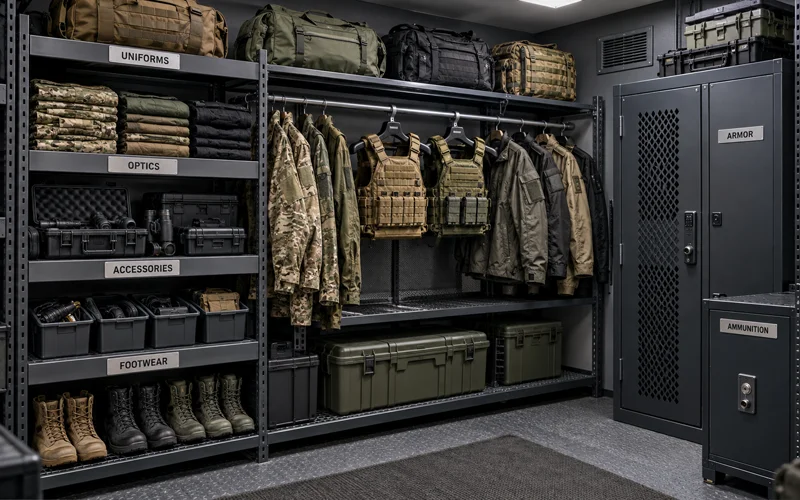
- Group by category: uniforms, armor and vests, footwear, optics, and accessories each get their own zone. Mixing categories is the single biggest reason people can’t find gear fast.
- Label every shelf, bin, and hook. A label takes ten seconds to make and saves minutes during a callout.
- Hang heavy items on hangers rated for the load. A standard wire or plastic hanger is built for a shirt, not a 15-pound plate carrier, and it will bow or snap within weeks.
- Lock and secure firearms, ammunition, and sensitive items separately from the rest of the kit.
- Control the environment. Cool, dry, and ventilated protects fabric, leather, and optics far longer than a sealed closet ever will.
Tactical gear storage ideas (closet, wall, garage, or room)
The right layout depends on how much space you have and whether you are outfitting one person or a shift rotation. These four approaches cover most situations, and you can combine more than one in the same space.
Dedicated gear room
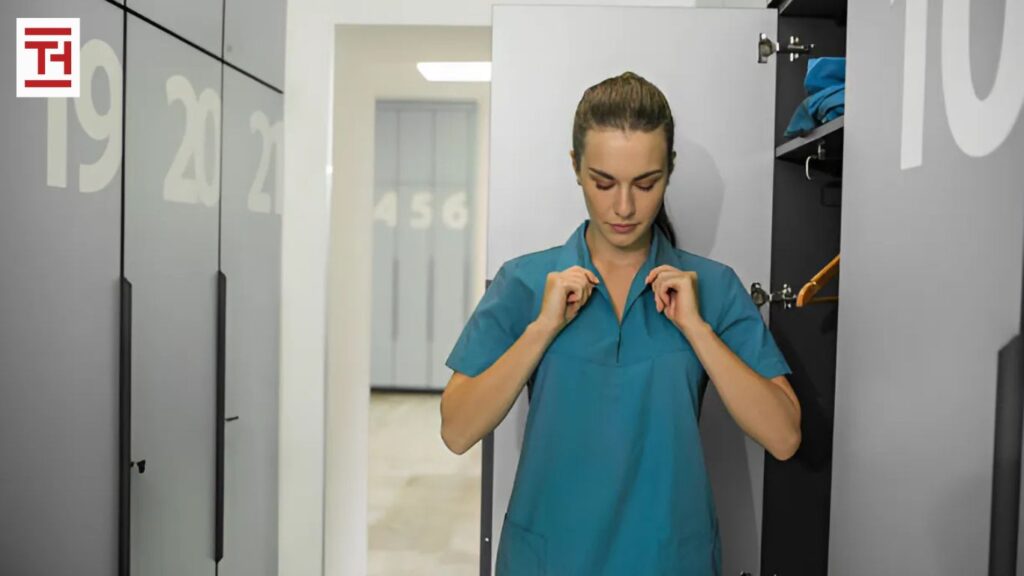
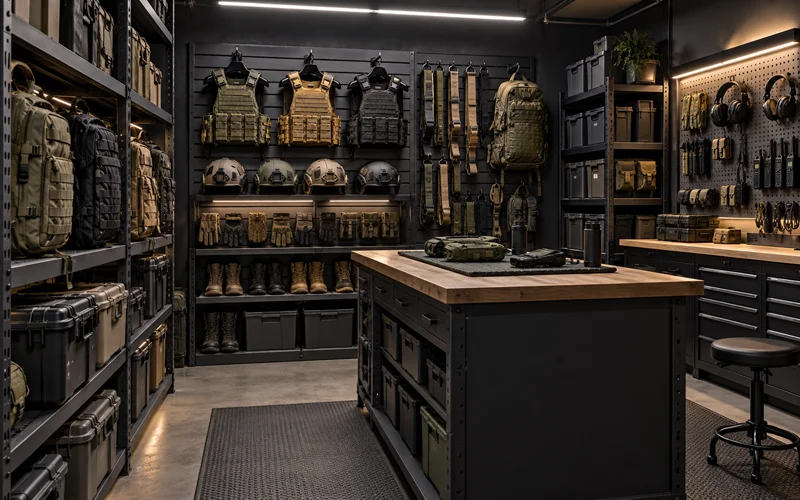
If space permits, a dedicated room is the strongest option. Run a rod at shoulder height with heavy-duty hangers for uniforms and loaded gear, add shelving above for helmets and bags, and put a lock on the door. A single closet-sized room, roughly 6 by 8 feet, is enough to outfit two or three people without anyone’s gear touching another’s.
Closet conversion
Turning a spare closet into a gear storage area is the fastest route for most households. Organizing a closet around hangers instead of shelves alone means loaded items hang clear of the floor. Add a heavy-duty rod, pegboard on the inside of the door for small items, and labeled bins on the shelf above for anything you don’t hang.
Wall systems and pegboards
Wall space is usually the most wasted square footage in a garage or mudroom. Pegboards let you hang belts, holsters, and daily-carry items where you can see them at a glance instead of digging through a drawer. Keep frequently grabbed items at eye level and reserve the lower rows for less urgent gear.
Shelving, lockers, and bins
Adjustable metal shelving handles ammo cans, boots, and seasonal kit that doesn’t hang well. Lockers give each person a secure, individual compartment, which matters in any shared station or armory setting. Labeled bins keep small parts, batteries, and accessories from disappearing into a junk drawer.
DIY tactical gear room: a simple setup
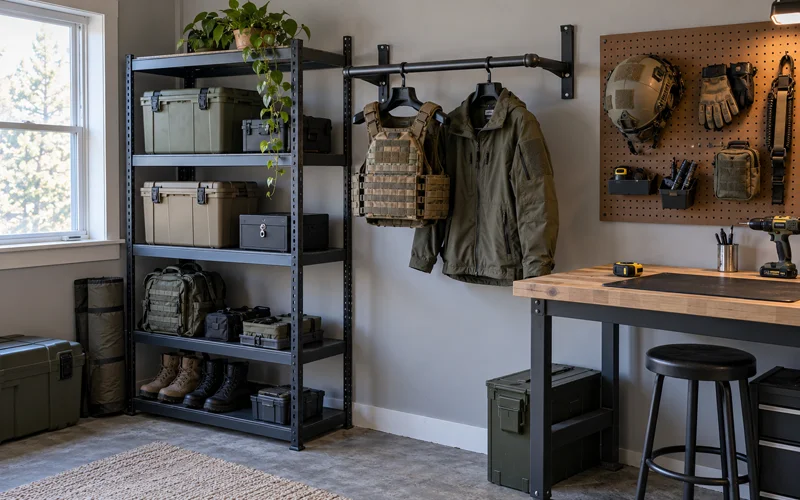
You don’t need a contractor for most of this. A closet, a garage corner, or a small spare room with a lockable door will do, and the build below takes most people a weekend.
- Pick the space: a spare closet, a garage corner, or a small room with a door that locks.
- Check for damp before you install anything. Avoid hot attics and uninsulated basements, both of which swing in temperature and humidity through the year.
- Mount a heavy-duty rod at a height that clears the floor by at least four inches once gear is hung on it.
- Add shelving above the rod for helmets, bags, and bins.
- Put a pegboard or wall system on one wall for belts, holsters, and grab-and-go items.
- Add a safe or locker for firearms and sensitive items, bolted to a stud if the unit is small enough to carry off.
- Label every zone and keep a short inventory list taped inside the door.
Climate and humidity control for tactical gear storage
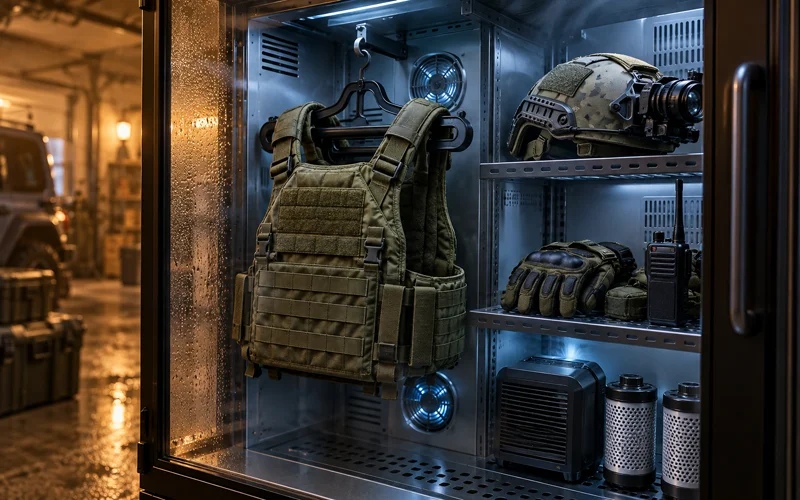
Most gear damage happens in storage, not in the field. Moisture, heat, and poor airflow degrade fabrics, corrode metal components, and fog optics over months of quiet sitting. A few targeted controls make the difference between gear that stays ready and gear you end up replacing early.
Temperature and ventilation
Aim for a stable temperature between 60 and 75 degrees Fahrenheit. Avoid attics, which swing between extreme summer heat and winter cold, and uninsulated garages in humid climates. A small ventilation fan or a louvered door on a dedicated storage room keeps air moving and cuts down the moisture buildup that causes mildew on fabric gear and rust on metal hardware.
Humidity targets and desiccants
Relative humidity above 60 percent speeds up mold growth on textile gear, leather degradation, and corrosion on metal buckles, zippers, and firearm components. Target 40 to 55 percent relative humidity for a mixed tactical storage space. A basic digital hygrometer, usually under 15 dollars at any hardware store, lets you monitor this without guessing. If a dehumidifier isn’t practical for the space, silica gel desiccant canisters placed near optics cases and leather gear absorb excess moisture in smaller enclosed areas.
Hanging gear to air dry before storage
Never store damp gear, even if the mission ended hours ago. Plate carriers, duty jackets, and turnout gear trap moisture deep in foam padding and stitching that doesn’t evaporate quickly in a closed space. Hang gear on a heavy-duty hanger in a ventilated area for several hours before returning it to the storage room. This single habit prevents most of the mildew problems that get wrongly blamed on storage conditions when the real cause was storage prep.
Documenting and cataloging your gear inventory
A physical storage space solves organization. A written inventory solves accountability, insurance coverage, and deployment readiness, which are separate problems most setups ignore until something goes wrong.
Why an inventory matters
The written record earns its keep the moment something is lost, damaged, or questioned. Keeping track of equipment on paper or in a shared sheet turns a guessing game into a five-minute lookup.
- Insurance claims: Tactical gear is expensive. A documented inventory with purchase dates, serial numbers, and values gives you a defensible record if gear is stolen, damaged in a fire, or destroyed in a natural disaster. Without it, most homeowner and renter policies default to low generic valuations.
- Department accountability: Law enforcement and fire service personnel often store a mix of personally owned and department-issued equipment. A written list that separates the two prevents disputes during audits, equipment turnover, or personnel changes.
- Deployment readiness: A simple checklist posted on the storage room door lets you confirm a full kit in under a minute, rather than mentally tallying gear under pressure before a shift or a callout.
What to record
For each item, note the name and description, the brand and model, the purchase date and approximate replacement cost, any serial or lot numbers for firearms and optics, and whether the item is personally owned or department issued. A spreadsheet works for this, and so does a printed sheet inside a plastic sleeve on the storage room door.
Keeping the inventory current
Review and update the inventory whenever you add or retire gear, after any deployment where equipment is expended or damaged, and at the start of each calendar year. Set a recurring reminder. An inventory that is 18 months out of date is only marginally better than none.
How to store specific gear
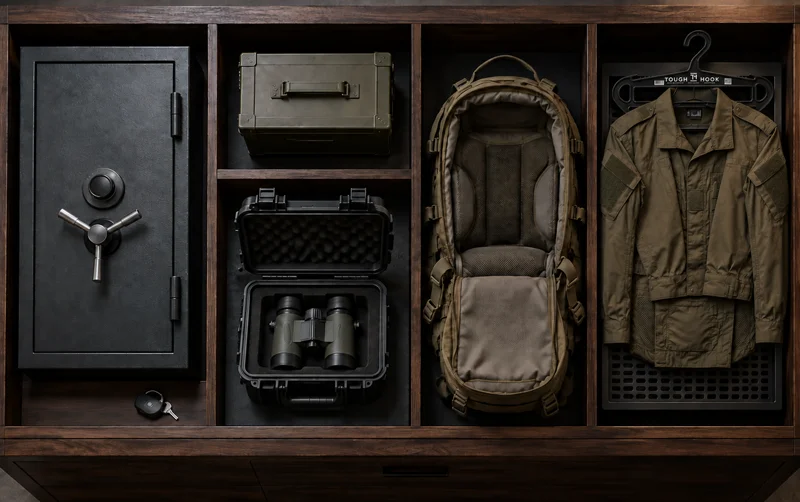
General storage principles cover most of a kit, but a few categories need their own rules.
- Firearms: store unloaded in a locked safe with trigger locks engaged.
- Ammunition: store cool and dry, away from firearms.
- Optics: keep in padded cases in a stable environment.
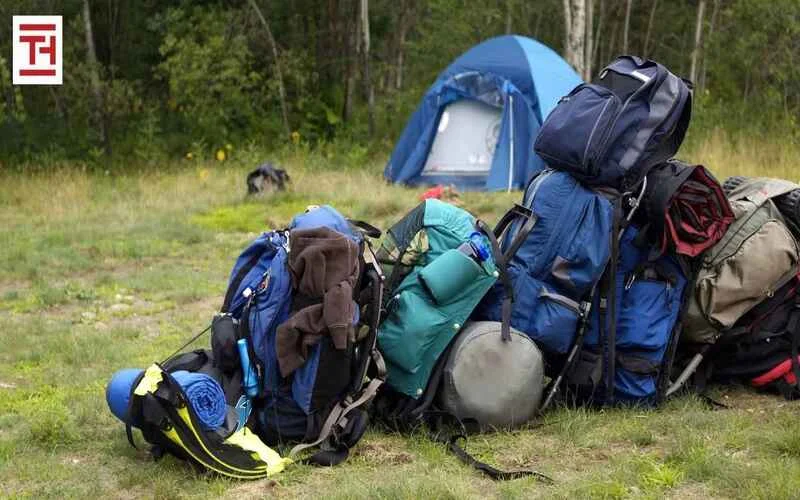
- Backpacks: store empty to prevent mildew and shape distortion; a quick guide to how to store backpacks covers the drying step most people skip.
- Uniforms and tactical clothing: hang clean and let them dry fully on sturdy hangers to hold their shape. Skip wire hangers, which dent shoulders and bend under layered or wet uniforms. Departments that need military uniforms to look sharp for inspection should not be relying on hangers built for dress shirts.
Body armor, vests, and heavy gear
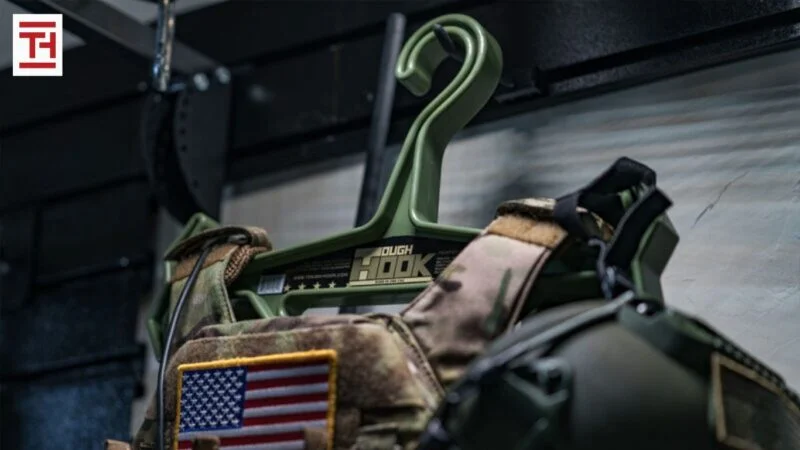
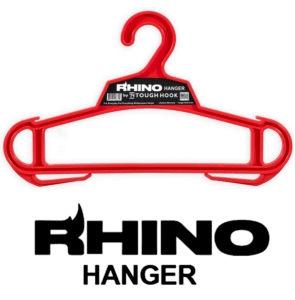
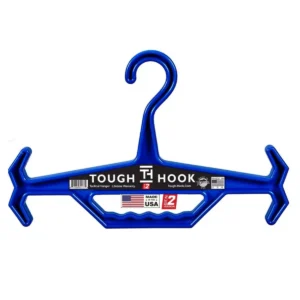
Plate carriers, loaded chest rigs, and duty jackets are heavy and bulky, and most closet hangers crack or sag under that load, which deforms the shoulders permanently. Plate carrier hangers built for the actual weight class of the gear solve this, not a thicker version of a standard hanger.
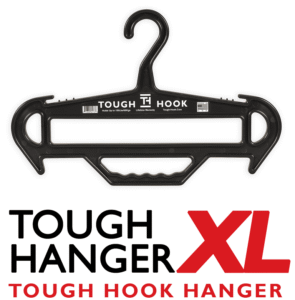
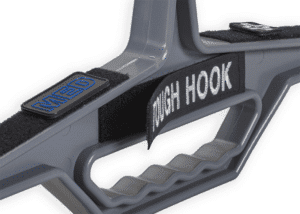
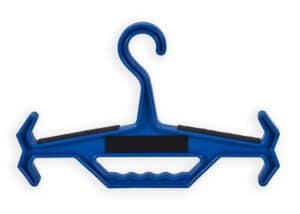
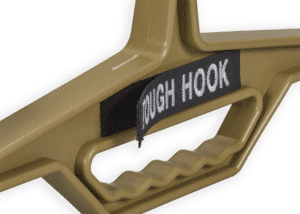
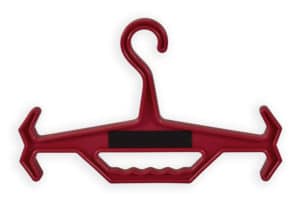
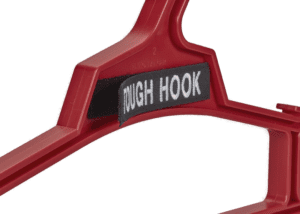
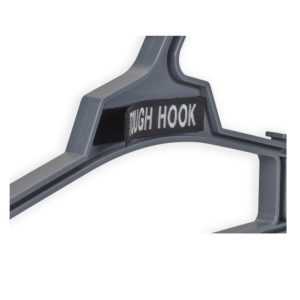
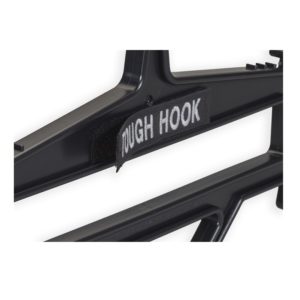
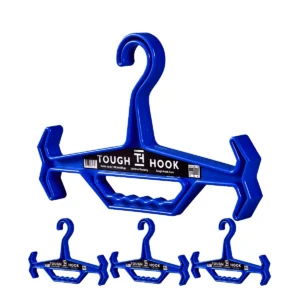
The Tough Hook tactical hanger is designed by a US Army sergeant, made in the USA from high-impact polypropylene with a patented I-beam construction, and rated to carry over 200 pounds without bending, warping, or cracking. For a broader look at body armor storage and duty belt care, see our guide to proper storage for body armor and equipment.
Keep your kit ready
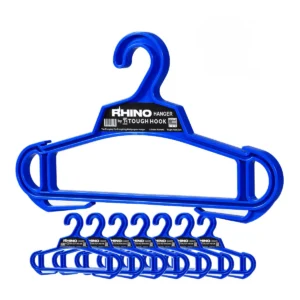
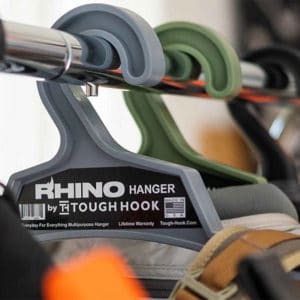




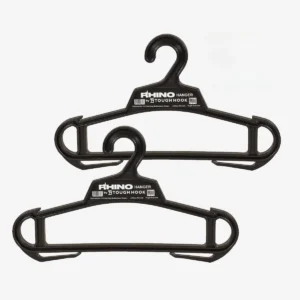
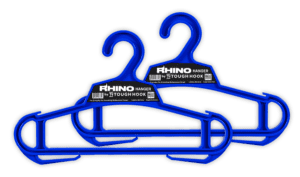
2 Pack RHINO Heavy Duty Clothes Hanger Bundle
Original price was: $27.95.$23.95Current price is: $23.95.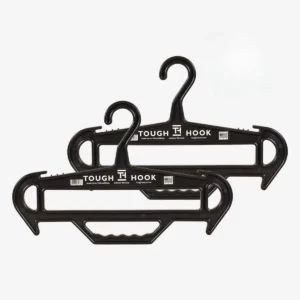
A dedicated storage space keeps your gear organized, protected, and ready to move. For the heavy items ordinary hangers cannot handle, browse the full range of heavy duty hangers built in the USA to hold the weight and the shape.
Frequently asked questions
How do you store tactical gear at home?
Sort it by how often you use it, group it by category, and label every zone. Hang uniforms and loaded gear on heavy-duty hangers, keep firearms and sensitive items locked, and store everything in a cool, dry, ventilated space.
What is a tactical gear room?
A tactical gear room is a dedicated space, often a spare room, closet, or garage corner, set up to store and organize gear the way you deploy it. It usually combines a heavy-duty rod, shelving, a wall or pegboard system, bins, and a locked safe for firearms.
What are some good DIY tactical gear storage ideas?
Convert a closet with a heavy-duty rod and door-mounted pegboard, build a wall system for grab-and-go items, use stacked shelving and labeled bins for ammo cans and seasonal kits, and add a lockable cabinet for firearms.
How do you store heavy tactical vests and plate carriers without damaging them?
Use a heavy-duty hanger rated for the load. Standard hangers bend under plate carriers and loaded jackets, which deforms the shoulders. A hanger built to hold the weight, such as a 200-pound-rated I-beam hanger, keeps the gear in shape and ready to grab.
How much space do you need for a tactical gear storage area?
A single-person kit fits in a converted closet as small as 24 inches deep by 36 inches wide, provided you use vertical space with a rod, an overhead shelf, and a door-mounted pegboard. A shared or department-level setup needs at minimum a 6-by-8-foot room to fit multiple lockers, a gear rod, and shelving without crowding the space. The real constraint is usually rod length: allow at least 12 inches of rod space per set of hung gear so items don’t press against each other and trap moisture.
How do you protect tactical gear from humidity in storage?
Keep the storage area at 40 to 55 percent relative humidity using a dehumidifier or silica gel desiccants. Always hang gear to air dry for several hours before storing it, and make sure the space has some airflow rather than being completely sealed. A basic digital hygrometer lets you monitor conditions without guessing.