

Open your closet right now. If finding what you need takes more than ten seconds, if clothes are crammed together, if hangers are tangled and sliding off the rod the problem is not the size of your closet. It is the system inside it. Most people spend money on storage bins, shelf dividers, and closet inserts trying to fix a problem that starts much earlier. Before any of that matters, you need to get the foundation right. And the foundation of every hanging closet is the hanger. Get the hangers right and everything else falls into place. This guide shows you exactly how.
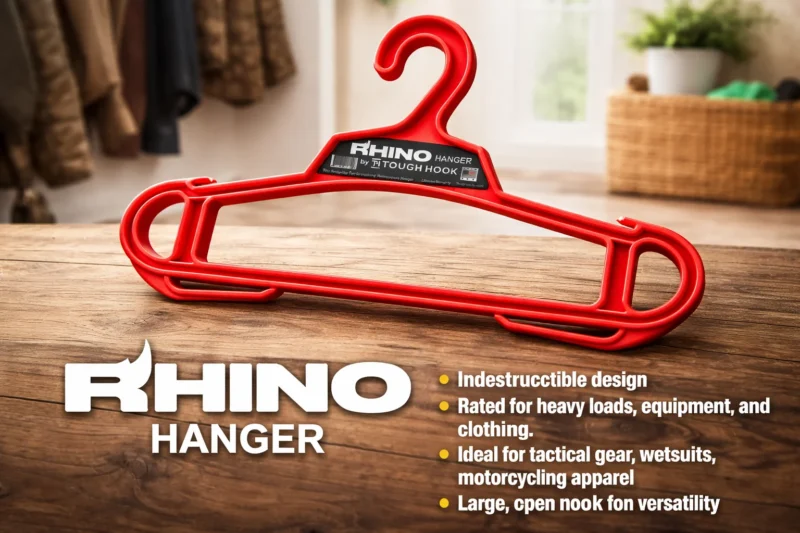
Your Closet Deserves Better Than a Dollar Store Hanger If you are serious about organization, start with a hanger that is serious about performance. The RHINO Hanger was designed specifically for everyday clothing storage — with wider arms, a stronger build, and a finish that protects your clothes rather than damaging them. Made in the USA. Built to last a lifetime. See the RHINO Hanger here.
Why Closet Organization Starts With the Right Hanger
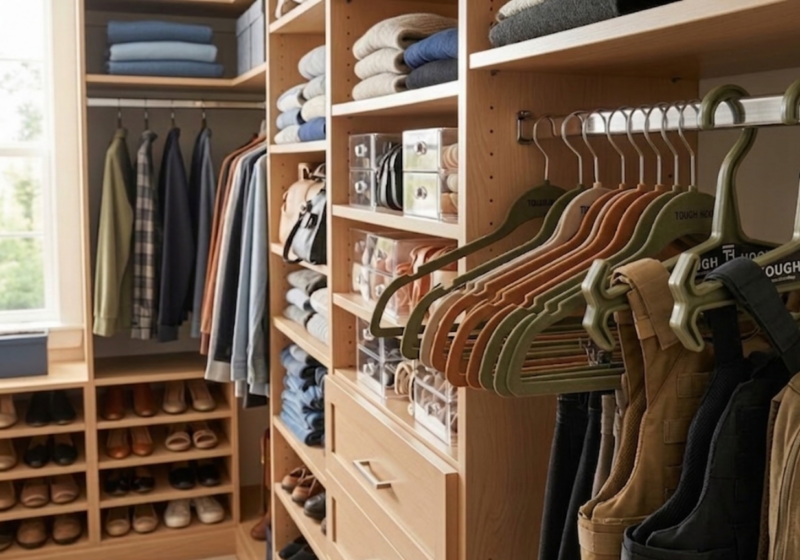
Here is something most organizational guides will not tell you no labeling system, color-coding method, or storage bin will fix a closet with bad hangers at its core. Flimsy hangers tangle together, slide off rods, warp under weight, and create visual chaos that makes even a tidy closet look messy. They also quietly damage your clothes over time, stretching necklines, distorting shoulders, and leaving permanent marks on fabric you paid good money for.
A quality hanger does three things a cheap one never can: it holds its shape under load, it keeps your clothing in its original form, and it stays exactly where you put it on the rod. As explored in The Science of Gear Preservation: Shape, Weight, and Material, proper storage starts with proper support, and that principle applies to everything from tactical gear to your favorite winter coat.
Best Ways to Organize Your Closet With Hangers

Small changes in how you use hangers can completely transform how your closet looks and functions. Here are the six that make the biggest difference.
1. Commit to One Hanger Style for the Whole Closet
Walk into a well-organized closet, and the first thing you will notice is that everything hangs at the same height. That consistency is not accidental; it comes from using one uniform hanger style throughout. Mixing wire, plastic, velvet, and wooden hangers creates uneven heights, inconsistent spacing, and visual clutter that makes a closet feel chaotic even when it is not. Switching to a single-hanger type is the fastest and most impactful organizational change you can make, and it costs far less than any storage system on the market.
2. Group by Category, Not by Color
Color-coordinated closets photograph beautifully but function poorly in real life. A black winter coat, a black gym hoodie, and a black dress shirt are distinct items that belong in different sections. Grouping them together just because they share a color makes no practical sense. Category-based organization: all coats together, all shirts together, all gear together means your hands go to the right section automatically. No scanning, no second-guessing. Pair this with uniform hangers and your closet becomes something you actually enjoy using every morning.
3. Match the Hanger to What You Are Hanging
This is where most people go wrong. They buy one type of hanger and use it for everything from a lightweight linen shirt to a heavy tactical jacket. The result is predictable: bent arms, snapped hooks, and clothing that loses its shape over time. Think of hangers the way you think about tools. You would not use a screwdriver to hammer a nail. A hanger rated for 5 lbs has no business holding a 30 lb coat. Match the hanger to the load, and everything in your closet stays in perfect condition. Check out Built to Last: What to Look for Before Buying Heavy-Duty Hangers for a full breakdown of what to look for. Heavy Gear Needs a Hanger That Means Business Tactical jackets, heavy coats, and duty gear need real support, not a hanger that bends the moment you load it up. The Original Tough Hook Tactical Hanger is rated to hold up to 200 lbs, features an integrated gripper handle, and is built in the USA with a lifetime warranty. If you are hanging anything heavy, this is the hanger for it.
4. Think Vertically, Not Just Horizontally
The average closet uses only about half of its available space because everything is organized in a single horizontal line across the rod. The space below shorter hanging items, such as shirts, jackets, and folded trousers, goes completely to waste. Adding a second hanging rod below your main one for shorter items can effectively double your usable closet space without touching a single wall. Heavy-duty hangers with built-in hooks take this further by letting you hang accessories, bags, or additional items directly off the hanger itself, turning dead space into functional storage.
5. Put Your Most-Used Items Where You Can Grab Them First
An organization should save you time, not just look good. If your most-used items are buried behind seasonal pieces or pushed to the far end of the rod, your closet is organized for appearances rather than function. Keep your most frequently used clothing and gear at eye level, front and center. Push rarely used items to higher rods, the back of the closet, or into seasonal storage. For anyone who needs to get dressed quickly, shift workers, first responders, and early morning routines, this single change can save real minutes every day. Read Storage for Shift Workers: Keeping Workwear Ready at Any Hour for more on building a closet that works under pressure.
6. Pull Seasonal Pieces Off the Main Rod
Keeping every item you own on the same rod year-round is one of the most common reasons closets stay overcrowded and disorganized. Your summer shirts and your winter coats do not need to share the same real estate year-round. Rotating seasonal items off the main rod when they are out of rotation creates immediate breathing room and makes what you actually need far easier to find. When storing heavy coats for months at a time, make sure they go onto hangers strong enough to hold their shape during long-term static load, because a cheap hanger under a heavy coat for six months will damage both. Seasonal Swap Made Easy: Rotating Heavy Clothes the Smart Way walks through exactly how to do this right.
Conclusion
A disorganized closet does not fix itself overnight but it also does not require a complete renovation to turn around. The six changes covered in this guide are small, practical, and immediately noticeable. Commit to one hanger style, group by category, match your hanger to your load, use vertical space, keep daily items within reach, and rotate out seasonal pieces. Do all six and your closet transforms from a daily frustration into the most functional room in your home. You will spend less time searching, less money replacing broken hangers, and zero energy dealing with clothes that lost their shape because a flimsy hanger let them down. The best part? It starts with one decision, choosing a hanger actually built for the job.
Frequently Asked Questions
Q1. How many hangers do I actually need for a well-organized closet?
One hanger per item currently in your closet, plus an additional 10–15% for new additions. More importantly, never overcrowd your rod items need enough space to hang freely without pressing against each other, which is usually about one inch of spacing per item.
Q2. What is the best hanger type for heavy winter coats?
Heavy coats need wide, reinforced hangers with a high load capacity and thick, contoured arms that distribute weight evenly. A hanger rated for 200 lbs will protect your coat’s shape and hold up for years. A standard thin plastic hanger under a heavy coat will warp within weeks.
Q3. Do all clothes need the same type of hanger?
Using one consistent hanger style creates visual uniformity and makes organization easier to maintain. However, the load capacity needs to match what you are hanging. A hanger rated for light shirts is not appropriate for heavy outerwear, gear, or anything weighing more than a few pounds.
Q4. Why do my hangers keep bunching together on the rod?
Bunching is almost always caused by mismatched hanger sizes or overcrowding. Switching to a uniform hanger type and maintaining consistent spacing, roughly one inch per item, prevents bunching and keeps everything easy to access.
Q5. Is investing in better hangers really worth it for closet organization?
Without question. Hangers are the foundation of every hanging closet system and the single most impactful change most people can make. Better hangers create instant visual uniformity, protect clothing from damage, and hold their position on the rod, three things cheap hangers simply cannot do consistently.