
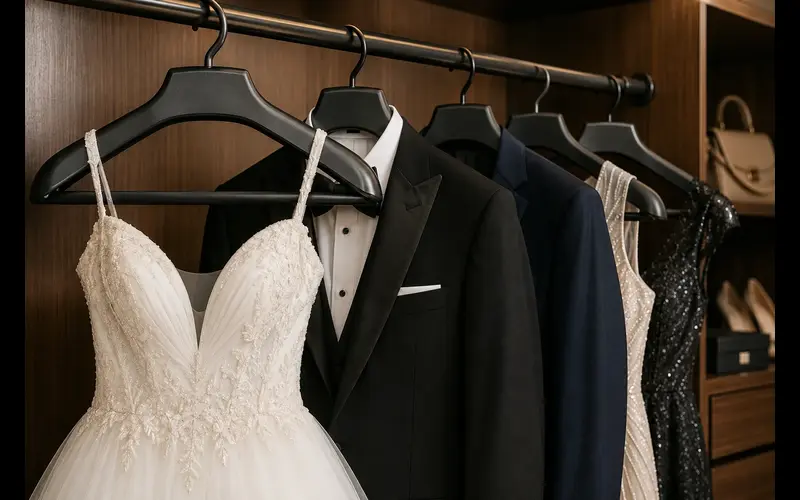
A wedding gown with a full skirt and layered tulle can weigh far more than it looks. The same goes for a wool overcoat, a fully lined tuxedo, or an evening gown with structured boning through the bodice. These garments are built with real weight and structure, and a thin wire or basic plastic hanger is rarely designed to support either.
The result shows up slowly. Shoulders start to point instead of curve. Seams pull. A gown that hung beautifully in the shop starts to lose its shape a few weeks into storage. This guide looks at what formalwear actually needs from a hanger, from suits and tuxedos to wedding gowns and evening dresses, and where a heavy-duty hanger fits alongside more traditional padded options.
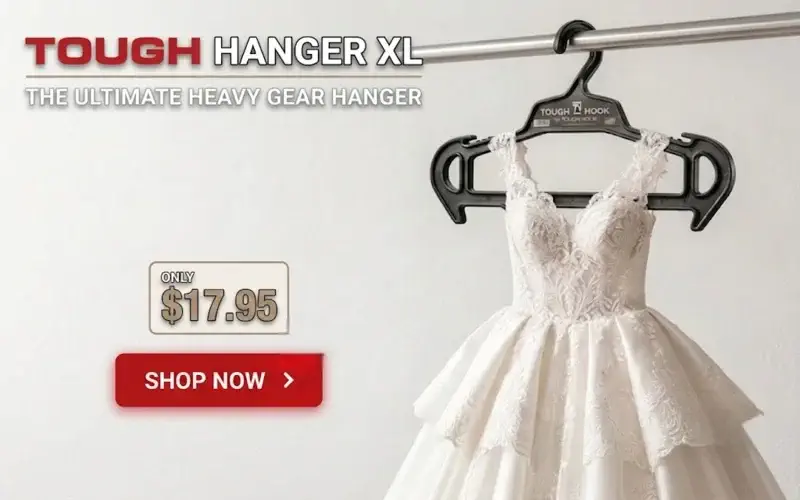
Full wedding gowns and ballroom dresses are heavier than most closets are designed to support. The Tough Hanger XL has a wide, full-shoulder span designed to support that kind of weight.
Why Formalwear Needs Better Hanger Support
Formal wear is built differently from everyday clothing. Structured shoulders, layered fabric, interior boning, and heavy trim all add weight and rigidity that a standard hanger was never designed to carry. A hanger that works fine for a cotton shirt will often let a tuxedo jacket or gown slide, sag, or lose its shape within a matter of weeks.
This matters most at the shoulder. Structured garments are meant to hang in a specific shape, and a hanger that does not match that shape puts continuous pressure on the exact seams and fabric points that hold the garment’s structure together.
Understanding Shoulder Structure, Weight, and Fabric Sensitivity
Every formal garment combines three variables that decide what kind of hanger it actually needs: shoulder structure, total weight, and fabric sensitivity. A tuxedo jacket has a rigid, padded shoulder that needs firm support to keep its shape. A silk evening gown may weigh very little but bruise or crease easily under the wrong pressure point. A full wedding gown often combines both problems at once, with structured boning up top and significant weight in the skirt.
None of these garments responds well to a hanger that is too narrow, too thin, or too rigid at the wrong points. The right hanger has to match the specific combination of weight and delicacy the garment presents, not just its general category. Understanding how proper storage works for weighty garments generally starts with the same weight and structure assessment.
What Counts as Formalwear: Suits, Gowns, and Everything Between
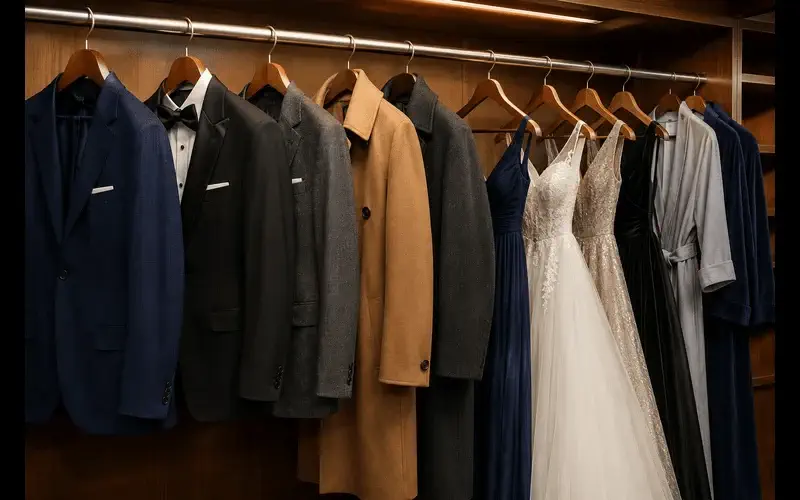
Formalwear covers a wide range of garment types, and each one puts stress on a hanger differently. Suits and tuxedos concentrate weight and shape at the shoulder. Overcoats add bulk and often a heavier fabric on top of that same shoulder structure. Evening dresses and wedding gowns add skirt weight, which pulls down through the bodice if it is not supported separately, as explained in more detail in how weight distribution affects the shape and life of clothing. Robes and other layered garments are lighter individually but often get hung several at a time on the same rod, which adds up in a shared closet.
Features That Matter Most for Formal Garments
Wide, Smooth Shoulders
A hanger’s shoulder should roughly match the width of the garment’s own shoulder seam. Too narrow and fabric bunches at the tip. Too wide and the garment loses its shape entirely. Smooth edges matter just as much as width, since any rough seam or sharp corner on the hanger can snag delicate fabric or leave a visible mark over time.
Strap Loops and Extra Support Points
Strapless gowns, dresses with thin straps, and anything with a heavy skirt benefit from a second point of support beyond the shoulder alone. Museum textile guidelines note that heavy skirts specifically require additional support with padded hangers and cotton tape to prevent the fabric’s own weight from pulling on the bodice and shoulder seams over time.
Garment Bags and Padding
A breathable garment bag protects formalwear from dust and light without trapping moisture the way plastic dry cleaning bags do. Padding, whether built into the hanger or added separately, spreads pressure over a wider area of fabric rather than concentrating it at two narrow points.
Hanging Space and Airflow
Formalwear needs enough room on the rod to hang without being compressed by neighboring garments. Crowding causes creasing and prevents the airflow that keeps fabric from retaining odor or moisture, particularly after a garment has been worn.
When a Wooden Hanger Still Makes Sense
Traditional wooden hangers remain a solid choice for lighter suits, blazers, and everyday formalwear stored in a climate-controlled closet. Their rigid shoulder holds a jacket’s shape well, and many people prefer their appearance in a visible closet, an approach covered further in this guide to tailored heavy duty hangers for business attire. The tradeoff is moisture sensitivity. In a garage, storage unit, or any space with fluctuating humidity, wood can warp or swell over time, which changes the very shape it was chosen to preserve.
When Extra Strength Becomes Necessary
Extra strength becomes worth considering once a garment’s actual weight starts to exceed what a standard hanger, wood included, was built to hold. A full ball gown, a heavily lined overcoat, or several layered robes on one hanger all fall into this category. Museum conservation guidance on hanging garment storage notes that heavy skirts and structured garments concentrate real stress at the shoulders and neck, which is exactly where a stronger, wider hanger earns its keep. Very fragile or heavily embellished pieces are the exception. Those are generally better suited to flat, padded storage than to hanging at all, regardless of hanger strength.
Short-Term Versus Long-Term Storage
The right hanging strategy depends heavily on how long a garment will actually stay on the hanger. For short-term storage, meaning days or a few weeks before an event, hanging a properly supported gown or suit on a wide, sturdy hanger in a breathable garment bag is generally fine. For long-term storage, meaning months or years, hanging puts continuous stress on the same seams and shoulder points every single day, which is why heirloom gowns and valuable formalwear are often better stored flat in a padded box once the short-term need has passed.
Suits, tailored jackets, and lighter formalwear benefit from the same reinforced construction. The RHINO Hanger features a wide, contoured shoulder built specifically for this kind of structured garment.

Storage Advice by Setting
Bridal shops and formalwear retailers typically need consistent, wide-shoulder hangers across an entire rack, since gowns and suits are handled constantly by staff and customers alike. Costume departments face a similar challenge but often with a wider range of garment weights and conditions on the same rack, which calls for some flexibility in hanger selection rather than a single standard, similar to the approach outlined in how to hang costumes, uniforms, or special outfits without wrinkles. Hotels storing guest formalwear or event attire need hangers sturdy enough to handle unpredictable garment weight without advance notice, not unlike the demands covered in this overview of heavy-duty coat hangers. Households storing a suit collection or a single wedding gown have the simplest need, but the same core principle applies everywhere: match the hanger to the weight and structure of what is actually being hung, and treat delicate or heirloom pieces differently from everyday formalwear.
Common Mistakes That Stretch, Crease, or Distort Formalwear
Hanging a heavy gown or coat on a hanger designed for shirts is the most common mistake and usually the fastest way to stretch a shoulder out of shape. Leaving formalwear in a sealed plastic dry cleaning bag traps moisture and can cause yellowing over time. Crowding a rod so tightly that garments compress against each other creates permanent creasing. Skipping strap loops or additional support on strapless and heavily skirted gowns puts avoidable strain directly on the bodice.
Formalwear Hanger Selection Checklist
- Match the hanger’s shoulder width to the garment’s own shoulder seam
- Use additional support loops or ties for strapless or heavily skirted gowns
- Choose a breathable garment bag instead of a sealed plastic one
- Leave enough space on the rod to prevent crowding and creasing
- Reserve flat, padded storage for fragile or heavily embellished pieces
- Reassess hanging versus flat storage for anything stored longer than a season
Getting Formalwear Storage Right
Formalwear asks more of a hanger than everyday clothing does, whether that means supporting the structured shoulders of a tuxedo or the full weight of a wedding gown. Matching the hanger to the garment, rather than defaulting to whatever is already in the closet, is the difference between formalwear that holds its shape for years and formalwear that needs repair before it is worn again.
Heavy-duty hangers make the most sense for genuinely heavy, structured pieces like ball gowns, lined overcoats, and tailored suits, while delicate or heirloom garments still deserve the padded and flat storage methods recommended by textile professionals. Tough Hook builds its heavier hangers with exactly this kind of structured, weight-bearing garment in mind.
Frequently Asked Questions
What is the best hanger for a wedding dress?
A wide, contoured hanger that matches the gown’s shoulder width is generally the best choice for short-term hanging, ideally with strap loops or ties to support a heavy skirt. For long-term storage lasting months or years, flat padded storage in an acid-free box is usually recommended over continuous hanging.
Can heavy-duty hangers be used for delicate evening gowns?
It depends on the garment. Structured gowns with real weight, such as full ball gowns or heavily lined dresses, often benefit from a sturdier, wider hanger. Very delicate fabrics like unlined silk or antique lace are usually better served by a traditional padded hanger or flat storage, since strength is not the limiting factor for those pieces.
How should I store a tuxedo or suit between events?
Hang the jacket on a wide, supportive hanger in a breathable garment bag, and hang trousers from the waistband or cuffs rather than folding them over the bar. Leave enough space around the garment to prevent creasing, and avoid sealed plastic dry cleaning bags for anything stored longer than a few days.
Is it bad to hang a wedding dress for a long time?
Yes, in most cases. Continuous hanging concentrates the gown’s weight on the same shoulder seams every day, which can cause stretching or distortion over months or years. Short-term hanging before an event is generally fine with proper support, but long-term preservation usually calls for flat, padded storage instead.
What is the difference between a padded hanger and a heavy-duty hanger for formalwear?
A padded hanger cushions the shoulder area to reduce pressure points on delicate fabric, which is important for lightweight or sensitive garments. A heavy-duty hanger is built primarily for load capacity and structural support, which matters most for genuinely heavy garments like full gowns or lined overcoats. Some situations call for both approaches together.
Do bridal shops and costume departments need different hangers than households?
The core requirements are the same, but bridal shops and costume departments typically need a larger, more consistent supply of wide-shoulder hangers to handle constant daily use across many garments. Households usually only need to solve for a handful of pieces, so the selection process can be more specific to each garment.