

Heavy garments break rules that light clothing doesn’t. A wool coat, a fully loaded plate carrier, or a stack of winter sweaters needs hanger strength, shelf load capacity, and folding technique that a standard closet guide never covers. This article is about handling the weight itself, not general closet organization, which we cover separately in How to Organize a Guy’s Closet.
Storing heavier garments starts with using vertical space. One effective method is to install sturdy hooks or hangers that can support the weight of your items. Additionally, consider using vacuum-sealed bags for items that you won’t need access to regularly or during warmer months. You can also maximize shelf space by folding heavy items neatly and storing them in labeled bins or boxes. Remember to keep like items together and purge any items you no longer use or need before storage for optimal organization.
Standard hangers won’t hold this stuff. The Original Tactical Hanger™ is rated for 200 lbs and built to handle coats, gear, and heavier items without bending.

Preparing Heavy Garments Before They Go Into Storage
Every storage method in this guide works better when the garment going into it is clean, dry, and worth keeping. Preparation is the step most closet guides skip, yet it decides whether a coat comes out of storage ready to wear or ready for the repair pile.
Wash or dry clean everything headed into long-term storage, then let each piece dry completely before it goes into a bin or bag. Body oils, sweat, and food residue are what attract moths and carpet beetles, and stains that look faint now will set permanently over months in storage. Trapped dampness in a thick coat or sweater invites mildew and musty odors, so full drying matters just as much as the wash itself.
While each garment is out, handle small repairs on the spot. Sew loose buttons, close small tears, and empty every pocket, since forgotten items stretch pockets out of shape under the garment’s own weight. Then sort your wardrobe honestly into three piles: pieces you will store, pieces you still wear, and pieces to donate. Heavy garments claim more space than anything else you own, so only the items that earn their space should go back in.
Using Hanging Closet Organizers for Weighty Garments

Hanging closet organizers make the biggest difference in a small closet, especially for weighty garments. These organizers feature sturdy hooks and compartments that let you hang heavy clothing without worrying about it taking up too much space or wrinkling.
The benefit of hanging closet organizers is that they provide an efficient way to store your weighty garments, such as coats, jackets, and winter sweaters. Instead of piling these bulky items on top of each other or cramming them into limited shelf space, hanging them up keeps them accessible and prevents unnecessary wrinkles or creases. Additionally, hanging organizers allow you to use vertical space in your closet, making the most of every inch.
A small coat closet overflowing with winter jackets and coats turns every search into a struggle, and removing one item often results in a pile of disheveled outerwear. Hanging closet organizers let you neatly organize coats and jackets separately with the best coat-hanger options, ensuring easy access and helping maintain their pristine condition. No more digging through a mountain of clothes just to find the one you’re looking for!
Additionally, hanging closet organizers offer various configurations and compartments to keep your heavy garments organized. Some organizers come with built-in shelves or pockets for storing hats, gloves, or scarves for specific outfits. This eliminates the need for extra storage bins or cluttering up precious shelf space.
Hanging closet organizers offer more than storage. Here are the additional benefits they provide.
Benefits of Hanging Closet Organizers

Using hanging closet organizers goes beyond efficient storage for heavy garments; they offer several other benefits!
Firstly, these organizers can save you valuable time when getting ready in the morning. Instead of rummaging through a cluttered closet to locate specific items, hanging organizers provide easy visibility and quick outfit selection. Having a clear view of your clothing options can make choosing what to wear more efficient, especially during rushed mornings.
On a rushed morning before an important meeting, a well-organized hanging closet organizer lets you see all your shirts, blouses, or dresses at once. You can swiftly choose the perfect outfit without wasting time pulling out multiple hangers or digging through folded stacks on shelves.
Secondly, hanging closet organizers provide better protection for your weighty garments. When clothes are folded and stacked on shelves, they are more prone to creasing or damage over time. By hanging them up individually, you minimize the risk of wrinkles and help your clothes retain their original shape longer.
Lastly, using hanging closet organizers can help promote a sense of order and reduce stress in your daily life. A cluttered and disorganized closet can be overwhelming every time you open its doors. However, having everything neatly hung in separate compartments gives your closet a clean, organized appearance. It creates an environment that promotes relaxation and makes getting dressed more enjoyable.
With these benefits in mind, it’s clear that hanging closet organizers offer practical solutions for maximizing space and improving organization within small closets.
- Hanging closet organizers offer several benefits beyond just efficient storage for heavy garments. They save valuable time in selecting outfits, provide better protection for weighty garments, and promote a sense of order to reduce stress in daily life. By using hanging closet organizers, you can maximize space and improve organization within small closets.
Preventing Hanger Marks and Shoulder Dents
Hanging protects heavy garments only when the hanger spreads the load. Thin wire or plastic hangers concentrate a coat’s full weight on two narrow points, which is exactly how shoulder dents and hanger marks form. Choose wide-shoulder, contoured hangers that follow the natural slope of the shoulder seam so the weight distributes evenly across the whole garment. Knitwear is the one exception: even the best hanger lets gravity stretch a heavy sweater out of shape over a season, so fold knits and reserve hangers for structured pieces like coats, jackets, and uniforms. For a deeper look at how hanger choice affects garment lifespan, see how heavy duty hangers extend the life of your clothes.
Protecting Weighty Garments from Moths and Long-Term Damage
Weight isn’t the only threat to heavy garments in storage; pests and humidity are just as damaging over the course of a season or more. Wool coats, heavy sweaters, and natural-fiber uniforms are especially vulnerable to moths. Cedar blocks or lavender sachets placed near hanging or folded storage naturally repel moths without the chemical smell of mothballs, a method confirmed by Colorado State University Extension entomologists. Keep garments clean before storing, as sweat oils and food residue are what actually attract pests, not the fabric itself. For long-term preservation, breathable garment bags (cotton canvas, not sealed plastic) let moisture escape while still keeping dust off.
The same habits apply to service dress and duty gear, which is covered in more detail in how proper storage habits keep uniforms looking sharp
For hanging heavy gear, tactical vests, winter coats, wetsuits, and body armor, standard plastic hangers simply break. The Original Tactical Hanger™ by Tough Hook is rated to over 200 lbs and built from impact-resistant polypropylene resin with patented I-beam construction that prevents bending or sagging under any load. It is the hanger purpose-built for the weighty garments this article covers.
Choosing Shelves for Heavy Garment Storage
Choosing the right shelves is crucial for maximizing space and storing weighty garments. The shelves you select should be sturdy, durable, and able to support the weight of heavier clothing items, such as coats, jackets, and bulky sweaters.
One option to consider is snap-together shelving. These shelves are easy to assemble and can create rows of sturdy storage space for your garments. They are particularly useful for organizing pants, T-shirts, and other foldable items that tend to take up a lot of space. With snap-together shelves, you can customize the height and width according to your closet dimensions.
Another option is installing simple shelves in the dead space of your closet. This could involve using floating shelves or adjustable shelves that can fit seamlessly into corners or alcoves. You can use these shelves to store heavier items like sweaters or folded pants that you cannot hang on regular hangers. By utilizing previously unused areas in your closet, you can maximize every inch of available space.
Here’s a comparison between snap-together shelving and simple floating or adjustable shelves:
| Snap-Together Shelving | Simple Floating/Adjustable Shelves |
| Easy to assemble | Utilize previously unused spaces |
| Customizable height | Provide additional storage |
| Suitable for foldable items | Can support heavier garments |
Remember that when selecting shelves for heavy garment storage, it’s essential to consider the overall weight capacity and adjust the shelves accordingly. Make sure they are properly installed and securely attached to prevent accidents or damage to your clothes.
With shelving options covered, the next question is which containers work best on those shelves.
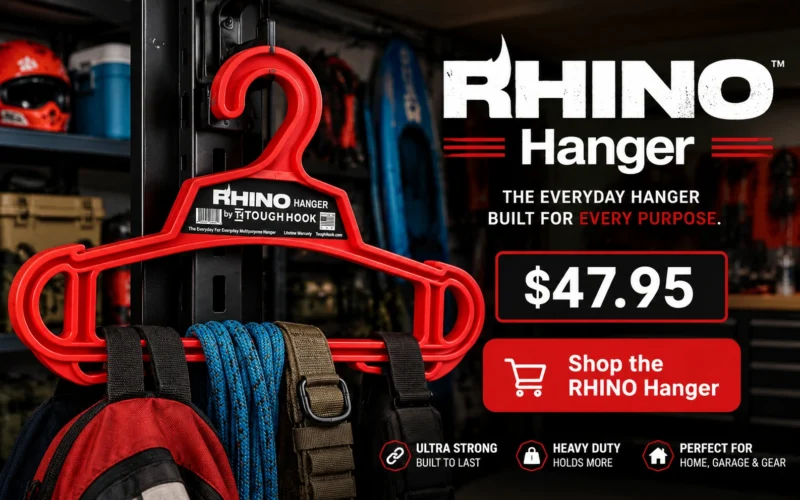
Storing more than one heavy item? The Rhino Hanger 4-Pack gives you enough load-rated hangers to cover coats, gear, and everything in between without buying one at a time.
Best Containers for Shelving Storage
Stackable plastic storage crates are among the best container options for shelving. These containers will not only help you stay organized but also protect your garments from dust, moisture, and other potential damage.
For shelving storage, one of the best container options is stackable plastic storage crates. These crates allow you to neatly organize your clothes by category, such as season or clothing type. For example, you can use separate crates for summer clothing, winter clothing, or specific items like scarves or belts. By stacking these crates on your shelves, you can create vertical storage space while keeping similar items together and easily accessible.
Another great option for shelving storage is open-front bins. These bins are perfect for file-folding clothes like sweatpants or shirts. The open front provides easy visibility and access to your garments while allowing you to stack them on top of each other without compromising organization. This way, even in a small closet, you can make the most of your shelf space.
Imagine using open-front bins to store your collection of clutches and belts; everything would be visible at a glance when you need it.
Using bins and open-front containers ensures a clutter-free, streamlined appearance while maximizing shelf space in your small closet. Remember to label your containers for easier identification and retrieval of specific items.
Opting for Space-Saving Garment Bags or Boxes
To maximize space while still protecting your heavy garments, consider space-saving garment bags or boxes. These storage options are designed to efficiently utilize the limited closet space available while keeping your precious items safe and well-maintained.
Garment bags are perfect for hanging clothes like heavy coats, suits, or long dresses. They typically feature a zippered enclosure that allows you to easily slide your garments in and out. Look for garment bags made from durable materials, such as nylon or canvas, as they offer better protection against dust, moisture, and wrinkles. Hanging these bags on a sturdy rod or hook inside the closet ensures your heavy garments remain within reach while leaving floor space for other storage solutions.
A collection of winter coats tends to take up more space than anything else in a small closet. Specially designed garment bags let you hang them up neatly without worrying about damage or excessive space. This not only keeps your coats organized but also prevents them from becoming dusty or creased over time.
| Pros Of Space-Saving Garment Bags And Boxes | Cons Of Space-Saving Garment Bags And Boxes |
| Protects garments from dust and moisture | Requires additional hanging space |
| Efficient use of limited closet space | May limit visibility/accessibility |
| Prevents wrinkling and damage | Some boxes may not stack well |
| Durable materials ensure long-lasting use | Bag handles can be bulky |
While space-saving garment bags work well for hanging clothes, what about those weighty garments that don’t necessarily need to hang? That’s where handling tips for weighty garments come into play.

Handling Tips for Weighty Garments
When dealing with weighty garments that don’t require hanging, it’s essential to consider their storage and handling with care. Here are some useful tips to ensure the longevity of your heavy items:
Fold Properly
Instead of simply stuffing these garments into drawers or shelves, take the time to fold them properly. Folding not only saves space but also helps maintain the shape and integrity of the fabric.
Use Sturdy Boxes or Bins
If you have enough floor space available in your closet, investing in sturdy boxes or bins can provide an excellent storage solution for your weighty garments. Opt for stackable options to maximize vertical space utilization. Chunky knitted sweaters that take up significant shelf space when left unfolded benefit especially when folded carefully and stored in sturdy boxes or bins to create a neat stack that protects them from wear and tear.
Add Protective Layers
Place acid-free tissue paper or cotton fabric between the folded layers of heavy garments to prevent friction and potential damage from rubbing against each other.
Label and Organize
To easily locate specific heavy garments when needed, label your boxes or bins by garment type or season. This makes it much simpler to retrieve what you need without disturbing the rest of your storage system.
Where to Store Heavy Garments: Closet, Wardrobe, Attic, or Basement
Location matters as much as the container. A bedroom closet or a freestanding wardrobe in a climate-controlled room is the safest home for heavy garments because temperature and humidity stay stable year round. Attics swing from freezing to baking within a single year, and basements trap the moisture that leads to mildew, musty odors, and mold damage in wool and down.
If a garage, attic, or basement is your only option, use sealed plastic bins with a moisture absorber inside, keep everything raised off the concrete floor, and check the bins every month or two. Anything hanging in these spaces belongs in a breathable garment bag rather than dry cleaner plastic, which traps humidity against the fabric.
Heavy Duty Garment Racks for Overflow Storage
When the closet is full, a freestanding heavy duty garment rack turns spare wall space in a bedroom, laundry room, or garage into hanging storage for coats, gear, and out-of-season outerwear. Skip the flimsy chrome racks sold for lightweight laundry duty. A rack meant for heavy garments needs a reinforced steel frame, a published weight rating, and crossbar bracing that stops the rail from bowing under a full row of winter coats.
Useful features to prioritize include double hanging rods for shorter jackets, a bottom shelf that holds bins or boots, and lockable wheels if you plan to roll the rack between rooms. Remember that a rack’s weight rating only tells half the story. The load still passes through each individual hanger, so pair any heavy duty rack with load-rated hangers that can carry their share without bending.
Techniques for Fluffy Item Storage in Small Closets
Vacuum-Sealing
Fluffy items like sweaters and coats tend to take up a lot of space in small closets. However, with the right techniques, you can maximize storage and keep them organized. One effective technique is vacuum-sealing these items. By using vacuum-seal bags, you can remove excess air, reducing their bulkiness and creating more room in your closet. These bags are also great for protecting your fluffy garments from dust, moisture, and pests.
Vertical Storage
Use shelf dividers or fabric bins to stack fluffy items vertically rather than horizontally. This not only saves space but also makes it easier to find specific pieces without disrupting the arrangement. Additionally, consider using the top shelves of your closet to store these items, as they are less frequently accessed.
Hanging Organizers for Small Accessories
For those with limited shelf space, hanging organizers can be a lifesaver. Look for hanging shelves or compartments that can be attached to the closet rod or door. You can use them to neatly store your fluffy items while keeping them easily accessible. Hanging organizers are especially useful for smaller accessories like scarves, hats, and gloves.
Repurposed Over-the-Door Storage
Lastly, don’t forget about maximizing the underutilized spaces in your closet. Over-the-door shoe organizers can be repurposed for storing fluffy items such as sweaters or folded blankets. These organizers have multiple pockets, which make them perfect for keeping your fluffy items separate and easy to access.
With fluffy-item storage covered, here are strategies specifically designed for folding and storing bulky garments.
Strategies for Folding and Storing Bulky Items
Efficient folding techniques play a crucial role in organizing bulky garments in small closets. One such strategy is the KonMari folding method, which involves folding garments into compact rectangles that can be easily stacked or stood upright. This method not only saves space but also improves visibility, making it easier to locate specific items.
If you have a shelf or cubby in your small closet, consider file folding. This technique involves folding bulky items like sweatshirts and pants into smaller rectangles and stacking them vertically, much like files in a filing cabinet. By doing this, you can maximize your shelf space and keep your bulky garments neatly organized.
Let’s say you own several chunky knit sweaters that take up a significant amount of shelf space. By utilizing the file-folding method, you can arrange them vertically in a neat row, allowing for easy access to each sweater without disturbing the rest.
For those with limited closet shelf space, consider investing in stackable bins. These bins are perfect for storing bulky items like blankets, jackets, or seasonal clothing. By stacking the bins on top of one another, you create vertical storage that maximizes available space while keeping your garments protected and easily accessible.
Combining these folding and storage strategies together produces the best results for bulky items.
Seasonal Rotation and Maintenance During Storage
Twice a year, at the change of season, rotate your wardrobe so the garments you reach for daily hold the prime closet space. Move out-of-season heavy pieces to higher shelves, the back of the wardrobe, or dedicated bins instead of banishing them to a damp corner of the house.
Storage is not a set-and-forget arrangement either. Every couple of months, air stored garments out for a few hours to release trapped odors, refresh cedar blocks with a light sanding so they keep repelling moths, and check bins and bags for any sign of pests, moisture, or mildew. A few minutes of maintenance each season protects garments that cost far more to replace than to care for.
Frequently Asked Questions
How should I store heavy garments?
Use a hanger rated for the garment’s actual weight, keep items spaced apart for airflow, and reserve shelves or bins for anything too bulky to hang.
What type of hangers are best for heavy clothes?
Wide-shoulder, load-rated hangers made of high-impact polypropylene or reinforced wood hold their shape under load; standard wire or thin plastic hangers will bend or snap.
Can vacuum bags be used for storing heavy garments?
Yes, for out-of-season items you won’t need soon, but avoid them for anything you want to keep on a hanger.
How do I protect heavy clothes from moths?
Clean garments before storing, use cedar blocks or lavender sachets instead of mothballs, and store in breathable bags rather than sealed plastic.
Is climate control necessary for storing heavy garments?
A cool, dry space with stable temperature and low humidity is enough for most heavy garments.
How long can heavy garments be stored safely?
Indefinitely, as long as they’re clean, stored on hangers or in containers that support their weight, and checked periodically for moisture or pests.
Should I clean heavy garments before storing them?
Yes, always wash or dry clean garments and let them dry fully before storage, since body oils and food residue attract moths and stains set deeper over time.
How do I prevent hanger marks on heavy clothes?
Use wide-shoulder hangers that spread the garment’s weight across the shoulder seam, and fold knits instead of hanging them so the fabric cannot stretch.