

What Is High Impact Polypropylene?
Plastic is widely used in a variety of different industries. However, over time, different types of plastic have been introduced for their specific applications. One of the most common plastics used worldwide today is polypropylene.
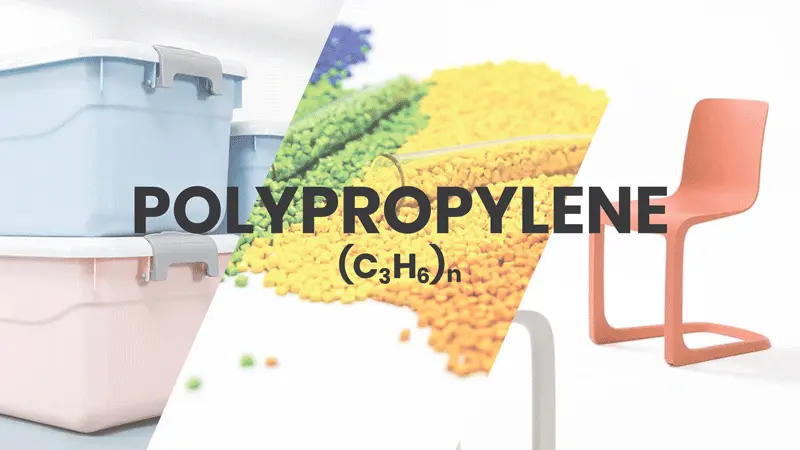
Polypropylene is incredibly tough and rigid and is considered a crystalline thermoplastic made from the propene monomer. It is a member of the polyolefin family of polymers, and is one of the three most widely used polymers in the world as of now. It is commonly used as a plastic and a fiber in various applications across a wide range of industries, including the automotive sector, consumer goods manufacturing, and the furniture industry.
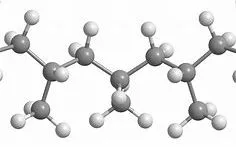
Polypropylene is produced through a process known as polymerization. When propene monomer polymerizes, it results in three chain structures in the plastic, primarily depending on the positioning of the methyl groups. These include the atactic, isotactic, and syndiotactic chain structures.
Chemical formula (C3H6)n | Density: 0.95 g/cm³ | Melting point: 320–338°F (160–170°C) | IUPAC ID: poly(propene)
What Makes Polypropylene “High Impact”?
Standard polypropylene, also called homopolymer PP, is strong but can become brittle in cold temperatures or under a sudden, sharp impact. High-impact polypropylene, often produced as an impact copolymer, solves that problem by blending polypropylene with a small amount of rubber or another polymer, most commonly polyethylene, during polymerization.
That blend creates tiny rubber-like regions throughout the plastic. When the material is struck or dropped, those regions absorb and dissipate the energy rather than allowing a crack to form and propagate. The result is a plastic that keeps standard polypropylene’s stiffness and chemical resistance while holding up far better to drops, impacts, and everyday abuse, exactly why it’s the material Tough Hook hangers are built from. To see how that translates into everyday durability, compare heavy-duty hangers vs. regular hangers.
Is High Impact Polypropylene Hard or Soft?
Hardness and toughness are not the same property, and this is where high impact polypropylene often gets misunderstood. Hardness measures how well a material resists surface indentation and scratching; toughness measures how well it resists cracking under impact. Polypropylene scores well on both, but not in the way harder-sounding plastics like polycarbonate or acrylic do.
Plastics testers typically rate polypropylene on the Rockwell R scale or the Shore D durometer scale rather than the harder Rockwell M or E scales reserved for rigid engineering plastics and metals. Standard homopolymer PP generally falls in the Rockwell R 80–102 range, while impact copolymer grades, the type used for high impact polypropylene, typically test slightly softer, around Rockwell R 65–96, because of the rubber-like phase blended in to absorb shock.
That small trade-off in surface hardness is intentional. A slightly softer, more elastic structure is exactly what lets high impact polypropylene flex and rebound around an impact point instead of cracking the way a harder but more brittle plastic would. In practical terms, it’s firm enough to hold its shape under a loaded garment or heavy gear, yet forgiving enough to survive being dropped, kicked, or knocked around a closet or a truck bed.
How Strong Is High Impact Polypropylene?
Strength in plastics is usually measured two ways: tensile strength (how much pulling force it withstands before yielding) and impact strength (how much sudden force it absorbs before cracking). High impact polypropylene is built to win on the second measure without giving up much on the first.
Standard polypropylene grades typically show a tensile strength at yield around 5,000–5,200 psi (roughly 35 MPa), which is where most of its rigidity comes from. Where the impact copolymer version pulls ahead is notched Izod impact strength, the industry test for how much energy a material absorbs before a crack propagates through it. Homopolymer PP generally tests around 0.4–1.4 ft-lb/in of notch, while impact copolymer grades commonly test between 1.1 and 14 ft-lb/in, several times tougher depending on the grade and rubber content.
That gap is the whole point of high impact polypropylene. It’s why a hanger molded from an impact copolymer can carry a heavy coat or a loaded garment bag season after season, take a fall off a closet rod onto a hard floor, and still snap back into shape instead of cracking at the hook or the shoulder line, the exact failure point that snaps standard wire and basic plastic hangers.
Is High Impact Polypropylene a Copolymer or a Homopolymer?
As you can imagine, several types of polypropylene are produced for different purposes. The two most commonly produced polymers out there are homopolymers and copolymers. The former is commonly used for general purposes.
It is often available in a semi-crystalline form and is used in the textile industry, health care, pipe manufacturing, and electrical and automotive applications.
Copolymers are further categorized into random and block (impact) polymers, both made by polymerizing propene alongside ethylene. Random copolymers distribute the ethylene evenly through the chain and mainly improve clarity and flexibility, while block copolymers, better known as impact copolymers or high impact polypropylene copolymer, concentrate the ethylene into distinct rubber-like domains within the polypropylene matrix. Those domains are what give impact-modified polypropylene its shock-absorbing edge over plain homopolymer PP.
Increase in Demand
Global demand for polypropylene has grown steadily for years and is expected to keep climbing, driven largely by the packaging industry. It is perhaps most commonly used in the packaging industry, and its main popularity stems from its slippery surface.
One of the main benefits that polypropylene offers is that it can be easily manufactured into moving hinges through the process of CNC machining or injection molding. Beyond injection molding, polypropylene is also processed through extrusion, blow molding, and thermoforming to produce sheet, film, and bottle products across packaging and industrial applications. Living hinges made from the material are generally quite thin and allow bending without ever breaking. In fact, they can bend up to 360 degrees.
RHINO Clothes Hanger 8 Pack Bundle
Original price was: $111.95.$94.95Current price is: $94.95.RHINO Hanger
$15.95Original Tough Hook Hanger
$24.95Tough Hanger XL
$18.95Original ID MAX Tactical Hanger™
$29.95Original ID Tactical Hanger™
$26.95Rhino ID Hanger (Identification Hanger)
$19.95Tough Hanger XL ID Hanger (Identification Hanger)
$20.952 Pack Original Tough Hook Hanger Bundle
Original price was: $49.95.$42.95Current price is: $42.95.2 Pack RHINO Heavy Duty Clothes Hanger Bundle
Original price was: $27.95.$23.95Current price is: $23.95.2 Pack Tough Hanger XL Hanger Set
Original price was: $35.95.$29.95Current price is: $29.95.4 Pack Original Tough Hook Hanger Bundle
Original price was: $99.95.$84.95Current price is: $84.95.RHINO Hanger 4 Pack
Original price was: $55.95.$47.95Current price is: $47.95.Tough Hanger XL 4 Pack Bundle
Original price was: $71.95.$61.95Current price is: $61.95.For structural applications, such as a hinge on a door, living hinges aren’t the right choice. But for applications that don’t need to bear any load, such as the hinge on a shampoo bottle or a sauce bottle, polypropylene is a great choice.
If you open the cap on a shampoo bottle, you will be able to move it almost to 360 degrees and even twist it around without ever having to worry about the possibility of it breaking. It does require considerable effort to break the hinge on its own.
Polypropylene also offers another major benefit, and that is that you can easily copolymerize it. Simply put, this means you can combine it with other polymers, such as polyethylene, to form a composite plastic. This drastically changes the material’s properties and allows it to be used in a wide variety of engineering applications.
The Main Characteristics
There are several key characteristics of the material that make it popular for use in various applications.
For starters, it has excellent fatigue resistance. Polypropylene can retain its shape even after being bent, flexed, or turned. When making living hinges or hook hangers, this property is especially useful because the material does not lose its shape.
This is one of the toughest materials out there. Polypropylene is also quite elastic, but in its early stages, it’s likely to deform. Toughness simply refers to the material’s ability to lose its form without breaking, and flexibility refers to how much it bends before that happens at all.
Polypropylene is also highly resistant to chemicals. Different acids and diluted bases do not react with polypropylene, which is why it is an excellent choice for the manufacturing of containers in which such liquids are likely to be stored.
Polypropylene is also highly resistant to electrical interference, which is why it’s valued as an insulation material in wiring components, enclosures, and other electronic parts.
Transmissivity is another major property. While polypropylene is opaque in standard manufacturing processes, it can be made transparent. For instance, in certain situations where light needs to pass through the material, the material can be made transparent.
Most Common Uses
The material is commonly used in the packaging industry. It is used to package a variety of goods, such as tobacco, clothing, confectionery, and other foods, because of its rigid and flexible nature. The material is also used in the fashion and sports industry.
Polypropylene is used to make tote bags, beach slippers, cinch bags, and many other types of bags and equipment. In fact, the material is also used to make modern jewelry. These jewelry pieces are generally affordable and readily available at many stores.
The material has become popular in the consumer products sector, with many furniture pieces, housewares, and toys made from it. For instance, many hangers are made from polypropylene.
If you are looking to buy tough hook hangers, you simply can’t go wrong with these hangers. They are among the most durable pieces of equipment out there and will last you a lifetime!
What are the benefits of Polypropylene?
Polypropylene, often called the ‘steel’ of plastics, has impressive advantages. Firstly, it’s incredibly durable and fatigue-resistant, making products made from it long-lasting. Polypropylene is also immune to water, oils, and most chemicals, increasing its versatility. Its lightweight design reduces transport and handling costs.
Furthermore, Polypropylene’s eco-friendly nature cannot be understated; it’s fully recyclable, mitigating its environmental impact. Notably, it is cost-effective, offering high value at an affordable price, making it a preferred, versatile material across various industries.
What are the uses of Polypropylene?
Polypropylene’s resilience and versatility make it suitable for a wide range of applications. In the packaging industry, it’s used to make food containers, bottle caps, and plastic films because it protects against moisture, chemicals, and UV light.
Polypropylene’s heat resistance makes it ideal for microwave-safe containers and kitchen appliances. It’s also used in the automotive sector, including car bumpers and interior components. In the textile industry, it’s used for indoor-outdoor carpets; in the medical field, it’s used for lab equipment and surgical sutures. Of course, its sturdiness makes it perfect for making durable items like polypropylene hangers.
What is a tough hook hanger, and why is it made of Polypropylene?
A tough hook hanger is a robust, durable hanger for heavy items. Made of Polypropylene, these hangers offer superior strength and longevity compared to standard plastic or wire hangers. Polypropylene is chosen for its exceptional resistance to physical and chemical stress, ability to maintain its shape under heavy loads, and cost-effectiveness.
Polypropylene material ensures that tough hook hangers can withstand the weight of heavy coats, suits, or outdoor gear without breaking or deforming, making them a reliable choice for maintaining the shape and quality of your clothing.
Frequently Asked Questions
What is high-impact polypropylene?
High-impact polypropylene is polypropylene that has been modified, usually as an impact copolymer blended with rubber or polyethylene, to resist cracking and breaking under sudden impact. It keeps the stiffness and chemical resistance of standard polypropylene while holding up much better to drops and impacts.
How is high-impact polypropylene different from regular polypropylene?
Regular (homopolymer) polypropylene is strong but can become brittle and crack under sharp impacts, especially at low temperatures. High-impact polypropylene is designed to absorb that kind of shock rather than crack, making it a better choice for products that take repeated hits or heavy loads, such as heavy-duty hangers.
Is high-impact polypropylene hard or soft?
It sits in the semi-rigid range. On the Rockwell R hardness scale, standard homopolymer PP typically tests around 80–102, while impact copolymer grades used for high-impact polypropylene test slightly softer, around 65–96, because the rubber-like phase absorbs impacts. It’s firm enough to hold its shape under load but flexible enough to resist cracking.
How strong is high-impact polypropylene?
Standard polypropylene has a tensile strength at yield of roughly 5,000–5,200 psi. High-impact polypropylene trades a small amount of rigidity for a large gain in impact strength, commonly testing several times higher on the notched Izod impact test than standard homopolymer PP, which lets it absorb drops and hits without cracking.
Is high-impact polypropylene recyclable?
Yes. Like standard polypropylene, high-impact polypropylene is fully recyclable and is typically marked with the #5 resin code.
Is a Tough Hook hanger made from high-impact polypropylene?
Yes. Tough Hook hangers use high-impact polypropylene specifically because it can support heavy garments and gear without cracking or losing its shape over time.
How much heat can high-impact polypropylene handle?
Polypropylene has a melting point in the range of 320°F to 338°F (160°C to 170°C), and it typically holds up well to continuous use up to around 176°F to 212°F (80°C to 100°C), which is well above normal storage and everyday-use conditions.