In the high-stakes world of emergency services, every second counts. Whether it is a structural fire, a tactical police intervention, or a critical medical evacuation, the efficiency of a station’s organization can be the difference between a successful mission and a catastrophic delay. One often overlooked component of station readiness is the storage and maintenance of heavy-duty equipment.
Standard residential hangers are notorious for failing under the weight of professional gear, leading to disorganized floors and damaged equipment. This is where specialized heavy-duty hangers built for first responders become an essential asset for any emergency response facility.
By implementing professional-grade storage solutions, stations can ensure that their gear is not only protected but also positioned for the fastest possible deployment. At Tough Hook, we specialize in creating the world’s most durable clothing and equipment heavy-duty hangers, specifically engineered to support the demanding lifestyles of first responders, military personnel, and public safety professionals.
The Critical Role of Equipment Organization in Emergency Response
Emergency stations are environments defined by “hurry up and wait.” Personnel must be ready to transition from a state of rest to full-speed action in a matter of moments. If a firefighter has to fumble with a collapsed hanger or a police officer finds their heavy plate carrier slumped in a heap on the locker floor, precious seconds are lost.
Effective tactical hanging systems provide several key benefits to a station, as covered in our guide on gear storage for dedicated firefighters and EMTs:
-
Improved Response Times: When gear is hung systematically and remains upright, it is easier to don in a hurry.
-
Equipment Longevity: Heavy vests and turnout gear are expensive investments. Hanging them properly prevents the degradation of fibers and plates that occurs when gear is folded or piled.
-
Professionalism and Morale: A clean, organized station promotes a culture of discipline and readiness among the crew.
-
Enhanced Airflow: Specialized hangers allow moisture and perspiration to evaporate, preventing the growth of mold and the accumulation of odors in thick fabrics.
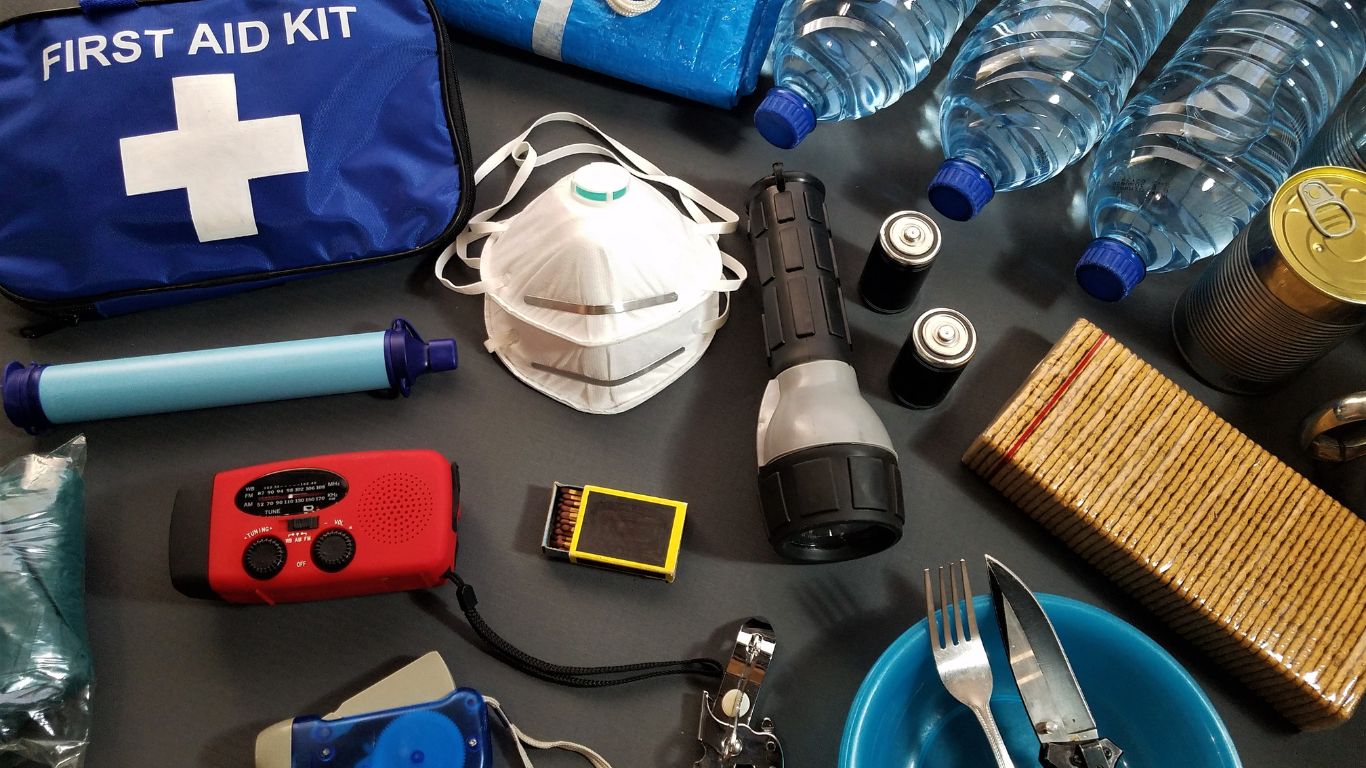
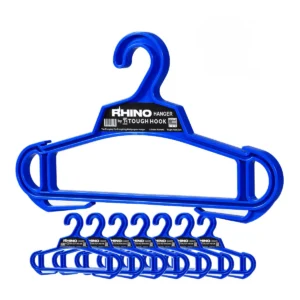
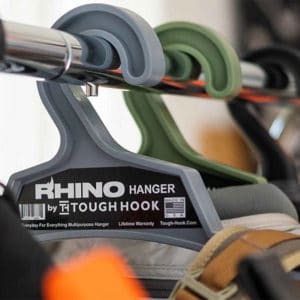

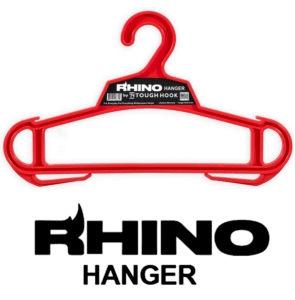
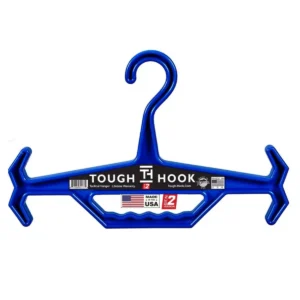

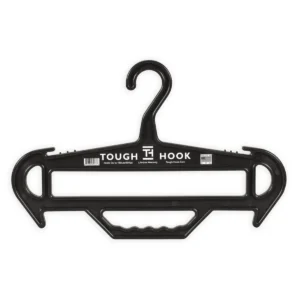
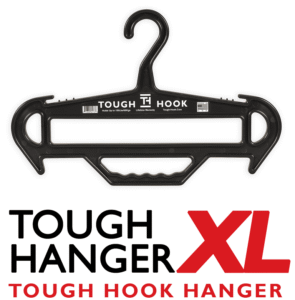
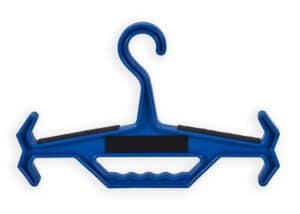
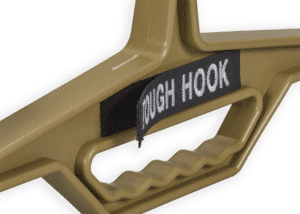
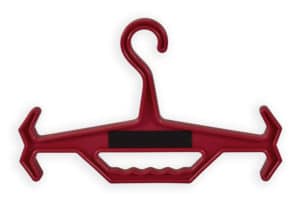
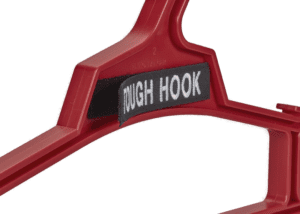
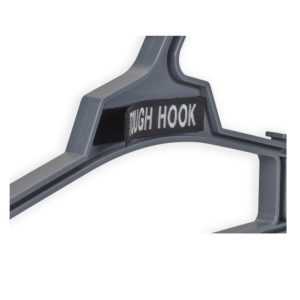
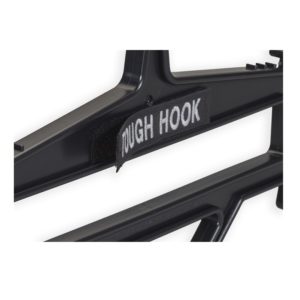


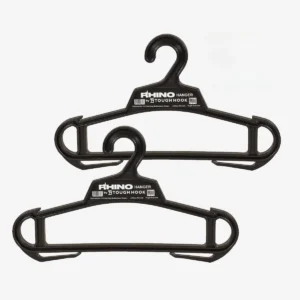
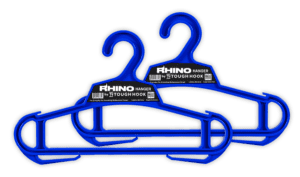
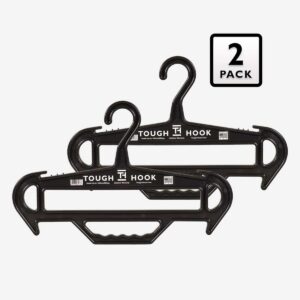
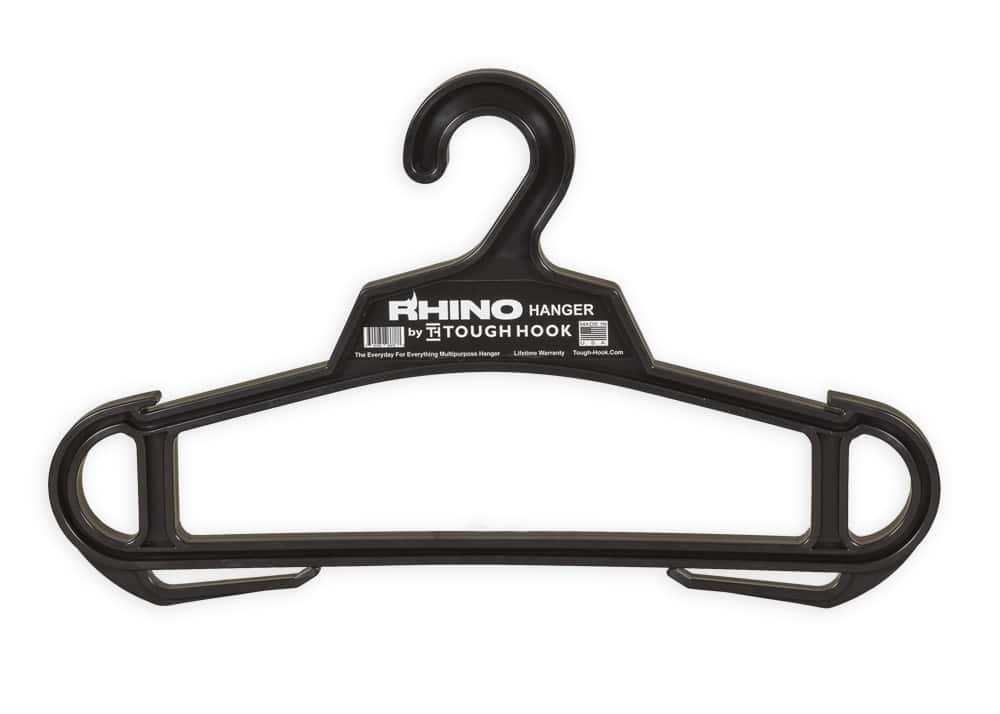
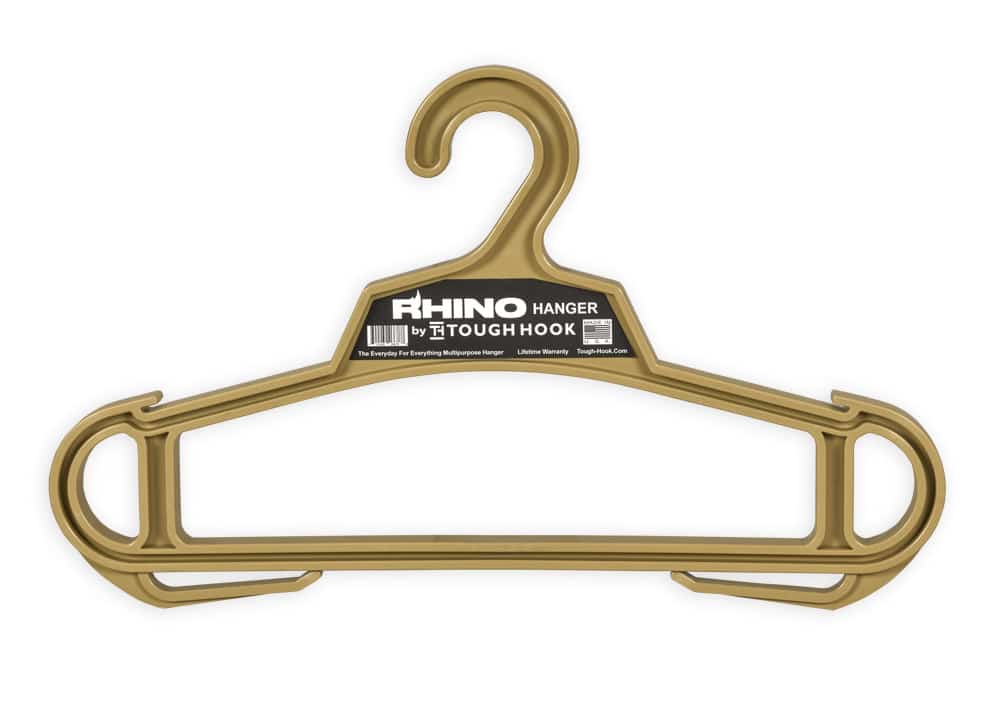
2 Pack RHINO Heavy Duty Clothes Hanger Bundle
Original price was: $27.95.$23.95Current price is: $23.95.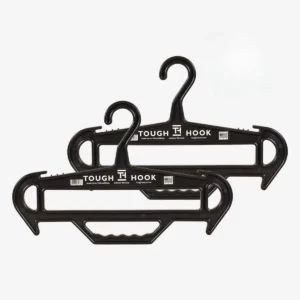
Why Standard Hangers Fail the Mission
Most commercial hangers are designed to hold a three-pound suit jacket, not forty pounds of life-saving equipment. When a standard plastic or wire hanger is used for tactical gear, the result is almost always structural failure. The plastic stretches and eventually snaps, or the wire deforms, dropping the gear onto the floor.
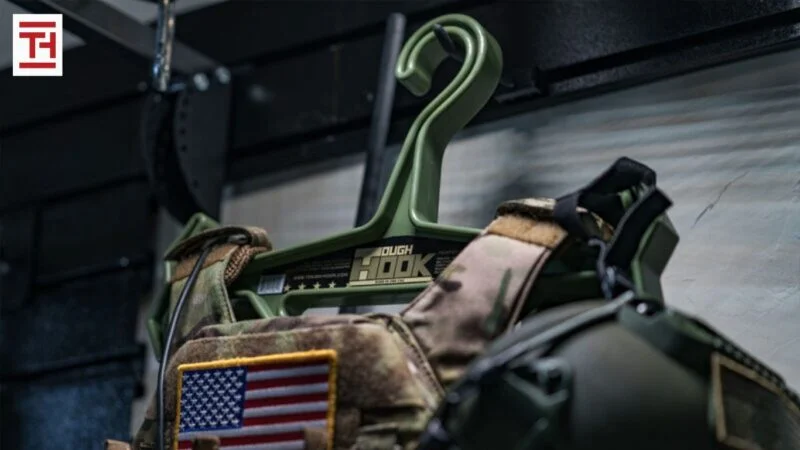
Tough Hook was founded to solve this specific problem. Our hangers are constructed from high-impact functional plastic that can support upwards of 150 pounds. This level of durability is necessary because the average weight of professional gear is far beyond the capacity of traditional storage solutions.
Consider the weight of common emergency equipment, and see our guide on storing turnout gear between shifts for firefighter-specific guidance:
-
Firefighter Turnout Gear: A full set of turnout gear, including the jacket, trousers, and liners, can weigh significantly more when wet or contaminated.
-
Tactical Body Armor: Plate carriers equipped with ceramic or steel plates, along with loaded magazines and tools, frequently exceed 25 pounds. Proper storage for body armor and equipment prevents strap and seam damage over time.
-
Search and Rescue Kits: Technical rescue harnesses and ropes require specialized hanging to ensure the integrity of the life-safety webbing.
-
Dive and Water Rescue Suits: Wetsuits and dry suits are heavy and require wide-shoulder support to prevent shoulder wear and material fatigue.
Features of a High-Performance Tactical Hanger
When outfitting an emergency station, decision-makers must look for specific features in their hanging systems. It is not enough to simply have a “thick” hanger; the design must be intuitive for the user.
Key features of a professional tactical hanging system include:
-
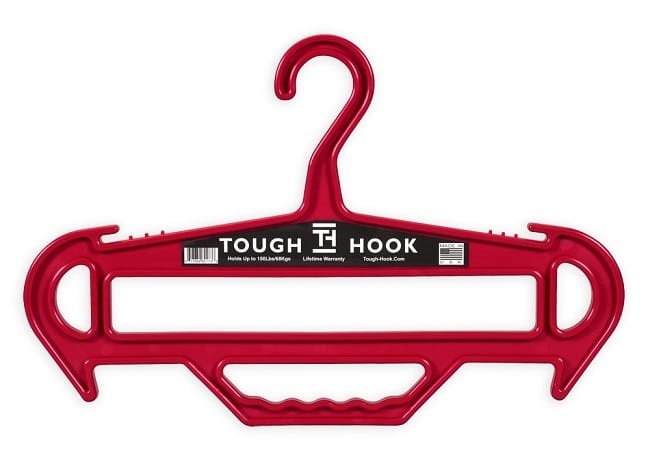
I-Beam Construction: This structural design ensures maximum load-bearing capacity without bending or breaking under extreme stress.
-
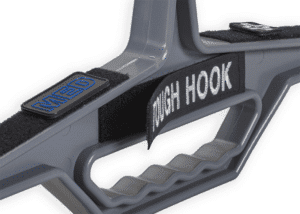
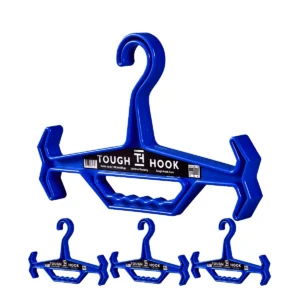
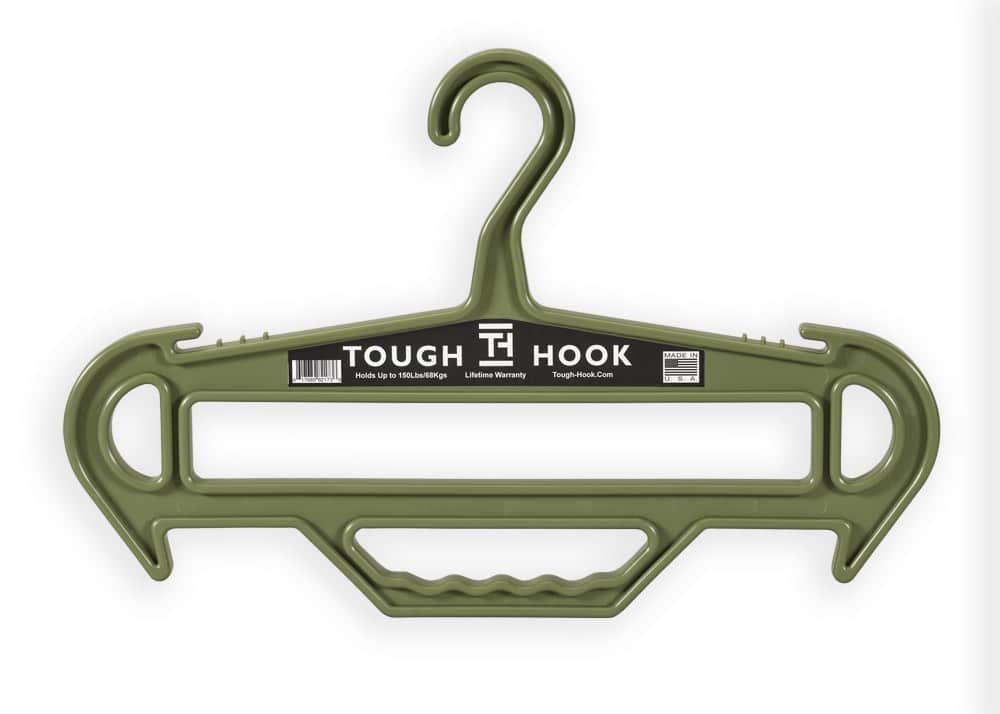
Integrated Carry Handles: A unique feature of the Tough Hook is the built-in handle. This allows a responder to grab their entire kit off the rack and carry it comfortably to a vehicle or another staging area.
-
Reversible Design: The ability to flip the hanger and use the hook in different orientations allows for more flexible, secure storage in lockers or on mobile rolling racks.
-
Resilience to Elements: Emergency gear often gets wet or exposed to chemicals. Hangers must be resistant to corrosion, UV light, and extreme temperature fluctuations.
Installation Options for Every Station Layout
A tactical hanging system only earns its keep if a crew can put it to work without waiting on a maintenance order. Tough Hook hangers require no brackets or tools to install. They hook directly onto a standard closet rod, locker bar, or gear rack in seconds, which means a shift supervisor can outfit an entire bay without pulling in a facilities team.
For stations moving toward open-grid storage, Tough Hook hangers also work with modular wall panel systems. Mounting a rail or panel to a wall stud creates a fixed anchor point, and hangers slide, rotate, or reverse along that surface as gear loadouts change. This modular approach gives departments the flexibility and adaptability to reconfigure a gear wall as staffing or equipment needs shift, without replacing the underlying hardware or losing wall space.
Optimizing Station Layout for Rapid Deployment
Beyond the hanger itself, the layout of the storage area dictates how quickly a team can mobilize. Large-scale emergency stations are moving away from traditional closed lockers and toward open-grid tactical stations. These “ready-racks” allow for maximum visibility and ventilation.
To optimize a station for rapid response, consider these strategies, and see our breakdown of grab-and-go storage for tactical rapid-response units for more detail on layout:
-
Zoned Storage: Categorize gear by response type. Keep medical bags, ballistic protection, and entry tools in clearly marked zones.
-
Standardized Height: Ensure all hanging rails are set at a height that keeps heavy gear off the floor while supporting accessibility for personnel of every height and reach.
-
Mobile Readiness: Use heavy-duty rolling racks equipped with Tough Hook hangers. This allows an entire unit’s gear to be moved from the locker room to the bay floor instantly during a shift change, a strategy covered in more depth in our guide on tactical hanger systems for shift rotations.
-
Maintenance Stations: Dedicate an area for gear inspection. Having a dedicated heavy-duty hanger available for checking the integrity of a vest or harness makes the inspection process more efficient.
Accessibility and Ergonomics for Faster Gear Retrieval
Layout determines where gear lives, but accessibility determines how fast a responder can get it off the rack. A hanger with a non-slip, integrated handle lets a firefighter or officer grab a full loadout in one motion, even wearing gloves, so gear stays secure during a rapid grab instead of sliding or catching on the rack.
A reversible hook design also supports one-handed use in either direction, so gear can be donned from a rack positioned on either side of a doorway or vehicle bay. Departments outfitting stations for personnel of varying heights and reach should pair this ergonomic hook design with the standardized hanging height covered above, since real accessibility depends on both the hanger and where it sits on the wall.
The Economic Impact of Proper Gear Storage
Budgeting for emergency services is always a challenge. Administrators must justify every expense to taxpayers and oversight boards. While high-quality tactical hangers may have a higher upfront cost than consumer-grade plastic, the long-term ROI is undeniable.
When gear is stored improperly, the mechanical stress on seams and internal components increases. For example, a ballistic vest that is draped over a thin hanger will develop “hot spots” where the weight of the plates pulls against the shoulder straps. Over time, this can cause the hook-and-loop fasteners to fail or the fabric to tear. By using a Tough Hook, the weight is distributed evenly across a wide, curved surface, significantly extending the service life of the armor. Replacing a twenty-dollar hanger is far more economical than replacing a two-thousand-dollar vest.
Customization for Department Branding and Accountability
Beyond load capacity, many departments need a hanging system that supports accountability on a crowded rack. Tough Hook offers ID-tagged hangers that let each responder label their own gear, reducing the chance of a mix-up during a fast changeover between shifts.
Departments equipping an entire station can also request white-label customization, including department colors, logos, and identification markings. Minimum order requirements apply for custom runs, but the option lets an agency standardize its entire gear room under one consistent, branded system without sacrificing the hanger’s core utility.
Investing in Readiness
In the emergency services sector, “good enough” is rarely sufficient. The equipment used by first responders is specialized, expensive, and life-critical. It deserves a storage solution that matches its importance. A tactical hanging system is not just a piece of plastic; it is a foundational component of station logistics. Station preparedness is not just about what gear a department owns, but how quickly that gear can be reached, which is why the hanging system supporting it deserves the same scrutiny as the equipment itself. See our full First Responders hanger collection for the models built specifically for this use case.
By choosing Tough Hook, agencies are investing in a product designed by those who understand the rigors of the field. Our hangers are built to be the last hangers you will ever need to buy, providing the peace of mind that when the alarm sounds, your gear will be exactly where you left it, ready for the mission ahead. Organization is the silent partner of speed, and speed is the ally of safety. Ensure your station is rapid-response ready by upgrading your tactical hanging systems today.
Frequently Asked Questions
How much weight can a Tough Hook tactical hanger support?
Tough Hook hangers are built from high-impact plastic rated to hold up to 150 pounds, enough for a fully loaded plate carrier, turnout gear, or a soaked wetsuit without bending or snapping.
What is the best way to store turnout gear at a fire station?
Turnout gear should hang on a wide, load-rated hanger with enough airflow to dry out sweat and moisture, kept off the floor and separated from personal clothing. See our guide on storing turnout gear between shifts for a full walkthrough.
Why do standard hangers fail with tactical or emergency gear?
Standard plastic or wire hangers are designed to hold a few pounds of fabric, not a 20 to 40 pound load. Under that kind of weight they stretch, bend, or snap, dropping gear onto the floor and shortening its lifespan.
How should an emergency station organize gear for the fastest response?
Zone gear by response type, hang everything at a standardized height, and use rolling racks so a full loadout can move from the locker room to the bay floor in seconds. Our guide on grab-and-go storage for tactical rapid-response units covers this in more detail.
Is a tactical hanging system difficult to install in an emergency station?
No. Tough Hook hangers need no brackets or tools. They hook directly onto a standard rod, locker bar, or gear rack, and departments moving to modular wall panels can mount a rail once and reconfigure hangers as needs change.
Can tactical hangers be customized for department branding or gear accountability?
Yes. Tough Hook offers ID-tagged hangers so responders can label their own gear, plus white-label customization with department colors, logos, and identification markings for agencies outfitting a full station.