
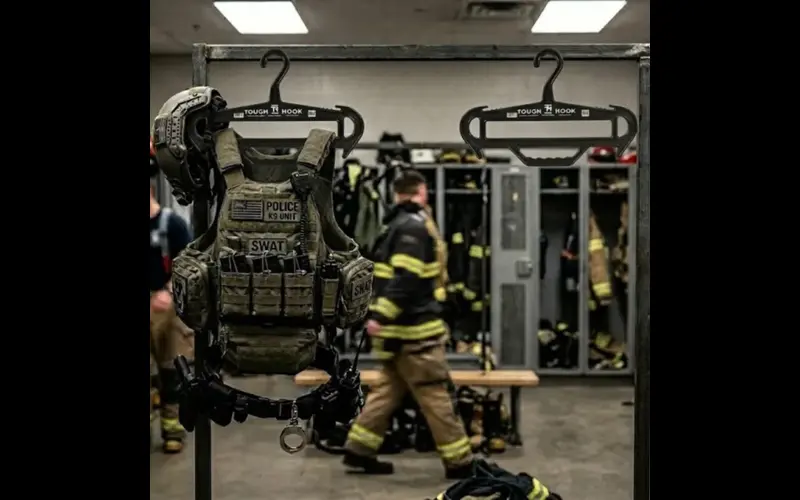
For a first responder, the time between the tone dropping and rolling out is measured in seconds, not minutes. A jacket slipping off a flimsy hanger, a vest crumpled on a bench, or a turnout coat buried under a tangle of straps isn’t just an annoyance. It’s lost time when time is the one thing you don’t have.
If you’ve already decided you need a better way to stage your kit and you’re weighing your options, this guide breaks down exactly what separates a genuine heavy-duty hanger for first responders from a hardware-store hanger that’s going to crack the first time you load a plate carrier on it. We’ll cover the criteria that actually matter, how the right hanger supports proper gear care, and how to match a hanger to your specific role.
Why Standard Hangers Fail the People Who Need Them Most
Most hangers are designed to hold a dress shirt. Duty gear is a different universe. A loaded plate carrier can run 30 to 40 lbs on its own, and a full set of structural turnout gear, an SCBA harness, or a duty belt pushes the demand far beyond what molded wire or thin plastic was ever built to handle.
When a standard hanger fails, it tends to fail in three ways that cost responders directly:
- It bends or snaps under load, dumping gear on the floor where it gets stepped on, contaminated, or damaged.
- It has no fast way to grab and move the whole kit, so you’re fumbling pieces individually during a call-out.
- It looks identical to every other hanger in the bay, so you waste seconds identifying whose gear is whose in a shared station.
These aren’t theoretical problems. They’re the exact frustrations that drive Fire, EMS, and law enforcement personnel to look for purpose-built storage in the first place. (Tough Hook’s own First Responder hanger page was created in direct response to this need.)
What “Gear Ready Fast” Actually Requires
If you’re comparing hangers, judge every option against these five criteria. A hanger that misses even one of them will eventually slow you down.
1. Load Capacity That Matches Real Duty Gear
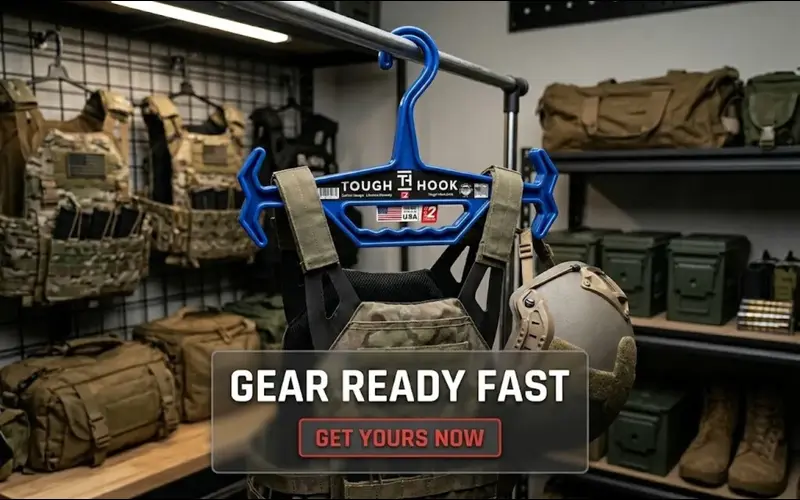
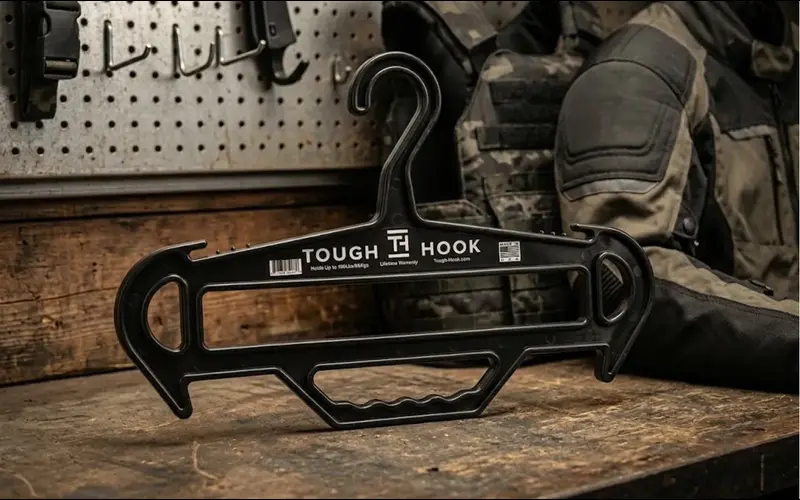
The single most important spec is how much weight a hanger can hold without flexing or failing. A genuine heavy-duty hanger should be rated for 200 lbs or more not because a single coat weighs that much, but because that headroom is what guarantees the hanger never bends, sags, or fatigues under the real-world abuse of daily use. Tough Hook hangers are engineered around this 200-lb-plus threshold with internal I-beam construction, the same load-bearing principle used in steel building frames.
2. A Grab-and-Go Carry Handle
This is the feature that turns a hanger into a deployment tool. An integrated carry handle lets you lift an entire loaded kit, vest, jacket, harness, off the rack in one motion and carry it to the apparatus or your vehicle without re-gripping or re-balancing. When you’re racing the clock, “flip it over and go” beats handling five separate items every time.
3. A Secure, Slip-Resistant Hold
Hooked ends and a properly shaped shoulder keep straps, slings, and heavy shells from sliding off mid-grab. Gear that stays put is gear you can trust to be exactly where you left it.
4. Visibility and Instant Identification
In a shared bay or a multi-shift station, identical black hangers create friction. Color-coding by shift, crew, or equipment type and adding a name or unit patch eliminates the “whose is this?” delay. Tough Hook’s ID Tactical Hanger and ID MAX Tactical Hanger include hook-and-loop strips built specifically for adding identification patches.
5. Durability That Survives the Station
Firehouses, ambulance bays, and patrol-room lockers are rough environments. A hanger that survives needs to be built from high-impact polypropylene or a comparable impact-resistant resin, flexible enough to absorb shock, rigid enough to never deform. This is exactly the kind of durability-under-pressure performance that defines tactical-grade storage.
How the Right Hanger Supports Proper Gear Care
Fast access is only half the job. How gear is stored between calls has a direct effect on its lifespan, performance, and even responder health.
For the fire service, the consolidated NFPA 1850 standard, which took effect in September 2025 and folded in the old NFPA 1851 selection, care, and maintenance requirements, emphasizes proper storage of turnout gear, including keeping it off the floor, allowing it to dry fully, and protecting it from UV and contamination. You can review the current standards directly through the National Fire Protection Association. Hanging gear properly, rather than stuffing it in a locker or piling it on a bench, is a foundational part of that care.
This matters beyond longevity. Reducing contaminant transfer from soiled gear is a recognized priority across the fire service, a concern reinforced by firefighter health research from NIOSH and the CDC. A hanger that holds heavy gear open, off the ground, and in its own dedicated space supports the cleaner, more organized storage these guidelines call for. The U.S. Fire Administration similarly stresses readiness and equipment discipline as core to operational safety.
A hanger isn’t PPE, but a heavy-duty hanger is a small, low-cost piece of the larger system that keeps PPE ready, clean, and where it belongs.
Matching the Right Tough Hook Hanger to Your Role
There’s no single “best” hanger for every responder. It depends on what you’re hanging and where. Here’s how the core lineup compares so you can match the tool to the job.
| Hanger | Best For | Standout Feature | Approx. Price |
|---|---|---|---|
| Original Tough Hook Tactical Hanger | Plate carriers, body armor, duty jackets | GEN 2 wide neck + integrated GRIPPER handle | ~$24.95 |
| Tough Hanger XL | Bulkiest loads, full kits, turnout gear | Largest, most capable size in the line | ~$17.95 |
| RHINO Hanger | Everyday uniforms and off-duty wear | Everyday heavy-duty design at entry price | ~$14.98 |
| Original ID Tactical Hanger | Shared bays needing one ID strip | 1×5″ hook-and-loop ID strip | ~$26.95 |
| Original ID MAX Tactical Hanger | Maximum organization across crews | Three 1×5″ ID strips for full personalization | ~$29.95 |
A few quick guidelines:
- Patrol officers and tactical teams staging plate carriers and duty gear gravitate to the Original Tactical Hanger for its handle and wider neck.
- Firefighters with heavy, bulky turnout ensembles lean toward the Tough Hanger XL for its larger frame.
- Stations and shared lockers benefit most from the ID series, where color-coding and patches cut identification time to zero.
Want the full range side by side? Browse the complete tactical hanger collection or the full Tough Hook shop.
Turnout Gear and Bunker Gear Hangers for Firefighters
“Turnout gear” and “bunker gear” are two names for the same structural firefighting ensemble, the coat and pants staged with the boots and gloves. Different departments favor different terms, but the storage problem is the same either way: a full set is bulky, heavy when wet, and prone to collapsing off a standard hanger.
The Tough Hanger XL is sized for this load. Its wider, taller frame holds a full coat-and-pants set without the shoulders folding in, and the same 200-lb-plus rating covers a soaked turnout coat straight off a working fire.
Bunker Gear Hanger vs. Bunker Gear Carrier
These two terms cover different jobs. A bunker gear hanger keeps the coat and pants open on a rack between calls so they dry fully and stay ready to grab, which is what the Tough Hanger XL is built for. A bunker gear carrier is a separate piece of equipment, typically a bag or sling, used to transport a full set to and from an apparatus, training, or a cleaning facility. Pair the hanger with a dedicated carrier bag if your station also needs to move gear off-site.
Real-World Use by Discipline
Fire and EMS: Turnout coats, SCBA harnesses, BVM and CPR kits, helmets, and oxygen equipment all benefit from being hung open and accessible. The carry handle lets a crew member move a staged kit to the apparatus in one trip.
Law Enforcement and Tactical: Plate carriers, duty belts, and external vests stay shaped and ready in a locker rather than collapsing in a heap. Color-coded ID hangers keep shared armory and locker spaces orderly.
Search and Rescue / Wilderness: Packs, harnesses, and weather shells stage cleanly and dry properly between deployments, the same versatility Tough Hook brings to scuba, camping, and other demanding outdoor environments.
Before You Equip Your Locker or Station
A few practical considerations as you finalize a decision:
- Buy for your heaviest load, not your average one. Sizing up to the XL or Original means the hanger is never the weak link.
- Standardize across a crew. Outfitting an entire shift or station with the same color-coded system pays off in daily speed and accountability, and bulk or bundle options make this affordable.
- Check for service discounts. Tough Hook offers exclusive First Responder and Military discounts as a thank-you to the community it was built to serve.
- Look at the warranty. A lifetime warranty signals a manufacturer that expects its product to last and stands behind it.
Equip the People Who Show Up First
First responders don’t get to ask their gear for a second chance. The hanger holding that gear should meet the same standard the job demands: strong enough to never fail, fast enough to deploy in one motion, and built to last a career.
If you’ve worked through the criteria above and you’re ready to choose, start with the First Responder collection or compare the full lineup in the Tough Hook shop, and don’t forget to claim your First Responder discount on the way out.
Frequently Asked Questions
How much weight can a heavy-duty first responder hanger hold?
A genuine heavy-duty hanger should hold 200 lbs or more. Tough Hook hangers are engineered around this 200-lb-plus threshold so they never flex under loaded plate carriers, turnout gear, or full duty kits.
What makes a hanger “ready fast” for emergency response?
The key features are a high load rating, an integrated carry handle for grab-and-go transport, slip-resistant hooked ends, and clear identification. Together, they let a responder lift a complete kit and move in one motion.
Are these hangers suitable for fire turnout gear?
Yes. The Tough Hanger XL is designed for bulky, heavy loads like structural turnout gear, and hanging gear properly supports the storage practices emphasized in current NFPA gear-care guidance.
Can I label hangers for a shared station?
Yes. The ID Tactical Hanger and ID MAX Tactical Hanger include hook-and-loop strips for adding name or unit identification patches.
Where are Tough Hook hangers made?
They’re made in the USA, manufactured in Montana by men and women who have served in law enforcement, military, and first-response roles. See the full story on the About page.
What is the difference between a turnout gear hanger and a bunker gear hanger?
There isn’t one. “Turnout gear” and “bunker gear” describe the same firefighting ensemble, so a turnout gear hanger and a bunker gear hanger serve the same purpose. The Tough Hanger XL is sized to hold the full coat-and-pants set either term refers to.