In the demanding world of emergency services, every piece of equipment plays a crucial role. From life-saving medical gear to protective turnout coats, reliability is not just a preference; it’s a necessity. Yet one often-overlooked item in the kit of firefighters, paramedics, law enforcement officers, and military personnel is the humble hanger. For people who put their lives on the line, standard hangers simply don’t cut it, which is why purpose-built first responder hangers exist.
The short answer: a heavy-duty hanger for emergency personnel should carry the full weight of your gear when it is wet, spread that weight across broad shoulders, hold straps and collars so nothing slips, resist moisture and cleaning chemicals, and leave room for air to move through the garment. This guide to heavy-duty hangers for emergency personnel covers why ordinary hangers fail, what makes a hanger heavy duty, how to match a hanger to each role, and how to store protective gear so it stays ready.
The Unseen Wear and Tear: Why Standard Hangers Fail
Imagine a firefighter’s bunker gear, a multi-layered ensemble designed to protect against extreme heat. It is bulky and heavy, and after a grueling shift it can be soaked with sweat or water from a hose line, which makes it heavier still. It needs to be properly dried and stored to keep its integrity and readiness. A typical plastic or wire hanger buckles under that load, which leads to stretched fabric, uneven drying, and gear that ends up on the floor.
For law enforcement officers, body armor, duty belts loaded with tools, and specialized uniforms present similar challenges. Paramedics deal with heavy jackets and gear bags, and military personnel depend on robust storage for plate carriers and field uniforms. The common denominator is weight, bulk, and the need for equipment to be ready at a moment’s notice.
Traditional hangers are simply not engineered for these stresses:
- Weight capacity: They are designed for everyday clothing, not for the weight of tactical vests, loaded plate carriers, or saturated turnout gear.
- Structural integrity: Thin plastic and wire bend, snap, or deform under pressure, and equipment falls to the floor.
- Shape and design: Slender profiles can’t support the broad shoulders of protective jackets, which leads to creasing, stretched seams, and uneven drying.
- Poor ventilation: When a heavy coat collapses on a narrow hanger, the layers press together and trap moisture inside the garment.

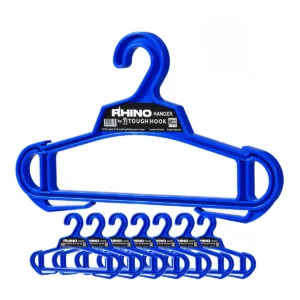

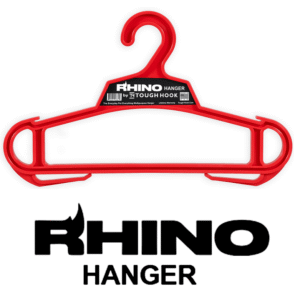
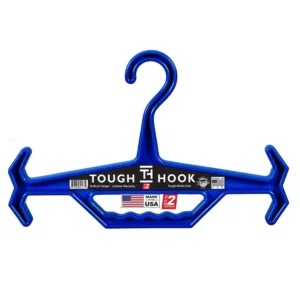

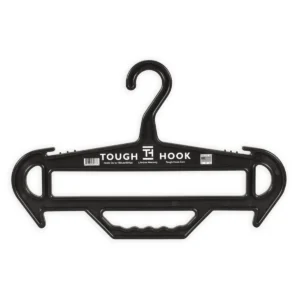
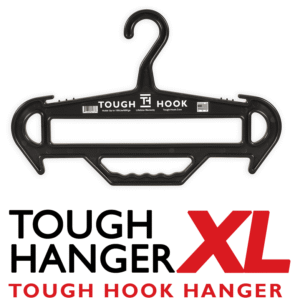
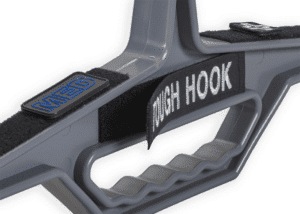
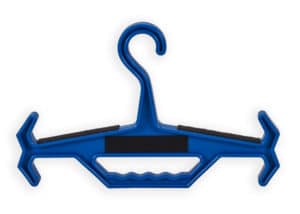
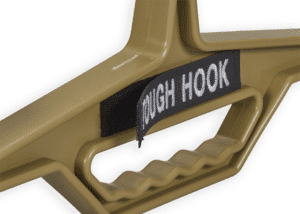
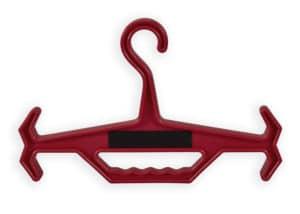

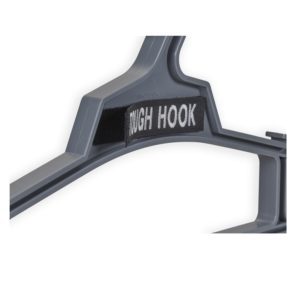
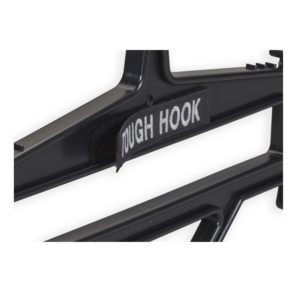


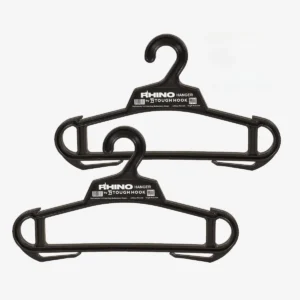
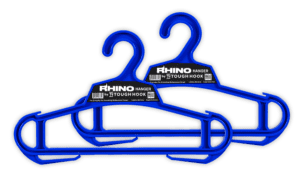
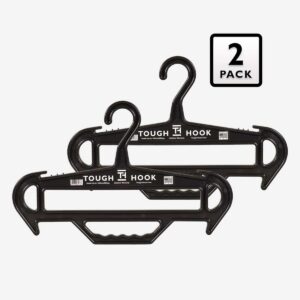
2 Pack RHINO Heavy Duty Clothes Hanger Bundle
Original price was: $27.95.$23.95Current price is: $23.95.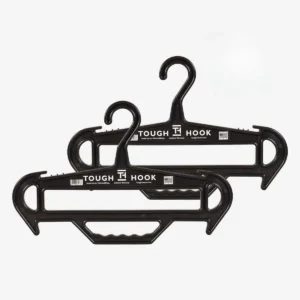
What Makes a Hanger Heavy Duty?
“Heavy duty” gets printed on a lot of packaging. For emergency gear, it comes down to three things you can check before you buy: the load rating, the shape, and the material. If you want a side-by-side look at the basics, our comparison of heavy-duty vs. regular hangers covers the general differences.
Load Rating: Plan for Wet Gear, Not Dry Gear
Wet turnout gear can weigh substantially more than the same gear dry, and a loaded vest or plate carrier is far heavier than an empty one. Size your hanger for the heaviest version of the gear it will hold: wet, loaded, and with anything that stays clipped on. Keep in mind that a published load rating usually describes a static load, while your hanger will be lifted, carried, and loaded every shift. A generous margin above your heaviest load is what keeps a hanger from fatiguing over time.
Shape: Broad Shoulders and Secure Ends
Broad shoulders spread a coat’s weight across more fabric, which reduces stretching at the seams and helps the garment keep its shape. Hooked or raised ends keep straps, collars, and vest shoulders from sliding off. A hanger that holds the coat open also lets air reach the inner layers instead of only the outer shell.
Material: Plastic, Coated Steel, or Wood
Each material behaves differently in a fire station, ambulance base, or locker room:
| Material | Strengths | Watch out for |
|---|---|---|
| High-impact plastic (such as ABS) | Won’t rust, light to carry, easy to wipe clean, holds its shape when well engineered | Thin, low-grade plastic still bends and snaps, so construction matters as much as material |
| Coated steel | Very rigid, slim profile | Moisture and cleaning chemicals can attack the metal once the coating chips, and rust can mark fabric |
| Wood | Wide shoulders, classic look | Absorbs moisture, can swell or split in damp gear rooms, and is heavy to carry |
What Size Hanger Do You Need?
Size matters as much as strength. A hanger that is too narrow lets a heavy coat slump and fold in on itself, while one that is too wide can stretch the shoulders of a uniform shirt or crowd a locker. Match the hanger to the garment:
- Bulky jackets and turnout coats: Choose the widest, broadest-shouldered hanger that still fits your locker, so the coat keeps its shape and stays open for drying.
- Vests and plate carriers: Look for shoulders that line up with the carrier’s shoulder straps, so the straps sit securely on the hanger’s ends instead of sliding toward the hook.
- Uniform shirts and dress uniforms: A standard-width hanger with a smooth finish keeps creases sharp without stretching the fabric.
- Pants: Hang them separately from coats, either folded over a sturdy bar or by the waistband, so each piece can dry on its own.
Before you buy, measure the inside width and depth of your locker and compare it with the hanger dimensions listed on the product page.
Fitting Hangers Into Lockers, Racks, and Apparatus Bays
Most stations and squad rooms store gear in one of three places, and each one asks something a little different of a hanger. Getting the fit right also frees up space, since gear that hangs neatly takes far less room than gear piled on a shelf or floor.
Gear Lockers
Check that the hanger’s hook seats securely on the locker’s rod or hook and won’t twist when a heavy coat goes on. Ventilated or open-front lockers help gear dry, and leaving a little space between hangers keeps layers from pressing together.
Wall-Mounted Racks and Hooks
Wall racks keep gear close to where crews get dressed and clear floor space in tight rooms. Use mounting hardware and brackets rated for the weight of wet gear, and space hooks so coats don’t overlap. For more space-saving ideas, see our guide to maximizing closet space.
Mobile Racks and Carts
Rolling racks make it easier to move gear between the gear room, the laundry or cleaning area, and storage. Gear stays on the same hanger the whole way, so it isn’t handled any more than it needs to be.
If gear is stored near the apparatus bay, keep it protected from vehicle exhaust and direct sunlight, in line with the storage guidance covered below.
Matching the Hanger to the Job
Different services carry very different loads. Use this as a starting point when you outfit a station, a squad room, or your own locker:
| Role | Typical gear to hang | What to look for |
|---|---|---|
| Firefighters | Turnout coats, turnout pants, station uniforms | Broad shoulders and a high load rating for wet coats; a separate spot for helmets, gloves, and boots |
| EMS and paramedics | Duty jackets, uniforms, gear bags | Sturdy shoulders for insulated jackets; a strong hook that won’t twist under a loaded bag |
| Law enforcement | Ballistic vest carriers, duty belts, tactical uniforms | Wide support for vest shoulders and secure ends so straps don’t slide off |
| Military personnel | Plate carriers, body armor, field uniforms | The highest load rating you can find and a carry handle for moving kit between storage and vehicle |
For more detail by role, see our guides on EMS gear, EMS uniforms and trauma bags, and tactical gear organization.
Hangers for Firefighter Turnout Gear
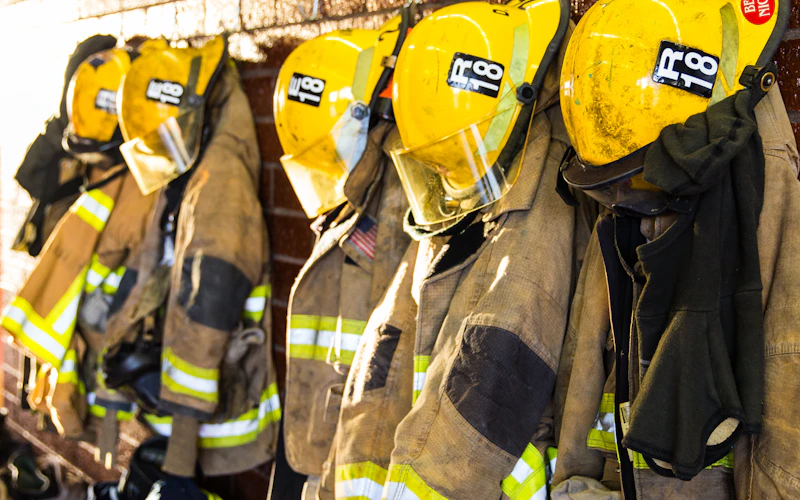
Turnout gear is the heaviest and bulkiest load most hangers will ever carry, so it deserves its own setup. A full set of firefighter PPE includes the coat, pants, helmet, hood, gloves, and boots, and each piece stores best in a slightly different way.
Turnout Coats
Hang each coat on its own wide, sturdy hanger by the shoulders, with closures open so air can reach the liner and thermal layers. Doubling up coats on one hanger traps moisture and slows drying after a call or a rescue drill.
Turnout Pants and Suspenders
Hang pants separately from the coat so both can dry fully. Let suspenders hang free rather than tangling around the hook. Whatever your station’s staging setup, make sure pants get a chance to air out between calls.
Helmets, Hoods, Gloves, and Boots
These pieces don’t belong on a coat hanger. Give them a shelf, helmet holder, or glove hook in the gear locker where they can dry without getting crushed, and clean hoods and gloves according to your department’s procedures.
Hangers for Police and Law Enforcement Gear
Law enforcement gear is heavy in a different way. Instead of one big coat, the weight is concentrated in a vest carrier, a loaded duty belt, and a rotation of uniforms that need to look sharp on every shift.

Ballistic Vests and Carriers
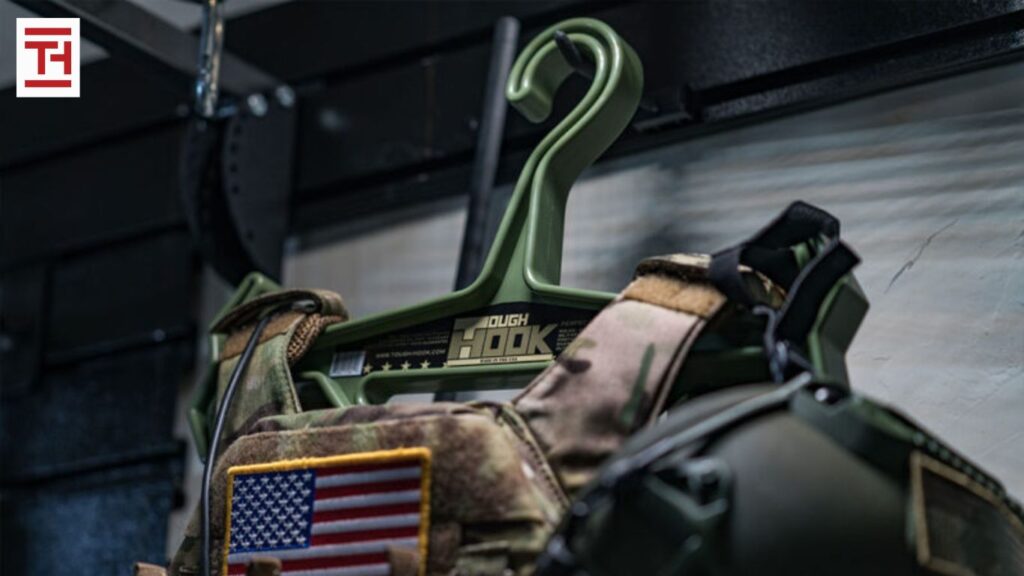
Hang vest carriers by their shoulder straps on a hanger wide enough to support them, and loosen the side straps so the inside can air out after a shift. Avoid folding or creasing armor panels, and follow the manufacturer’s care and storage instructions. A durable, purpose-built tactical hanger is designed for exactly this kind of load.
Duty Belts
A loaded duty belt is easy to damage when it is dropped in the bottom of a locker. Hang it over a strong hook or across a sturdy hanger so holsters, pouches, and keepers hold their shape.
Uniforms and Outerwear
Patrol uniforms, dress uniforms, and jackets keep their pressed shape on broad-shouldered hangers that don’t leave bumps in the fabric. Keep dress uniforms on their own hangers, away from daily wear, so they stay ready for ceremonies and court appearances.
How to Store Protective Gear on Hangers
A strong hanger is only part of the job. Where and how gear hangs matters just as much. For structural firefighting gear, the care guidance in NFPA 1851, now consolidated with NFPA 1852 into NFPA 1850, calls for storing protective clothing in clean, dry, well-ventilated areas away from direct sunlight. These habits put that guidance to work:
- Clean and dry first. Follow your department’s cleaning procedure, then let gear dry fully before it goes into storage. Damp gear in a closed space breeds odor and mildew.
- Keep it out of the sun. UV light breaks down some fibers used in protective clothing, so avoid drying or storing turnout gear in direct sunlight.
- Give it airflow. Leave space between hangers and open closures so air can reach the inner layers. Airflow around gear directly affects drying time.
- Store it in the right place. Keep turnout gear in a designated gear room or locker, not in living quarters or at home, so contaminants stay where they belong.
- Hang heavy items by their strongest points. Coats hang by the shoulders, pants hang separately, and vests and carriers hang by their shoulder straps. Follow each manufacturer’s storage instructions for body armor and specialty PPE.
- Label by person or shift. In shared stations, an ID hanger or a clear label makes it obvious whose gear is whose.
- Inspect the hanger too. Replace any hanger that has cracked, bent, or started to sag. It is a cheap fix compared with the gear it holds.
For a deeper look at fire service storage and care, this overview of turnout gear care and maintenance walks through cleaning, drying, and storage basics.
Using Sturdy Hooks for Cords, Ropes, and Cables
Stations and squad rooms collect more than uniforms. Extension cords, charging cables for radios and lights, rope bags, and spare straps tend to end up on the floor. A sturdy hook or heavy-duty hanger can keep coiled cords and bagged rope off the ground and out of walkways, which cuts down on tangles and trip hazards.
- Coil cords loosely before hanging them, and avoid sharp kinks that can damage the cable over time.
- Hang rope in its bag, and follow your department’s inspection and storage procedures for life-safety rope.
- Use dedicated cable clips or cable hangers for permanent cable runs along walls or ceilings. A hanger is for storage, not for routing cables.
The Toughest Tools for the Toughest Jobs: Our Heavy-Duty Hangers
Recognizing these shortcomings, we set out to build hangers for emergency and tactical applications. Our hangers are not merely oversized hangers; they are built with the same commitment to strength and reliability as the gear they hold.
Here is what goes into them:
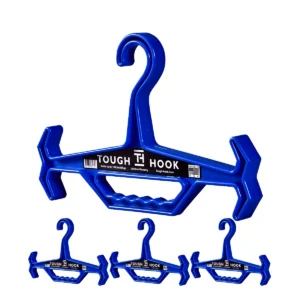
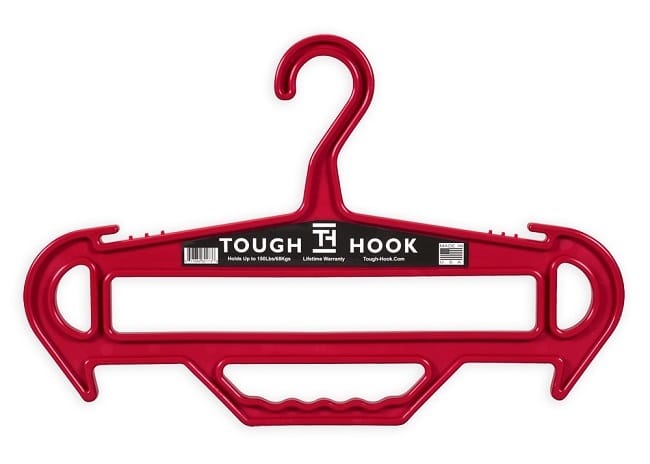
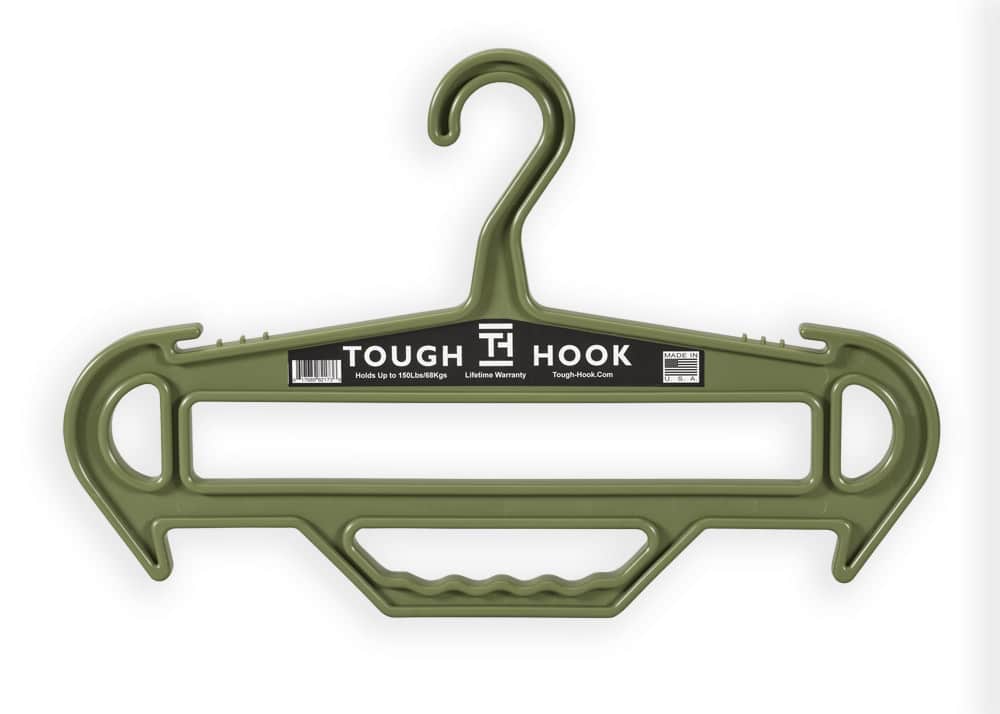
- Load capacity built for real gear: Our Original hanger is rated for well over 150 pounds, enough for wet turnout coats, loaded vests, and plate carriers without sagging.
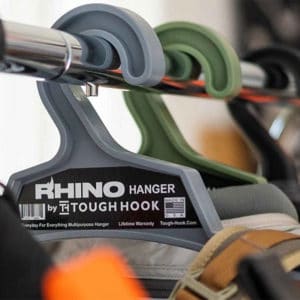
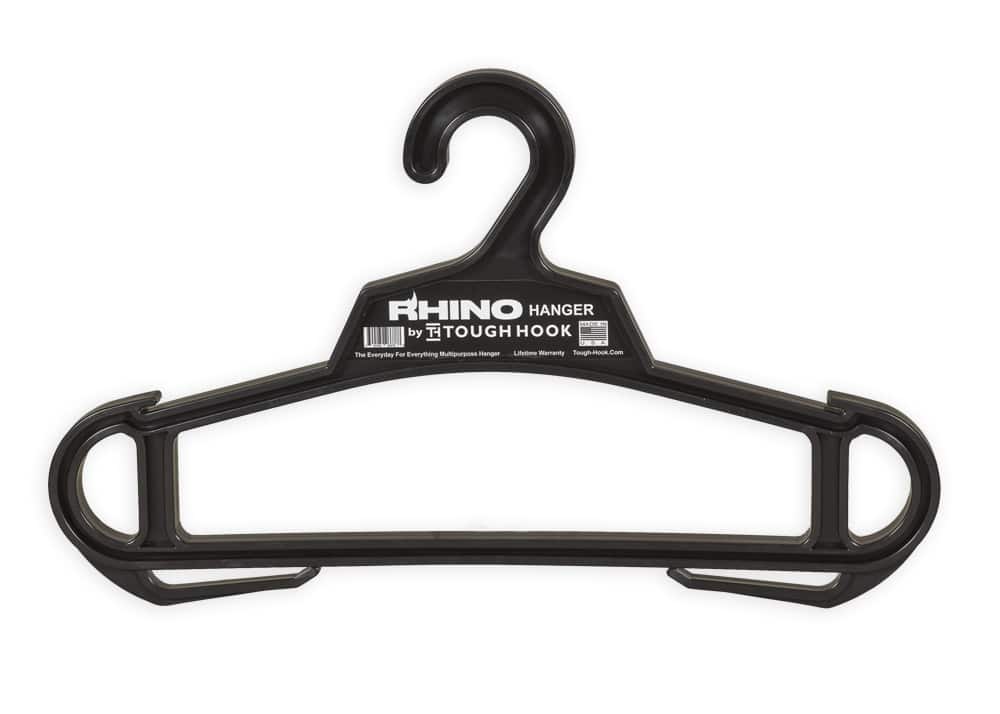
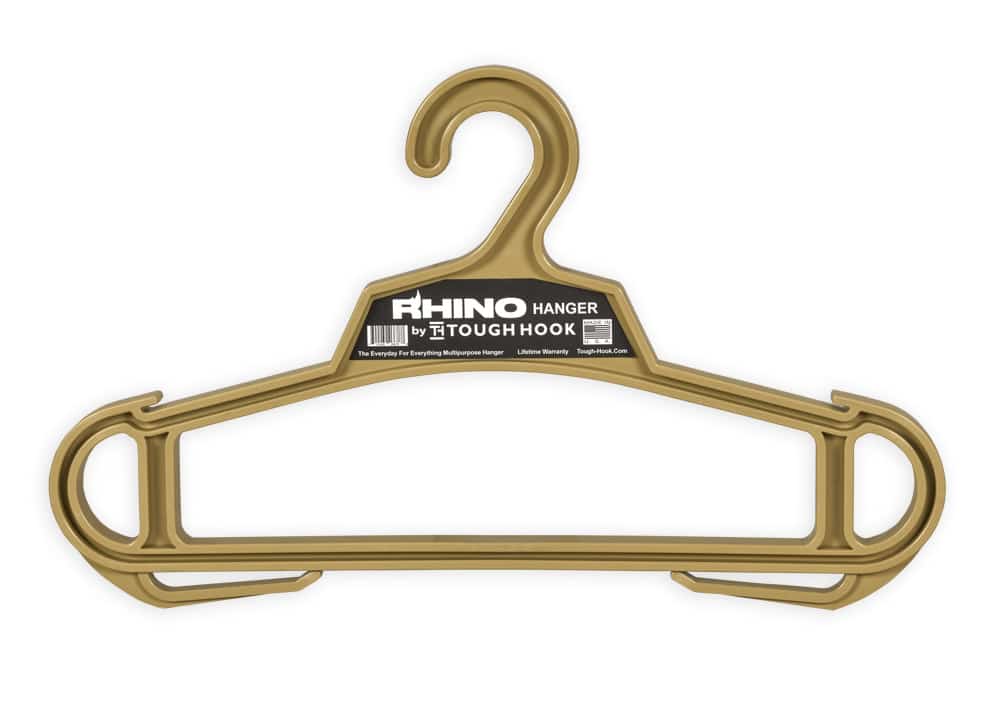
- I-beam construction: High-impact ABS plastic shaped into an I-beam profile resists bending and snapping, and it won’t rust in a damp gear room.
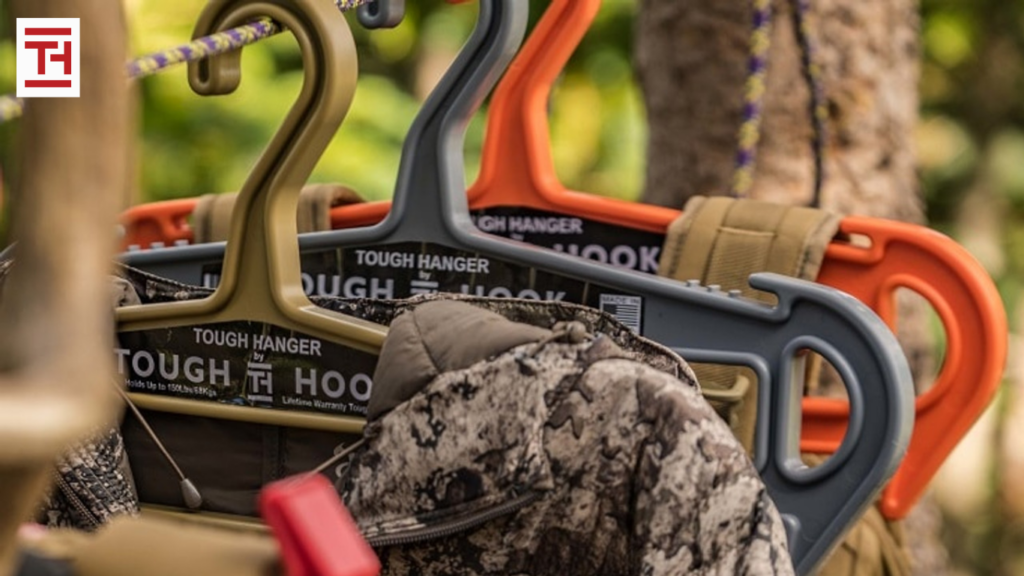
- Broad, secure shoulders: Wide shoulders support heavy jackets and vests, and hooked ends help keep straps and collars from slipping off.
- Integrated carry handle: The built-in grip lets you carry heavy gear from the locker to the vehicle without pulling it off the hanger.
- Identification options: ID versions give each hanger a dedicated spot for a name or unit label, which helps in shared stations and squad rooms.
- Made in the USA: Our hangers are manufactured in Bozeman, Montana, and the Original is backed by a lifetime warranty.
The Investment in Readiness and Longevity
Investing in heavy-duty hangers is an investment in readiness, equipment longevity, and the well-being of the people who wear the gear. Properly stored equipment performs better and lasts longer, and when the call comes, it is in good condition and ready to go.
- Extends equipment lifespan: Proper hanging reduces material stress, tears, and deformation, which helps preserve protective fabrics and specialized components on gear that is expensive to replace.
- Supports readiness: When every coat and vest has a set place, no one wastes time hunting for gear that fell to the floor or got moved.
- Improves hygiene and airflow: Emergency gear often gets wet, dirty, and exposed to contaminants. Better air circulation helps it dry and reduces the growth of bacteria and mildew in multi-layered garments.
- Boosts morale and professionalism: A well-organized locker room or equipment bay reflects a high standard and shows that the organization values its people and their tools.
- Reduces workplace hazards: Fallen gear is a tripping hazard in a busy station. Secure hangers keep walkways clear and equipment safely stowed.
Outfitting a Station or Department
Buying for a whole crew is different from buying for one locker. Count hangers per person, not per locker, since many responders hang a coat, pants, and a station uniform separately. Multi-pack hanger bundles make it easier to outfit a full roster at once, and departments that want hangers carrying their own name or logo can look at our private label program. We also offer first responder and military discounts.
Whether it’s a firefighter’s turnout coat, a police officer’s ballistic vest, or a soldier’s plate carrier, our hangers are built to protect the gear that protects our heroes. Critical equipment deserves a storage solution that is just as tough and reliable as the people who use it. Because when duty calls, every detail matters, and durability truly matches the duty.
Ready to upgrade your gear storage? Shop heavy-duty hangers built in the USA for the weight of real emergency gear.
Frequently Asked Questions
What makes a hanger heavy duty?
A heavy-duty hanger has a load rating high enough for wet or loaded gear, broad shoulders that spread weight across the garment, secure ends that stop straps from slipping, and a material that won’t bend, snap, or rust under daily use.
How much weight should a hanger for emergency gear hold?
Choose a hanger rated well above the heaviest version of your gear, meaning wet turnout gear or a fully loaded vest or plate carrier. Published ratings usually describe a static load, so a generous margin helps the hanger hold up to daily lifting and carrying.
Can heavy-duty hangers hold wet turnout gear?
Yes, if the hanger is rated for the added weight of wet gear and has shoulders broad enough to hold the coat open. Hang wet gear indoors in a well-ventilated area away from direct sunlight so it can dry fully.
Are plastic or steel hangers better for emergency gear?
Both can work. Well-engineered high-impact plastic won’t rust and is easy to clean, while coated steel is rigid but can corrode once the coating chips in a damp gear room. Construction and load rating matter more than the material alone.
Can these hangers support body armor and plate carriers?
Hangers built for tactical loads can carry vests, body armor carriers, and plate carriers by their shoulder straps. Always follow the armor manufacturer’s storage instructions as well.
Where should firefighter turnout gear be stored?
Store turnout gear clean and dry in a designated gear room or locker that is well ventilated and out of direct sunlight. Keep it out of living quarters and out of your home to limit contamination.
How do I clean heavy-duty hangers?
Wipe them down with mild soap and water and let them dry before hanging gear again. Cleaning hangers regularly keeps soot, sweat, and grime from transferring back onto clean uniforms.
Can a department buy hangers in bulk or with its own branding?
Yes. Multi-pack bundles help outfit a full crew, and a private label program is available for departments that want their name or logo on their hangers.
What size hanger do I need for bulky jackets and turnout coats?
Choose the widest, broadest-shouldered hanger that still fits your locker. Wide shoulders keep a heavy coat from slumping and hold it open so it can dry. Measure the locker before you buy and compare it with the hanger’s listed dimensions.
Will heavy-duty hangers fit in a standard gear locker?
It depends on the locker and the hanger. Check that the hook seats securely on the locker’s rod or hook and that the hanger’s width leaves room for the coat to hang without pressing against the sides or door.
How do heavy-duty hangers keep uniforms and vests from slipping?
Broad shoulders support the garment’s weight, and hooked or raised ends hold straps and collars in place so heavy coats, vests, and carriers don’t slide off.
Can a heavy-duty hanger help with cable and cord management?
A sturdy hook or hanger can keep coiled extension cords, charging cables, and bagged rope off the floor for storage. For permanent cable runs along walls or ceilings, use cable clips or hangers made for that job.
Where can I buy heavy-duty hangers for fire, EMS, and police gear?
Heavy-duty hangers for first responders are available in our online shop, including single hangers, multi-pack bundles, ID hangers, and private label options for departments.