In the high-stakes world of emergency medical services (EMS), every second counts. From the moment a 911 call comes in to the rapid transport of a patient to the hospital, efficiency and organization are paramount. EMTs (Emergency Medical Technicians) and paramedics are the frontline heroes who respond to medical emergencies, providing critical care often in chaotic and unpredictable environments.
While their medical expertise and quick thinking are undoubtedly their most vital assets, the unsung heroes in their daily operations are often the tools and systems that ensure their life-saving gear is always ready for deployment. Among these, heavy-duty hangers play a surprisingly crucial role in paramedic gear storage and EMS equipment organization for a vast array of essential equipment.
The Demands of the Job: Why Standard Organization Fails
Imagine a typical EMS vehicle: an ambulance. It’s not just a means of transport; it’s a mobile medical unit, a rolling emergency room packed with an astonishing amount of equipment.
From oxygen tanks and IV bags to trauma kits, defibrillators, personal protective equipment (PPE), and an array of specialized tools, the sheer volume of gear is staggering. Furthermore, much of this equipment is bulky, irregularly shaped, and needs to be accessed quickly, often in low light or cramped conditions.
Traditional organizational methods, such as flimsy plastic hangers or simply piling gear into compartments, fall short in this demanding environment. Here’s why:
- Weight and Bulk: Many EMS items are heavy. A fully stocked trauma bag can run 20–30 lbs on its own; standard hangers would buckle under that kind of pressure, leading to torn equipment and disarray.
- Irregular Shapes: Medical equipment isn’t designed to be neatly hung. Oxygen masks, head immobilizers, and specialized vests have unique contours that don’t lend themselves to standard hooks.
- Durability and Longevity: EMS gear is subject to constant movement, vibrations, and the occasional bump or scrape during transport. Organizational tools need to be as robust as the equipment they hold.
- Hygiene: In a medical setting, cleanliness is critical. Organizational solutions must be easy to clean and sanitize to prevent cross-contamination.
- Accessibility: During an emergency, there’s no time to search for a specific item. Everything needs to be visible, organized, and instantly retrievable.





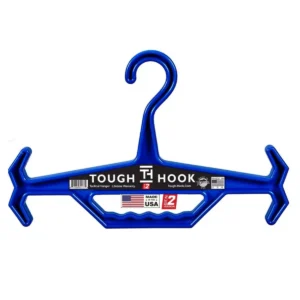

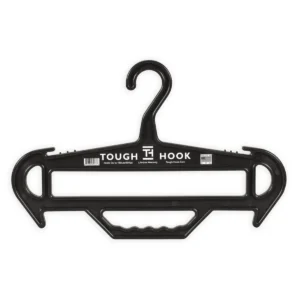
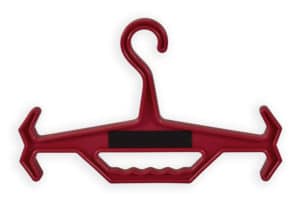

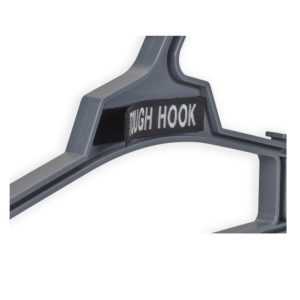




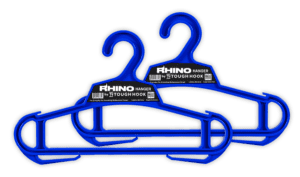
2 Pack RHINO Heavy Duty Clothes Hanger Bundle
Original price was: $27.95.$23.95Current price is: $23.95.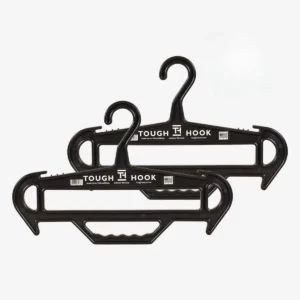
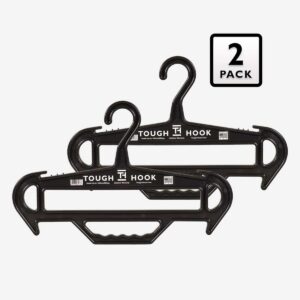
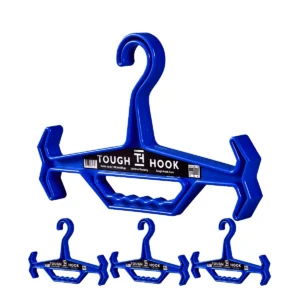
Built to Handle EMS Gear
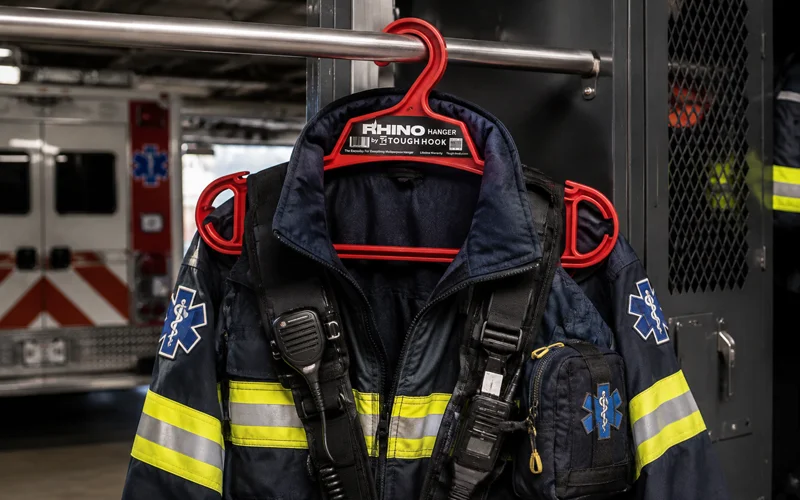
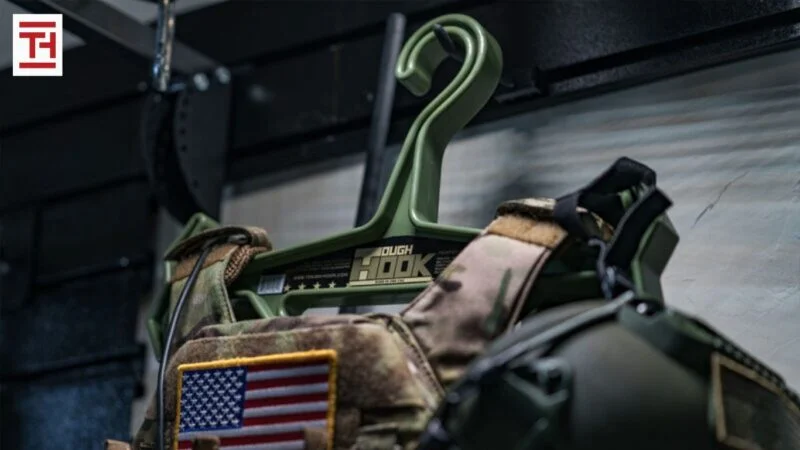
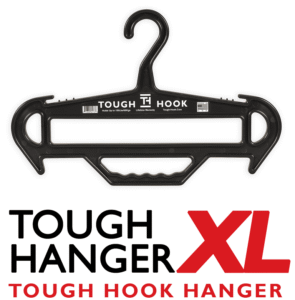
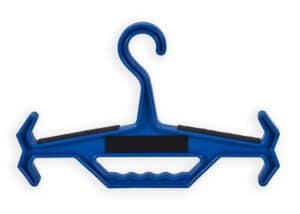
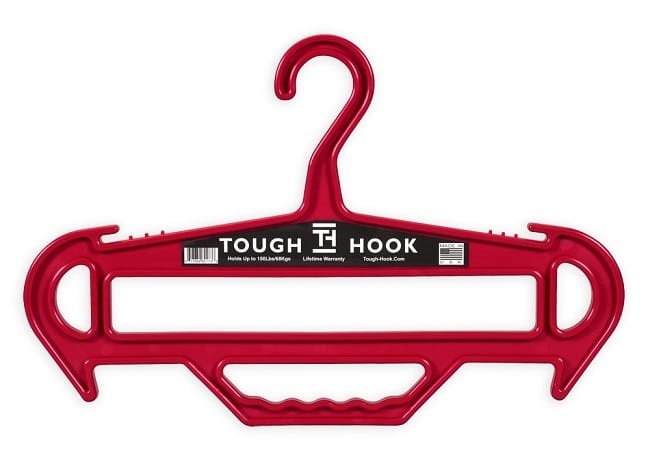
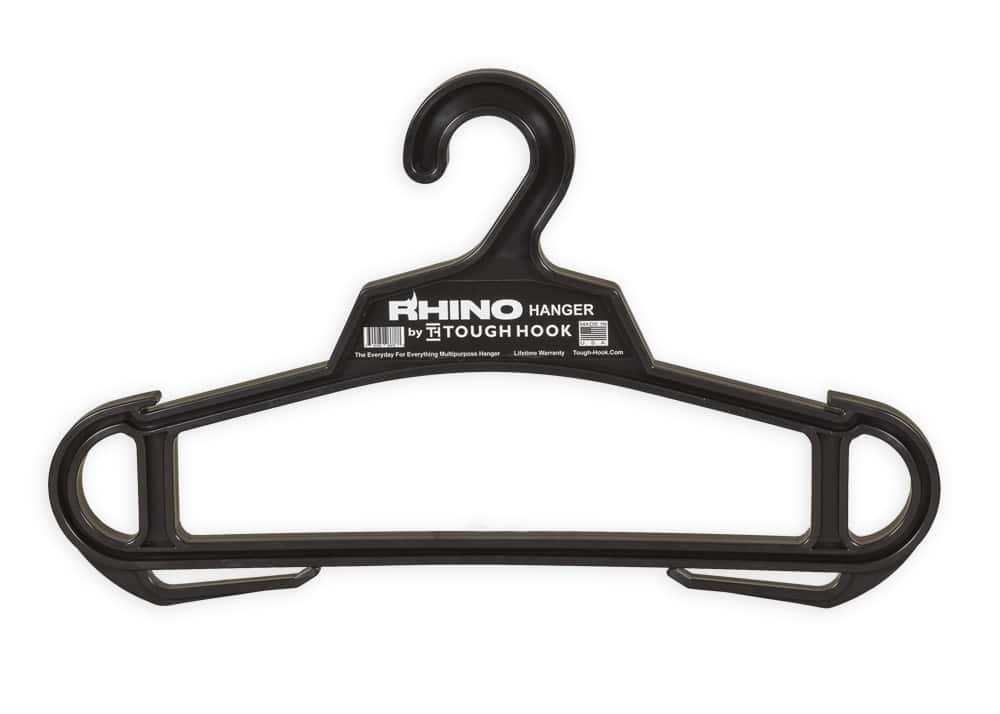
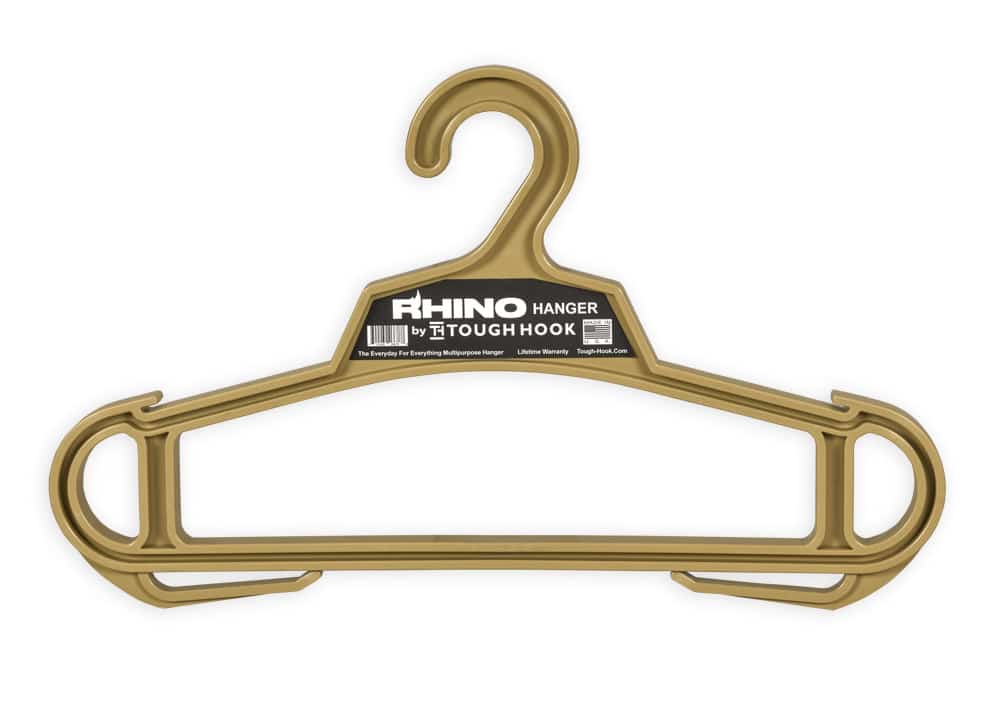
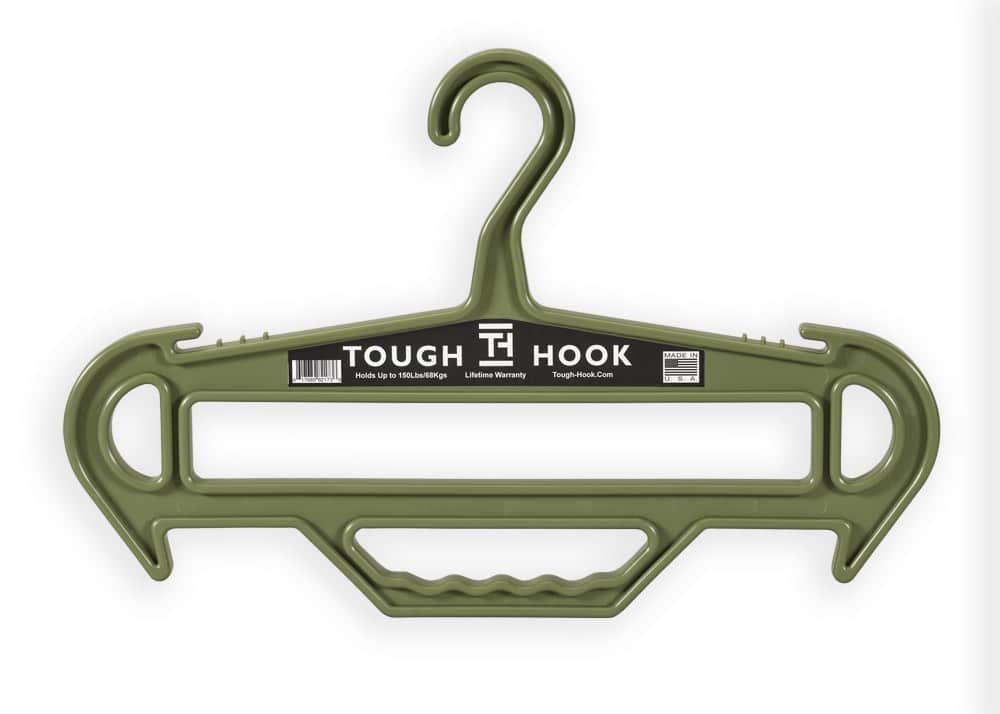
This is where specialized heavy-duty hangers, like those offered by our company, Tough Hook, make a significant difference for first responder gear hangers and PPE storage hangers alike. Designed with strength, versatility, and durability in mind, these hangers are built to withstand the rigorous demands of EMS operations, including our First Responders hanger lineup built specifically for departments and crews. They are not merely for clothing; they are robust organizational tools engineered to support significant weight and odd shapes.
Here’s how EMTs and paramedics put these hangers to use:
Organizing Personal Protective Equipment (PPE)
- Tactical Vests and Body Armor: Many EMS professionals, especially those working in challenging environments or with specialized units, wear tactical vests or body armor. A loaded vest can weigh 15–25 lbs. Tough Hook hangers, rated to hold over 150 lbs and built with integrated carrying handles, are ideal for storing these items, keeping them off the floor and in perfect condition.
- Hazmat Suits and Isolation Gowns: In situations requiring specialized protection, hazmat suits or isolation gowns need to be kept clean and readily accessible. Heavy-duty hangers prevent creases and damage, ensuring these critical items are ready for immediate use.
- Helmets and Headgear: While not always hung, specialized headgear can sometimes be stored on these hangers, particularly if they have straps or integrated components that allow for this.
Streamlining Medical Bags and Kits
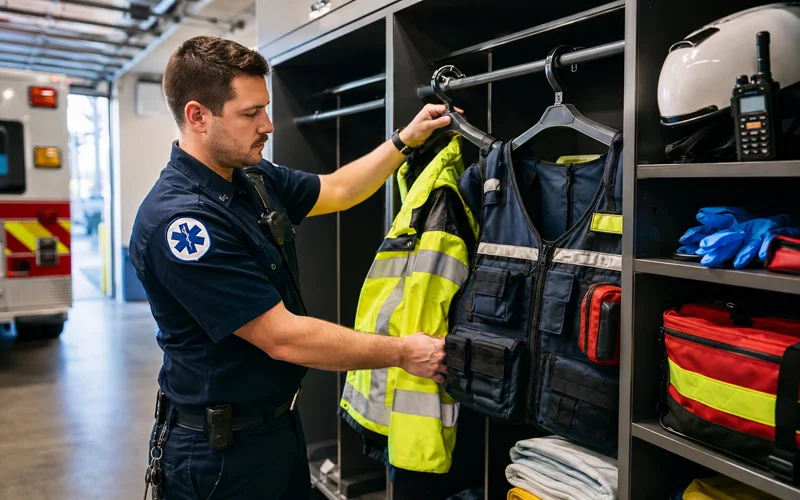
- Trauma Bags: These large, fully stocked bags are often the heaviest pieces of equipment on the rig. Hanging one on a sturdy hanger, rather than leaving it on a shelf or the floor, simplifies trauma bag storage, allows for better air circulation, prevents crushing of contents, and cuts the time it takes to grab it and go, a real difference when every second before wheels-up counts.
- Airway Kits: Essential for managing a patient’s breathing, these kits contain intubation equipment and other vital tools. Keeping them organized and easily visible on a hanger reduces fumbling during critical moments.
- Jump Bags: Designed for immediate deployment, jump bags contain the most critical initial assessment and intervention tools. Hanging them ensures they are always packed correctly and ready.
Managing Specialized Equipment
- Spinal Immobilizers and KED Devices: These are often awkward to store. Heavy-duty hangers can be adapted to hold certain components or the entire device if its design allows, keeping them from being bent or damaged.
- Hydration Packs: For long shifts or mass casualty incidents, hydration packs are essential. Hanging them keeps them clean and their bladders intact.
- Specialized Tools: Certain extrication tools or other specialized instruments that have handles or loops can be efficiently hung, preventing them from shifting during transport and causing injury or damage.
Where to Mount Heavy-Duty Hangers in the Rig or at the Station
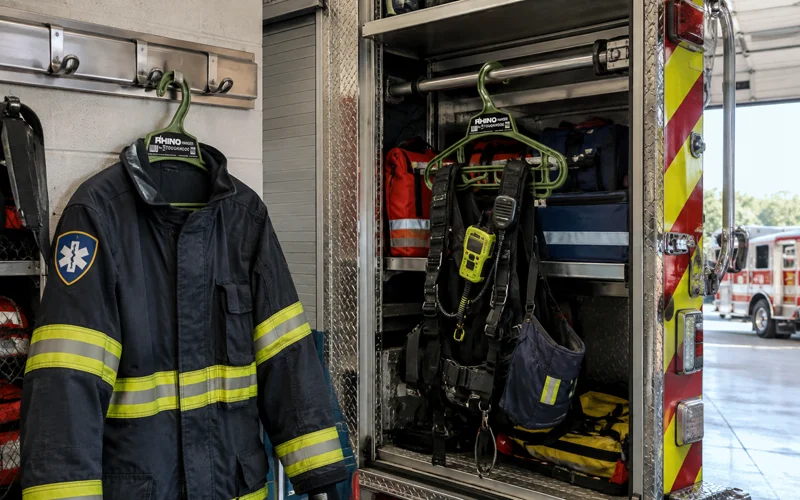
A hanger only helps if it’s mounted where the gear actually gets used, and the good news is Tough Hook hangers work either as a fixed part of a personal gear station or as a portable option that moves with the crew. Inside the rig, a hook mounted just inside the rear doors or a side compartment keeps trauma bags and PPE within arm’s reach during transport. At the station, a wall-mounted rack near the bunk or locker room keeps uniforms and off-duty gear off the floor without eating into walking space.
Apparatus bays and ambulance interiors are tight by design, so space-saving placement matters as much as weight capacity. Mounting hangers vertically on an existing wall or door, rather than adding a freestanding rack, keeps the floor clear for movement during a call. Because Tough Hook hangers hook onto standard bars, rails, and mounted brackets, a crew can set up the same hanging system in the rig and duplicate it at the station without buying separate hardware for each.
What Else Belongs Near Your Hanger Station
Hangers solve storage for anything with a shoulder line or a strap, but a full gear station usually needs a few things nearby that don’t hang well on their own. Gloves and disposable supplies are better suited to a small bin or dispenser mounted next to the hanger rather than the hook itself, and duty boots typically sit on a low shelf or tray underneath so they stay separated from clean uniforms above. For crews who carry search-and-rescue or patient movement harnesses, the same hook used for a plate carrier or trauma bag works just as well for a coiled harness, keeping it untangled and ready between calls.
The Benefits of Superior Organization
The integration of heavy-duty hangers into EMS operations yields numerous benefits that directly impact patient care and responder safety:
- Enhanced Readiness: Every piece of equipment has a designated, accessible place. This minimizes search time during an emergency, allowing EMTs and paramedics to focus on the patient.
- Improved Equipment Longevity: Keeping gear properly hung prevents damage, creasing, and wear and tear that can occur from being piled or stored haphazardly. This extends the lifespan of expensive medical equipment.
- Better Hygiene and Infection Control: Storing items off the floor and allowing for proper air circulation reduces the risk of contamination and makes cleaning routines more effective. Separating clean, ready-to-use gear from anything awaiting decontamination on its own rack or hook also cuts down on cross contamination between calls. Hangers themselves can be easily wiped down.
- Reduced Stress and Fatigue: When equipment is organized, responders can work more efficiently, reducing the mental and physical stress associated with a disorganized workspace. This allows them to allocate more energy to patient care.
- Safety: Properly stored equipment is less likely to become a projectile during sudden stops or turns in the ambulance, enhancing the safety of both patients and personnel.
Tough Hook: Built for the Toughest Jobs
Our commitment at Tough Hook is to provide organizational solutions that meet the highest standards of durability and functionality. Our heavy-duty hangers, including the Original ID Tactical Hanger and the Tough Hanger XL, are crafted from high-impact polypropylene, capable of holding over 150 pounds.
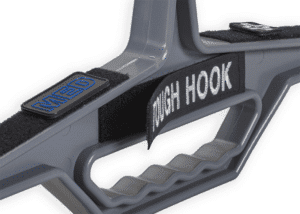
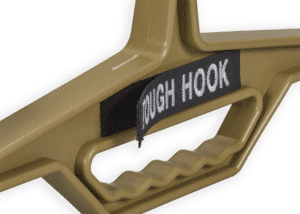
They feature an integrated carrying handle, a full 360-degree rotation hook, and a design that accommodates a wide range of equipment. We understand that professionals like EMTs and paramedics need tools they can trust, and our hangers are engineered to be that reliable organizational cornerstone. If you have questions about fitting these to your station or rig, reach out to our team.
In a profession where precision and speed are literally matters of life and death, the meticulous organization of gear is not a luxury but a necessity.
Heavy-duty hangers, particularly those designed with the unique demands of emergency services in mind, are indispensable tools that support the critical work of EMTs and paramedics, ensuring that when they arrive on the scene, their life-saving equipment is as ready as they are.
Frequently Asked Questions
What’s the weight capacity of a heavy-duty EMT hanger?
Tough Hook heavy-duty hangers are rated to hold over 150 lbs, well above the weight of a fully stocked trauma bag, a loaded vest, or bulky PPE.
Can heavy-duty hangers hold a stocked trauma bag?
Yes. A fully packed trauma bag typically weighs 20–30 lbs, comfortably within a Tough Hook hanger’s 150+ lb rating, and hanging it keeps contents from being crushed and cuts grab-time during a call.
Are these hangers easy to sanitize between shifts?
Yes. The high-impact polypropylene construction wipes down easily with standard disinfectants, which matters in a setting where cross-contamination control is part of daily routine.
Do Tough Hook hangers fit standard ambulance and station mounting bars?
Yes. The hooked ends are sized for standard racks, locker bars, gear room doors, and most custom-mounted systems already used in ambulances and stations.
Are EMT gear hangers wall-mounted or portable?
Both. Tough Hook hangers work on a fixed wall-mounted rack inside a station or apparatus bay, and just as easily on a portable hook or rail inside the rig itself, so the same hanger can move with the gear between the truck and the station.
Where should heavy-duty hangers be mounted in an ambulance or station?
Mount them wherever the gear needs to be grabbed fastest: just inside the rear doors or a side compartment of the rig for trauma bags and PPE, and on a dedicated wall rack near the bunk or locker room for uniforms and off-duty gear.