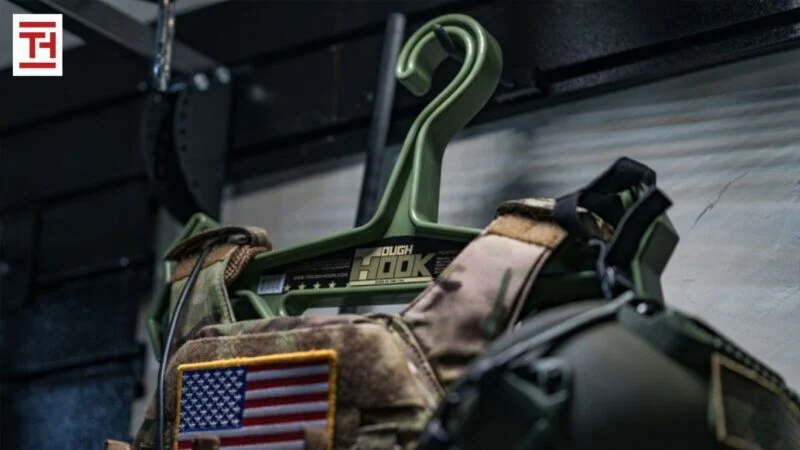
The best way to store tactical gear is to clean and fully dry every item, keep it in a cool, ventilated space with controlled humidity, and give each piece the storage method that suits its shape, weight and materials. Hang uniforms and jackets, lay soft armor panels flat, shelve helmets and boots, and keep batteries, optics and ammunition in their own protected spots. Do that consistently and your kit lasts longer, stays ready to grab, and keeps its resale value.
This guide walks through the full process, from prepping gear for storage to organizing a locker or closet and checking it on a schedule. If you are building a space from scratch, our article on creating a dedicated tactical gear storage space covers room layouts and inventory tracking, and storage ideas for tactical equipment goes deeper on closets, lockers and garages. For the hanging side of your setup, see our range of tactical hangers.
Tactical Gear Storage in Five Rules
- Clean and dry first. Dirt, sweat and trapped moisture do most of the damage while gear sits unused.
- Control the environment. Aim for a cool, ventilated area with relative humidity below 60 percent, away from direct sun and heat sources.
- Match the method to the item. Hang what hangs well, lay flat what must stay flat, and shelve or bin the rest.
- Organize by how often you reach for it. Daily-use gear goes at arm’s reach, spares and seasonal items go further back.
- Inspect on a schedule. Stored gear still ages, so check it monthly, quarterly and yearly.
What Poor Gear Storage Costs You
Tactical gear is an investment, whether you are a law enforcement officer, a military professional or a dedicated outdoorsman. Improper storage chips away at that investment in several ways.
Wear, Deformation and Hidden Damage
- Friction and abrasion: Tossing gear into bins or drawers rubs fabrics, zippers and stitching against each other, which weakens seams and wears down coatings.
- Deformation: Stacking heavy items on top of helmets, boots and plates can warp their shape and affect fit, comfort and safety.
- Coating breakdown: Polyurethane-coated fabrics can deteriorate through hydrolysis, a chemical reaction with water that heat and humidity speed up. A 24-month outdoor aging study of polyurethane-coated fabrics found hydrolysis and oxidation thinning the coating, with the worst damage in a hot, humid, high-sunlight climate.
- Hook-and-loop wear: Lint and debris packed into the hook side reduce grip, so patches, straps and closures start to slip.
Moisture, Corrosion and Contamination
- Mold and mildew: Damp, poorly ventilated spaces breed mold, which damages fabric, causes odor and can affect your health.
- Corrosion: Buckles, clips and other metal hardware rust in humid air, which can weaken parts you rely on.
- Contamination: Gear stored dirty or in dusty spaces carries that grit into zippers, pouches and moving parts.
Lost Time and Lost Value
- Disorganization: When gear is piled together, finding one item costs minutes you may not have, and pieces go missing.
- Accidental damage: In crowded spaces, equipment gets crushed, stepped on or knocked off shelves.
- Lower resale value: Faded, mildewed or misshapen gear sells for far less, and gear that no longer works as designed loses its purpose.

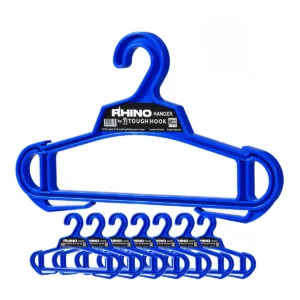
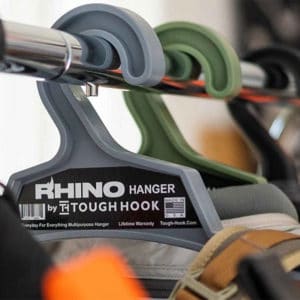

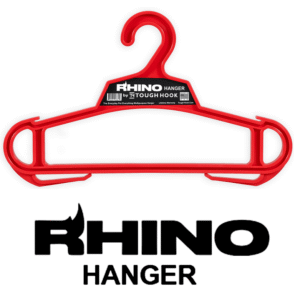
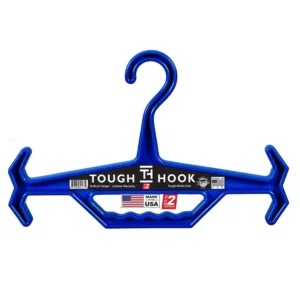

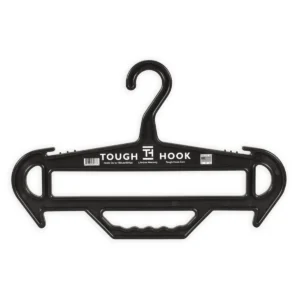
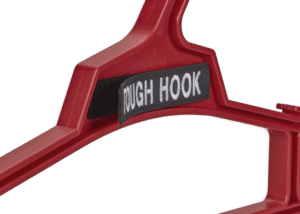
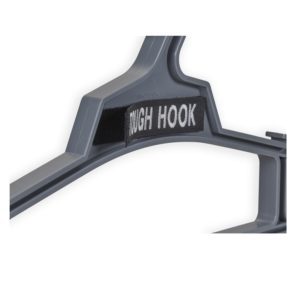
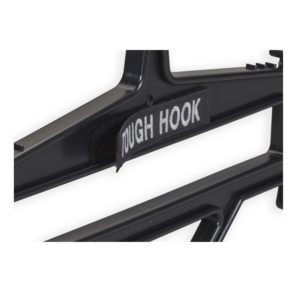


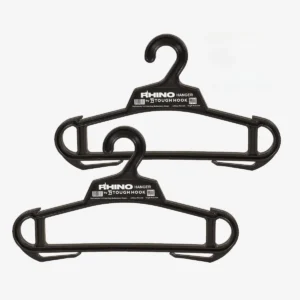
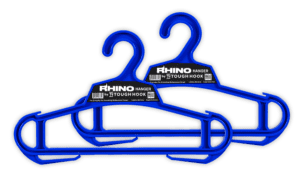
2 Pack RHINO Heavy Duty Clothes Hanger Bundle
Original price was: $27.95.$23.95Current price is: $23.95.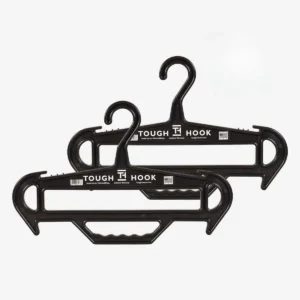
Step 1: Clean and Dry Gear Before You Store It
Storage starts the moment you finish using an item. Gear that goes into a locker damp or dirty keeps working against you for weeks.
- Air dry everything. Hang sweaty or wet items in a ventilated area until they are completely dry, including pads, liners and the inside of pouches. A folding drying rack with a tray underneath catches drips.
- Brush off dirt and debris. Pay attention to zippers, buckles and hook-and-loop panels.
- Follow the care label. Do not wash or dry clean ballistic panels unless the manufacturer says so. The National Institute of Justice (NIJ) notes that dry cleaning solvents, harsh detergents, bleach and soap residue can damage body armor, and compliant armor models must carry care instructions.
- Check for damage. Fix a loose stitch or a cracked buckle now, not before your next shift.
Step 2: Pick a Cool Spot with Good Ventilation
Where you store gear matters as much as how. Look for a space that stays stable through the seasons.
- Humidity: The EPA recommends keeping indoor humidity between 30 and 60 percent to limit mold growth. A small hygrometer costs little and tells you what your closet or locker room is really doing.
- Temperature: Avoid uninsulated garages, attics and sheds where heat swings are large. Heat also speeds up coating breakdown and battery wear.
- Light: Keep gear out of direct sunlight, which fades fabric and weakens some materials.
- Ventilation and airflow: Leave space between items so air can move. Packed shelves and sealed bins trap moisture.
- Floor clearance: Keep boots and bags off bare concrete and away from walls that sweat.
Step 3: Size Your Storage to Your Loadout
Before you buy a rack or locker, list your full loadout: carriers, belts, helmets, bags, boots and spare layers. Measure the hanging length, shelf depth and floor space each piece needs, then leave room to grow. Storage sized to what you own today fills up fast, and crowded gear loses the airflow that protects it.
Step 4: Match the Storage Method to the Gear
No single storage solution fits everything. Most setups combine several.
Hangers for Clothing and Carriers
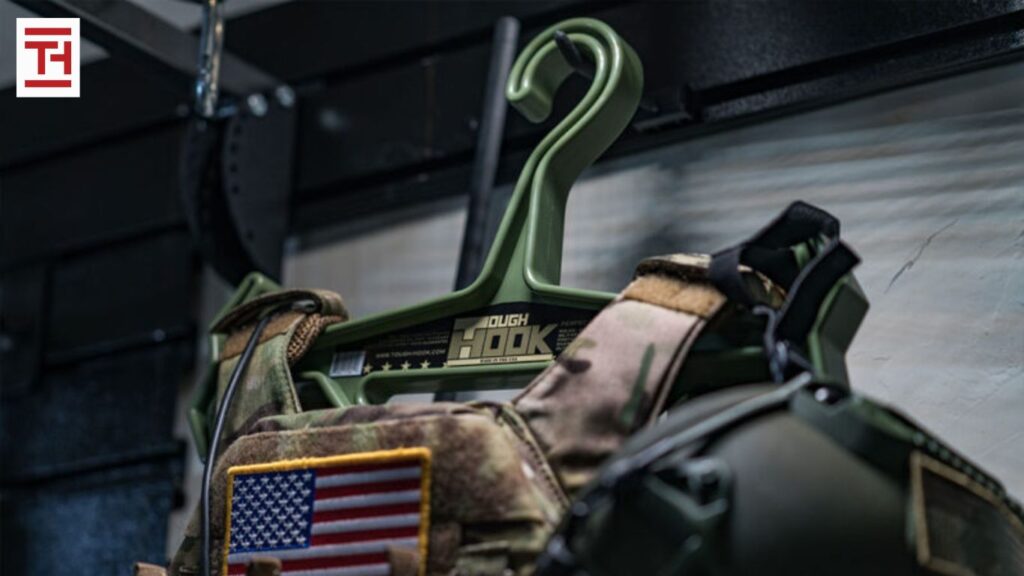
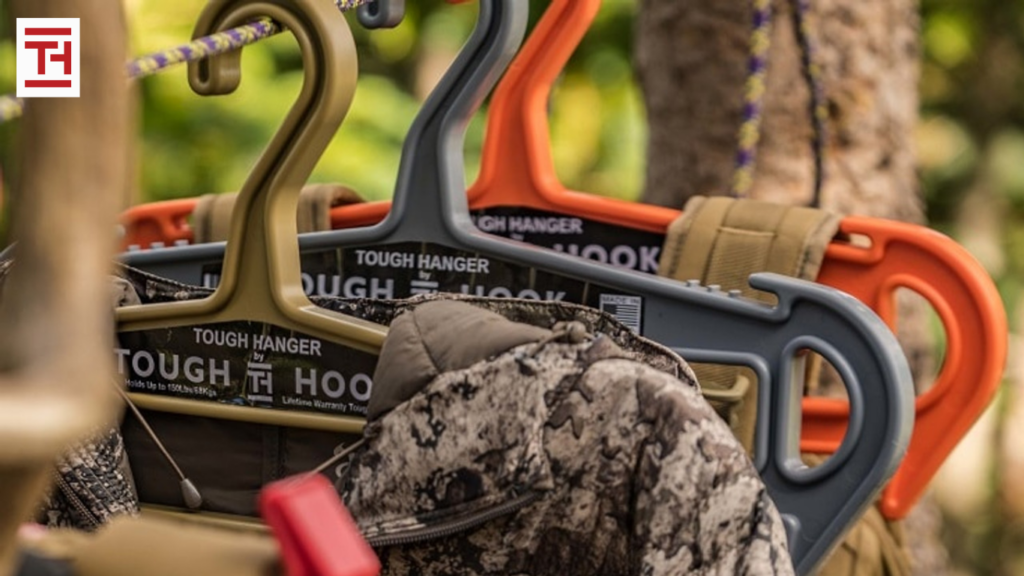
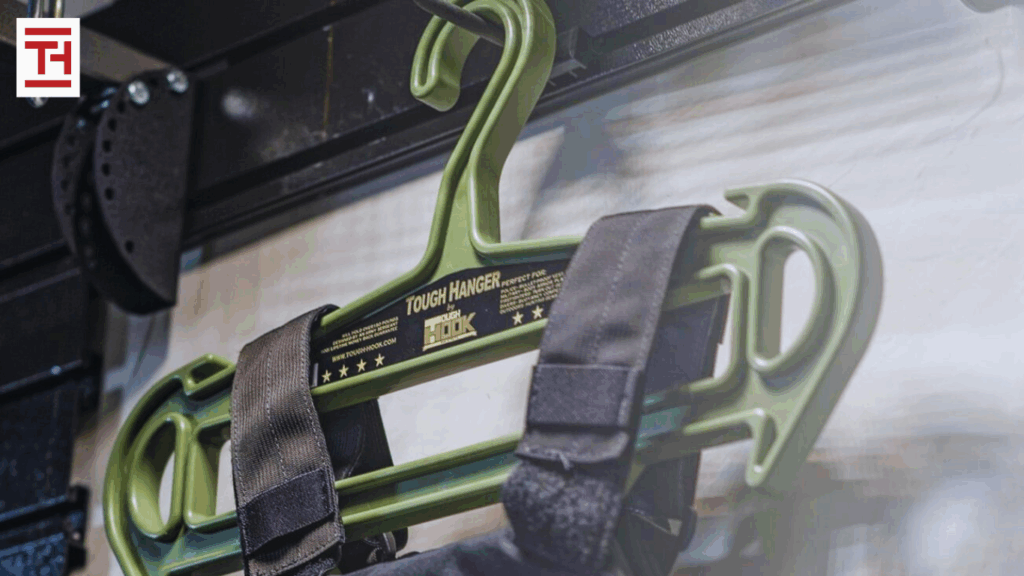
Hanging suspends gear so air circulates on all sides, which cuts friction and helps items dry. It suits uniforms, jackets, turnout coats and carrier shells. Use a hanger rated for the weight you are putting on it, because a thin standard hanger can bend or sag under a heavy item.
Lockers and Cabinets
Lockers keep duty gear in one secured, labeled place. Look for ventilated doors or perforated panels, a hanging rail, a shelf for small items and a drawer or lower compartment for boots and heavy pieces. Departments sharing a facility should add lockable doors and assign each locker to one person.
Shelves and Open Bins
Shelving suits helmets, folded layers and gear that should not hang. Choose open or ventilated containers over sealed plastic tubs for anything that has been used, and avoid stacking heavy items on top of shaped gear.
Wall Systems and Pegboard
Wall systems use vertical space and keep frequently used items visible. They work well for belts, pouches, bags and small accessories.
Hard Cases and Safes
Use these for items that need protection from impact, dust or unauthorized access, such as optics, electronics and firearms. Follow local laws and manufacturer instructions for firearm and ammunition storage, and keep ammunition separate from other gear.
Tactical Gear Racks and Stands: When to Use Them
 A gear stand or rack keeps a complete kit staged and visible, which suits gear you put on often. Stands are commonly built from wood, PVC or metal, so pick one that holds your heaviest item without tipping. Wall racks save floor space, lockers add security, and hangers on a closet rod suit clothing and carriers. Choose by how often you gear up, how much space you have and whether the gear is personal or shared.
How to Store Specific Tactical Gear
Body Armor, Plate Carriers and Vests
Soft armor panels need different treatment from the carrier around them. An NIJ guidance page warns that storing body armor on a hanger rather than lying flat can reduce its effectiveness. A separate NIJ-funded survey of officers found that 55.9 percent stored their armor on standard clothes hangers, 40.3 percent stored it flat as most manufacturers recommend, and 65.5 percent did not know moisture could reduce ballistic protection.
- Check the manufacturer’s care label first and follow it over any general advice.
- Store soft armor panels flat, in a cool, dry place, away from heat and moisture.
- If the label allows hanging a carrier or plate carrier, use a heavy-duty hanger built for that load.
- Keep the armor and carrier dry, and inspect covers and panels often. NIJ guidance encourages agencies to inspect armor at least once a year.
Uniforms, Jackets and Turnout Gear
Hang these on supportive hangers with room between garments so air can circulate. Make sure they are fully dry first, and keep reflective trim and coated fabrics out of heat and direct sun.
Helmets
Store helmets on a shelf or dedicated hook where nothing presses on the shell. Let pads and liners dry completely, and keep helmets away from heat sources, solvents and heavy stacked items. Follow the manufacturer’s care instructions.
Boots
Remove insoles, loosen laces and let boots dry in moving air before storing them upright. Sealed bins hold moisture inside the boot, which leads to odor and material breakdown.
Backpacks, Duty Bags and Shields
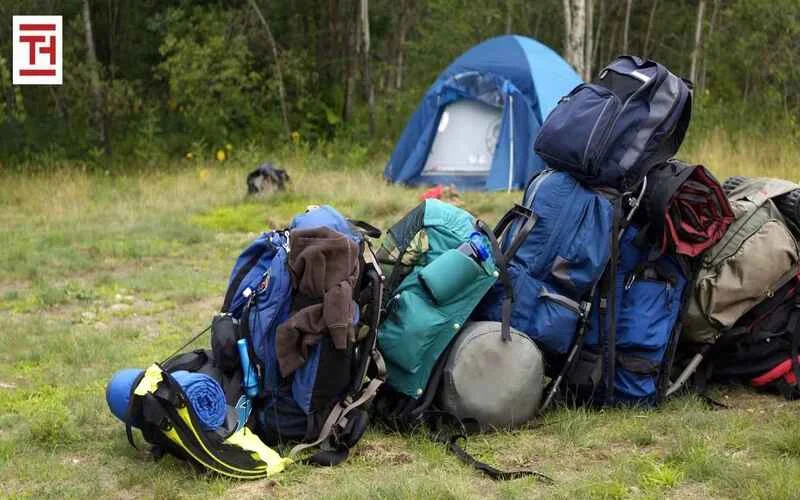
Empty bags completely, brush out grit and let them dry with the pockets open. Store backpacks and duty bags upright on a shelf or hook, with nothing heavy stacked on them. Keep ballistic shields on a rack or wall mount that supports their weight and keeps the face clear of scratches.
Belts, Pouches and Modular Rigs
Hang duty belts and battle belts, or lay them flat on a shelf, so they keep their shape. If you leave pouches on a rig, remember that standard PALS webbing uses one-inch rows stitched about 1.5 inches apart, so check stitching and strap tension during inspections, since a loaded rig puts steady stress on that grid.
Batteries, Optics and Electronics
Remove batteries from devices before long-term storage. University safety guidance advises charging or discharging lithium-ion batteries to about 50 percent before storing them for a long time. Lithium-ion batteries can enter thermal runaway if they are damaged or exposed to excessive heat, so keep them cool, dry and away from other gear, and never store a swollen or damaged battery. Keep optics in padded cases with a desiccant pack.
Medical and First Aid Kits
Keep trauma kits where you can reach them quickly, away from heat, and check expiration dates on every inspection. Replace anything expired or damaged right away.
How to Control Moisture in Tactical Gear Storage
Moisture is the most common reason stored gear fails, so it deserves its own plan.
- Measure it. Keep a hygrometer in the space and check it regularly.
- Move air. Use ventilated lockers, open shelving and small gaps between items. A dehumidifier helps in basements and humid climates.
- Use desiccants in enclosed spaces. Silica gel absorbs moisture until it reaches its capacity, and some types change color when saturated. Replace it or recharge it following the product’s instructions.
- Do not seal damp gear. Plastic tubs and bags without airflow trap humidity and invite mildew.
- Dry before you store. No desiccant makes up for storing wet gear.
How to Organize Tactical Equipment for Quick Access
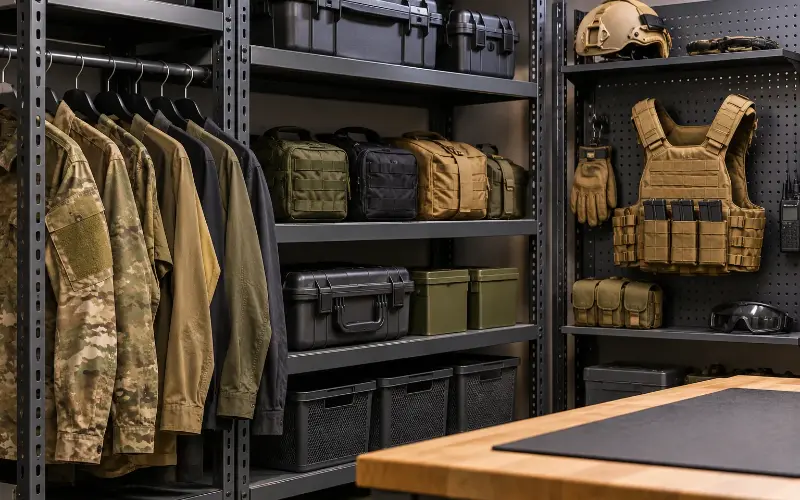 Good organization is part of good storage. When every item has a place, you find it fast, and you notice right away when something is missing. Our piece on tactical gear organization for military and law enforcement explains how orderly gear supports readiness under pressure.
Sort Gear Into Access Tiers
- Ready tier: Duty gear and go-bags you use daily or may need at short notice. Keep these at chest height and reachable without moving anything else.
- Regular tier: Training gear, seasonal layers and spare items. Shelves and lower hanging rails work well.
- Long-term tier: Backups, retired kit and rarely used items, stored clean, dry and labeled.
Label and Track Everything
- Label shelves, bins and hangers so anyone can find and return an item.
- Keep a simple inventory with the item name, serial or lot number, issue date, last inspection date and any expiration date.
- Take photos of kit layouts, such as a packed bag or a loaded carrier, so you can rebuild them quickly.
- Group gear by loadout, for example range day, patrol, field training and travel.
- For shared facilities, assign each locker or rack to one person and log sign-outs for accountability.
Packing Tactical Gear for Quick Deployment
Keep a ready bag packed and staged in your ready tier so you can leave without gathering items. Use labeled containers for small kits, add a checklist inside the lid, and rotate batteries, medical supplies and any expiring items on a set schedule. After every use, unpack, dry, restock and repack, so the bag is never left half ready.
Storing Tactical Gear in a Vehicle or in the Field
A parked vehicle can get far hotter and colder than your house, so treat it as short-term storage only.
- Keep only what you need in the vehicle, in a secured, organized container.
- Bring batteries, electronics and medical supplies inside during temperature extremes.
- Do not leave damp gear in a closed vehicle. Take it out and dry it.
- Rotate vehicle gear regularly and check it for heat damage and expired items.
- For travel, use hard cases or padded bags with labeled compartments, then unpack and dry everything when you arrive.
How to Inspect Stored Gear
Stored gear still ages, so build a short routine.
- Monthly: Check humidity readings, look for odors or visible mold, and confirm items are where they belong.
- Quarterly: Inspect zippers, buckles, hook-and-loop closures and stitching, and recharge or replace desiccants.
- Yearly: Do a full inspection of armor, helmets, medical supplies, batteries and anything with an expiration date, and update your inventory.
Look for corrosion on hardware, stiff or cracked coatings, fraying webbing, swollen batteries and signs of pests. Repair or retire anything that no longer meets its job.
Where Tactical Hangers Fit in Your Storage Setup
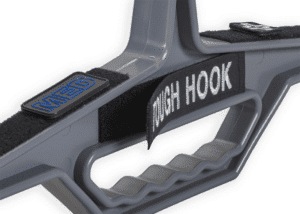
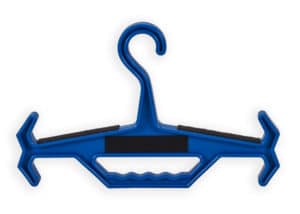
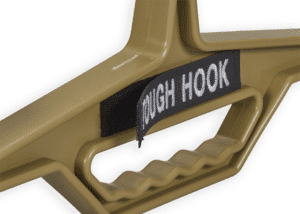
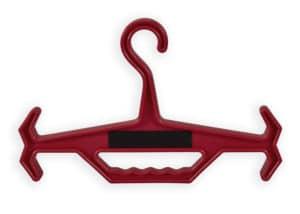
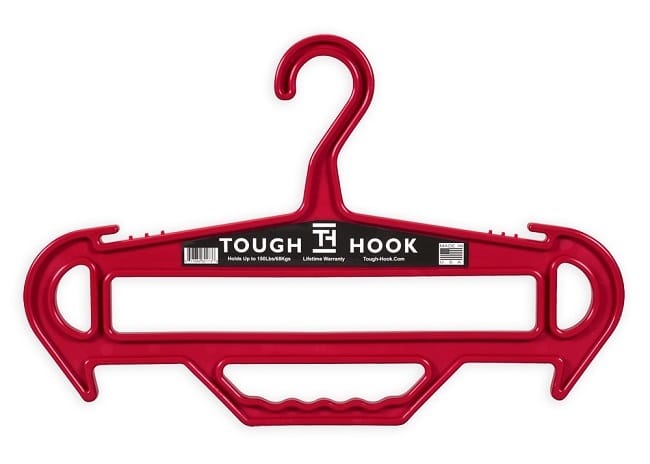
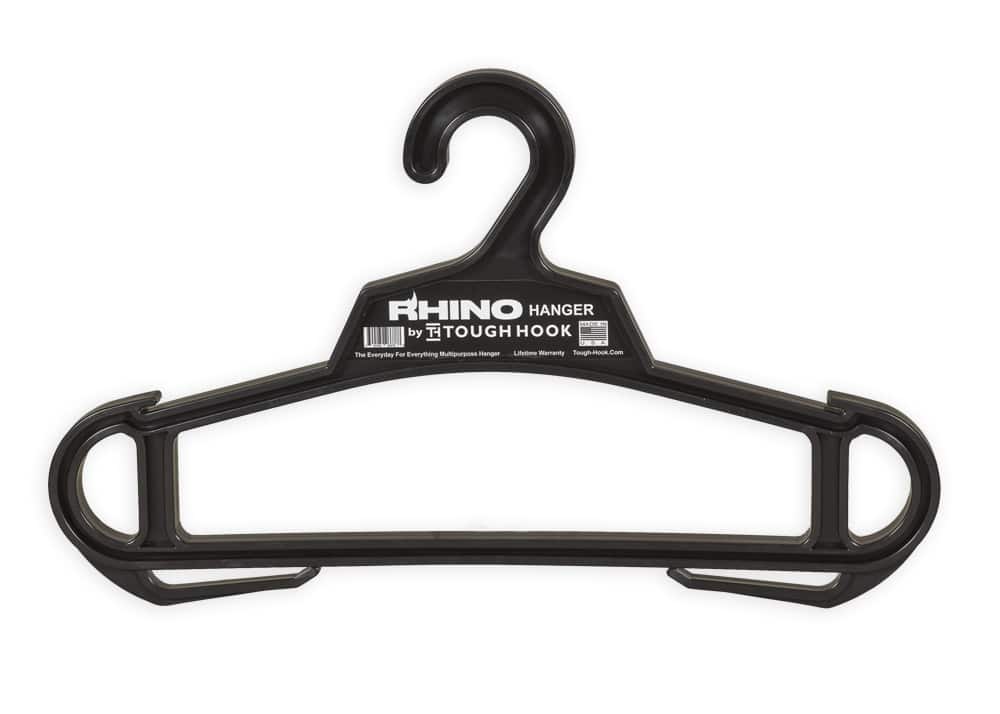
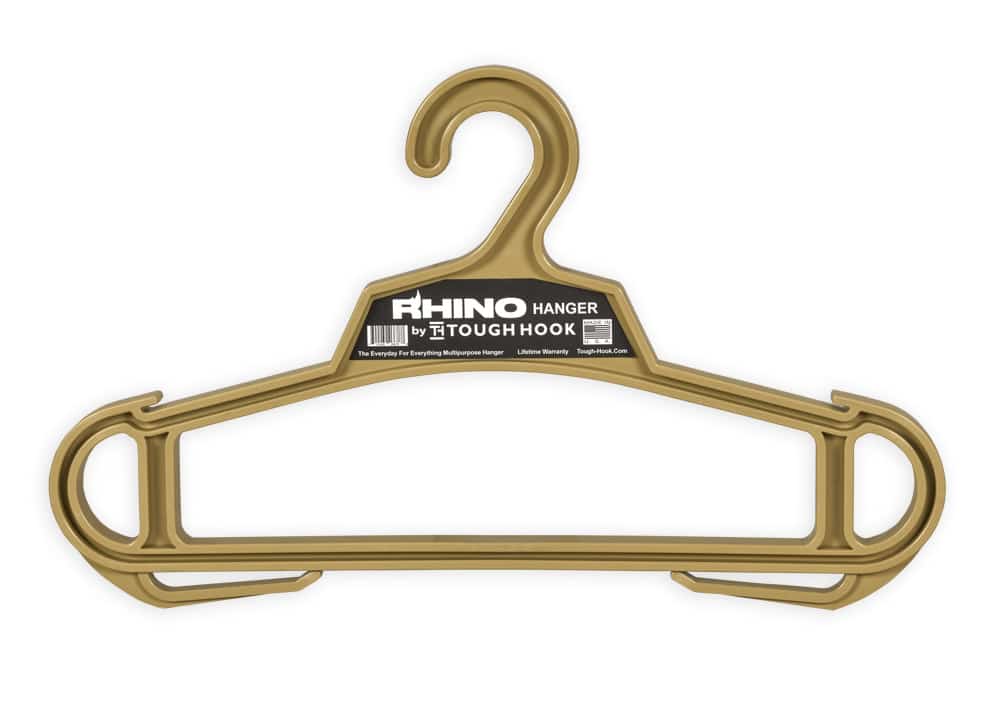
Tactical hangers handle the part of your storage that standard hangers cannot: heavy, bulky gear that needs support and airflow. Built for military, law enforcement, first responders and outdoor users, they let you hang more gear in less space while keeping air moving around it.
- Organization and access: A hanger for each item makes gear easy to find at a glance.
- Less wear: Suspended gear avoids the friction that comes from piling items together.
- Better airflow: Open space around hanging gear helps it dry and cuts the risk of mold, mildew and corrosion.
- Vertical storage: Hanging uses wall and closet height, which frees floor and shelf space.
How to Choose the Right Tactical Hanger
- Start with your gear: List what you need to hang, such as uniforms, vests, carriers, jackets and bags, and pick hangers designed for that weight and shape.
- Choose durable hangers: Look for heavy-duty construction that holds its shape under load.
- Look at features: Rotating hooks, adjustable lengths and built-in accessory points add flexibility.
- Follow care labels: For armor, confirm with the manufacturer before hanging anything.
Frequently Asked Questions
What is the best way to store tactical gear?
Clean and fully dry each item, then store it in a cool, ventilated space with humidity below 60 percent. Hang clothing and carriers, lay soft armor flat, shelve helmets and boots, and label everything so it is easy to find.
How should I organize tactical equipment?
Sort gear by how often you use it, then store daily items at arm’s reach and spares further back. Label shelves and hangers, and keep a simple inventory with inspection and expiration dates.
How can I protect tactical gear from moisture?
Dry gear completely before storing it, keep air moving around it, and use a hygrometer to watch humidity. Add silica gel in enclosed spaces and avoid sealed plastic bins for used gear.
Should tactical gear be hung or stored flat?
It depends on the item. Uniforms, jackets and belts do well on hangers, while soft armor panels are generally stored flat. Always follow the manufacturer’s care label.
How do I store tactical gear in a vehicle?
Keep only what you need in a secured container and avoid long-term storage in a vehicle. Take batteries, electronics and medical supplies inside during extreme heat or cold.
How do I store tactical gear at home?
Use a closet, locker or spare room that stays cool and dry. Combine hangers, ventilated shelves and wall systems, and keep firearms and ammunition locked up according to local law.
How often should I inspect stored tactical gear?
Do a quick check monthly, a closer hardware and stitching check quarterly, and a full inspection once a year. Update your inventory each time.
How much storage do I need for tactical gear?
List your full loadout, measure the hanging length, shelf depth and floor space each item needs, and add room to grow. Crowded storage blocks the airflow that keeps gear dry.
How do I keep tactical gear ready for quick deployment?
Keep a packed ready bag in your most accessible spot, use labeled containers for small kits, and unpack, dry and restock after every use. Check expiration dates on a set schedule.
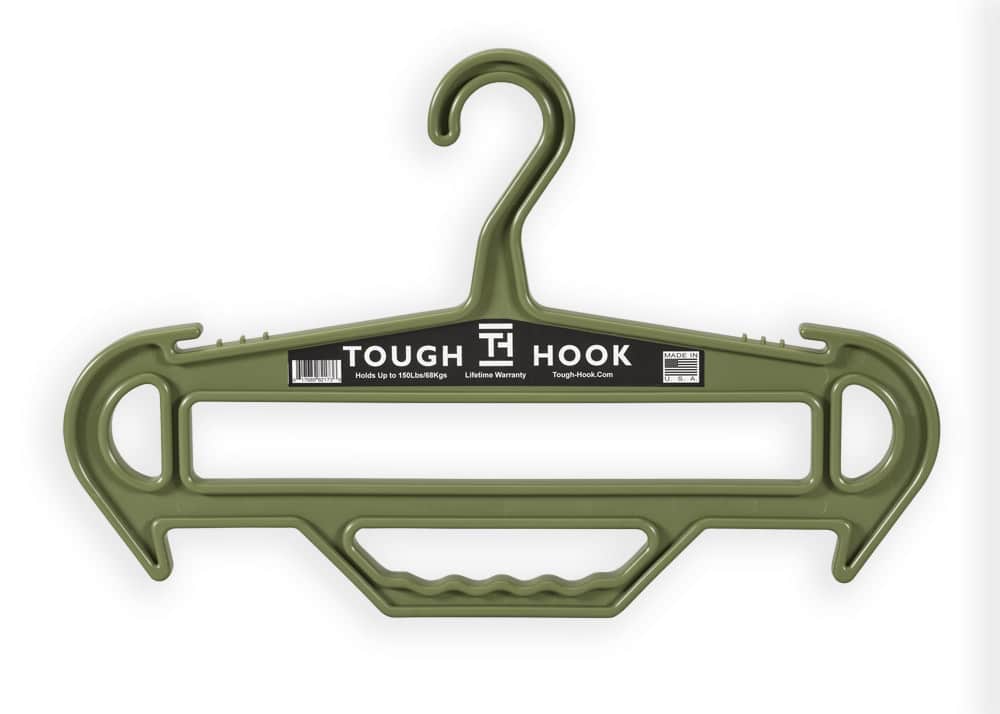
Tough Hook: Your Partner in Gear Storage
At Tough Hook, we understand the importance of proper gear storage. We design and manufacture heavy-duty tactical hangers for military personnel, law enforcement officers, first responders and outdoor enthusiasts. They are built to last and to keep your valuable gear organized, dry and ready.