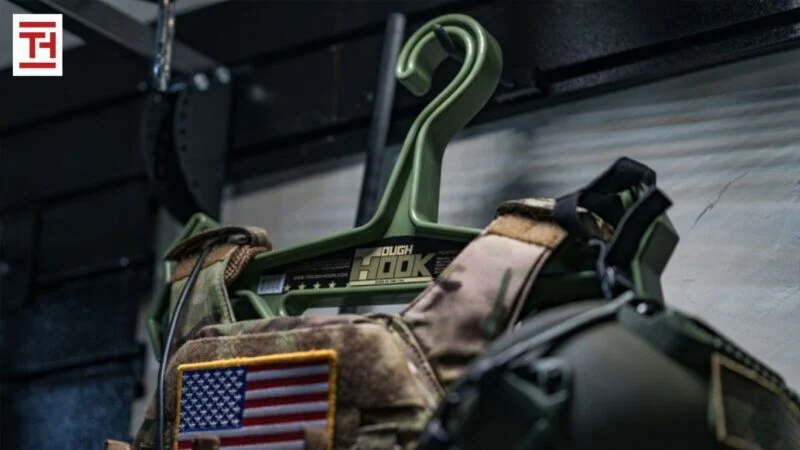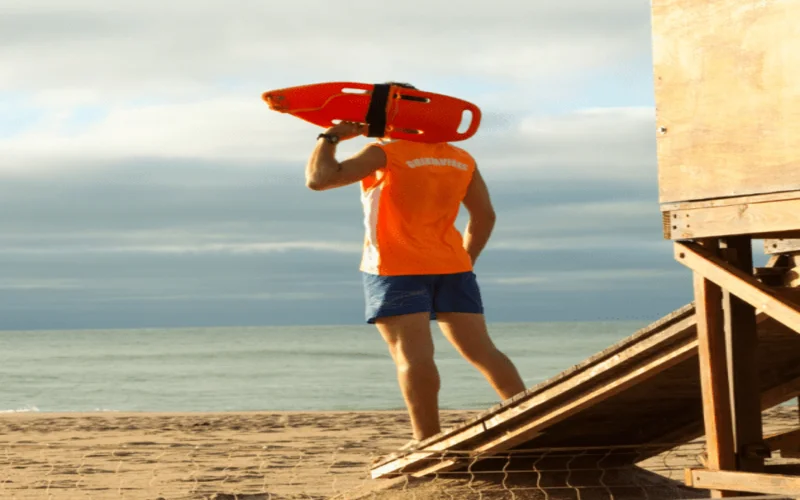
Lifeguards finish every shift with wet, heavy gear: soaked rash guards and uniforms, wetsuits, rescue tubes, hip packs, and whistles on lanyards. Most of it ends up on thin plastic hangers that bend, a rusting wall hook, or a locker floor where it never dries. Heavy-duty hangers for lifeguards fix that by holding wet gear without sagging and keeping it open to the air so it is dry, clean, and ready for the next shift.
This guide covers what lifeguard gear needs from a hanger, how much weight it should hold, which materials survive chlorine and salt air, and how pools, beaches, and aquatic facilities can set up a guard room that stays organized.
What Makes a Hanger Right for Lifeguard Gear?
Lifeguard hangers face constant moisture, chlorine or salt, and daily loading, so hanger design matters more than it does in a home closet. Look for these five features before you buy.
- High load capacity: Wet garments add weight, so choose a durable, load-bearing hanger rated far above the weight of your heaviest wet item.
- Rustproof material: Plastic or resin hangers won’t rust. Unprotected metal corrodes around saltwater and chlorine and can stain uniforms.
- Wide, rounded shoulders: Broad shoulders spread a garment’s weight across more fabric, so wet rash guards and wetsuits keep their shape.
- An open frame: Open-frame hangers let air move around wet gear, which helps prevent mildew and odor.
- Smooth, snag-free edges: No sharp seams or wire ends to catch on swimsuits, rash guards, or neoprene.
Why Lifeguards Need Heavy-Duty Hangers
Lifeguard uniforms and equipment are harder on hangers than everyday clothing. Here is how heavy-duty hangers handle the main problems.
- Durability: Wet uniforms, wetsuits, and gear are heavy, and regular hangers bend or snap under the weight. Our hangers are molded from impact-resistant resin with I-beam construction, a rib that keeps the frame rigid instead of flexing under load.
- Versatility: Lifeguards wear different gear through the day, from swimsuits and rash guards to wetsuits, jackets, and flotation vests. A wide, sturdy hanger takes all of it. Our guide to drying wetsuits and rash guards covers caring for wet neoprene.
- Rust-proof: Constant exposure to saltwater and chlorine takes a toll on metal hangers, and rust can stain and weaken fabric. Resin hangers won’t rust, and they don’t soak up water the way wooden or fabric-covered hangers can.
- Organization: One hanger per guard, or per gear set, keeps each lifeguard’s kit together so it can be grabbed quickly at shift change or during an emergency.

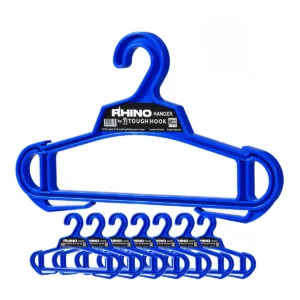
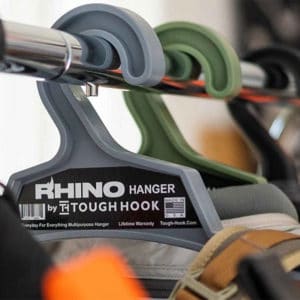


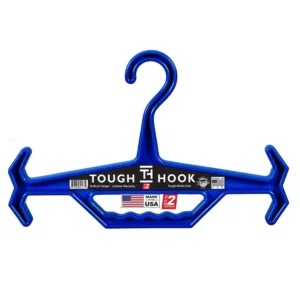

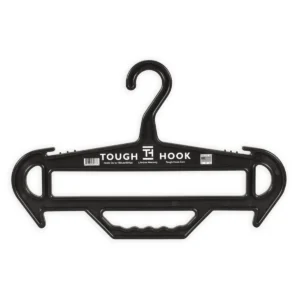

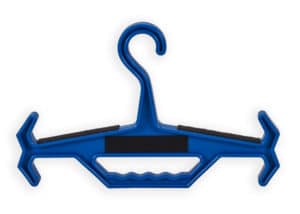
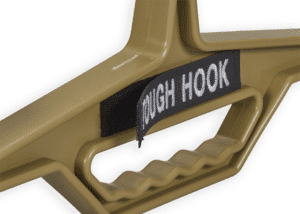
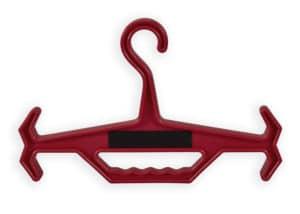

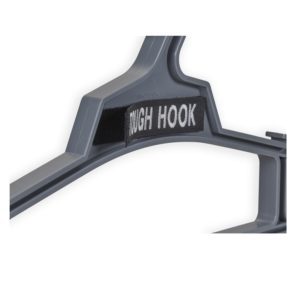
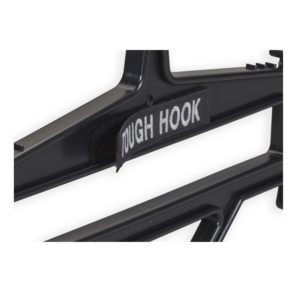


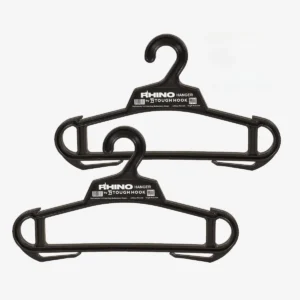
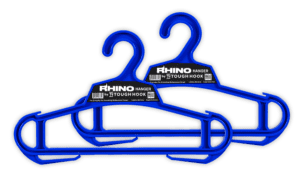
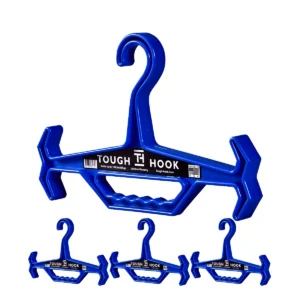
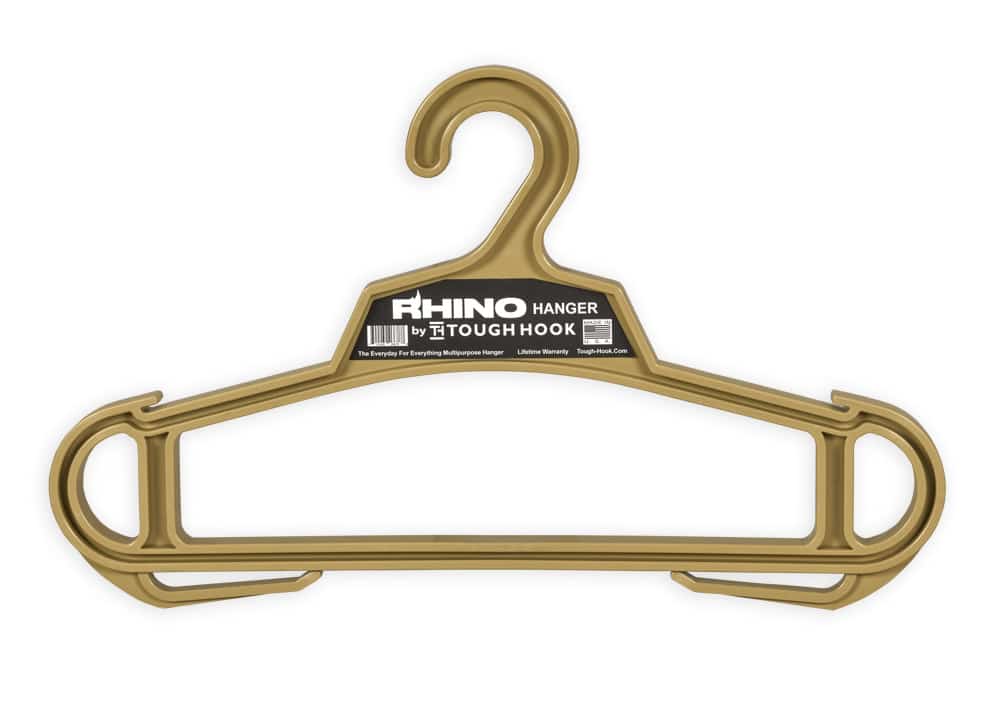
2 Pack RHINO Heavy Duty Clothes Hanger Bundle
Original price was: $27.95.$23.95Current price is: $23.95.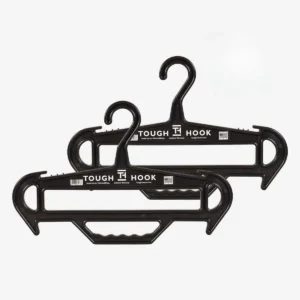
What Lifeguards Actually Hang
A lifeguard’s locker holds more than a uniform. Each type of gear has different storage needs, and not all of it belongs on a hanger.
| Gear | How to store it |
|---|---|
| Uniform, swimsuit, rash guard | Rinse in fresh water and hang on a wide-shoulder hanger to dry |
| Wetsuit | Rinse, then hang by the shoulders on a wide hanger in the shade |
| Jacket and sun-protective layers | Hang on the same hanger as the uniform or on its own |
| Towels | Hang spread out over the hanger bar, never balled up in a locker |
| Hip pack and whistle lanyard | Loop over the hanger hook so they stay with the uniform |
| Rescue tube | Store on a wall-mounted hook or rack by the strap, out of direct sun when off duty |
| Backboard and reaching pole | Wall-mounted brackets at the guard station, as facility rules require |
Whistles are often worn on a breakaway lanyard, and many lifeguards carry a hip pack or fanny pack with a resuscitation mask, gloves, and scissors. Keeping these on the same hanger as the uniform means nothing gets left behind at the start of a shift. For drying technique specific to wet neoprene and flotation vests, see our guide to hanging wetsuits and life vests.
Hanger Styles for Lifeguard Gear
Different gear and different storage spaces call for different hanger styles. Most guard rooms use a mix of two or three.
| Hanger style | Best for | Why |
|---|---|---|
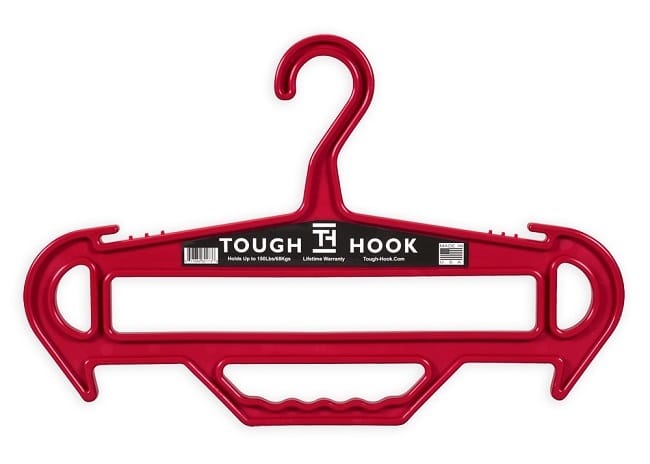
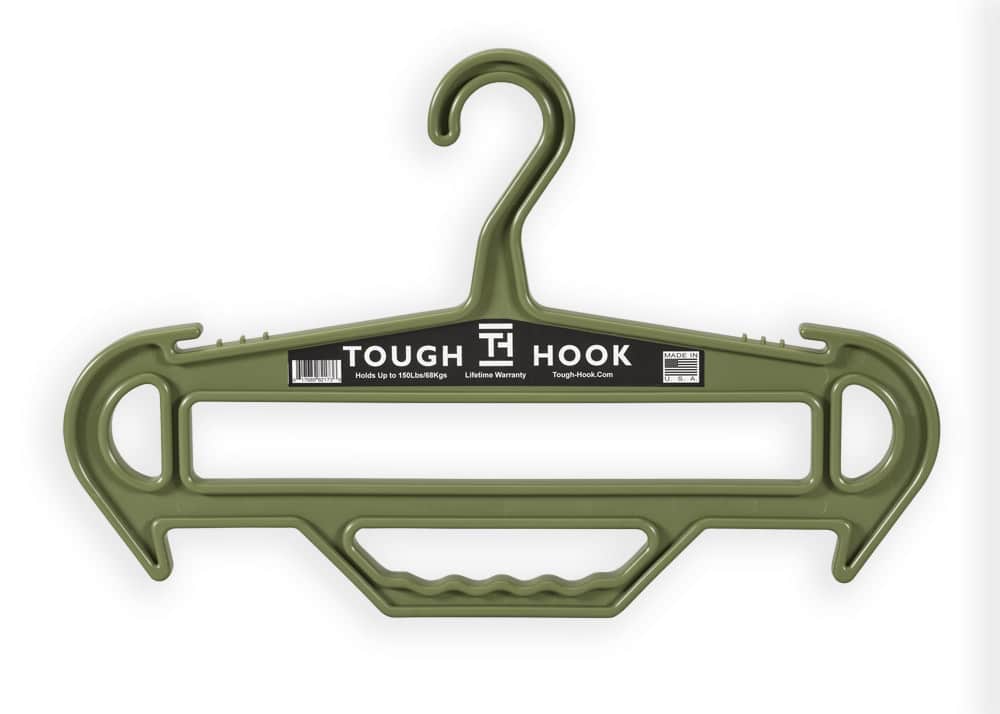
| Standard heavy-duty hanger with grip handle | Uniforms, rash guards, flotation vests, hip packs | About 16 inches wide, with a handle for carrying a loaded set to the stand or tower |
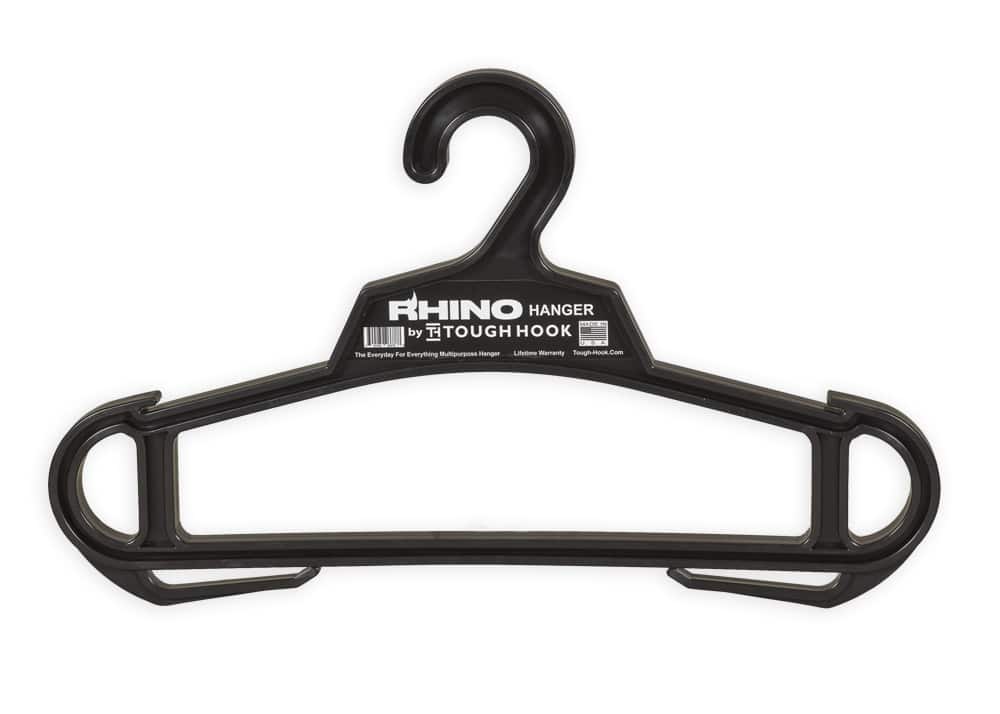
| Closet-rod style heavy-duty hanger | Lockers and guard room rails | A streamlined profile without the open handle, so more hangers fit on one rod |
| XL heavy-duty hanger | Wetsuits, jackets, and full gear sets | A full-shoulder span keeps bulky, wet items from folding over the edges |
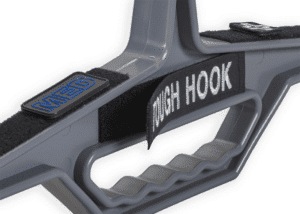
| ID hanger | Shared lockers and team guard rooms | A hook-and-loop strip holds a name tape so each guard’s kit stays together |
| Wall hooks and racks | Rescue tubes, backboards, reaching poles | Rescue equipment needs fixed, visible spots, not clothes hangers |
How Much Weight Can a Lifeguard Hanger Hold?
Weight capacity matters most when a hanger has to hold a soaked wetsuit, a wet uniform with a jacket over it, or a full gear set. Load ratings generally describe static capacity, meaning weight that hangs still, so leave a wide margin for gear that is wet and gets pulled on and off every day.
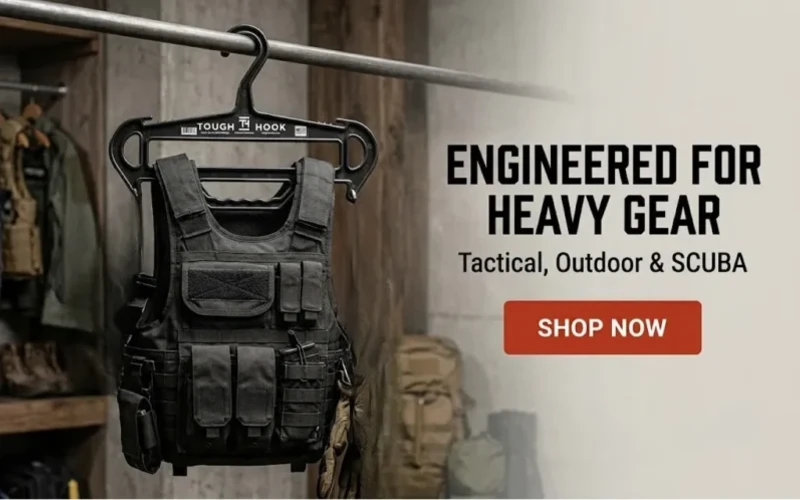
The Tough Hanger XL is listed by retailers as rated for over 200 pounds, with a full-shoulder span for bulky items. The I-beam profile runs the length of the shoulder and spreads the load instead of concentrating stress at the hook, which is what lets a sturdy hanger keep its shape through hundreds of loaded-and-unloaded cycles.
Materials for Poolside and Beach Conditions
Lifeguard stations, guard rooms, and pool decks combine water, chemicals, and sun. Each one damages the wrong materials.
Chlorine and Salt
Saltwater and chlorine both corrode unprotected metal. Indoor pools add humid, chlorinated air that reaches every fixture in the guard room, not just what touches the water. Resin hangers aren’t affected, but check any metal rods, brackets, and wall hooks too, and choose stainless or coated hardware.
UV Exposure
Long exposure to strong sun can make some plastics brittle and fades fabric and foam. Store hangers, uniforms, and rescue tubes in the shade when they aren’t in use, especially at beach towers and outdoor pools.
Airflow and Hygiene
Damp gear in a closed locker grows mildew and smells fast. Open-frame hangers let air reach the inside of each item, and a non-absorbent hanger can be wiped clean with soap and water, which helps keep shared guard rooms sanitary.
How to Prevent Gear From Slipping
Wet swimsuits and rash guards slide off narrow or glossy hangers. A few simple choices keep them in place.
- Use wide, contoured shoulders: More contact area holds wet fabric better than a thin edge.
- Hang heavier items first: Put the jacket or wetsuit on the hanger, then the lighter rash guard over it.
- Use the hook for loops: Hip pack belts, lanyards, and straps hold better looped over the hook than draped over the shoulders.
- Don’t overload one hanger: Packing items too tightly causes slipping and blocks airflow.
Setting Up a Guard Room or Lifeguard Station
Aquatic facility managers and beach patrol supervisors can turn a cluttered guard room into one where every guard’s gear has a place. The goal is a layout that dries gear quickly and makes missing equipment obvious.
Choose the Right Mounting Options
- Locker bars and closet rods: Hangers slide on with no tools. Confirm the rod is rated for the combined weight of everything you plan to hang.
- Wall-mounted rails: Anchor them into studs or solid masonry along a ventilated wall, away from the pool chemical storage room.
- Wall hooks and racks: Use them for rescue tubes, backboards, and reaching poles, which don’t belong on clothes hangers.
What Lifeguard Station Standards Specify
Purpose-built lifeguard stations show what works at scale. The San Diego Fire-Rescue Department’s lifeguard station design standards call for:
- Lockers: Heavy-duty, non-rusting metal or thermoplastic lockers with a top shelf, paired hooks, a padlock attachment, and space for a name tag.
- Ventilation: Locker rooms vented to the outside.
- Drying: A centrifuge dryer for swimsuits, and showers with hooks and a towel bar.
- Racks: Aluminum tubing and speed rail for wetsuit racks, and marine-grade plywood for fin and buoy racks.
- Radios: A lockable, ventilated cabinet with outlets for chargers.
Smaller pools and beach patrols can borrow the same ideas: rustproof lockers with name tags, a ventilated drying area, and dedicated racks for each kind of gear.
Label Each Guard’s Gear
The Rhino ID hanger has a hook-and-loop strip for a name tape, so each lifeguard’s uniform and kit stays together and shared lockers stay organized. Facilities that want branded hangers can order them through our private label program.
Build a Shift-Change Routine
- Rinse uniforms, swimsuits, and wetsuits in fresh water at the end of each shift.
- Hang each item on its own hanger in a ventilated area.
- Inspect rescue equipment at the start of every shift. The Lifesaving Society BC advises guards to check rescue equipment each shift for missing or damaged items.
- Restock hip packs with gloves and a resuscitation mask.
- Wipe hangers and racks down with soap and water once a week.
Buying in Bulk for Your Facility
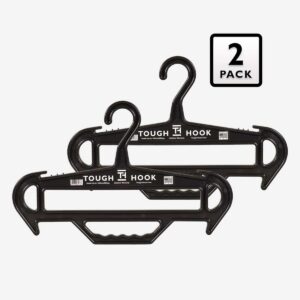
Pools, water parks, and beach patrols outfitting a whole team usually buy hangers in multi-packs so every guard gets the same model. Buying one model makes the guard room look uniform and makes replacements easy to match. Larger orders can be arranged through our team.
Safety and Accessibility in the Guard Room
A well-organized guard room is also a safer one. Storage should never slow down a response or create new hazards.
- Keep rescue equipment ready: Lifesaving equipment must be in place and available to lifeguards at all times while on duty, so give rescue tubes, first aid kits, and backboards fixed, visible spots that hanging gear never covers.
- Keep floors dry: Put a drip mat or floor drain under drying rails so wet gear doesn’t create a slip hazard.
- Keep walkways clear: Don’t hang gear across doorways, exits, or the route to the pool deck or beach.
- Hang within reach: Mount rails at a height every guard can reach without climbing, with heavy items lower down.
- Separate chemicals: Keep gear storage away from pool chemical rooms and their fumes.
Built to Last: Made in the USA With a Lifetime Warranty
Our hangers are made in the USA and are sold with a lifetime warranty. For a lifeguard team, that means hangers bought once for the guard room stay in service season after season, instead of being replaced every summer. For storage ideas for other water gear, see our guide to watersports gear hangers.
Frequently Asked Questions
These are the questions lifeguards and facility managers ask most about hanging and storing gear.
What weight capacity should lifeguard hangers have?
Choose hangers rated far above the weight of your heaviest wet item, so they hold a soaked wetsuit or a wet uniform with a jacket without sagging. The Tough Hanger XL is listed as rated for over 200 pounds.
What hangers resist rust?
Plastic and resin hangers resist rust. Unprotected metal hangers corrode around saltwater and chlorine and can stain uniforms.
How do I prevent wet gear from slipping off a hanger?
Use a hanger with wide, contoured shoulders, hang heavier items first, loop straps and lanyards over the hook, and avoid overloading one hanger.
Can heavy-duty hangers hold wet towels and swimsuits?
Yes. Spread towels over the hanger bar and hang swimsuits and rash guards on wide shoulders so they dry fully instead of staying damp in a locker.
Should rescue tubes go on a hanger?
No. Store rescue tubes on a wall-mounted hook or rack by the strap, out of direct sun when off duty. Hangers are best for uniforms, wetsuits, towels, and accessories.
How do I install a heavy-duty hanger safely?
Slide it onto a standard closet rod or locker bar. Just confirm the rod is rated to hold the combined weight of everything you plan to hang.
How do I clean heavy-duty hangers?
Rinse off salt or chlorine residue and wipe them down with soap and water. Non-corrosive resin hangers don’t need much more than that.
What size hangers work for lifeguard equipment?
Standard heavy-duty hangers, about 16 inches wide, fit uniforms, swimsuits, and rash guards. For bulky wetsuits, jackets, and full gear sets, an XL hanger with a full-shoulder span keeps fabric from folding over the edges.
Do heavy-duty hangers work in humid areas?
Yes. Resin hangers don’t rust, warp, or absorb moisture, so they hold up in humid guard rooms, indoor pools, and beach stations. Pair them with good ventilation so the gear on them dries.
Where should rescue equipment be stored?
Keep rescue tubes, first aid kits, and backboards in fixed, visible spots where lifeguards can reach them at all times while on duty, on wall hooks, racks, or brackets rather than on clothes hangers.
Are heavy-duty hangers available in bulk for lifeguard teams?
Yes. Multi-packs and larger facility orders let every guard use the same model, and branded hangers are available through our private label program.
Ready for the Next Shift
Lifeguards keep everyone else safe, and their gear should be ready when they are. Heavy-duty, rust-proof hangers keep uniforms, wetsuits, towels, and accessories dry, organized, and in one place, shift after shift. Browse the full range in our shop.