
Very often, we take for granted many of the everyday objects found around our homes that we nonetheless depend on for our lifestyles.
Let us take a look at this interesting and little-known History of the Clothes Hanger.
From can openers to remote controls, little inventions make our lives easier. Another of these items is the clothes hanger. Think about it: you probably use multiple clothes hangers every single day.
Clothes hangers preserve and protect some of your most expensive, valuable garments. Many of your articles of clothing are always wrinkle-free and ready to wear. What most people do not realize is that hangers have a fascinating story, beginning with their invention in the 1800s. They have continued to evolve through the years since they first appeared on the market. Today, approximately 62% of all hangers used are made from plastic, and over 150 million clothes hangers are produced annually worldwide. Let us dive into the History of the Clothes Hanger.
Quick Clothes Hanger History Facts
| Who invented the coat hanger? | O. A. North |
| When were hangers invented? | 1869 |
| Where were hangers invented? | New Britain, Connecticut |
| Source: U.S. Patents | |
Origins of the Clothes Hanger
The Hanger is Born
If you do some digging, you might read that Thomas Jefferson, one of the Founding Fathers of the United States and its third president, invented the clothes hanger. However, this fact is of dubious credibility. While undoubtedly a brilliant and resourceful man who invented a new style of plow, a macaroni machine, and a revolving chair, Jefferson’s version of the hanger bears little resemblance to what we consider a hanger today.
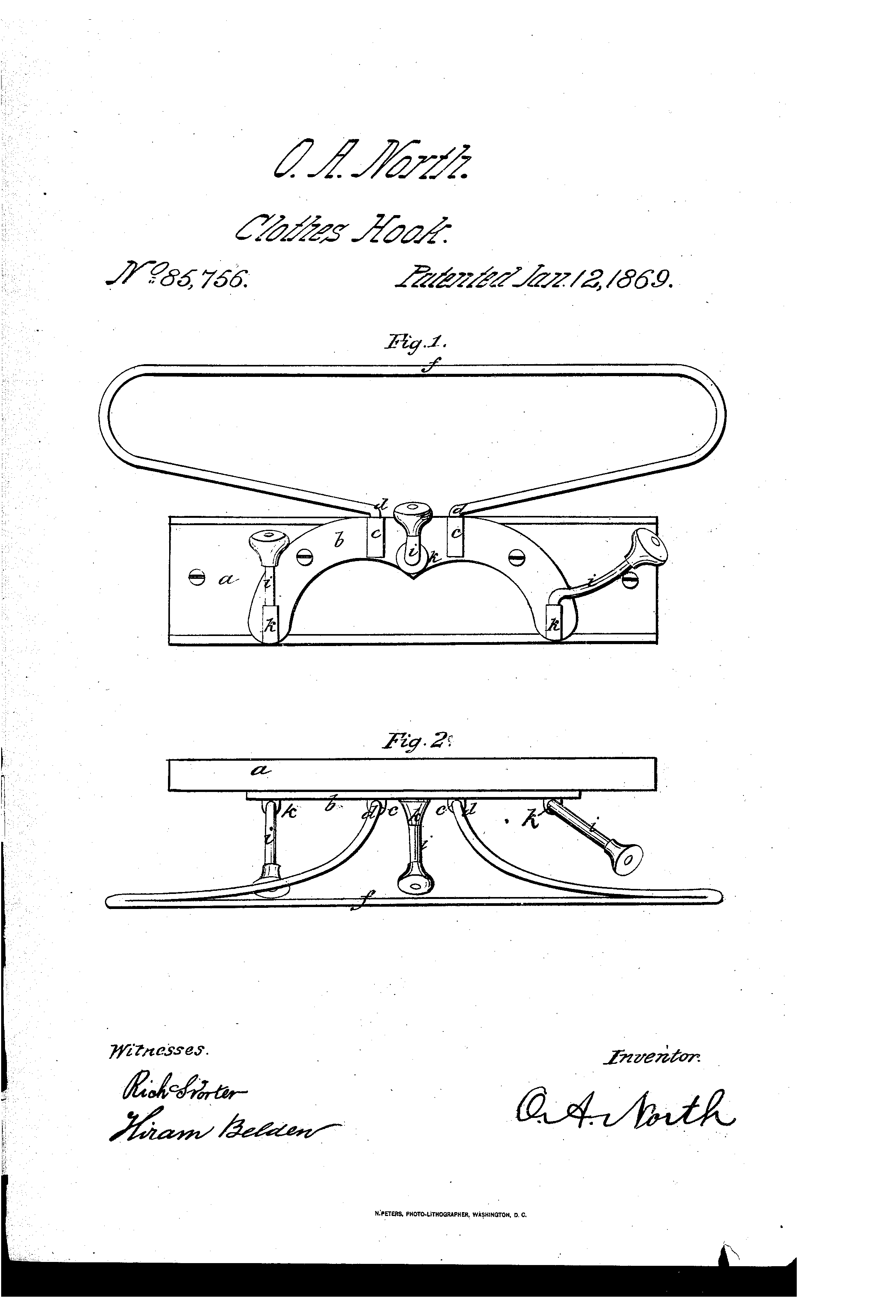
Instead, the first modern clothing hanger was probably invented by a man named O.A. North in 1869. The first patent for a clothes hanger was filed in 1869 by O.A. North while living in New Britain, Connecticut. He submitted a patent application for a device featuring a hook on top and what resembled shoulder supports for clothing to the right and left of the hook. Around the same time, others also submitted patents for somewhat similar contraptions. Historians note that the concept of a coat hook or wall-mounted support for apparel had existed in various forms before North’s formal patent, but his design gave the invention its first official structure.
Evolution Through the 19th Century
During the remaining years of the 19th century, more households began to utilize hangers. They became more important with the growth of the middle class and the increasing number of people working as professionals rather than laborers. These people, mostly men, included lawyers, clerks, accountants, and businessmen, and they wore suits to work. They needed to look fresh and well-pressed, but very often did not have the household staff to iron their clothes each day. Women also increasingly required practical storage solutions for their dresses and garments as fashion became more accessible across social classes.
Wooden hangers gained popularity in the early 20th century, with production increasing by 45% between 1920 and 1940. For the most part, these early clothes hangers were made of wood, prized for their utility, durability, and the way they preserved the shape of heavier garments like coats and trousers.
Early Designs, Materials, and Key Inventors
The Hanger Evolves
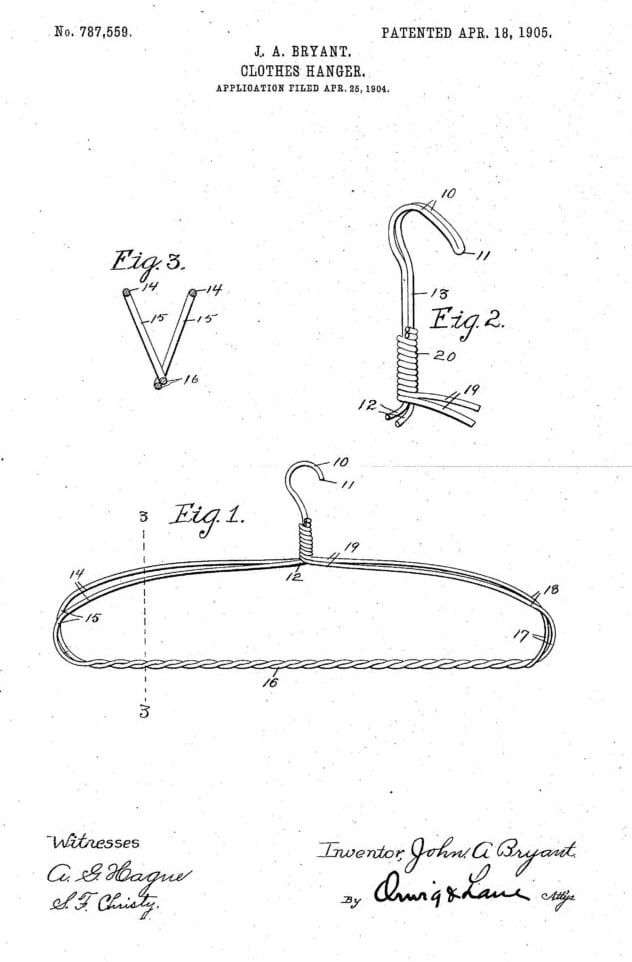
Continuing the History of the Clothes Hanger journey, at the very beginning of the 20th century, the hanger evolved to more closely resemble the accessory we use today. In Jackson, Mississippi, a man named Albert J. Parkhouse worked at the Timberlake Wire and Novelty Company. While there, he figured out that a piece of sturdy wire could be twisted to form a useful contraption for hanging clothes, especially coats.
His shape featured two ovals on either end, twisted in the center with a hook shape at the top, which was perfect for attaching to a bar, wall hook, or any number of other places. Albert J. Parkhouse is often credited with creating the modern wire hanger in 1903, and metal wire hangers account for about 28% of all hangers sold globally each year.
Development of Wire Hangers
After Parkhouse’s design caught on, other companies and individuals kept on making improvements to it. In order to make hangers stronger and sturdier, some people began adding wooden reinforcements in the middle especially. Remember that the wire was bendable, and clothing tended to be heavier in the early 20th century than it is today. Some variations added coat hooks or small clips to help hold trousers and other garments in place without slipping.
The year 1932 was another important evolutionary moment in the History of the Clothes Hanger. A man named Schuyler C. Hulett added inexpensive cardboard tubes to the wire in order to further prevent wrinkling. To this day, many dry cleaning companies still use a version of this wire and cardboard design.
The Industrial Revolution Impact and Cultural Influence on Hanger Design
The Swinging 60s
Two important developments in the History of the Clothes Hanger occurred in the 1960s. First, in 1965, Gerhard Wieckmann patented a new hanger design with a wire hook and wooden frame. His innovation prevented wrinkling and solved some other issues with the older design. This period also saw growing cultural influence on hanger design, as fashion became increasingly important for both men and women across all social classes, driving demand for hangers suited to specific garment types such as dresses, suits, and children’s clothing.
The second development was in 1967 when J.H. Batts patented an inexpensive molded plastic hanger. While plastics had been invented much earlier, they really took off in the 1960s. This not only made the manufacture of items such as hangers easier, it also made them less expensive to produce and sell. It was around this time that hangers truly became an essential storage accessory in almost every household in America.
As is often the case, a single invention can cause a cascade of other innovations and changes. It was not until after the clothes hanger really caught on that closets became such an important feature in homes, something that we could not dream of not having in houses and apartments today. The wardrobe as a piece of furniture also became less necessary as built-in closets and hanger-based organization systems took over bedroom and hallway storage.
Modern Innovations in Clothes Hangers
The Modern Clothes Hanger
Since the 1960s and the emergence of plastic hangers, we have seen more developments, including hangers designed to hold multiple items of clothing, travel hangers built for convenience and portability, and hangers specifically made for particular articles or types of clothing. Sizes have expanded too, with children’s hangers, slim velvet hangers for delicate garments, and wide shoulder-support hangers for heavy coats all becoming standard products.
What Makes a Great Modern Hanger?
A great modern hanger combines practicality with preservation. It should support the structure of the garment, prevent wrinkling, allow air circulation for freshness, and withstand the weight of heavier clothing. There are even luxury and custom-made hangers built for specific wardrobe collections. Perhaps more importantly, we also have heavy-duty hangers to handle large items. For example, Tough Hook hangers can hold 150 pounds on a single hanger. This innovation is even more impressive when you know about the humble beginnings and slow development of the clothes hanger itself.
Environmental Considerations and Recycling
The invention of plastic hangers in the 1960s revolutionized the clothing industry, making hangers more affordable and accessible. However, this came at a significant environmental cost.
Plastic hangers, often not recycled, contribute to the growing plastic waste problem. The practicality of plastic has long come at the expense of sustainability. In response, some companies now focus on eco-friendly alternatives, including hangers made from recycled materials or sustainable sources like bamboo. These sustainable hangers serve the same purpose but have a much smaller environmental footprint, making preservation of the planet as important as preservation of your garments.
Frequently Asked Questions
Who invented the clothes hanger?
The first modern clothes hanger is credited to O.A. North, who filed the first patent in 1869 in New Britain, Connecticut. Albert J. Parkhouse later developed the wire hanger design in 1903 while working at the Timberlake Wire and Novelty Company in Jackson, Mississippi.
Why were clothes hangers invented?
Clothes hangers were invented to preserve and protect garments. They became more prevalent with the growth of the middle class and the increasing number of professionals who needed to keep their suits and clothing fresh and well-pressed.
What material were the early clothes hangers made of?
The early clothes hangers were primarily made of wood, valued for their utility and ability to maintain garment shape. It was not until the early 20th century that wire hangers started to appear, followed by plastic in the 1960s.
Why did clothes hangers start to evolve in the early 20th century?
They evolved to become stronger and sturdier due to the heavier clothing of that era, which the wire hangers at that time struggled to support. Innovations like cardboard tubes and wooden reinforcements were added to improve structure and prevent wrinkling.
How did the invention of the clothes hanger influence home design?
As hangers became essential, the concept of closets also became a key feature in homes. The wardrobe as a standalone piece of furniture gradually gave way to built-in closets and organized storage systems centered around the hanger.
How do modern hangers differ from historical ones?
Modern hangers come in a wide range of materials including plastic, wood, metal, and bamboo, and are designed for specific garment types, from children’s clothing to heavy coats. Heavy-duty options like Tough Hook hangers can support up to 150 pounds, a far cry from the simple wire and wood devices of the 19th century.