The operational readiness of any multi-unit department—be it fire rescue, law enforcement, or military—hinges significantly on the organization and maintenance of its gear room. This is not merely a storage closet; it is a critical zone where seconds matter and the condition of equipment can be the difference between mission success and failure. As departments grow and gear becomes more complex and heavier, traditional storage solutions quickly become obsolete. A cluttered, inefficient gear room directly translates to slowed response times, increased equipment damage, and unnecessary operational stress.
The time has come for departments to stop viewing gear storage as a logistical afterthought and start recognizing it as a key element of tactical readiness. The solution lies in re-engineering these vital spaces using purpose-built, tactical hanger racks designed for high-density, heavy-duty applications. This modernization is essential for maximizing space, protecting valuable equipment, and ensuring every unit member can deploy quickly and efficiently.
The Pitfalls of Conventional Gear Storage
For decades, many departments have relied on standard lockers, pegboards, and commercial garment racks, all of which are fundamentally ill-suited for the weight, bulk, and unique geometry of modern tactical equipment. This approach results in a number of costly and dangerous inefficiencies:
-
Equipment Damage and Degradation: Heavy items like plate carriers, hydration packs, and turnout gear are often folded, piled, or hung on flimsy racks and hooks. This can compromise the structural integrity of specialized materials, leading to premature wear on ballistic plates, damage to fire-resistant fabrics, and weakened stitching.
-
Wasted Space: Standard storage systems fail to utilize vertical space effectively. Floor-standing equipment and low-capacity racks create a dense, chaotic footprint, especially in multi-unit stations where space is always at a premium. This lack of spatial efficiency impacts everything from vehicle maneuvering to routine maintenance.
-
Slowed Deployment: In an emergency, every second spent searching for a helmet or a properly assembled vest is a delay in service. Disorganized gear rooms force personnel to rummage through piles or multiple storage locations, hindering the crucial transition from rest to readiness.
-
Poor Ventilation and Maintenance: Gear needs to breathe. Trapped moisture from sweat and decontamination efforts can lead to mold, mildew, and corrosion, further compromising equipment health. Standard lockers and closets offer little airflow, shortening the lifespan of costly uniforms and protective gear.
These challenges are compounded in multi-unit departments where the sheer volume of equipment for numerous teams, platoons, or shifts necessitates a scalable, robust, and highly organized system.
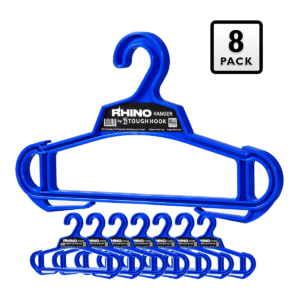

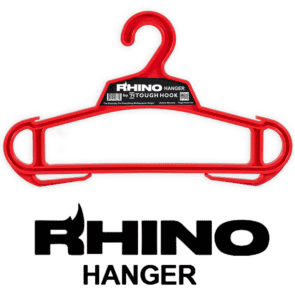








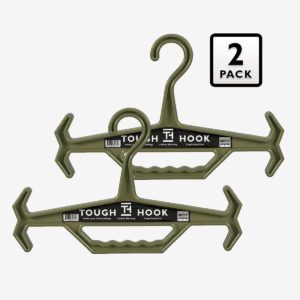

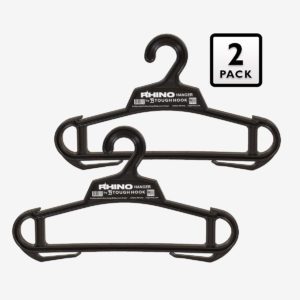
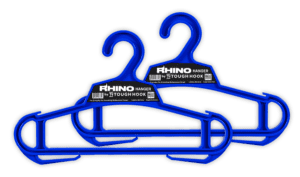
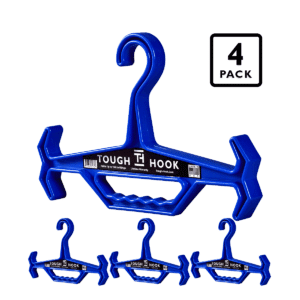
2 Pack RHINO Heavy Duty Clothes Hanger Bundle
Original price was: $27.95.$23.95Current price is: $23.95.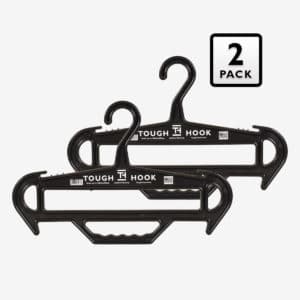
The Tactical Advantage of Purpose-Built Hanger Racks
Tactical hanger rack systems provide a comprehensive solution that addresses these pain points directly. They are engineered from the ground up to support the weight and protect the contours of duty-specific equipment, integrating seamlessly with heavy-duty hanger solutions.
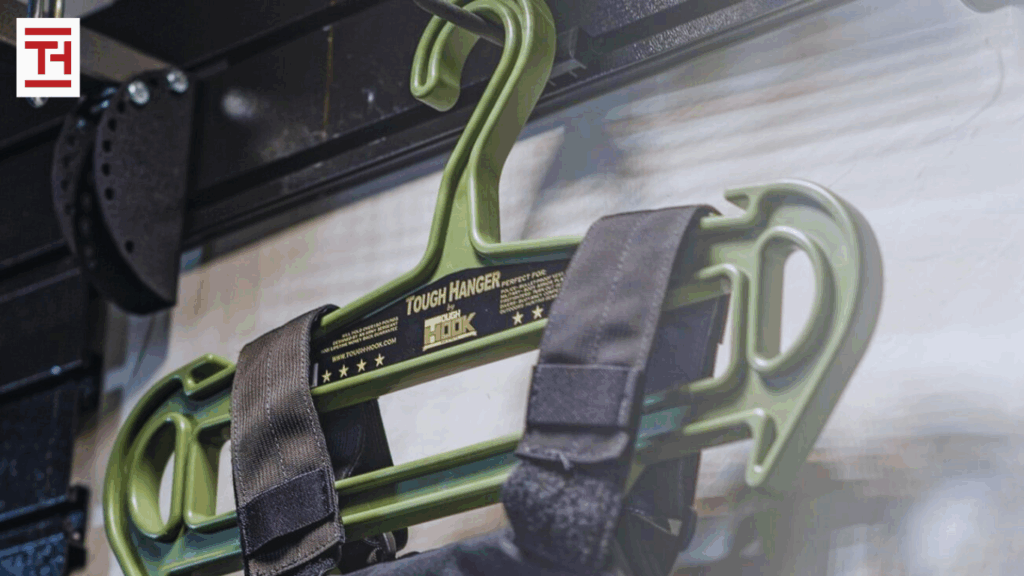
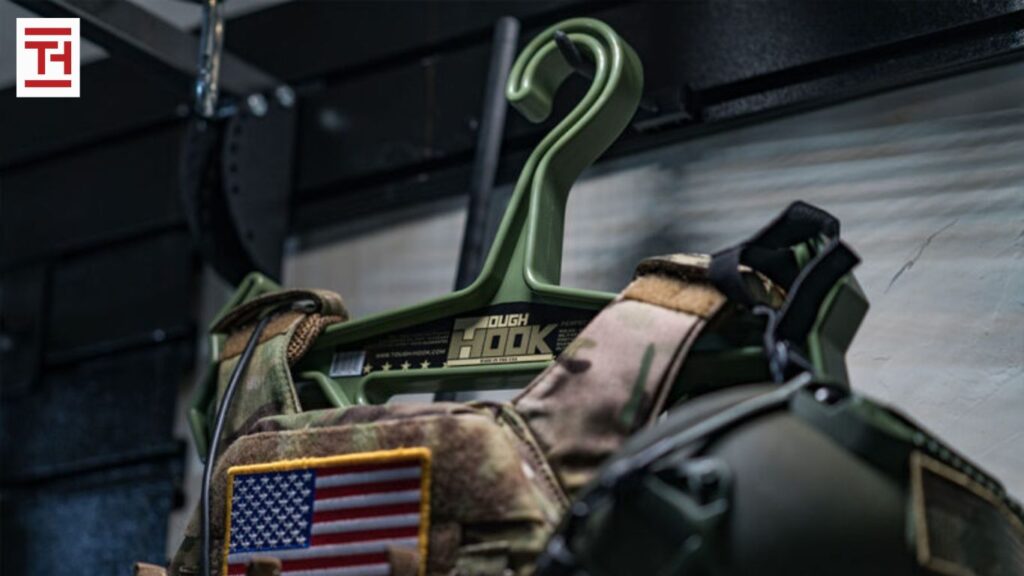
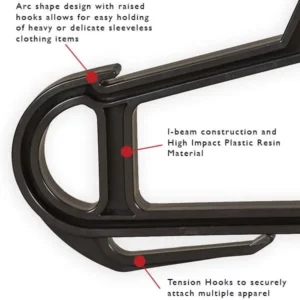
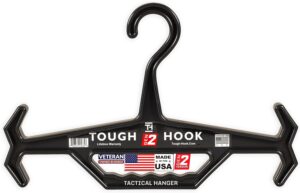
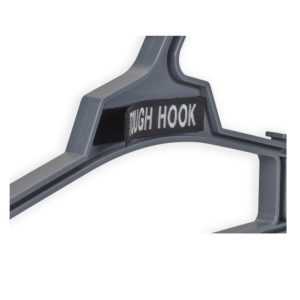
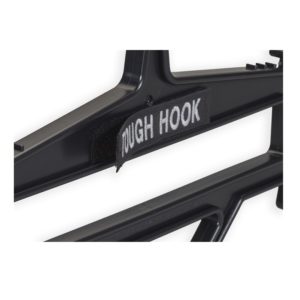
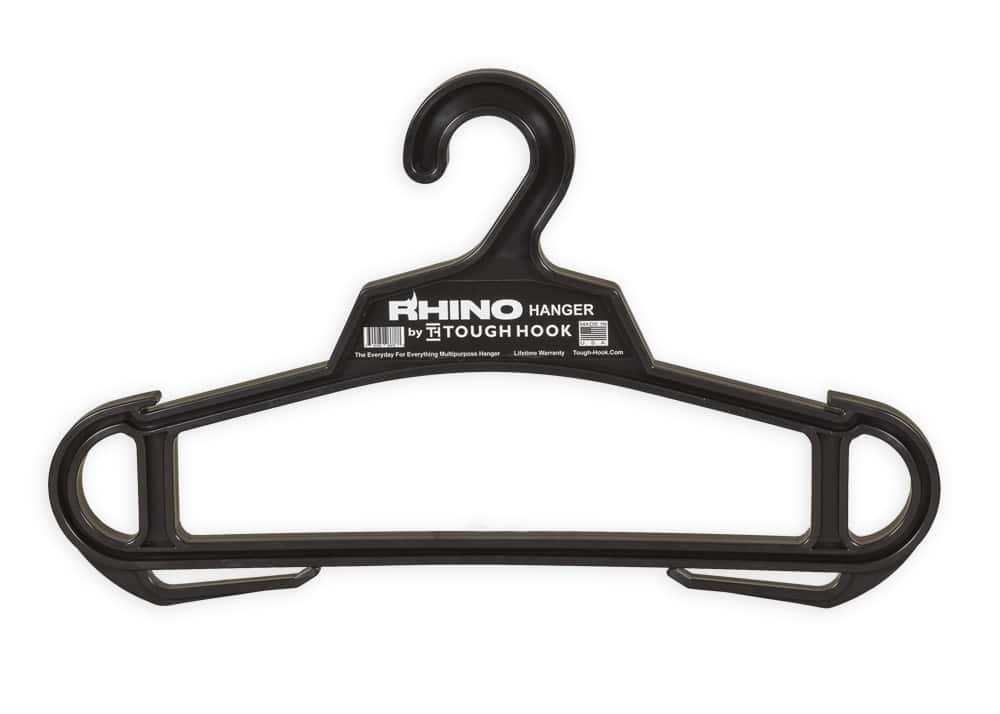
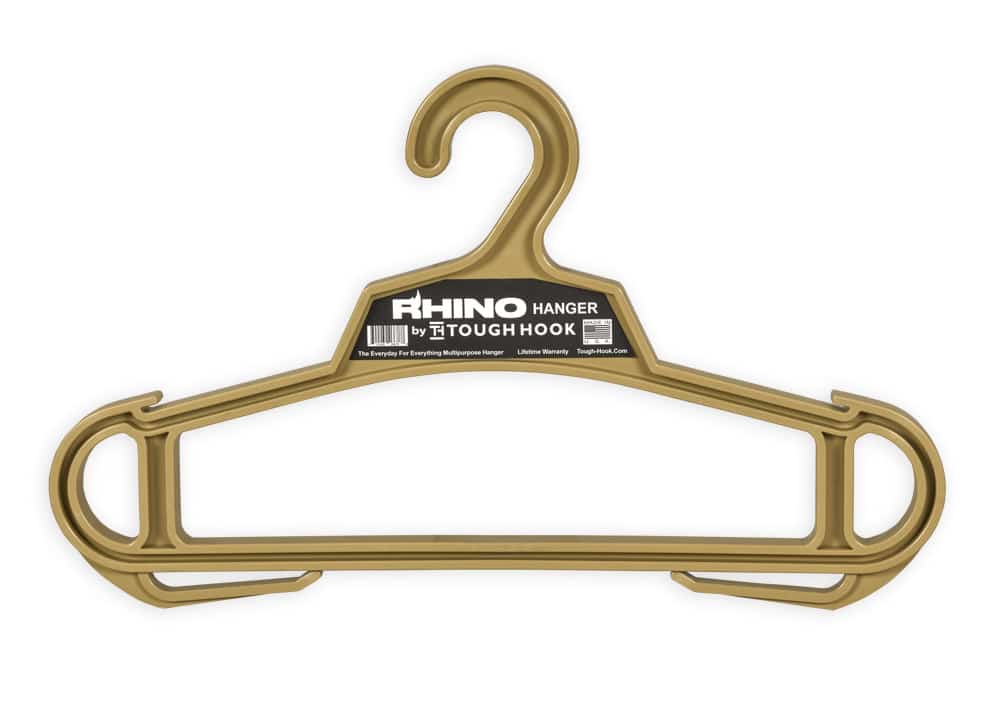
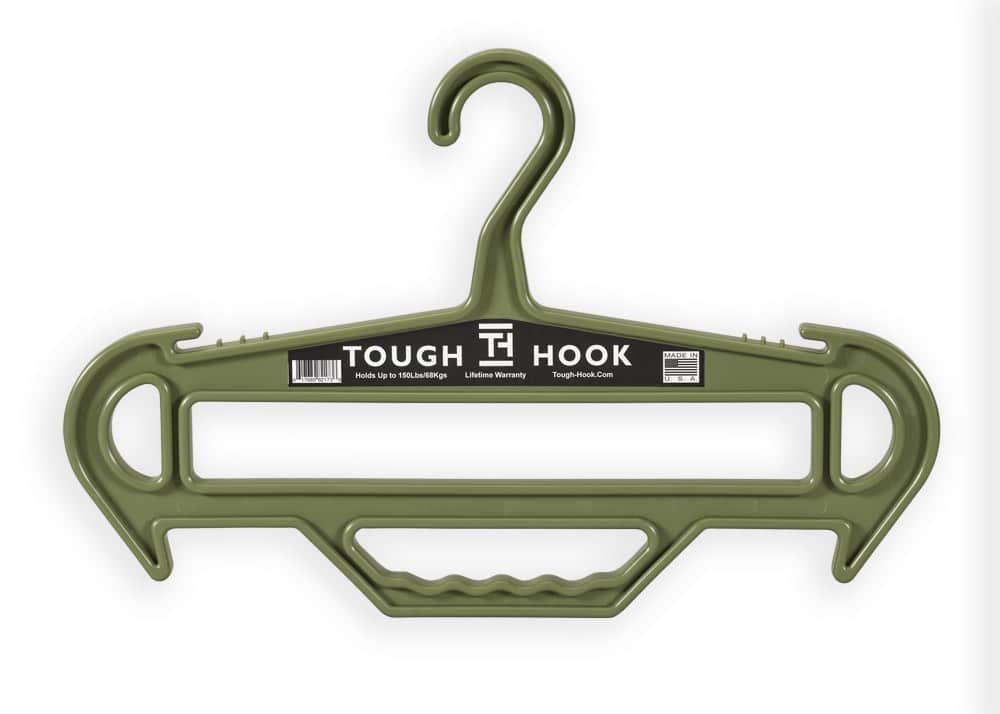
The core of this re-engineering process involves utilizing hangers that can handle extreme loads without bending or breaking. This is where specialized products, such as those made by our company, Tough Hook, come into play. Tough Hook, an American-owned, Service-Disabled Veteran-Owned Small Business, designs and manufactures heavy-duty hangers specifically built from impact-resistant polymer to support the toughest, bulkiest tactical loads.
The Benefits of Integrating Tough Hook Hangers with Tactical Racks:
-
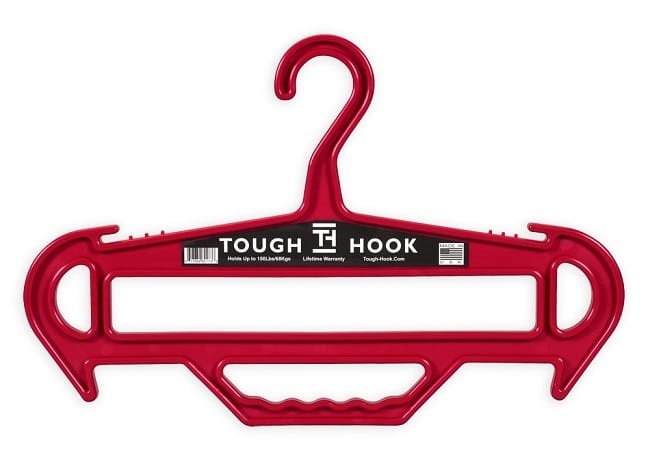
Extreme Load Capacity: The Original Tough Hook Hanger, for example, is engineered to hold over 150 pounds of equipment. This capacity easily accommodates a fully loaded body armor vest, a set of fire turnout gear, or a heavy dive suit, ensuring the gear maintains its proper shape and integrity.
-
Enhanced Gear Longevity: Hanging heavy gear correctly, instead of piling it, reduces stress points and allows for full-surface air circulation, a crucial factor in preventing material degradation after exposure to sweat, water, or hazardous materials.
-
Integrated Carry Functionality: Tough Hook hangers feature a patented, reversible carry handle. This unique design allows personnel to quickly lift, transport, and deploy their entire gear loadout—vest, uniform, and accessories—in one swift motion, directly from the rack to the vehicle or staging area. This transition significantly shaves off precious seconds during an urgent response.
Implementing a Multi-Unit Tactical Rack Strategy
A successful gear room re-engineering project for multi-unit departments requires a strategic approach focused on modularity, density, and accessibility.
Key Considerations for Rack System Design:
-
High-Density Vertical Storage: Utilize wall-mounted or mobile rack systems that maximize vertical space. This is critical for departments operating within existing, often limited, facility footprints. High-density systems can store a greater volume of gear per square foot, freeing up floor space for other uses.
-
Modularity and Scalability: The system must be adaptable to changing unit sizes, gear types, and future expansion. Modular designs allow for easy reconfiguration—adding, subtracting, or moving individual gear bays—without having to overhaul the entire system.
-
Ventilation and Drying: Rack systems should be open-air designs to promote continuous air flow around the equipment. Some advanced systems may even integrate low-profile drying capabilities, further expediting the process of readying decontaminated or wet gear for the next deployment.
Steps for Gear Room Re-engineering:
-
Phase I: Assessment and Inventory:
-
Catalog all equipment requiring storage: body armor, helmets, tactical packs, breathing apparatus, and specialized uniforms.
-
Measure the total linear hanging weight to accurately specify the required load-bearing capacity of the new rack system and hangers.
-
Map out traffic flow and personnel-to-gear ratios to determine optimal rack placement for rapid access.
-
-
Phase II: Procurement and Installation:
-
Select industrial-grade tactical rack infrastructure that integrates seamlessly with heavy-duty hangers like the offerings from Tough Hook.
-
Prioritize a floor plan that assigns specific rack sections or bays to individual shifts, teams, or roles, clearly identifying each space with placards or ID systems.
-
-
Phase III: Protocol and Training:
-
Establish clear Standard Operating Procedures (SOPs) for the proper way to don, doff, and store all major pieces of equipment on the new racks, emphasizing the correct use of the heavy-duty hangers.
-
Train all personnel on the “loadout-ready” configuration, ensuring that all necessary equipment (vest, helmet, belt) is hung in the correct sequence for rapid, one-handed retrieval.
-
The Return on Investment: Beyond Dollars and Cents
While the initial investment in a tactical rack system and commercial-grade hangers like those from Tough Hook is higher than generic storage, the return on investment is substantial and multi-faceted.
The most critical return is in operator safety and mission efficacy. By ensuring gear is always accounted for, undamaged, and immediately accessible, departments are directly enhancing the readiness of their personnel.
Additional returns include:
-
Reduced Equipment Replacement Costs: Protecting ballistic fibers and fire-resistant materials from compression damage and improper drying dramatically extends the service life of expensive gear, often saving thousands of dollars in premature replacement.
-
Maximized Space Utilization: Gaining back valuable square footage in a high-cost facility is a long-term economic benefit. This reclaimed space can be reallocated for training, equipment maintenance, or critical administrative functions.
-
Enhanced Professionalism and Morale: A clean, orderly, and professional gear room boosts personnel morale, reinforces discipline, and instills confidence in the department’s commitment to providing the best tools and support for its mission-critical work.
In the demanding, high-stakes environment of multi-unit public safety and defense, there is simply no room for compromise on operational efficiency. Re-engineering the gear room with tactical hanger racks and utilizing the unrivaled strength of equipment hangers from companies like Tough Hook is a necessary, modern imperative. It transforms a chaotic storage space into a refined, high-performance logistical hub, ensuring that when the call comes, every unit is genuinely ready to go. The tactical gear room should be a testament to a department’s readiness, not a measure of its logistical burden.