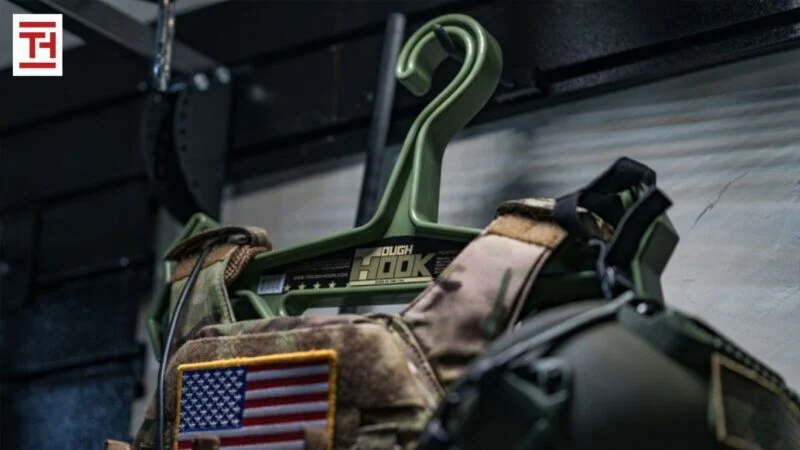
Heavy duty hangers for commercial laundry have one job that standard hangers fail at: carrying wet, heavy, or bulky garments through hundreds of cycles without bending, snapping, or stretching the shoulders out of shape. Washers and dryers get most of the attention in a laundry operation, from a neighborhood laundromat to an industrial plant, but the hangers decide whether finished work reaches the customer looking right. We build our heavy duty clothes hangers for exactly that kind of load.
This guide compares the main commercial laundry hanger types and sizes, explains how wire gauge and material affect strength, what hangers cost, and shows when a disposable wire hanger makes sense and when a reusable heavy-duty hanger pays for itself. It also covers conveyor and rail fit, bulk buying, and when to replace worn stock.
What Are Heavy-Duty Hangers for Commercial Laundry?
Heavy-duty commercial laundry hangers are hangers built for repeated, high-volume handling and heavier-than-normal loads. In practice, that covers two very different products:
- Heavier-gauge wire hangers: Thicker metal wire than a standard shirt hanger, used by dry cleaners and laundries for coats, uniforms, and drapes that leave with the customer.
- Reusable heavy-duty hangers: Molded resin or reinforced plastic hangers that stay in-house and carry heavy items such as coveralls, turnout gear, wetsuits, and winter coats again and again.
Most operations need both. Wire hangers handle the outgoing customer order, and reusable hangers handle the heavy pieces that would bend a wire hanger or never leave the building at all.
Why Hanger Choice Matters in a Commercial Laundry
A commercial laundry handles garments on hangers at almost every stage after washing: finishing, sorting, staging, and delivery. A hanger that fails at any point costs time and can cost the garment.
- Protects garment shape: A hanger with the right shoulder width and strength keeps heavy jackets and uniforms from stretching or developing shoulder bumps.
- Keeps the line moving: Hangers that do not bend, tangle, or slip off a rail mean fewer stops to rehang dropped items.
- Improves presentation: A finished garment that arrives straight and crease-free on a solid hanger tells the customer the work was done carefully.
- Controls cost: Choosing the right hanger for each garment avoids paying for heavy-duty stock where a standard hanger would do, and replacing cheap hangers where it would not.

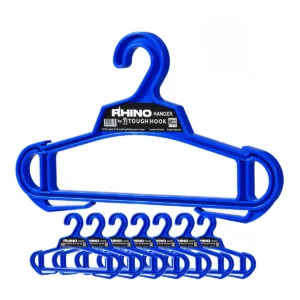
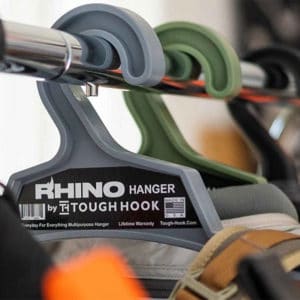

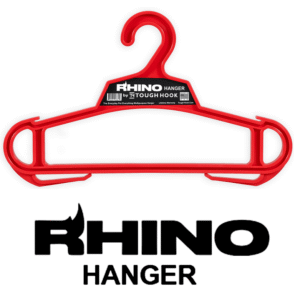
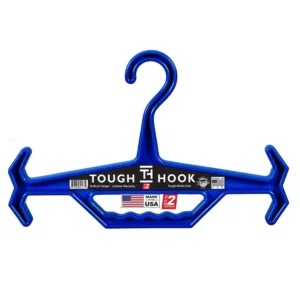

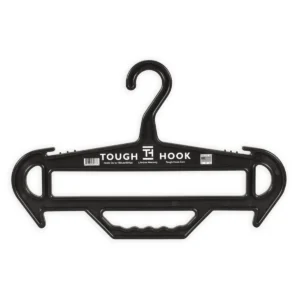
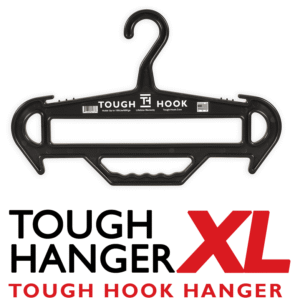
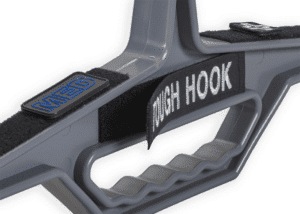
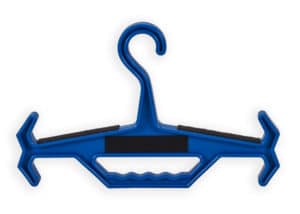
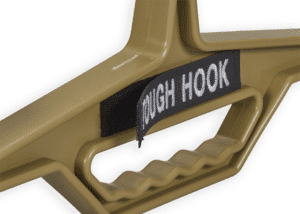
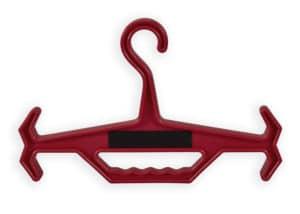
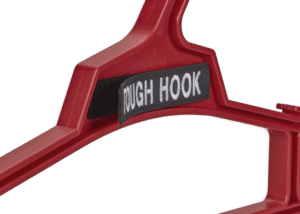
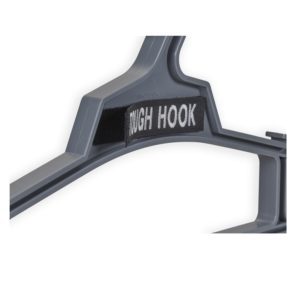
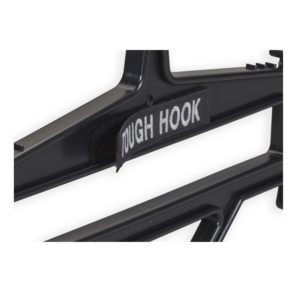


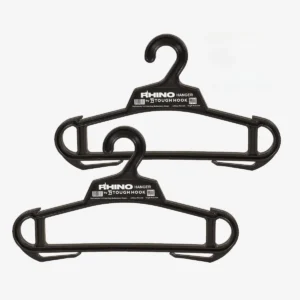
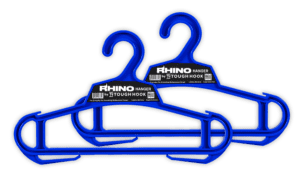
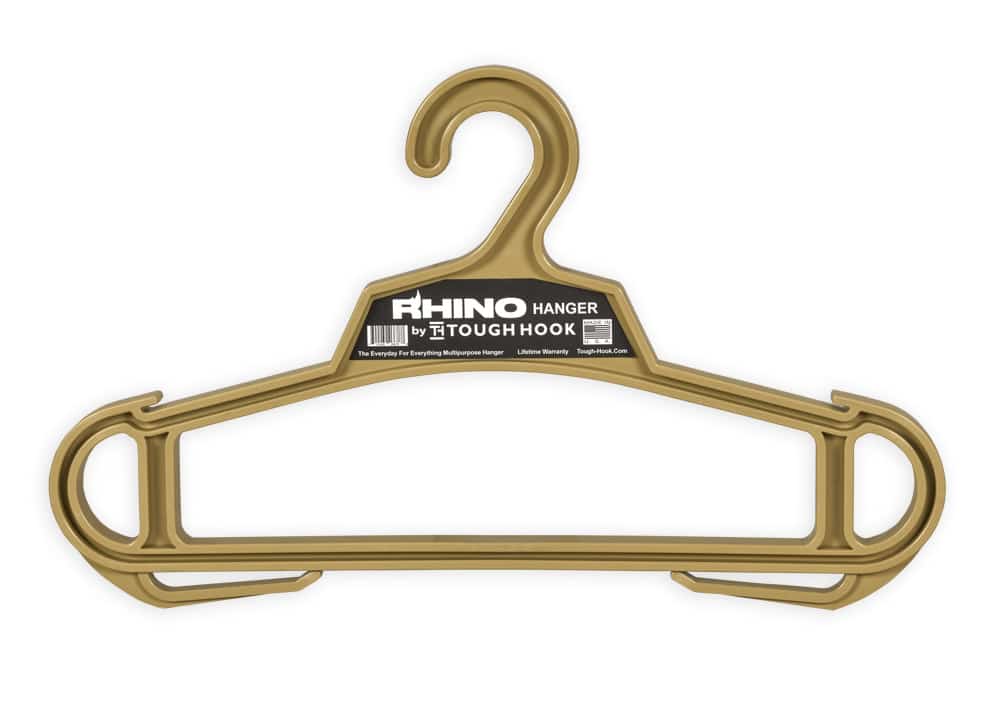
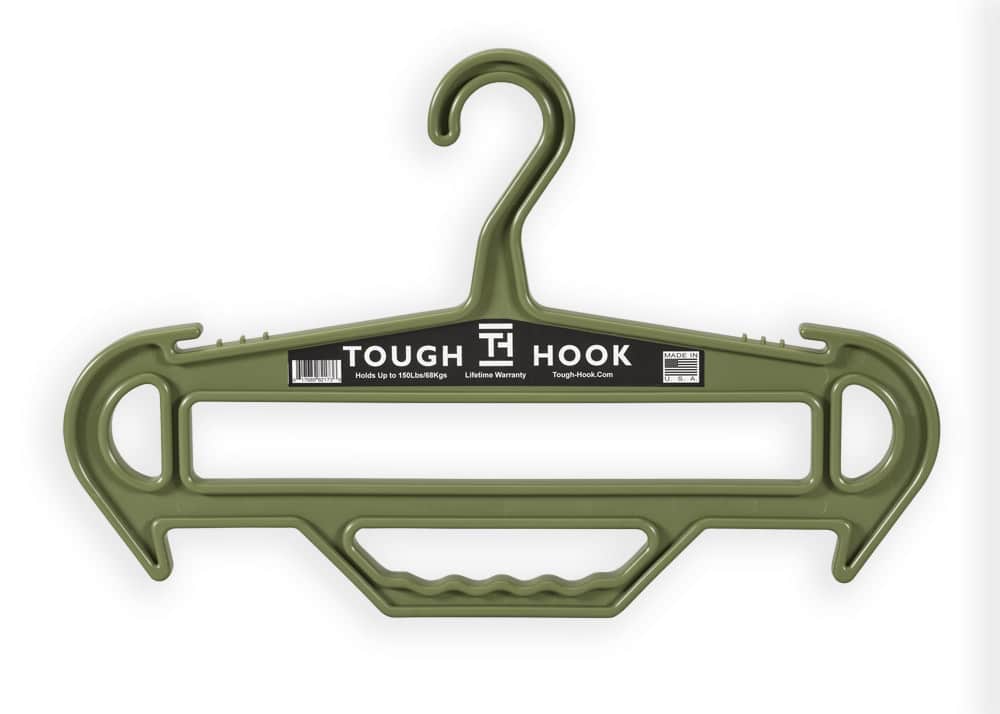
2 Pack RHINO Heavy Duty Clothes Hanger Bundle
Original price was: $27.95.$23.95Current price is: $23.95.
Commercial Laundry Hanger Types and Where Each Fits
Laundry suppliers sell hangers by garment type, and each design solves a specific problem. The table below shows where each type works best and where it falls short.
| Hanger type | Best for | Limits |
|---|---|---|
| Wire shirt hangers | Laundered shirts and blouses that go home with the customer | Too light for coats, wet items, or heavy uniforms |
| Strut hangers | Trousers and pants; the cardboard tube helps prevent a crease across the leg | Tube can soften if the garment is still damp |
| Caped hangers | Shirts and dresses where a paper cape protects the shoulders and adds a finished look | Single-use; not meant for heavy garments |
| Suit and coat hangers | Suits, blazers, and outerwear that need wide, contoured shoulders | Wire versions lose shape under heavy coats; molded versions cost more |
| Clip and skirt hangers | Skirts, shorts, and pants hung by the waistband | Clips can mark delicate fabric and loosen with heavy use |
| Heavier-gauge wire hangers | Coats, suits, and drapery in dry cleaning | Can still bend under very heavy or wet loads and may rust over time |
| Molded plastic hangers | Retail-style presentation and lighter in-house use | Many standard plastic hangers crack at the hook under weight |
| Reusable heavy-duty resin hangers | Coveralls, turnout gear, wetsuits, leathers, and heavy coats that circulate in-house | Higher upfront cost and a thicker hook that may not fit every rail |
Commercial Laundry Hanger Sizes
Hanger width should match the garment, not the closet. Too narrow and the shoulders sag; too wide and the fabric stretches or shows bumps.
- 18-inch shirt hangers: The common size for laundered shirts and blouses in wire.
- 16-inch strut hangers: The usual size for pants and trousers, often in gold-tone wire with a cardboard tube.
- Wider heavy-duty hangers: Bulky coats, coveralls, and gear need a broader, deeper shoulder. Our Original hanger measures about 16 by 10 inches, and the Tough Hanger XL about 18.5 by 12 inches, for garments that a thin wire shoulder cannot hold.
When in doubt, hang a sample of your widest regular garment on each size before ordering in bulk.
Wire, Plastic, or Heavy-Duty Resin: Which Material Lasts Longest?
Material decides how much weight a hanger can carry and how many cycles it survives. Each of the three common options suits a different part of the operation.
Wire Hangers and Gauge
Wire hangers are rated by gauge, and a lower gauge number means thicker wire. A 14.5 gauge wire shirt hanger is the common industry standard, and many dry cleaning hangers come in 13 or 14.5 gauge, with heavier 11.5 gauge wire offered for drapery. Wire is cheap, takes little rail space, and is easy to recycle. Chrome and stainless steel hangers are a more durable metal option, often used in hotel closets because they resist rust, though they cost far more per piece. Plain steel wire can bend under heavy loads and rust when hangers stay damp.
Standard Plastic Hangers
Molded plastic hangers look clean and resist rust, which makes them popular for retail and light in-house use. The weak point is usually the hook, where thin plastic can crack or snap under a heavy coat. Our guide to plastic hangers shows the common failure points.
Heavy-Duty Resin Hangers
Heavy-duty resin hangers are molded thicker, with reinforced hooks and shoulders, so they hold far more weight and stay durable through years of industrial-style use. Our hangers use I-beam construction and impact-resistant resin, are made in the USA, and are backed by a lifetime warranty. They cost more than wire per piece, which is why they belong where hangers are reused rather than sent home with each order.
How Much Weight Does a Commercial Laundry Hanger Need to Hold?
Start with the heaviest item the hanger will carry, then add the water it holds when damp. A dry shirt weighs very little, but a wet canvas coverall, a soaked wetsuit, or a fire turnout coat weighs far more wet than dry. That extra weight is what bends wire hooks and cracks thin plastic.
- Check the rated capacity: Look for a stated load rating, not just the word “heavy-duty.” Our Tough Hanger XL and RHINO hanger are each rated for over 150 pounds.
- Match the shoulder width: A hanger narrower than the garment leaves the shoulders unsupported, and one that is too wide pushes out bumps.
- Look at the hook: The hook carries the full load. A thick, reinforced hook is the clearest sign a hanger is built for weight.
- Stop slipping: Notches, ridged shoulders, or clips keep straps, slick fabrics, and wide necklines from sliding off when racks are moved.
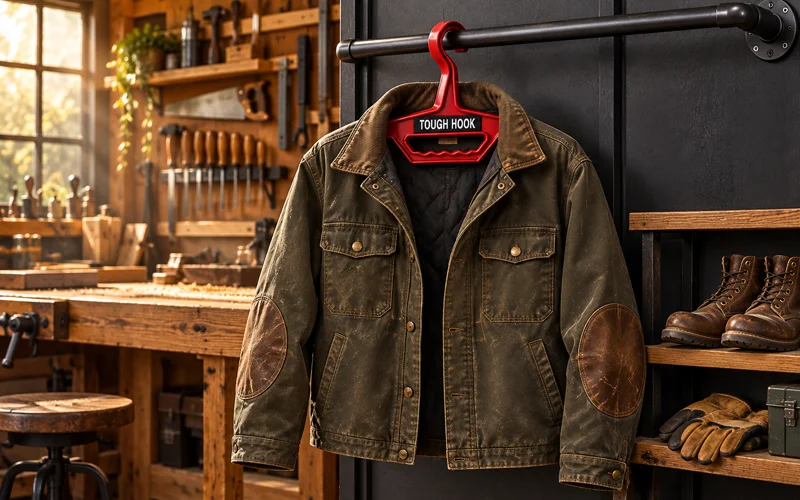
Hangers for Wet, Heavy, and Bulky Garments
Some of the hardest items in a commercial laundry are the ones that leave the washer heavy and need to hang while they dry or wait for pickup. These include work coveralls, fire turnout gear, wetsuits and dive gear, freezer suits, motorcycle leathers, waders, and winter coats.
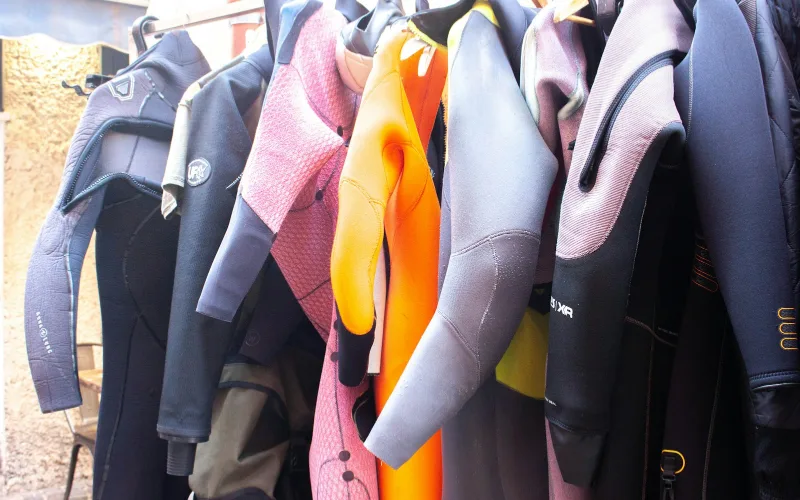
For these garments, hang each item on its own heavy-duty hanger with space around it so air can reach every side. Support the garment across the shoulders rather than by a loop or strap, and keep damp items off the floor and away from finished, dry work. Our guide to drying damp gear covers spacing and airflow in more detail, and our workwear hangers article shows how crews keep uniforms rotating.
Which Laundry Businesses Need Heavy-Duty Hangers?
Not every laundry needs the same hanger mix. The deciding factors are how heavy the garments are and whether the hanger leaves the building.
- Laundromats with drop-off service: Wire shirt and strut hangers for wash-and-fold or hang-dry orders, plus a few heavy-duty hangers for coats and comforter-weight items.
- Dry cleaners: Mostly wire, caped, and suit hangers for outgoing work, with heavier hangers for leather, suede, and winter coats.
- Uniform and workwear services: Heavy coveralls and work jackets that bend standard wire.
- Hotel and on-premises laundries: Staff uniforms and guest items that are washed and rehung in-house.
- Fire stations, EMS, dive shops, and gear rental: Turnout gear, wetsuits, and protective suits that stay on site and hang to dry between uses.

Racks, Carts, and Garment Bags for Hung Laundry
Hangers are only one part of the system. The racks and carts that carry them, and the bags that cover finished work, need to match the load.
- Garment racks and rolling carts: Check the rack’s weight rating before loading it with heavy hangers and wet garments. A full rail of coveralls weighs far more than a rail of shirts.
- Poly garment bags: Clear bags protect finished items from dust on the way to the customer. Let damp garments dry fully before bagging them to avoid trapped moisture.
- Spacing on the rail: Leave room between heavy items so air moves and hooks do not tangle when the cart is pushed.
Conveyor, Rail, and Tunnel Finisher Compatibility
Many commercial laundries move garments on overhead rails, conveyors, or through tunnel finishers, which use steam and hot air to remove wrinkles from garments carried on hangers. Before ordering any hanger in volume, confirm it works with that equipment.
- Measure the rail or conveyor hook: Compare it with the hanger’s hook opening and thickness. A thick hook built for heavy loads will not fit every rail or automated conveyor.
- Check heat tolerance: If hangers will pass through a tunnel finisher or sit near dryer exhaust, ask the hanger and equipment manufacturers whether the material is suited to that heat and steam.
- Test a sample first: Run a small batch through the full workflow, from finishing to sorting to delivery racks, before buying hundreds.
Disposable vs Reusable Hangers: Cost and Sustainability
The real choice in a commercial laundry is often not wire versus plastic, but disposable versus reusable. The answer depends on whether the hanger leaves with the customer.
When Disposable Wire Makes Sense
If finished garments go home with customers, low-cost wire hangers are usually the practical choice, since most will not come back. Bought in boxes of 500, standard wire shirt and strut hangers typically cost around 20 to 25 cents each at wholesale pricing. Many dry cleaners and laundry services accept returned wire hangers for reuse, and some delivery services run their own hanger return programs. Steel wire hangers are also accepted by many scrap metal recyclers, while plastic hangers are rarely accepted curbside, according to Earth911.
When Reusable Heavy-Duty Hangers Pay Off
Reusable hangers make sense wherever hangers stay in the building: on-premises laundries in hotels and gyms, fire station and EMS gear rooms, uniform rooms, dive shops, and rental operations that wash and rehang the same heavy items. Cost per use is the number to watch. As a simple example, a hanger priced around 16 dollars that is used once a day for a year costs less than 5 cents per use, which is already cheaper than a single-use wire hanger, and it keeps going after that. Replacing bent wire or broken plastic hangers adds up quickly when the garments are heavy.
Buying Commercial Laundry Hangers in Bulk
Wire hangers are usually sold by the box in counts of hundreds, while heavy-duty hangers are typically bought in smaller sets matched to the number of heavy garments in circulation. Before placing a bulk order, ask each supplier these questions:
- What is the rated load capacity? Get a number, not a description.
- What sizes do you stock? Confirm widths for shirts, pants, and heavy garments.
- Is there wholesale pricing? Ask where volume price breaks start.
- Will it fit our rails and conveyors? Request hook dimensions or a sample.
- How does it handle moisture and heat? Ask about rust resistance for wire and heat tolerance for plastic or resin.
- What is the warranty? A reusable hanger should come with one.
- Can it carry our branding? Branded hangers help with presentation and returns.
For volume orders, our hanger bundles cover smaller fleets, the private label program puts your brand on the hanger, and businesses that resell can apply through our dealer program.
Maintaining and Replacing Heavy-Duty Hangers
Even the strongest hangers last longer with a simple routine. These habits keep stock in service and protect the garments on it.
- Inspect regularly: Pull any hanger with a crack, a bent hook, or rust. Rusty wire can stain light fabrics.
- Clean resin and plastic hangers: Wipe them with mild soap and water to remove lint, detergent residue, and grime.
- Store them dry: Keep spare hangers in a clean, dry spot to prevent rust and tangling.
- Avoid overloading: Hang one heavy garment per hanger rather than stacking several on one hook.
- Sort by type: Keep shirt, pant, and heavy-duty hangers in separate bins so staff grab the right one every time. An ID hanger helps when garments must be matched to a customer or crew member.
Commercial Laundry Hanger FAQs
These are the questions laundry owners and managers ask most when choosing hangers.
What makes a hanger heavy-duty?
A heavy-duty hanger has thicker material, a reinforced hook, and a stated load rating well above a standard hanger. For wire, that means a lower gauge number. For plastic or resin, it means a thicker molded body and hook.
What gauge wire hanger is best for commercial laundry?
A 14.5 gauge wire hanger is the common standard for shirts. For coats, suits, and heavier items, many laundries use 13 gauge, and drapery hangers often use heavier 11.5 gauge wire. A lower gauge number means thicker wire.
Are plastic or wire hangers better for wet garments?
Neither standard type is ideal. Wire can bend and rust when damp, and thin plastic can crack at the hook under wet weight. Reusable heavy-duty resin hangers handle wet, heavy garments best because they resist rust and carry far more weight.
Will heavy-duty hangers fit my conveyor or rail system?
Not always. Heavy-duty hangers often have thicker hooks, so measure your rail or conveyor hook and compare it with the hanger’s hook opening, or test a sample before ordering in volume.
Can commercial laundry hangers be reused or recycled?
Yes. Many dry cleaners accept returned wire hangers, and steel wire is accepted by many scrap metal recyclers. Plastic hangers are rarely accepted curbside, so reusable heavy-duty hangers that stay in-house are the most practical way to cut waste.
How much weight can a heavy-duty hanger hold?
It depends on the model, so check the stated rating. Standard plastic hangers are built for light garments, while our Tough Hanger XL and RHINO hangers are each rated for over 150 pounds.
What size hangers do commercial laundries use?
Most laundries use 18-inch wire hangers for shirts and 16-inch strut hangers for pants. Bulky coats, coveralls, and gear need wider, deeper heavy-duty hangers that support the full shoulder.
How much do commercial laundry hangers cost?
Standard wire shirt and strut hangers bought in boxes of 500 typically cost around 20 to 25 cents each. Reusable heavy-duty hangers cost more per piece but less per use, because they last for years instead of leaving with each order.
What hangers stop clothes from slipping?
Hangers with notches, ridged or textured shoulders, or clips hold straps and slick fabrics in place. For heavy garments, a wide shoulder that fits the garment also keeps it from shifting.
Choosing the Right Hangers for Your Laundry
The best commercial laundry setup uses the right hanger for each job: standard wire for outgoing shirts, strut and caped hangers for presentation, and reusable heavy-duty hangers for the wet, bulky, and heavy items that break everything else.
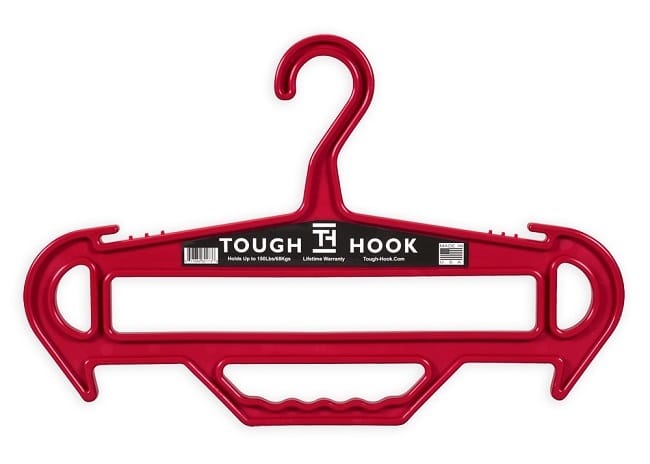
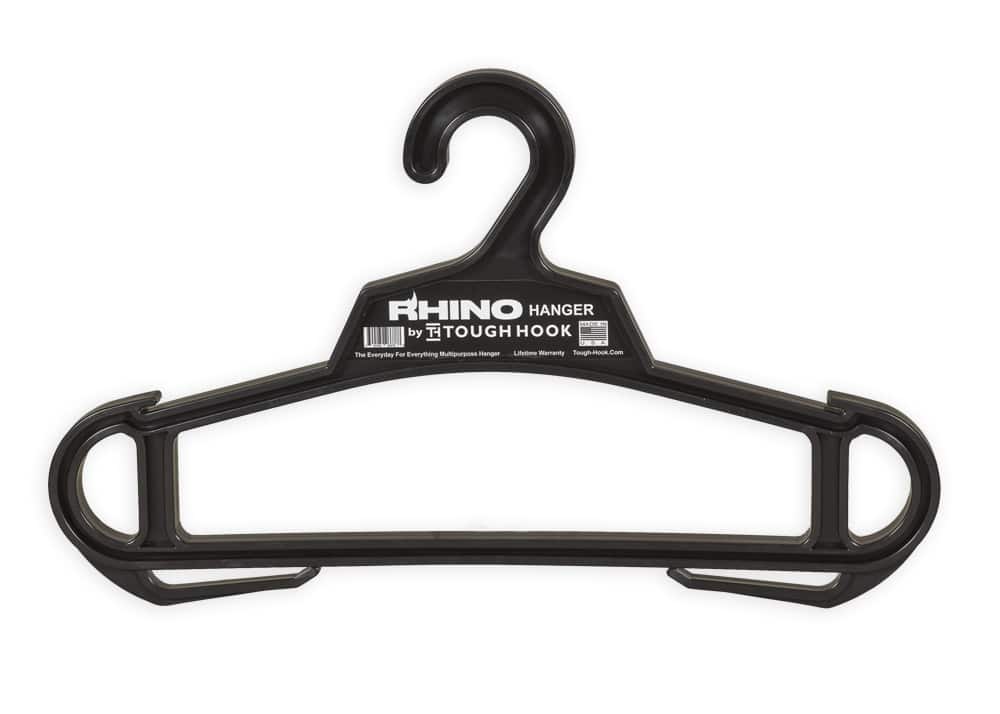
A well-hung garment is a well-presented garment. If your operation handles heavy uniforms, gear, or coats, our heavy-duty hangers are built to carry them cycle after cycle. For bulk or branded orders, contact our team with your garment types and volumes.