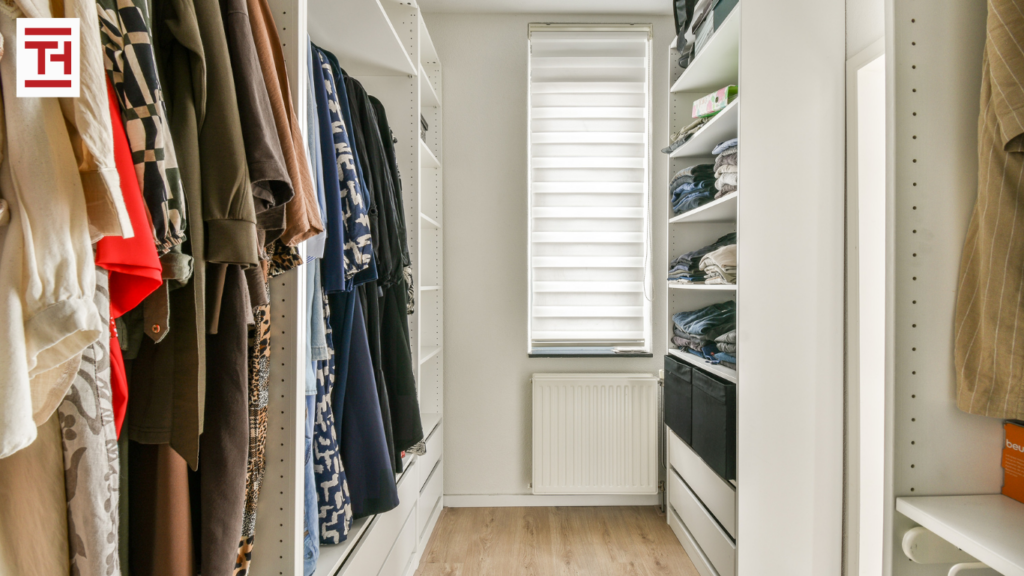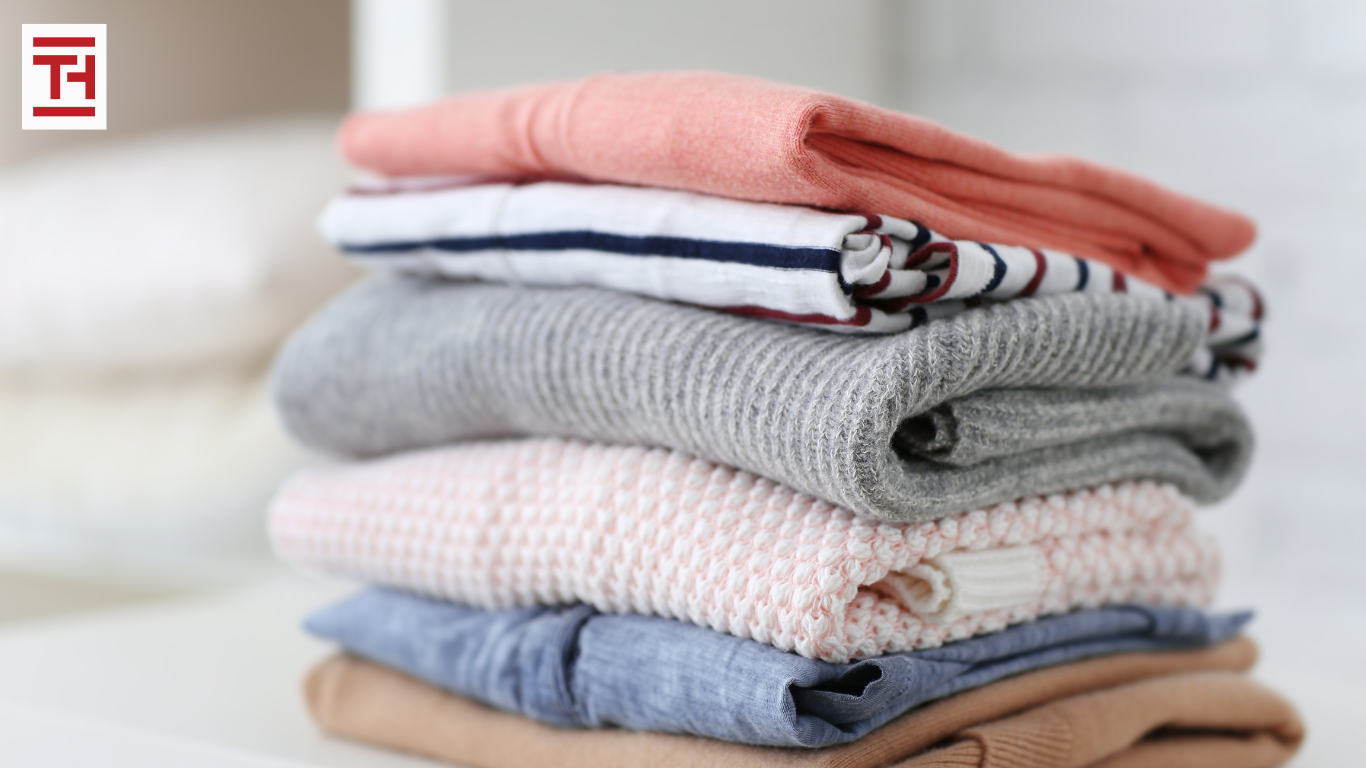
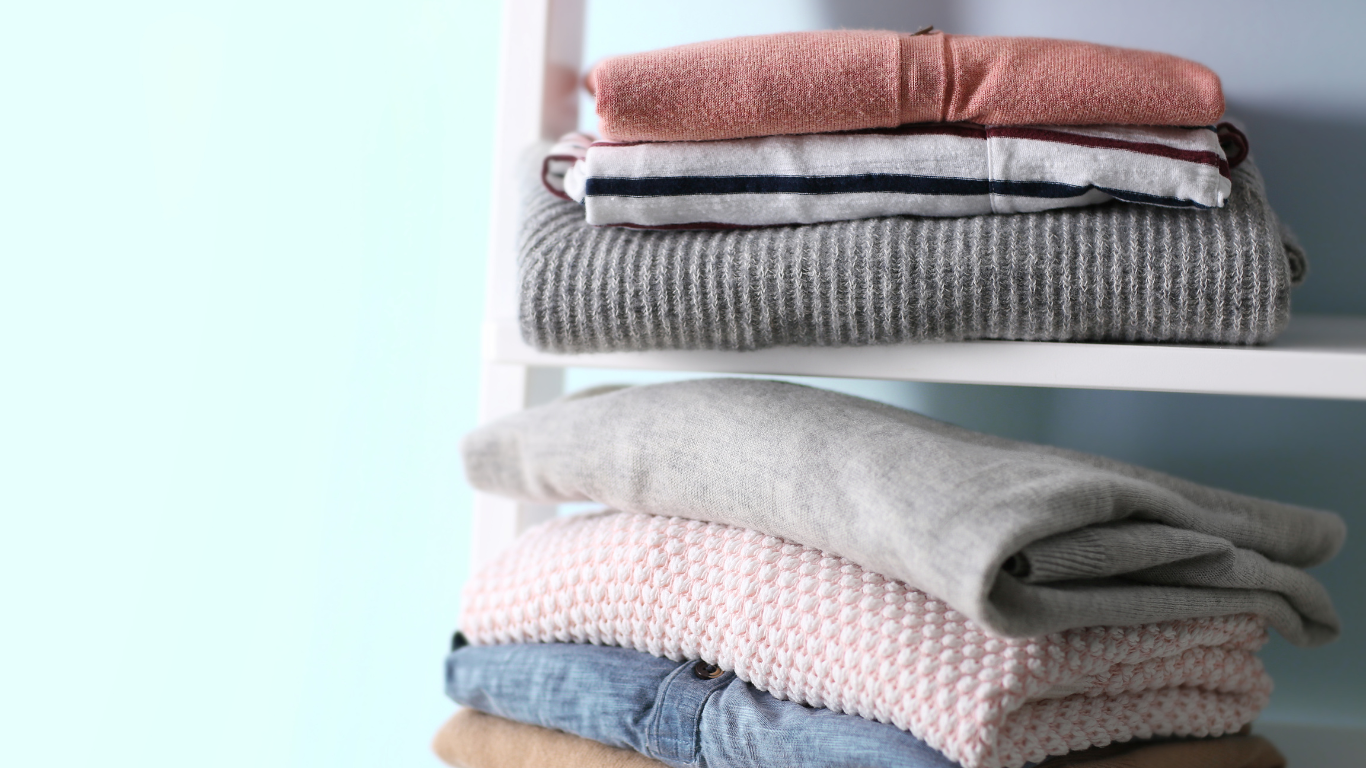
Open a closet after a few months and the evidence is usually right there. Shoulders poke into two sharp points, necklines stretch wider than they started, and a favorite sweater hangs a size bigger than the tag says.
None of that happens in one wear. It happens slowly, from the same three things working against a garment day after day: gravity, fiber structure, and a hanger that isn’t built to carry the weight properly.
Understanding what actually causes the damage makes it far easier to stop. Choosing hangers built to support clothing properly takes care of most of the rest.
Why Clothes Lose Shape on Hangers
A hanger stands in for a body while a garment isn’t being worn. A body spreads a garment’s weight across shoulders, chest, and back.
Most hangers do the opposite. They touch fabric at only two or three narrow points, the shoulder tips and the neckline, while gravity pulls steadily on everything else.
That weight concentrates into a few small spots instead of spreading out, and those spots are exactly where shoulder bumps and stretched necklines show up first.
Gravity concentrates weight at a few small points
A shirt lying flat has its weight supported evenly along a table. The same shirt on a hanger has its entire weight hanging from two small triangles of fabric at the shoulder seams.
Over hours, that isn’t a problem. Over weeks of continuous hanging, the constant pull at those two points slowly reshapes the fabric around them, which is how “shoulder bumps” or “hanger horns” form.
Sustained tension turns temporary stretch into permanent stretch
Fabric fibers can absorb a certain amount of stretch and spring back to their original length once the tension is released. That’s the same give a garment shows when you sit down or reach overhead while wearing it.
Hang a garment for weeks at a time, though, and the fibers are held under tension far longer than they’d ever experience during normal wear. Past a certain point, the stretch stops being temporary.
The fibers settle into their new, longer shape and don’t fully recover, even after the garment comes off the hanger. That’s the difference between a shirt that looks fine after you take it off and one with a neckline that never quite closes right again.
Some fabrics give up their shape faster than others
Knitted fabrics, like sweaters and jersey t-shirts, are built from interlocking loops rather than a woven grid, so they behave more like a spring than a sheet.
Sustained weight pulls those loops open, and once enough of them have opened, the knit doesn’t fully close back up. Wool, cashmere, angora, and other protein fibers are especially prone to this kind of stretching.
Cotton and looser knits also give way more readily than a tight weave or a fiber with strong natural recovery, such as most synthetics.
That’s why a heavy cotton sweatshirt sags on a hanger far faster than a structured cotton dress shirt does.
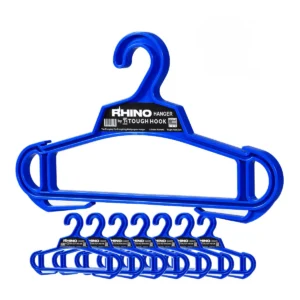
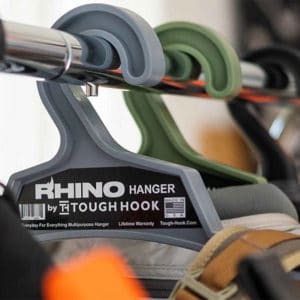

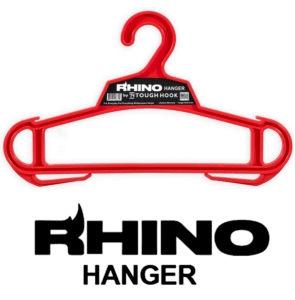
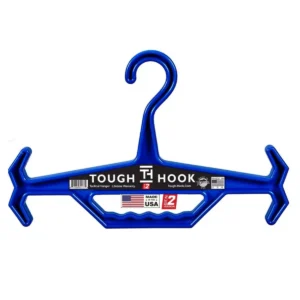
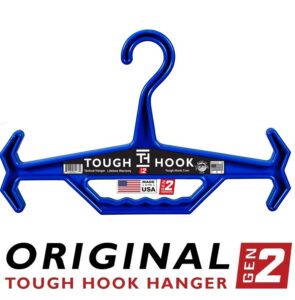
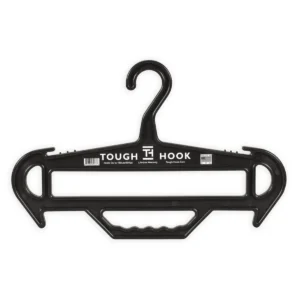
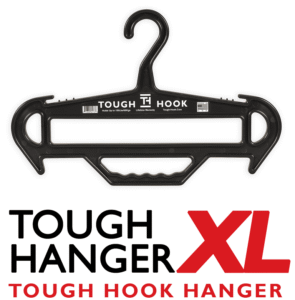
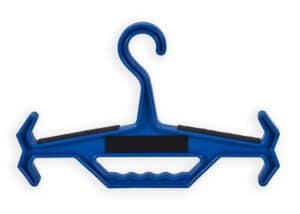
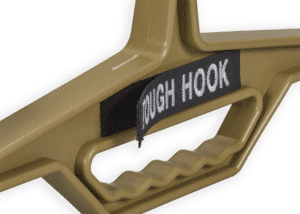
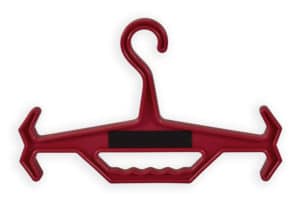
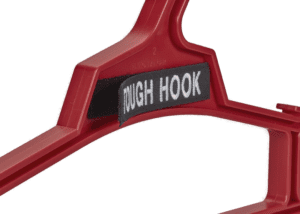
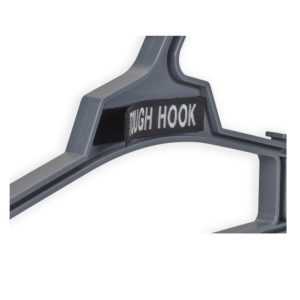
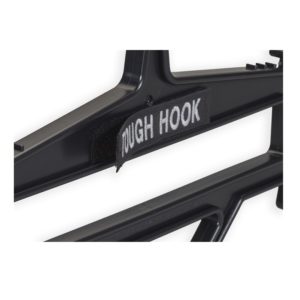


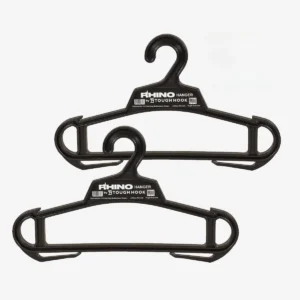
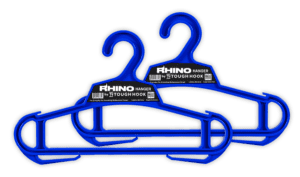
2 Pack RHINO Heavy Duty Clothes Hanger Bundle
Original price was: $27.95.$23.95Current price is: $23.95.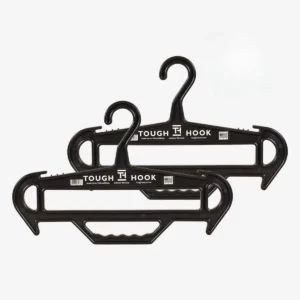
Hidden Factors That Make Hanger Damage Worse
The hanger itself is only part of the story. A few habits make the same physics work faster.
Hanging clothes while they’re still damp
A wet garment is noticeably heavier than a dry one, so hanging it while it’s still damp adds extra gravitational pull right when the fibers are also at their most pliable and least able to resist stretching.
Let clothes dry flat first, and hang them once they’re fully dry.
A hanger that doesn’t match the garment
A hanger that’s too narrow lets the shoulder seams fold inward, creating a crease or bunch right at the edge. One that’s too wide pushes fabric out past the garment’s natural shoulder line, distorting the silhouette in the opposite direction.
Matching hanger width to shoulder width keeps the fabric sitting the way it’s meant to.
Warped, bent, or worn-out hangers
A hanger that has already lost its own shape can’t hold a garment’s shape either. A slightly bent shoulder tip or a bowed center bar transfers that distortion straight into whatever’s hanging on it.
Wire hangers are the most common offenders since thin wire bends permanently under repeated weight, but even sturdier hangers wear out eventually and are worth replacing once they’re no longer sitting straight.
An overcrowded closet rod
Clothes packed too tightly together rub, shift, and get tugged diagonally every time a nearby garment is pulled out or pushed back in.
That adds friction-based stress on top of the gravity that’s already pulling on the fabric, and it’s a common reason clothes slide off hangers or bunch up unevenly even when the hanger itself is a good one.
Clothes That Should Never Go on a Hanger
Better hangers solve most shape-loss problems, but not all of them. A few categories of clothing lose their shape from their own weight, regardless of what they’re hung on, and are better off folded:
- Heavy knits and sweaters. Their own weight stretches the knit loops out over time, no matter how well the hanger supports the shoulders.
- Embellished or beaded garments. The weight of beading, sequins, or heavy trim concentrates stress on the shoulder seams and can tear the stitching over time.
- Bias-cut or very lightweight silk. Fabric cut on the bias stretches along its own diagonal grain and can distort under nothing more than its own weight.
Fold these and store them flat on a shelf or in a drawer instead. It takes up a little more space, but it’s the only reliable way to keep them from stretching.
How a Well-Built Hanger Prevents Shape Loss
Everything above points to the same fix: a hanger that spreads weight the way a body does, keeps fabric from sliding, and holds its own shape under load.
Wide, contoured shoulders spread weight the way a body does
A shoulder shaped closer to a human shoulder line, rather than a thin wire triangle, supports a garment across a broader area instead of two sharp points.
That’s the single biggest factor in preventing the shoulder bumps and neckline stretching described above.
Non-slip surfaces stop the sliding that causes creasing
A velvet-covered or textured grip keeps fabric from sliding down the hanger arm, which prevents the friction-based shifting that happens on a crowded rod and stops lightweight or silky garments from ending up crumpled on the closet floor.
Rigid, reinforced materials don’t warp under weight
Solid wood and reinforced plastic hold their own shape under sustained weight instead of bending the way thin wire does.
A hanger that stays straight keeps supporting a garment correctly for years, rather than gradually transferring its own warping into every garment it holds.
Matching Hangers to Different Garment Types
One hanger style rarely works for an entire wardrobe. A few practical pairings:
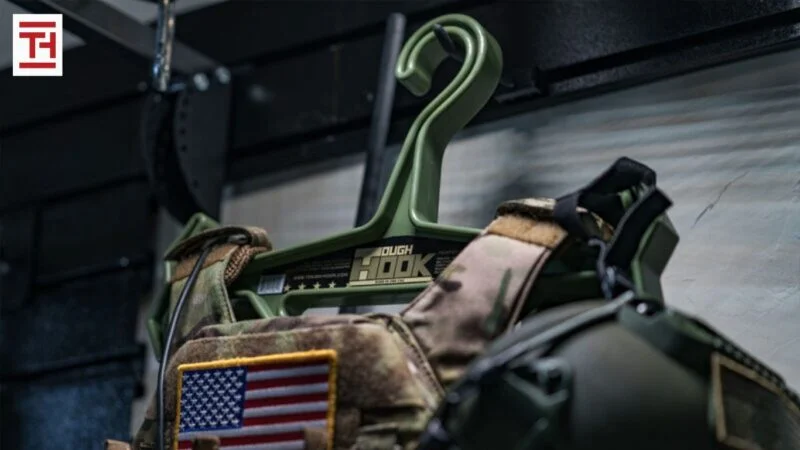
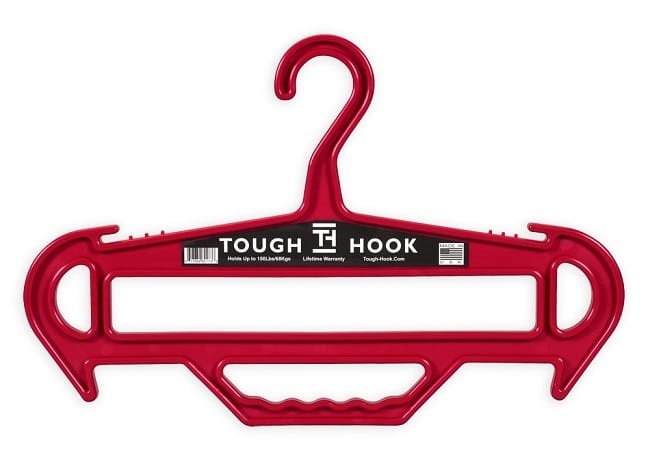
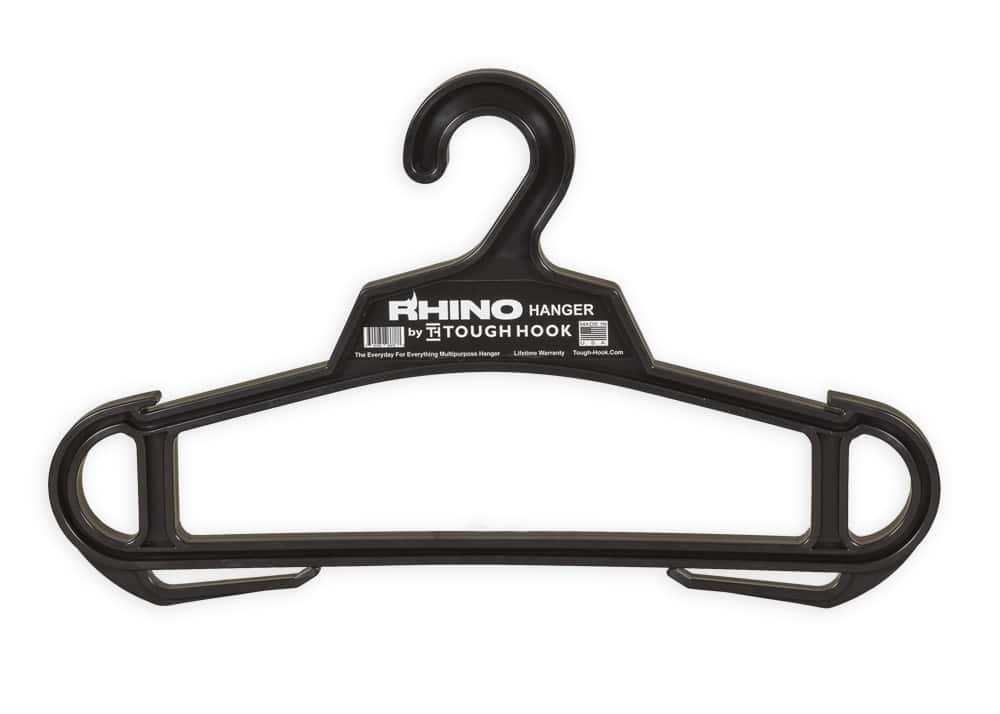
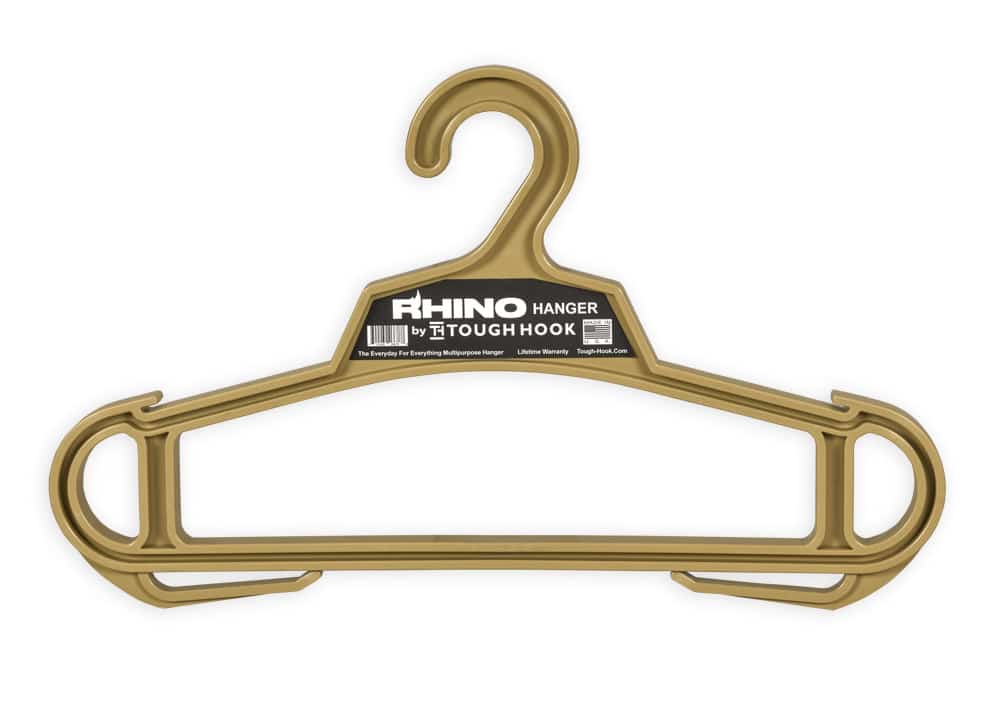
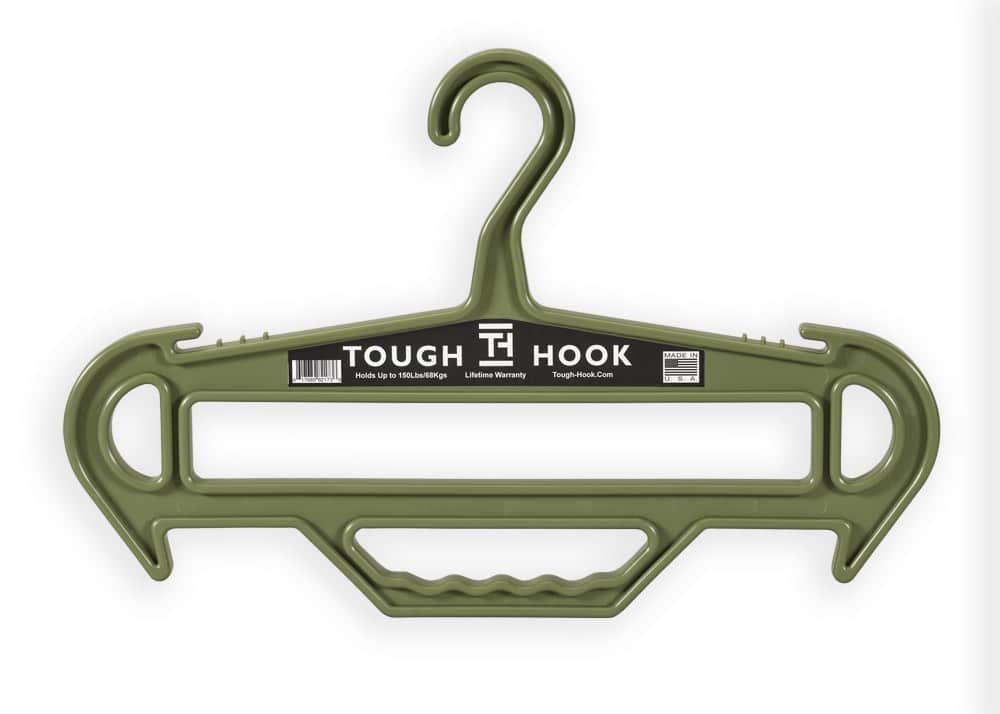
- Coats, jackets, and suits need the widest, most reinforced shoulders available, since they’re heaviest and have the most structure to protect. Heavy-duty coat hangers are built specifically for this weight range.
- Pants and skirts hold their shape best on hangers with clips or a horizontal bar, which avoid the center crease that comes from draping them over a shoulder-style hanger.
- Delicate items like lingerie, camisoles, and silk blouses do best on padded or non-slip hangers sized specifically for lighter fabric.
- Multiple similar items, like a matching skirt and jacket, can share a multi-hook or cascading hanger to save closet space without doubling up on hangers.
Best Hangers by Material and Price
Once the material matches the garment, the choice usually comes down to budget. Here’s how the common options compare:
- Solid wood. The sturdiest, most durable option for coats, blazers, and suits, and typically the highest price point because of the material and shaping involved.
- Velvet or flocked. A thin, textured layer over a slim frame, priced closer to the middle of the range. It’s the best pick for silk, satin, and other fabrics that slide off a bare hanger.
- Heavier-gauge metal. Not the same as thin wire. A properly weighted metal hanger holds its shape under load the way wood does, usually at a lower price, though without wood’s contoured shoulders.
- Reinforced plastic. The most affordable option that still holds up under weight, as long as it’s a thicker, reinforced build rather than the brittle tubular kind sometimes handed out at dry cleaners.
A closet full of matching hangers, in whatever material fits the budget, also looks a lot nicer than a mismatched pile collected over the years, and it makes it easier to see what’s actually hanging there.
How to Choose Heavy-Duty Hangers for Your Wardrobe
A short checklist covers most of what matters when upgrading a closet:
- Match hanger width to the shoulder width of your heaviest garments, not your lightest ones.
- Choose solid wood or reinforced plastic over thin wire or brittle plastic, since they hold their shape under repeated weight.
- Look for a non-slip or velvet-textured surface if your wardrobe leans toward silky or loosely woven fabric.
- Pick clip or multi-tier hangers for pants, skirts, and grouped items instead of forcing everything onto a single shoulder style.
- Check the hanger’s weight capacity if you’re hanging heavier coats or layered outfits, so it isn’t carrying more load than it’s built for.
- Replace any hanger that’s visibly bent, cracked, or sagging. It’s already stopped doing its job.
Matching hangers throughout a closet also has a side benefit worth mentioning: everything hangs at a consistent height and angle, which makes it easier to see what’s actually in the wardrobe.
How to Hang Clothes the Right Way
The right hanger only does its job if the garment goes on it correctly. A few habits make a bigger difference than most people expect:
- Use the interior loop on a coat or dress if it has one. It’s built to take the weight off the shoulder seams.
- Close the top button or zip partway before hanging a shirt or jacket. It helps the garment keep its shape instead of slipping sideways off the shoulders.
- Hang everything facing the same direction. It’s a small habit that keeps hangers from tangling and makes a closet easier to use.
- Don’t hang more than one heavy garment on a single hanger. Doubling up exceeds the weight it’s built for and speeds up warping.
- Wait until clothes are fully dry, including anything straight out of the laundry, before hanging them back up.
Frequently Asked Questions
Do hangers actually stretch clothes?
Yes. A hanger holds a garment’s full weight at just two or three narrow points instead of distributing it the way a body does. Over weeks of continuous hanging, that concentrated weight can permanently stretch the shoulders and neckline, especially on knits and other stretch-prone fabrics.
Does hanging clothes overnight stretch them?
Not usually. A single night on a hanger falls well within the stretch a fabric can recover from on its own. The damage builds up from continuous hanging over weeks or months, not from one night, so rotating clothes between hangers, drawers, and shelves matters more than how long any single hang lasts.
Are thicker or wider hangers better for preserving clothing shape?
Thicker, wider, and more contoured hangers are generally better, but only up to the point where they match the garment’s own shoulder width. A hanger that’s too wide pushes fabric out past its natural shoulder line and distorts the silhouette just as much as one that’s too narrow.
Can wire hangers ruin clothes?
They can, especially over time. Wire is thin enough to concentrate a garment’s weight into an even smaller area than a standard hanger, and it bends permanently under repeated weight, which makes the damage worse the longer a hanger stays in rotation.
Should sweaters be hung or folded?
Folded, in almost every case. A sweater’s own weight is usually enough to stretch the knit loops at the shoulders over time, regardless of hanger quality. Folding and storing sweaters flat on a shelf or in a drawer avoids that problem entirely.
Can a garment that’s already stretched from a hanger be fixed?
Sometimes, if the damage is mild and the fiber hasn’t fully lost its recovery. Gently reshaping the garment by hand while it’s slightly damp, then letting it dry flat, can relax some fabrics back toward their original shape. More significant stretching, especially in knitwear, often needs a tailor rather than a home fix.
Most shape loss comes down to the same combination of gravity, fabric type, and hanger quality, working slowly over months rather than all at once. Heavy-duty hangers with contoured shoulders, non-slip grips, and sturdy construction remove most of that stress before it has a chance to build up. Get in touch if you’d like help matching the right hanger to your wardrobe.