
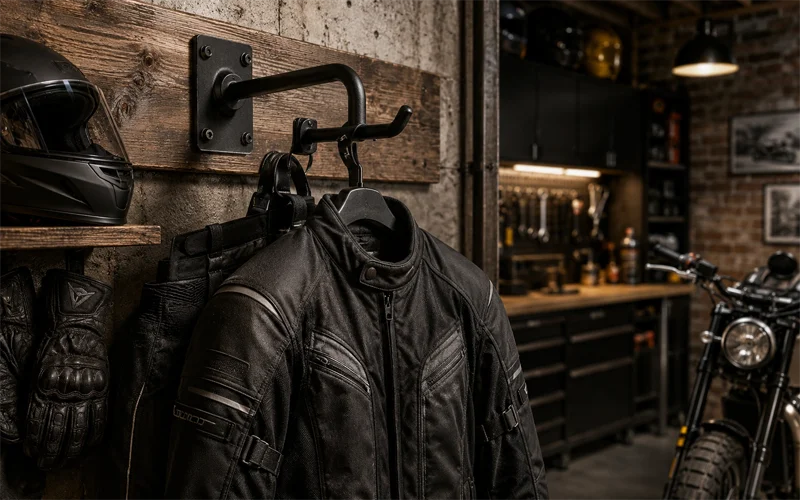
A motorcycle jacket is one of the most carefully engineered pieces of clothing a rider owns. The outer shell, the CE-rated armor inserts, the back protector panel, the liner system, and the stitching that ties it all together are built to work as a single protective unit. What happens to that unit between rides has more to do with how well it performs in a crash than most riders realize. Leave a 12-lb armored leather jacket on a wire hanger for a year and the shoulders start to droop, the back panel sags, and the armor drifts out of the zones it was sewn in to protect.
Picking the best hanger for heavy motorcycle jackets isn’t a matter of taste. It’s a practical call that shapes how the jacket fits, how well the armor stays positioned, and how many seasons the gear survives before it needs replacing. The requirements aren’t complicated once you know what to check, and the gap between the right hardware and the wrong hardware shows up in the jacket’s shoulders within a few months of regular use.
The Extra Width Your Jacket Actually Needs
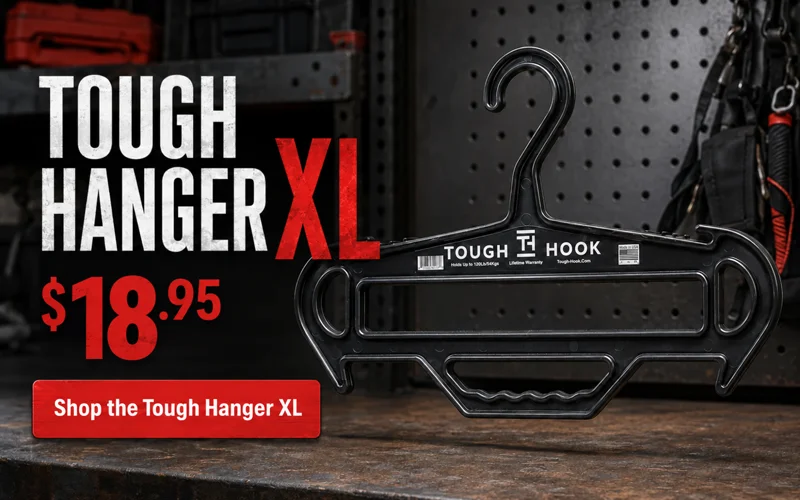
The Tough Hanger XL uses an extended shoulder span built specifically for wide, structured outerwear. Rated to 200 lbs and molded from high-impact polypropylene, it carries the full width of an armored motorcycle jacket or riding suit instead of narrowing the load down to a single pressure point at the neck.
Six Things the Best Hanger for Heavy Motorcycle Jackets Must Get Right
Not every heavy-duty hanger is built the same way, and not everything marketed toward gear storage was actually designed around what a motorcycle jacket needs. These six points are where the good options separate from the ones that only look sturdy on a store shelf.
1. Why Standard Hangers Fail Under Motorcycle Jacket Weight
A typical wire hanger tops out at a few pounds. A textile motorcycle jacket with removable armor and a waterproof liner usually runs 6 to 10 lbs on its own. A full leather jacket with a back protector and CE Level 2 shoulder and elbow inserts can hit 12 to 15 lbs.
That’s well past what ordinary closet hardware was ever built to carry, and the failure isn’t sudden. It creeps in. The hook straightens a little. The shoulder arms bow inward. The jacket starts resting on the body of the hanger instead of hanging from it, and all that weight ends up pressing down on two small points at the shoulder seams.
Give that pressure a few months and it creases the leather or textile right at the shoulder, flattens the padding underneath, and permanently reshapes the jacket in a way you can’t undo just by switching to a better hanger later. Looking at how heavy-duty hangers actually compare to regular closet hardware makes the difference obvious pretty fast, because the correct hardware costs about the same whether you buy it on day one or after the jacket is already ruined.
2. Weight Rating: The Number That Determines Everything Else
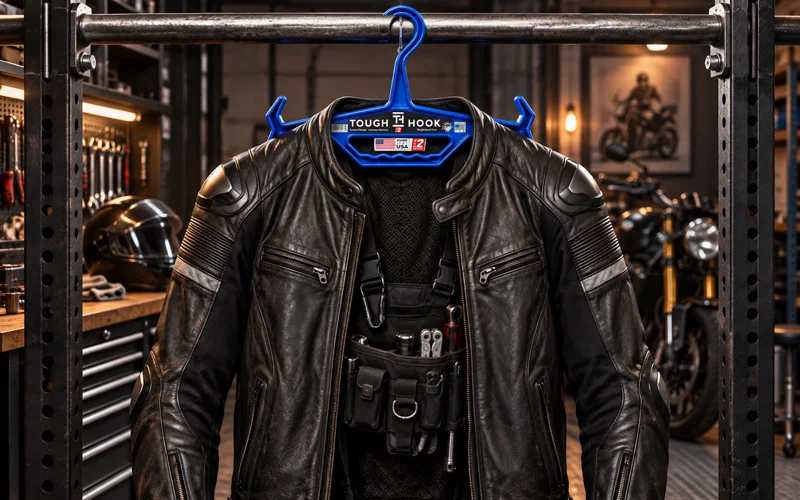
Every claim about a hanger being heavy-duty comes back to one number: the weight rating. A hanger rated to 200 lbs isn’t overkill for a 12-lb motorcycle jacket, it’s just built correctly. That rating decides whether the hanger holds up not just today but across the five or ten years a good jacket stays in rotation. A hanger running close to its limit is already under strain with every single use, and the material fatigues the same way any load-bearing part does under sustained stress, whether it’s wire, thin plastic, or pressed wood.
The rule of thumb here matches any other load-bearing hardware: buy for more capacity than you need, not exactly what you need. A 200-lb hanger under a 12-lb jacket has years of easy service left in it. A hanger rated for 15 lbs is already sitting at 80 percent of its limit before the jacket has spent a single day on it. It helps to know how those plastic hanger weight ratings are actually tested before trusting a number printed on a package, and any rating under 50 lbs is a sign the hanger was built for shirts, not riding gear.
3. Shoulder Span and How It Protects Jacket Structure Over Time
Motorcycle jackets are cut wide across the shoulders to make room for armor inserts and to leave a full range of motion while riding. The shoulder seams sit further out on the arm than they would on an ordinary jacket. A conventional hanger, tapered toward the hook, can’t support that shape. The outer part of the shoulder panel hangs with nothing under it, pulling the seam inward under its own weight and putting steady stress on the stitching where the shoulder meets the sleeve.
The best hanger for heavy motorcycle jackets has a shoulder span wide enough to actually reach the jacket’s shoulder seams, not just the general shoulder area of a lighter shirt. When the hanger fills that full width, the weight spreads evenly across the seam instead of piling up at the tips.
This one dimension, how the hanger’s span compares to the jacket’s, is probably the most overlooked factor in how a jacket holds its shape long-term. The same logic that applies to heavy tactical outerwear applies just as directly here, since both are wide-shouldered garments built to carry load across the full shoulder width.
4. When Every Jacket in the Garage Needs Its Own Spot
The Original ID MAX Tactical Hanger has three Velcro ID-strip loops built in, so each rider in a shared garage can label and find their own gear without digging through the rack. Rated to 200 lbs and built for shared storage, it keeps a multi-rider setup organized without anyone guessing whose jacket is whose.

5. Material: Why Polypropylene Outperforms Metal and Standard Plastic
Metal hangers rust in garages where humidity swings with the seasons, and that surface corrosion transfers straight onto leather linings and leaves stains on textile shells wherever they touch. Thin metal also bends permanently under sustained weight, which shifts how the jacket hangs in a way you can’t fix short of replacing the hanger outright.
Standard plastic isn’t much better; it goes brittle and cracks in cold temperatures, which is exactly the environment an unheated garage offers through the winter months a jacket might sit unused. High-impact polypropylene holds its shape under sustained heavy weight, doesn’t corrode, doesn’t crack across a normal garage’s temperature range, and won’t leave any residue on the jacket material.
It’s the material that makes a hanger genuinely fit for long-term storage of heavy riding gear rather than just good enough for lighter everyday clothes. Setting up dedicated storage built for weighty garments like this is what separates a garage that actually protects gear from one that just holds it. The best hanger for heavy motorcycle jackets is made from polypropylene because that material was designed for exactly the conditions garage storage creates: constant weight, swinging temperatures, and years of repeated use.
6. Storing a Full Riding Kit Without Disassembling It
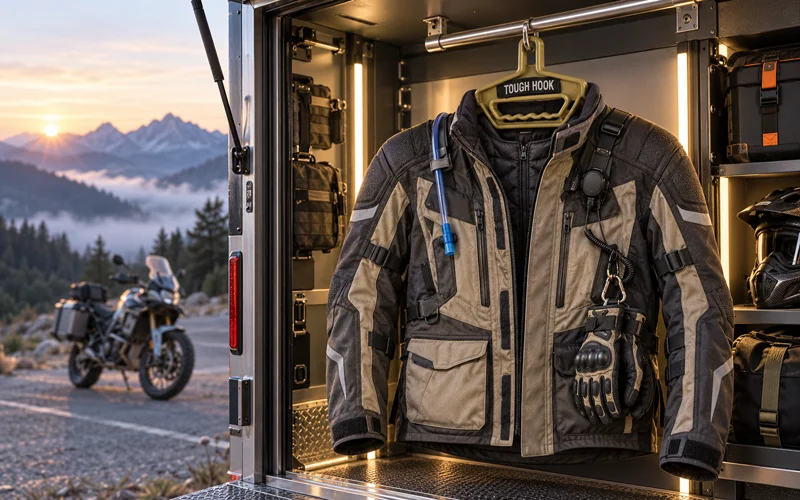
A lot of riders keep their jacket fully configured between rides, liner in, armor in place, any attached accessories still connected. It keeps the kit ready to grab and cuts down on the handling every time the jacket goes on or comes off the rack. But it also means the hanger has to carry the combined weight of every piece the jacket holds, not just the bare shell.
A hanger that manages a bare jacket fine might not hold up once the thermal liner, waterproof membrane, and armor are all installed at the same time. The best hanger for heavy motorcycle jackets is sized for the garment’s fully loaded weight, not its lightest configuration. This is also where the hook matters as much as the hanger body.
A hook that twists or slides on the closet rod under an uneven load turns into a real fall risk once a jacket weighs 15 lbs or more fully kitted out. It should lock onto the rod and stay put no matter how the weight shifts across the hanger. Riders keeping a full setup, boots, gloves, and the jacket together, often end up organizing an entire motorcycle gear setup in the garage around this one detail.
7. Matching the Hanger to the Jacket Type
Leather and textile jackets don’t behave the same way on a hanger. Leather is relatively stiff and holds its shape once it’s supported. Textile, especially anything with a mesh outer layer or a soft-shell build, is more pliable and will slowly take on the shape of whatever it’s hung on. A hanger with a narrow or sharply angled shoulder arm leaves a visible ridge across a textile jacket’s shoulder panel after enough time in storage, and that ridge can turn into a permanent crease.
Matching the hanger to the jacket means picking a shoulder arm that’s both wide enough and rounded enough at the top edge to support the panel without pressing a ridge into it. Knowing what specifications are actually worth checking before buying saves you from replacing a hanger that looked fine on the shelf but wasn’t built for the jacket you own. One hanger sized correctly for the heaviest piece in the garage will handle every lighter jacket in rotation without any adjustment.
The Right Hanger Is the Simplest Investment in Your Gear’s Longevity
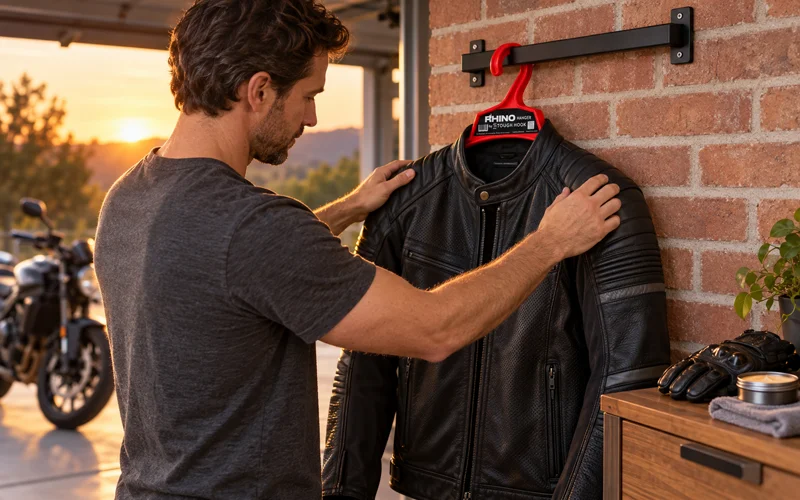
The best hanger for heavy motorcycle jackets isn’t an accessory, it’s infrastructure. A jacket hung correctly, on a hanger rated for its weight, with a span that matches its shoulder geometry and a material that holds up under garage conditions, stays in shape for as long as it stays in rotation.
A jacket hung on hardware that was never built for its weight starts degrading from the first day it goes on the rack. The price difference between the two options is small. The difference in jacket condition two or three years later is not. Choosing hangers built to last for years instead of replacing cheap ones on repeat is the standard the gear itself deserves.
Frequently Asked Questions
Can I use the same hanger for a leather jacket and a textile riding jacket?
Yes, as long as the hanger’s shoulder span and weight rating cover both. A wide, high-rated hanger built for a heavy leather jacket will support a lighter textile jacket with no trouble. It doesn’t work the other way around. A hanger sized for lighter textile gear often lacks the span or load capacity to properly hold an armored leather jacket over an extended storage period.
How does a bad hanger affect the armor inserts inside a motorcycle jacket?
When a jacket sags or deforms on a hanger, the armor inserts shift inside their pockets. Shoulder armor can rotate out of position. Back protectors can bow forward or lean to one side. Over time that changes how the armor sits against the body when the jacket is actually worn, which affects how impact energy gets absorbed in a crash. Hanging it correctly keeps the jacket in its designed shape and keeps the armor sitting where it was engineered to sit.
Should motorcycle jacket hangers be different from regular coat hangers?
Yes. Standard coat hangers are built for garments in the one to three pound range. An armored motorcycle jacket often weighs four or five times that. The shoulder span on a regular coat hanger is also narrower than where the shoulder seams sit on most riding jackets. A hanger built for heavy outerwear, with a wider span and a rating that reflects real-world load, is a different product from a standard coat hanger no matter how similar the two look on a rack.
Is it better to store a motorcycle jacket hanging or folded?
Hanging beats folding every time for armored motorcycle jackets. Folding compresses the armor inserts, creases the outer material along the fold lines, and puts sustained pressure on the stitching right where it folds. A leather jacket folded for an extended stretch will develop creases that weaken the material along those lines permanently. Hanging on a correctly rated, wide-span hanger keeps every layer of the jacket in its intended shape with no sustained pressure anywhere on the garment.
How often should I inspect a stored motorcycle jacket for condition?
A quick visual check every two to four weeks during any extended storage stretch is a reasonable baseline. Look for changes in shoulder shape, any sag showing up in the back panel, and whether the armor inserts have stayed lined up with their labeled body zones. A full inspection, including pulling out and checking each armor piece individually, should happen before the jacket goes back into active use after more than a month in storage, in line with the Motorcycle Safety Foundation’s standard guidance on gear maintenance.