
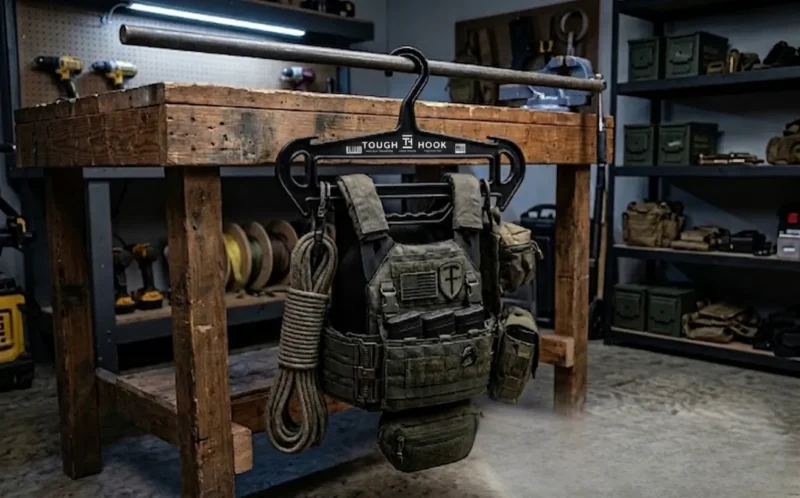
Most people assume a plastic hanger is a plastic hanger. It is not. The gap between what a standard retail hanger holds and what a purpose-built heavy-duty hanger holds is enormous, and using the wrong one for the job causes clothing and gear damage that builds up invisibly over time. Understanding how many pounds a plastic hanger can hold across different types and grades helps you make a storage decision based on the actual demands of your wardrobe and gear rather than on whatever happens to be in the pack.
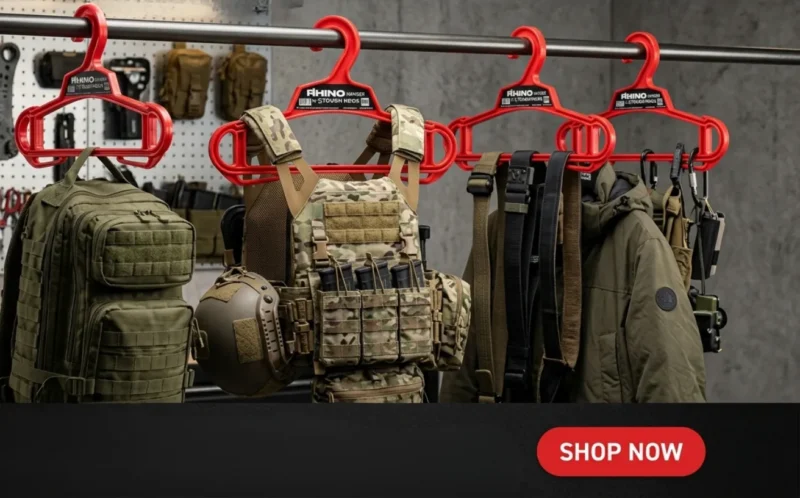
The RHINO Hanger is rated for 200 lbs, making it one of the highest-capacity plastic hangers available for heavy clothing, tactical gear, and protective equipment.
 Plastic Hanger Weight Capacity by Type
Plastic hangers span a wide range of load ratings depending on how they are built, what material they use, and what they are designed to hold. Here is how each category actually performs.
Standard Plastic Hangers
Standard plastic hangers made from basic polypropylene typically support between 7 and 10 pounds. They are adequate for everyday lightweight clothing like shirts, t-shirts, and lightweight trousers, but should not be used for anything heavier. The core failure mode is shoulder cracking, which develops gradually under sustained loads that exceed the material’s rated flex tolerance.
By the time a standard plastic hanger visibly deforms, it has usually been applying uneven pressure to the shoulders of garments for weeks. For anyone storing heavier items in a standard closet setup, the key factors to check before buying hanger covers are the specifications to prioritize.
Heavy Duty Plastic Hangers
Heavy-duty plastic hangers built from ABS or reinforced polypropylene composites support significantly more weight than standard options, typically ranging from 11 to 25 pounds, depending on construction. Their thicker arm profiles, wider shoulder spans, and reinforced hook connections distribute load more evenly, preventing the concentrated-stress failures that cause standard hangers to crack under heavy garments.
These hangers are appropriate for winter coats, heavy jackets, layered outerwear, and structured suits. They are a meaningful upgrade over standard plastic and work well for most household wardrobe applications involving heavier items. Heavy-duty plastic hangers for demanding storage applications demonstrate how the same engineering principles behind heavy garment hangers apply directly to tactical and protective gear storage.
Bridal and Specialty Dress Hangers
Bridal and dress hangers are engineered to accommodate the specific weight profiles of layered gowns, embellished fabrics, and heavy formal wear. Most are designed to hold 15 to 20 pounds, with reinforced chrome hooks and broad cushioned shoulder profiles that prevent the narrow contact points that cause shoulder marks on structured fabric.
Polycarbonate-reinforced variants reach tensile strength ratings in the 65-75 MPa range, providing reliable support for premium gowns during long-term display or storage. The curved shoulder geometry on these hangers improves weight retention by distributing the load across a larger surface area than straight-profile designs, reducing the risk of sagging or distortion in heavy, layered fabrics.
For heavy coats, structured gear, and anything that standard hangers visibly strain under, the Original Tough Hook Hanger provides wide shoulder support and a 200 lb rating that handles real-world loads without bending.
Super Heavy Weight Plastic Hangers
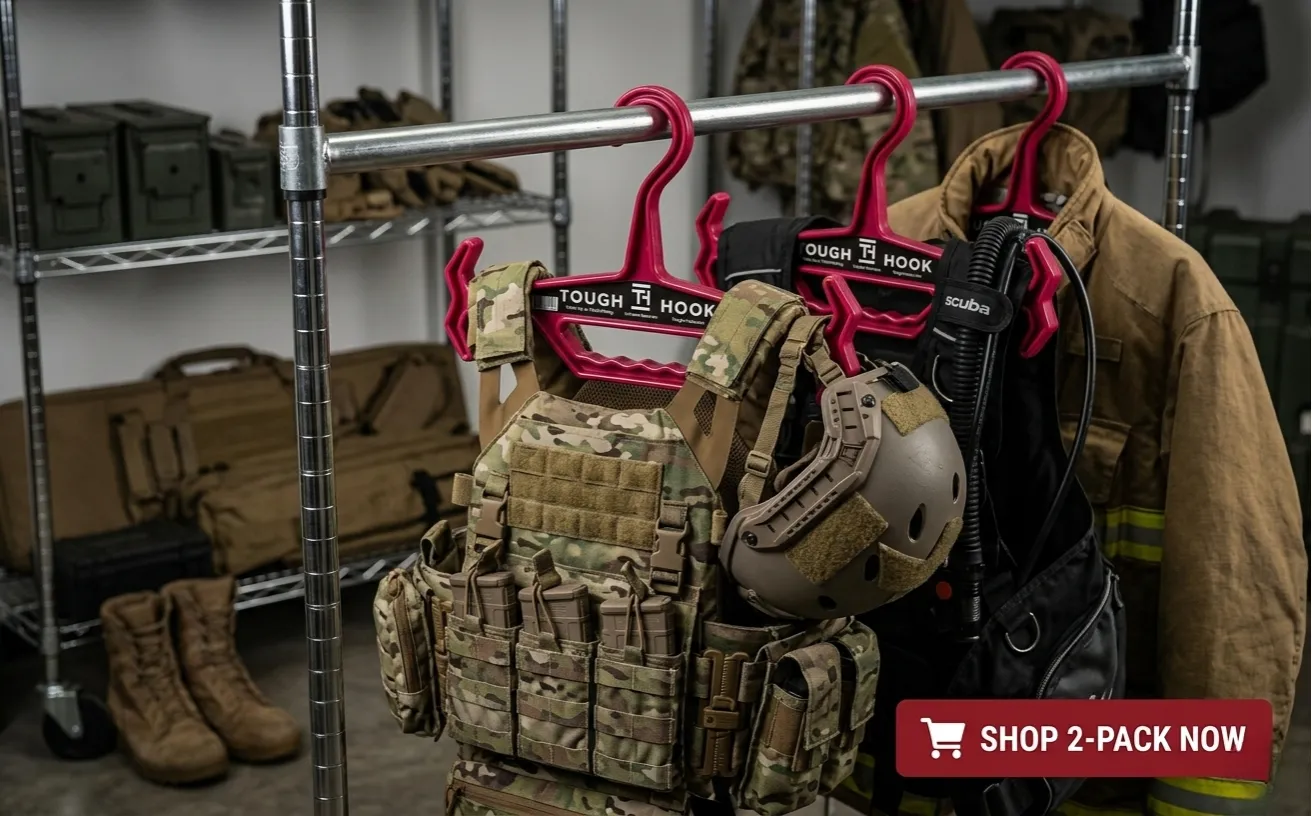
Super heavyweight hangers represent a fundamentally different category from anything sold in standard retail settings. These are purpose-engineered for loads that standard and heavy-duty hangers cannot handle, with rated capacities exceeding 200 pounds in the highest-performing options. The structural difference lies in the internal construction. Patented I-beam geometries and reinforced core designs distribute load across the full shoulder and arm span rather than relying solely on material thickness.
This allows the hanger to support sustained heavy loads without progressive deformation over time. The practical applications extend well beyond clothing, covering tactical gear, protective equipment, dry suits, and military load-bearing systems. For a direct test of this principle, whether a standard hanger can hold a weighted vest puts the load gap between hanger categories into an immediate practical context.
Material Composition and Load Performance
The material a plastic hanger is made from determines its baseline performance ceiling regardless of design. Polypropylene offers the best combination of flexibility and strength for general use, supporting higher weight capacities due to its tough yet lightweight structure. ABS plastic offers superior impact resistance and load-induced dimensional stability, making it the preferred material for heavy-duty commercial hangers. PVC sits at the bottom of the performance range, prone to cracking under sustained weight and temperature variation.
Recycled material variants retain much of the strength of virgin material but can exhibit variability in load performance depending on the source blend. The Plastics Industry Association notes that polypropylene remains the most widely used engineering resin for load-bearing applications due to its strength-to-weight ratio. For detailed technical context on how polymer selection affects structural performance, the Plastics Industry Association’s resin data resource covers the material characteristics that determine real-world load capacity.
Design Features That Determine How Much a Hanger Can Hold
Beyond material, the physical design of a hanger significantly affects how much weight it can realistically hold. Shoulder width is the most critical dimension: wider shoulders distribute garment weight across a larger contact area, reducing localized stress at the hang point.
Arm thickness at 0.24 inches or greater in polypropylene construction provides the rigidity needed to resist bending under sustained load. Reinforced hook design, particularly hooks with a steel core or increased diameter at the neck joint, prevents the most common failure point under heavy dynamic loading. Corrugated internal ribbing and solid molded construction together resist the progressive deformation that causes hangers to lose rated capacity over time. what to look for in a hanger for heavy training gear applies the same design principles to one of the most demanding practical storage scenarios, where load and moisture combine to stress every structural element simultaneously.
Know Your Load Before You Hang It
The weight a plastic hanger can hold ranges from 7 pounds for a standard retail option to over 200 pounds for a purpose-engineered heavy-duty design. That is not a small difference, and it matters every time you hang something that pushes against the lower end of that range. Choosing a hanger rated well above your actual load is not overcaution. It is the straightforward way to avoid progressive gear damage that is easy to miss until something valuable is already ruined.
Frequently Asked Questions
These are the most common questions people have about plastic hanger weight capacity and choosing the right option.
How many pounds can a standard plastic hanger hold?
Standard plastic hangers typically hold between 7 and 10 pounds. They are suitable for lightweight everyday clothing but will crack or deform progressively when worn with heavier garments. If your wardrobe includes coats, heavy jackets, or any structured gear, standard plastic hangers are the wrong tool for the job.
What makes a heavy-duty plastic hanger different from a standard one?
Heavy-duty plastic hangers use denser, higher-grade materials such as ABS or reinforced polypropylene, have thicker arm profiles, and feature wider shoulder spans that distribute weight more evenly. These structural differences allow them to hold 11 to 25 pounds without the progressive cracking and shoulder distortion that standard hangers develop under similar loads.
Can plastic hangers hold more weight than metal or wood hangers?
At the super heavyweight tier, yes. A high-impact polypropylene hanger rated to 200 lbs outperforms most standard metal and wood options. Standard and heavy-duty plastic hangers generally hold less than comparable metal hangers, but metal hangers introduce a corrosion risk in humid environments and can transfer rust to garment hardware over time.
What happens when a plastic hanger is overloaded?
Initial signs include visible shoulder bowing, audible creaking under load, and uneven weight distribution, causing the garment to hang at an angle. Left in place, the hanger will develop shoulder cracks that weaken the structure further until complete failure. By the time visible deformation appears, the hanger has usually been applying damaging pressure to the garment for an extended period.
How do I know if my plastic hangers are strong enough for my gear?
Weigh your garment or gear while wet, if applicable, since wet weight is always higher than dry weight and is the load the hanger will actually need to hold during the drying phase. Compare that number to the hanger’s rated capacity and aim for a safety margin of at least double. For tactical gear, protective equipment, or anything that combines weight with moisture, a hanger rated to 200 lbs is the only option that provides a meaningful margin above real-world loads.