
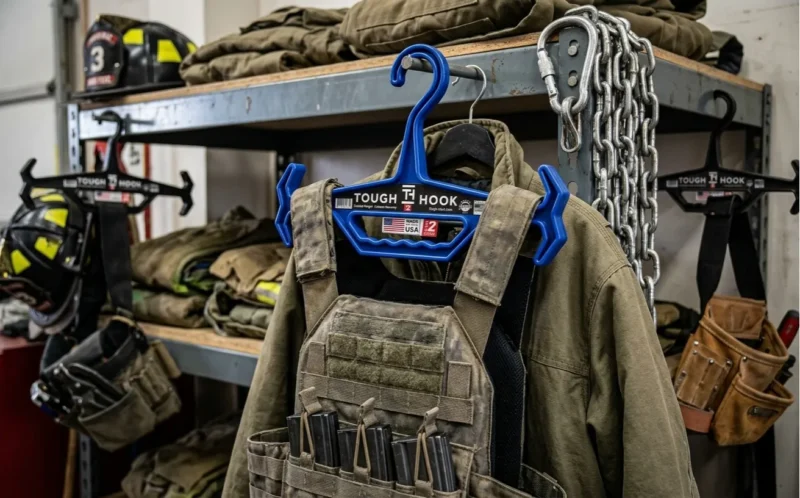
A winter coat soaked from a storm can weigh over 10 pounds. A tactical vest loaded for duty weighs considerably more. Firefighter turnout gear pushes past 25 pounds on its own. Standard hangers were never designed for any of these loads, and using them for heavy coats and gear leads to predictable results: bent arms, stretched shoulders, garment distortion, and eventually hanger failure at the most inconvenient moment. The best heavy duty hangers for heavy coats and gear are built around the specific demands of real weight, structured materials, and long term daily use. Here is what separates the right option from everything else on the market.
The Tough Hanger XL is engineered for oversized and heavy garments, with an extended shoulder span and 200 lb rating that supports even the heaviest coats and gear without sagging or deforming.
What Separates the Best Heavy Duty Hangers from the Rest
The difference between a hanger that handles heavy coats and gear and one that fails under them comes down to a handful of structural factors. Each one has a direct impact on how well the hanger performs over repeated use with real loads.
Shoulder Width and Weight Distribution
Shoulder width is the single most important dimension on any hanger carrying a heavy coat or structured gear. A narrow shoulder concentrates the entire weight of the garment at two small contact points, which stretches the fabric at the hang point and creates permanent shoulder bumps in wool and structured outerwear over time.
A wide shoulder profile distributes that weight across the full span of the garment, keeping it in its natural shape between uses. For heavy coats with substantial collar and shoulder construction, broad-shouldered hangers also prevent the inward roll that causes lapels and collar seams to lose their shape permanently. how to choose the right plastic coat hanger breaks down the shoulder width specifications and construction details that matter most when storing heavy outerwear long term.
Material Strength and Load Rating
The material a heavy-duty hanger is made from determines its ceiling for load capacity and its behavior under sustained weight. High-impact polypropylene provides an exceptional strength-to-weight ratio, resisting deformation and cracking under loads that cause standard plastics to fail within a single season. Unlike metal, it does not corrode, rust, or transfer surface damage to coat linings, hardware, or zip pulls. Unlike wood, it does not warp under humidity or require periodic maintenance to stay functional. A hanger rated to 200 lbs from this material provides a meaningful safety margin above any realistic coat or gear load, which means it performs consistently at full rated capacity across years of daily use without progressive degradation. For gear that goes beyond clothing into the realm of protective and tactical equipment, heavy duty hangers built for weight bearing equipment covers how these same material properties apply to the most demanding storage applications.
Non Slip Features for Coat and Gear Stability
A heavy coat or gear item that slides off a hanger does not just fall. It falls with enough weight to damage whatever is below it, and the impact can damage the garment itself. Non-slip shoulder features prevent this by increasing friction between the hanger surface and the garment material.
Corrugated shoulder profiles, textured surfaces, and notched edges all serve this function without adding the bulk or maintenance requirements of velvet coatings, which wear through over time and leave residue on certain fabrics. For structured gear with straps, loops, or external hardware, a hanger with positive retention geometry is particularly important, since smooth surfaces offer no resistance to the lateral movement that causes straps to shift and gear to become unbalanced during storage.
The NFPA sets standards for how protective clothing should be stored to preserve its protective properties, and proper hanger support is a direct factor in that guidance. NFPA 1971 standards for protective clothing outline storage requirements that reflect why load support and garment stability during storage directly affect performance readiness.
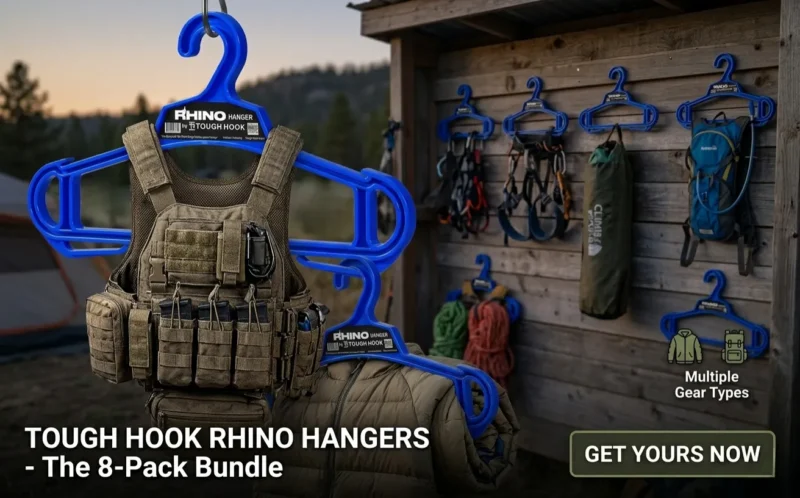
Storing a full coat collection or complete gear setup requires consistent support across every piece. The RHINO 8-Pack gives you eight 200 lb-rated hangers to handle an entire wardrobe without compromise.
Applications Across Coat and Gear Types
The best heavy duty hangers are versatile enough to handle multiple gear categories without specialised adaptations for each one. Heavy winter coats, wool overcoats, and down parkas all benefit from wide shoulder support and a high load rating during the wet and drying phases of winter use. Tactical vests and plate carriers require the same rated capacity but add the challenge of uneven load distribution, which concentrates weight toward the front panel.
Firefighter and first responder turnout gear demands hangers that hold the full suit weight plus equipment without any flex at the hook or arm junction. Loaded backpacks, outdoor packs, and duffel bags use the hook geometry rather than the shoulder, making reinforced hook design a relevant factor alongside arm strength. organising a closet with the right hangers covers how to set up a storage system that handles multiple gear types in the same space without overcrowding or compression damage.
Long-Term Durability Under Daily Use
Heavy coats and gear are typically used in the most demanding seasonal conditions and stored repeatedly across years. A hanger that handles one season of heavy coat use is not the same as one that handles ten seasons without measurable performance loss. Rustproof construction, UV-resistant materials, and molded designs without welded stress points all contribute to hanger longevity during sustained cycling.
A hanger that begins to flex under load is already structurally compromised, and a flexed hanger applies uneven pressure to the garment it holds. For long-term durability, the material rated capacity should significantly exceed the actual load being stored, since hangers used near their rated limit show accelerated wear compared to those operating well within their performance range. How to store heavy structured gear for the long term applies the same durability principles to extended off-season storage, where hanger performance matters just as much as active use conditions.
Closet Setup for Heavy Coat and Gear Storage
The hanger itself is only one part of a functional heavy coat and gear storage setup. The closet rod, mounting hardware, and spacing between hanging items all affect how well each piece is supported and maintained between uses. A closet rod rated for the combined weight of everything hanging on it prevents the progressive bowing that shifts garments together, causes compression damage, and eventually leads to rod failure. Wide spacing between heavy coats allows airflow to continue circulating after a wet winter day, which prevents the interior moisture buildup that causes fabric odor and mildew in dense wool and technical outerwear materials. A well-ventilated, dedicated hanging space with appropriate rod support and properly rated hangers throughout is the complete solution for anyone storing multiple heavy coats or a full gear collection in a single closet.
The Right Hanger Is the Foundation of Every Good Coat and Gear Storage Setup
Heavy coats and gear represent a significant investment in warmth, protection, and performance. Storing them on hangers that were never built for their weight quietly reduces that investment with every use cycle. Wide-shouldered, high-capacity hangers built from non-corrosive, UV-resistant materials are not a premium option for people with expensive wardrobes. They are the baseline requirement for anyone storing anything heavier than a dress shirt. Get this foundation right, and everything else in your closet setup becomes easier to maintain and longer lasting.
Frequently Asked Questions
These are the questions that come up most often when choosing heavy-duty hangers for heavy coats and gear.
What shoulder width should a heavy coat hanger have?
For standard heavy coats and wool overcoats, a shoulder width of at least 17 inches provides adequate weight distribution. For structured outerwear with substantial shoulder construction or for tactical and protective gear with a wider load profile, an extended shoulder span of 19 inches or more is preferable. The wider the contact area, the less concentrated stress the hanger applies to the fabric at the hang point.
How much weight can a heavy-duty hanger hold?
Heavy-duty hangers range from approximately 25 pounds for reinforced standard options to 200 pounds or more for purpose-engineered designs using high-impact polypropylene. For heavy winter coats the lower end of that range is adequate. For tactical vests, plate carriers, firefighter gear, or anything combining structural weight with equipment load, a 200 lb-rated hanger is the appropriate choice and provides a meaningful safety margin above realistic loads.
Can I use the same hanger for coats and tactical gear?
Yes, provided the hanger has both the rated capacity and the shoulder geometry to handle both load types. A hanger rated to 200 lbs, with a wide shoulder profile and a reinforced hook design, handles heavy coats, structured outerwear, and tactical gear without requiring separate hanger types for each category. This simplifies closet organization and ensures consistent support across everything stored.
Do heavy-duty plastic hangers damage coat fabric?
High-quality, heavy-duty plastic hangers with smooth edges and wide shoulder profiles do not damage coat fabric. The risk of fabric damage comes from narrow contact points that concentrate weight on a small area of the shoulder, which is exactly the problem wide-shouldered heavy-duty hangers are designed to prevent. Avoid hangers with exposed metal edges or sharp molding seams, as these can snag delicate coat linings over time.
How should I store heavy coats between seasons?
Store heavy coats on wide-shouldered, high-capacity hangers in a cool, dry space with adequate airflow. Clean the coat before long-term storage to remove oils, salt residue, and moisture that can degrade the fabric over time. Never compress coats into storage bags that flatten the shoulder construction. Hang with enough spacing between garments to allow air circulation, and keep out of direct sunlight to prevent fading and material degradation during the off-season.