
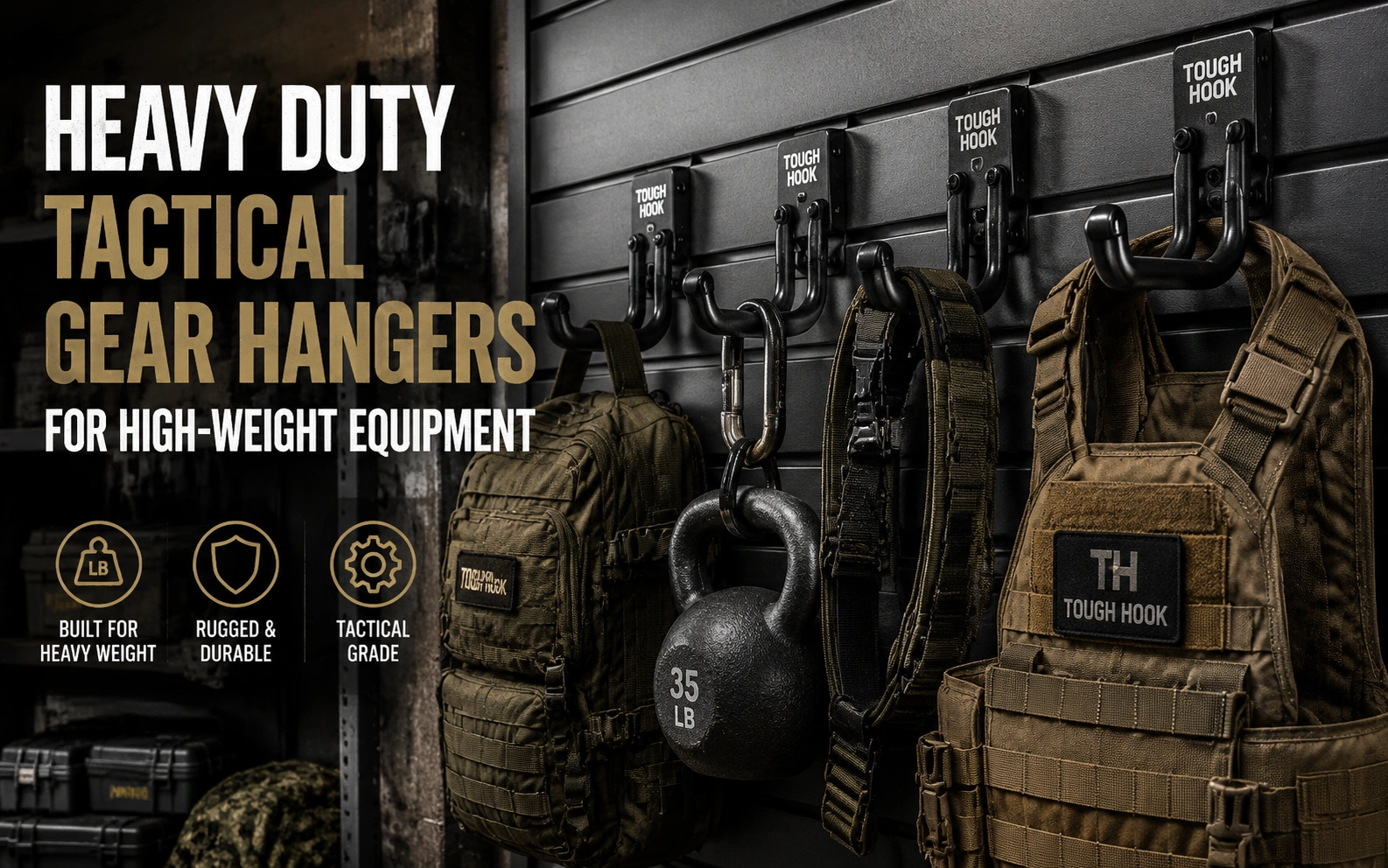
The Right Hanger Is Part of the Equipment System
Tactical gear is engineered to perform under extreme conditions. The hanger holding it between uses is rarely given the same scrutiny, and that mismatch creates problems that compound quietly over time. A standard wire or lightweight plastic hanger was designed to hold a shirt. Put body armor, a plate carrier, a turnout coat, or a loaded duty jacket on it and the outcome is predictable: bent hooks, stress fractures in the hanger body, uneven load distribution, and gear left sitting in deformed positions for hours or days at a stretch.
Heavy duty tactical gear hangers address the problem directly. They are rated for the actual weights involved, constructed from materials that do not warp under sustained load, and shaped to support the shoulders and structure of professional equipment rather than consumer clothing. For any operator, technician, or gear room manager responsible for high-weight equipment, the hanger is not a minor detail. It is the first point of contact between a critical system and everything that can go wrong during storage. NIJ guidelines on body armor care and maintenance reinforce that how protective equipment is stored between deployments directly affects its rated performance when it is needed most.
Built for the Weight Your Gear Actually Is
The Original Tough Hook Tactical Hanger is rated to 200 lbs, constructed from impact-resistant polypropylene, and designed to distribute load evenly across the full shoulder span – no bending, no shifting, no failure points.

Six Factors That Define a Heavy Duty Tactical Gear Hanger
Not every hanger marketed as heavy duty is built to the same standard. The following six factors separate storage hardware that genuinely protects high-weight equipment from products that simply look more substantial than a standard clothes hanger.
1. Weight Rating Grounded in Real Load Requirements
The weight rating of a hanger is the most direct measure of whether it belongs in a tactical gear room. Plate carriers with plates inserted routinely exceed 20 lbs. Full turnout gear sets can approach 50 lbs. A bomb suit or complete EOD loadout pushes well past that. Any hanger operating at or near its rated limit is already under stress, and stress accelerates failure.
A hanger rated to 200 lbs provides substantial margin above the weight of any single tactical garment or protective system currently in use. That margin is not excess – it is the difference between hardware that holds indefinitely and hardware that fails at an inconvenient moment. When evaluating any heavy duty tactical gear hanger, treat the weight rating as a floor, not a ceiling, and select hardware that exceeds your heaviest item by a meaningful margin.
2. Material That Resists Deformation Under Sustained Load
Weight capacity on paper means little if the material deforms under continuous stress. Metal hangers bend permanently at stress points, and that deformation shifts load to unintended contact areas on the gear itself. Standard plastic cracks when cold and fatigues over repeated use cycles. Neither material was engineered for the sustained, concentrated weight of professional protective equipment stored over extended periods.
High-impact polypropylene is the material standard for professional-grade tactical hangers. It holds its shape under sustained load, resists the temperature extremes common to gear rooms and vehicle storage areas, and does not corrode or transfer residue onto gear surfaces. When a hanger is under constant load for weeks or months at a time, material composition determines whether the rated capacity reflects long-term performance or just a single static test measurement.
3. Shoulder Geometry That Matches Professional Equipment
Consumer clothing hangers taper at the shoulders because consumer clothing does. Tactical gear does not taper – plate carriers, turnout coats, duty jackets, and protective suits all have wide, structured shoulder areas designed to distribute weight across the wearer’s frame. A hanger with a narrow shoulder profile concentrates the entire weight of the garment at two small contact points, creating pressure creases in padding and stitching over time.
A heavy duty tactical gear hanger should have a shoulder span wide enough to fully support the gear’s own structure. When the hanger matches the garment geometry, weight distributes naturally across shoulder seams and load-bearing panels rather than pulling down from two narrow pressure points. This matters especially for gear stored for extended periods, where repeated compression at stress points becomes cumulative damage invisible to a surface inspection.
High-Volume Storage Without Compromise
The RHINO Hanger is built for gear rooms where multiple heavy systems need to be organized and immediately accessible. Rated to 200 lbs and available in an 8-pack bundle, it brings the same structural standard to every position on the rack.

4. Hook Strength and Mounting Point Integrity
The hanger body is only as reliable as the hook connecting it to the rack or rod. Standard hanger hooks are stamped from thin wire or formed from the same lightweight material as the body. Under heavy loads they straighten, crack at the base, or pull free entirely. When that happens with a 50-lb piece of equipment, the consequences extend well beyond the cost of the hanger.
On a purpose-built heavy duty hanger, the hook is engineered as part of the load-bearing structure rather than attached as an afterthought. The connection between hook and hanger body should show no flex or rotation under load, and the hook profile should engage securely with standard-diameter rods and racks without the tendency to slide or rotate that leads to gear falling during the high-traffic periods typical of a shared gear room.
5. Compatibility With Modular and Multi-Component Loadouts
Tactical loadouts are rarely a single garment. A plate carrier may have attached pouches, a hydration bladder, and communication equipment. A first responder duty set may include a jacket, belt, and vest worn together as an integrated system. Storing these systems requires hangers that can handle the combined weight of all components simultaneously without requiring operators to partially disassemble their configuration every time the gear goes back on the rack.
A well-designed heavy duty tactical gear hanger accommodates modular gear by providing consistent support across the full width and depth of the system. It should not require stripping a carrier to a bare shell before storage. The ability to hang a complete, configured loadout preserves the readiness state of the equipment and reduces the time and steps involved in transitioning from storage to deployment under time pressure.
6. Longevity in Shared Storage Environments
Gear rooms are not climate-controlled showrooms. They experience temperature variation, humidity, physical impact from doors and adjacent racks, and the constant traffic of multiple operators accessing equipment under time pressure. A hanger in this environment must hold up through years of use without becoming a failure point in its own right.
Longevity in a shared storage environment depends on material selection, construction quality, and design that anticipates rough handling rather than assuming careful use. Impact-resistant construction, dimensional stability across temperature ranges, and hardware that does not corrode or lose structural integrity over time are the characteristics that separate a professional storage solution from a commercial product repurposed for tactical use. Every hanger that fails in a gear room is a replacement cost, a readiness disruption, and a potential equipment damage event that did not need to happen.
Frequently Asked Questions
What weight should a hanger be rated to for tactical gear storage?
The rating should meaningfully exceed your heaviest single item rather than simply meet it. Full protective equipment systems including plates, pouches, and integrated components can approach or exceed 50 lbs. A hanger rated to 200 lbs provides the load margin needed for both current gear and any configuration changes over the hanger’s service life.
Can the same heavy duty hanger work for different types of tactical gear?
Yes, provided the shoulder geometry and weight capacity are compatible with the items being stored. A hanger sized correctly for a plate carrier will also support turnout coats, duty jackets, and similar systems. The key variables are load capacity and shoulder span – a hanger that handles one type of high-weight protective gear will generally handle others of comparable or lesser weight without adjustment.
How does improper hanging damage tactical equipment over time?
Hangers that bend or shift under load concentrate weight on unintended contact points, creating sustained pressure on seams, padding, and stitching. This leads to creasing in protective layers, deformation of carrier structures, and fatigue in load-bearing stitching. Damage from improper hanging is cumulative and typically invisible until an inspection or functional test reveals it – by which point it may already represent a compromise in the gear’s rated protection level.
Is polypropylene better than metal for tactical gear hangers?
For tactical storage applications, high-impact polypropylene outperforms metal in several areas that matter. It does not corrode, does not transfer rust or surface oxidation onto gear, maintains dimensional stability across temperature ranges, and does not develop the permanent bends that metal forms under sustained heavy load. For long-term, high-weight storage in working gear environments, polypropylene is the more reliable material choice.
What is the correct way to store detachable components alongside the main system?
Detachable components including helmets, gloves, footwear, and groin protectors should be removed from the main system before hanging and stored separately on padded surfaces or dedicated shelving. Keeping the full weight of accessories on the hanging system adds unnecessary stress to both the hanger and the gear’s attachment points. Each component should be labeled and stored within the same designated area to maintain a complete and quickly accessible loadout.
Storage Hardware That Matches the Standard of the Gear It Holds
High-weight tactical equipment represents a significant investment in operator safety and mission readiness. Every element of how that equipment is handled between uses either protects or erodes that investment. The hanger is not separate from the readiness equation – it is where the readiness equation begins. Building a storage system around heavy duty tactical gear hangers that are rated for the loads involved, built from the right materials, and designed for professional environments is the same discipline that governs every other aspect of equipment management. The gear performs when it has been stored correctly. Start with hardware that is built to hold it.