
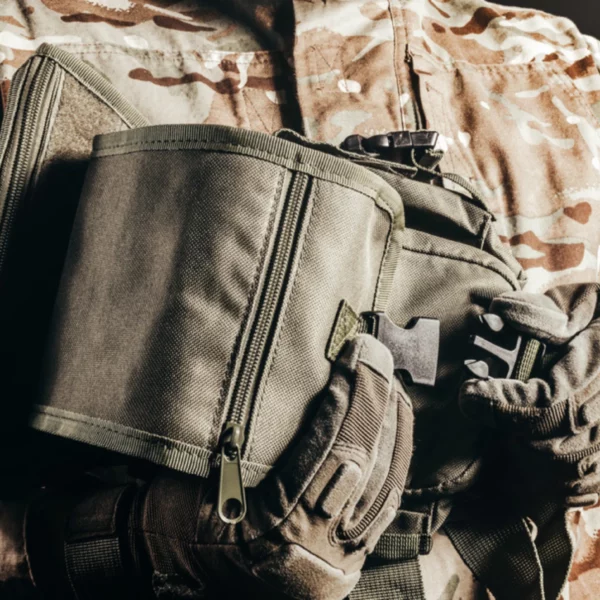
Tactical gear has moved well beyond military and law enforcement use. Hikers, campers, hunters, and everyday outdoor enthusiasts now rely on the same durability and organization that tactical design offers, without needing a combat use case to justify it. This guide breaks down the accessories worth carrying, what to actually check before you buy each one, and how to keep gear like this in shape once you own it.
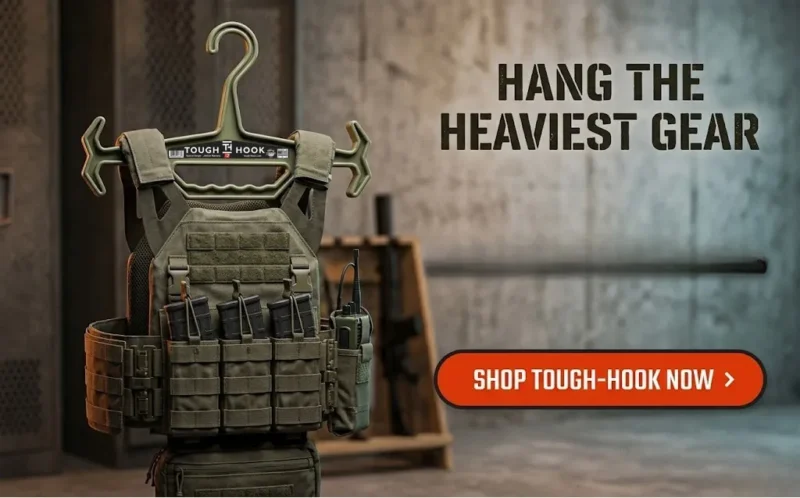
Already stacking up packs, vests, and jackets? Gear this heavy needs storage built for the load. See the Tough Hook Tactical Hanger™, made in the USA to hold reinforced gear without bending or snapping.
What Actually Makes Gear “Tactical”
A lot of gear gets labeled “tactical” without earning it. The real markers are construction-level, not cosmetic: reinforced stitching at stress points, abrasion-resistant fabrics like Cordura or ripstop nylon, MOLLE (Modular Lightweight Load-carrying Equipment) webbing for attaching pouches and accessories, and hardware rated to actually take a load rather than just look rugged. If you want the fuller breakdown of what separates authentic tactical construction from a marketing label, see our guide on the real benefits of tactical clothing. This piece covers the accessory side: what to carry, and what to check before you buy each piece. For a wider list of the categories a civilian tactical kit typically covers, see our guide to tactical gear for civilians.
Carrying Your Gear
Tactical Backpacks: What to Check Before Buying
The backpack is the single most important accessory on this list, and it’s worth getting right the first time. Before buying, check four things:
- Capacity. Day hikes run 20 to 35 liters. Overnight or multi-day trips need 40 to 65 liters. Buying oversized “just in case” usually means carrying more weight than the trip needs.
- MOLLE webbing. This is what lets you attach pouches, holsters, and tools directly to the pack instead of stuffing everything inside one compartment.
- Hydration bladder compatibility. A sleeve and hose port for a 2 to 3 liter bladder matters more on longer trips than most people expect until they’re without one.
- Weight distribution. Padded, adjustable straps and a supportive frame keep a loaded pack from turning into a shoulder and lower-back problem three miles in.
Materials matter too: tactical packs are usually built from Cordura or heavy ripstop nylon rather than the lighter fabrics used in ultralight hiking packs, which trades some weight for real durability under repeated abrasion.
Tactical Vests and MOLLE Systems
A tactical vest is really a modular carrying platform. The MOLLE rows on the front and sides let you attach pouches for a first aid kit, a knife sheath, a hydration carrier, or a radio pouch, and rearrange them as your trip changes. When you’re comparing vests, count the MOLLE rows (more rows mean more configuration options), check whether the vest is adjustable enough to layer over a jacket in cold weather, and confirm the pouches you already own or plan to buy will actually fit the webbing pattern.
A loaded vest is exactly the kind of gear that destroys ordinary hangers between trips. Shop Tough Hook’s heavy-duty hangers to keep vests and packs holding their shape instead of sagging in the closet.
Belts and Holsters
No tactical setup is complete without the right belt. Not just for holding your pants up, a good tactical belt is engineered to carry gear, tools, and sometimes even survival equipment. Look for a stiffened core that won’t sag under a loaded holster or pouch, and a weight rating appropriate to what you’re actually carrying, not just the belt’s price tier. Pair the belt with a holster built to a specific retention level, meaning how securely it holds a sidearm or tool in place during movement, so you get quick access without anything shaking loose.
Staying Safe and Found
Tactical Flashlights and Headlamps
A reliable light is non-negotiable once the sun goes down. Look for a lumen range appropriate to the use case: 100 to 300 lumens is enough for camp tasks and walking, while 500 lumens and up is better for signaling or covering distance. Rechargeable lights save money over time but need a charging plan on multi-day trips, where a light that runs on standard batteries is more reliable. A strobe or SOS mode is worth having for emergencies, and it’s a feature that cheaper lights often skip.
Fire starters are worth carrying alongside your light. A ferro rod works in wet conditions and lasts for thousands of strikes; waterproof matches are the simplest backup; and a stormproof lighter is the fastest option in calm weather. Carrying two of the three covers if one fails. A signal mirror and an emergency whistle round out the safety kit: they weigh almost nothing and make you visible and audible over long distances if something goes wrong.
Navigation: Compasses, Watches, and Maps
GPS devices fail: batteries die, screens crack, and signal drops in canyons and dense cover. A compass doesn’t, which is why one belongs in every kit. A baseplate compass is the simplest and most common choice for hiking, while a lensatic compass offers more precise sighting for serious land navigation. Tactical watches have grown into genuine navigation tools too, combining a compass, barometer, and altimeter on your wrist. And even with GPS along, carry a topographical map of the area; it shows terrain details that small screens compress, and it works without a battery.
Two-Way Radios and Group Communication
When a group splits up on a trail or loses cell coverage in the backcountry, a pair of GMRS or FRS radios keeps everyone in contact without relying on a phone signal. Advertised range figures assume open, flat terrain; in hilly or wooded country, expect a fraction of that in real use. Look for a model with a rechargeable battery pack and AA compatibility as a backup for longer trips, and confirm the channel and privacy codes match across every radio in the group before heading out. A radio doesn’t replace the whistle and signal mirror covered above, since a dead battery still leaves you without a way to call for help.
First Aid and Emergency Kits
A compact first aid kit, often called an IFAK (individual first aid kit), belongs on every outdoor trip regardless of distance or duration. At minimum, look for one stocked with bandages, antiseptic, blister treatment, and a tourniquet, packed small enough to attach to a MOLLE-equipped vest or backpack via its own pouch. Waterproof packaging matters more than people expect, since a soaked kit is a lot less useful when you actually need it.
Clothing, Footwear, and Hand Protection
Tactical Gloves
A good pair of tactical gloves protects your hands during rope work, firewood collection, or handling gear without sacrificing the grip and dexterity you need to actually use your hands. For a full breakdown of what separates a good pair from a cheap one, see our guide to tactical gloves.
Tactical Boots
Footwear takes more abuse than almost any other piece of gear, so it deserves as much attention as the pack on your back. Look for a lugged outsole with real traction on wet rock and loose ground, ankle support suited to the load you’re carrying, and a waterproof membrane if the trip involves stream crossings or wet weather. Full-leather boots hold up longer under heavy loads but need a break-in period before a long trip, while nylon and leather composite boots are lighter and ready to wear sooner at some cost to long-term durability. Whichever you choose, break new boots in on short hikes first; a blister that shows up three miles into a multi-day trip is a lot easier to prevent than to treat.
Tactical Clothing Basics
Reinforced stitching, abrasion-resistant fabric, and moisture-wicking liners are what separate real tactical clothing from a garment that just looks the part. We cover this in full, including exactly what to check before buying, in 7 Real Benefits of Tactical Clothing (And What to Buy First).
Tactical clothing and gear designed specifically for women, rather than men’s gear resized, has also become much more widely available. See our guide to tactical gear for women for fit and cut considerations.
Shelter, Hydration, and Food
Quick-Setup Tents and Sleeping Systems
The unpredictability of outdoor settings demands quick solutions, and quick-setup tents deliver shelter in minutes. Look for a weight class suited to how you’ll carry it (backpacking tents run lighter and smaller than car-camping tents) and whether it’s rated 3-season or 4-season, depending on the conditions you’ll actually face. A tactical hammock is a lighter alternative wherever trees allow, and a compact sleeping bag balances warmth against pack weight when the night’s chill sets in.
Hydration Systems and Water Filters
Hydration is one of the most commonly overlooked pieces of tactical gear, and one of the most important. A hydration bladder, typically 2 to 3 liters, worn in a backpack sleeve or a dedicated carrier, lets you drink on the move without stopping to dig out a bottle. Pair it with a portable water filter so you can refill safely from streams or lakes, and a bladder running low stops being a crisis on a longer trip. For meals, a spork and compact cookware handle cooking on the move, and a small emergency food reserve covers you if a trip runs longer than planned. If your trip involves stream crossings or sustained rain, our guide to waterproof tactical essentials covers how to keep the rest of your kit dry alongside your water gear.
Tools: Knives and Multi-Tools
A tactical knife and a multi-tool cover different jobs, and both belong in your kit. When choosing a knife, blade steel matters: high-carbon steel (like 1095) holds a sharper edge but needs more upkeep to avoid rust, while stainless steel resists corrosion and needs less maintenance, a real advantage on wet or humid trips. Fixed blades are stronger for heavy-duty tasks, while folding blades carry smaller and safer. A multi-tool adds pliers, a saw, screwdrivers, and other functions in one compact unit, and is worth carrying even alongside a dedicated knife since it covers repairs and tasks a knife alone can’t. A hard or padded case rounds out the tool kit, protecting optics, electronics, and other sensitive equipment from impact and weather.
Everyday Tactical Gadgets
Beyond the core categories above, a handful of smaller gadgets round out a well-equipped kit. A tactical pen looks like an ordinary pen but adds a glass breaker tip and sometimes a built-in kubotan for self-defense, making it one of the few tools you can carry through most workplaces and airports without a second look. A paracord bracelet or keychain packs several feet of usable cordage into something small enough to wear, useful for gear repairs, shelter building, or an improvised tourniquet in a pinch. A compact solar or battery power bank keeps a phone, headlamp, or GPS unit charged on multi-day trips where an outlet isn’t an option, and pairing it with a short charging cable saves digging through a bag at camp. Tactical carabiners and D-rings let you clip gear to the outside of a pack or belt for quick access instead of burying it in a compartment. None of these replace the core gear covered above, but they close small gaps that come up more often than people expect.
Taking Care of What You Buy
Cleaning and Maintenance Basics
Most tactical gear lasts for years if you do three things: follow fabric-specific washing instructions instead of defaulting to a hot wash, let gear fully air dry before storing it to prevent mildew and material breakdown, and inspect high-wear points like straps, seams, and buckles regularly so small damage gets caught before it becomes a failure in the field.
Storing Heavy or Reinforced Gear Properly
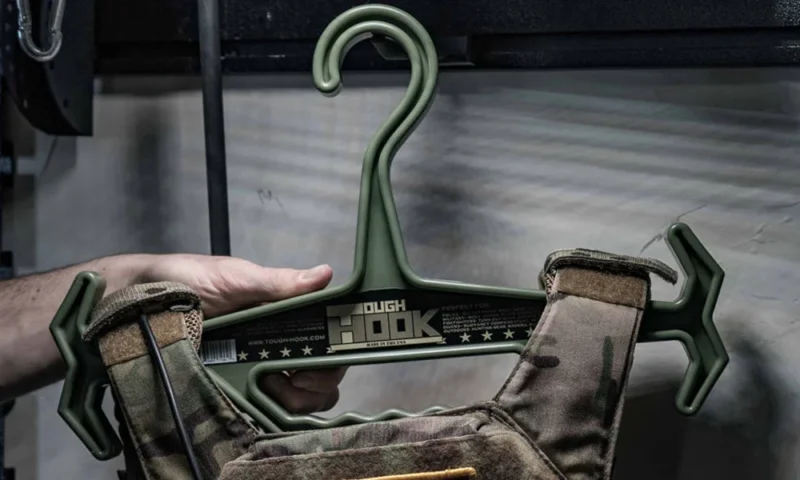
Tactical vests, loaded packs, and hydration carriers are heavier and bulkier than everyday gear, and standard wire or thin plastic hangers weren’t built to hold that weight. Over time, they bend, sag, or snap, stretching straps and warping the shape of vests and jackets. Tough Hook’s heavy-duty hangers are built specifically for this kind of reinforced, weighted gear, so they keep their shape between trips instead of degrading in the closet.
Conclusion
Tactical gear earns its place in an outdoor kit through the same things that matter in any tactical clothing purchase: durable materials, functional design, and construction that holds up under real use, not through the label alone. Buy for the features that match how you’ll actually use the gear, and take care of it properly once you own it so it lasts as long as it’s built to.
Frequently Asked Questions
What are tactical outdoor accessories?
Tactical outdoor accessories are gear items built with reinforced materials and functional design for demanding conditions, including backpacks, vests, flashlights, navigation tools, and first aid kits, originally developed for military and law enforcement use and now widely adopted by hikers, campers, and outdoor enthusiasts.
What should I look for when buying a tactical backpack?
Capacity matched to your trip length, MOLLE webbing for attaching pouches, hydration bladder compatibility, and padded, adjustable straps for weight distribution are the four things worth checking before buying.
Are tactical accessories worth it for hiking or camping, not just military use?
Yes. The reinforced construction, MOLLE modularity, and durable materials that define tactical gear hold up better under repeated outdoor use than standard hiking or camping gear, which is why the category has grown well beyond its original military use case.
How do I maintain and store tactical gear properly?
Follow fabric-specific washing instructions, let gear fully air-dry before storing it, inspect straps and seams regularly for wear, and use a heavy-duty hanger rather than a standard one for vests, jackets, and other reinforced pieces to keep their shape.
What’s the difference between tactical gear and regular outdoor gear?
Tactical gear is built heavier, using reinforced materials and features like MOLLE webbing and quick-release hardware for modular carrying. Regular outdoor gear prioritizes low weight and convenience instead, which is a real tradeoff to weigh depending on how far and how long you’ll be carrying it.
What should I look for in a tactical gear brand?
Reinforced stitching, named materials such as Cordura or ripstop nylon, a stated warranty, and manufacturing transparency are better signals of quality than marketing language alone. The construction details covered above apply regardless of brand, so checking a product against them is a more reliable test than reputation.
Is tactical gear different for men and women?
The core categories are the same, but fit differs. Packs, vests, and gloves sized for a women’s frame typically use a shorter torso length, narrower shoulder straps, and different grip sizing than men’s gear resized down rather than purpose-built.