
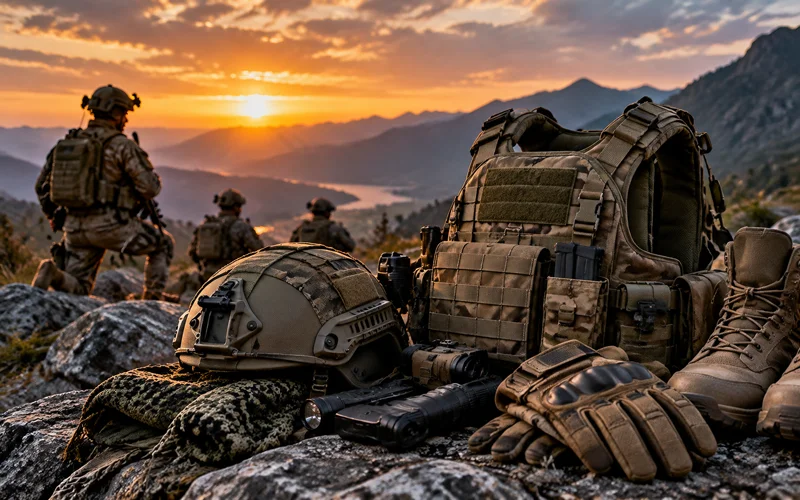
Military tactical gear covers every piece of equipment a service member relies on in the field, from tactical boots to load-bearing vests, communication devices, and protective armor. Each item is built to a specific standard because failure isn’t an option when gear is being used under real operational stress.
The role this equipment plays becomes clear in actual military training exercises, where the same gear that protects soldiers in combat is tested and refined. This guide breaks down every major category of military tactical gear, what each piece is used for, and what it costs to build a complete loadout.
What Counts as Military Tactical Gear
Tactical gear falls into a handful of broad categories: clothing and uniforms, load-bearing equipment, weapons accessories, protective armor, medical and sustainment gear, and communication or navigation tools. Together, these categories cover everything a soldier, police officer, or prepared civilian needs to operate safely in demanding conditions.
Clothing and Uniforms: Beyond Camo and BDU
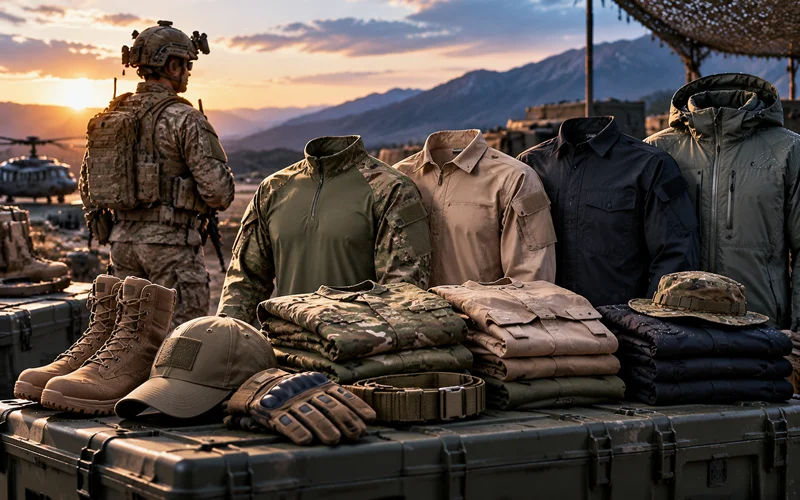
At the center of any tactical loadout is the clothing itself. It goes well past a camo t-shirt or a set of BDU pants. Weather-resistant outer layers, purpose-built shirts and hoodies, and reinforced pants combine camouflage, durability, and freedom of movement in one package.
Most tactical clothing relies on ripstop nylon or Cordura fabric with bar-tacked stitching at stress points, which is why it holds up to years of hard use instead of wearing through at the knees or seams.
Cold-weather layers matter just as much: the right boots and outerwear hold up in wet terrain, rocky ground, or freezing temperatures, while the wrong pair causes blisters and slows a unit down within a day. For gear built specifically to shed rain and stay functional in wet conditions, this breakdown of waterproof tactical essentials covers what to look for.
Load-Bearing Equipment: Backpacks, Pouches, and MOLLE
MOLLE webbing turned tactical carrying gear from fixed pouches into a modular system, letting a soldier reconfigure a tactical backpack or vest for a specific mission in minutes. Magazine pouches, medical kits, and utility pouches all attach to the same platform, which keeps ammunition, water, and first-aid supplies within reach without extra weight in the wrong place. For longer operations, a dedicated sleeping bag and sleep system matter too, the same fundamentals covered in any camping guide for extended time outdoors.
Head, Eye, and Communication Gear
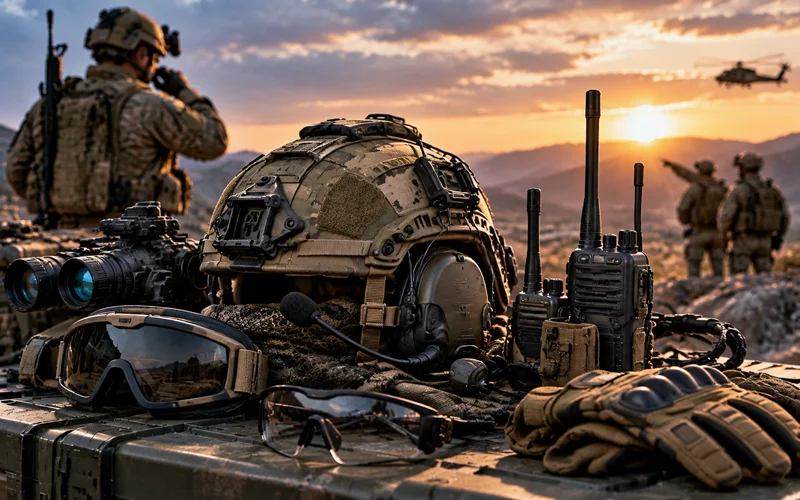
Protecting a soldier’s senses and keeping the unit in contact with each other is just as important as carrying the right weapon. This category rarely gets the attention that clothing or weapons do, but it’s often the difference between a coordinated operation and a chaotic one.
Helmets and Ballistic Eyewear
A combat helmet protects against fragmentation and blunt impact while providing a mounting platform for night vision and communication headsets. Ballistic eyewear, goggles, and impact-rated glasses guard against debris, shrapnel, and glare, and most modern designs meet ANSI or MIL-PRF impact standards rather than acting as basic sunglasses with a tactical label.
Night Vision, Radios, and Navigation
Night vision devices let units operate after dark without giving away their position with visible light, while tactical radios keep a squad synchronized across a wide area. A rugged flashlight is one of the most used, least discussed pieces of kit in this category, since low-light identification and signaling both depend on it. GPS units and dedicated navigation tools have become standard alongside a map and compass, mainly because they cut the time it takes to confirm a position in low-visibility conditions.
Body Armor and Protective Equipment
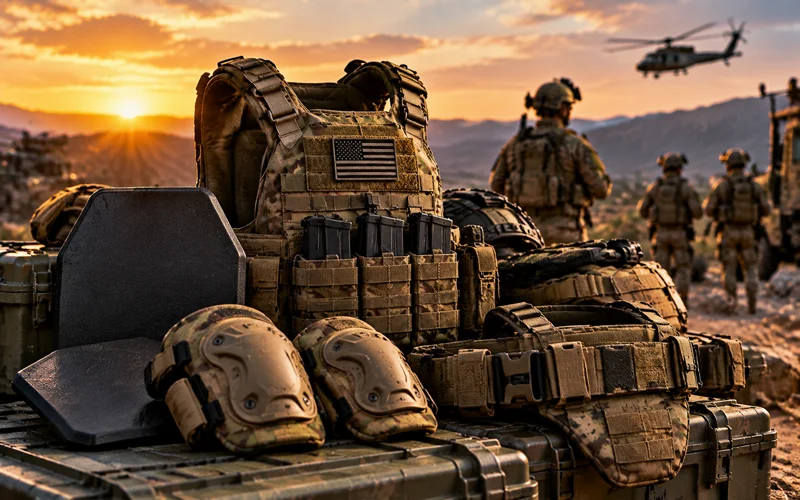
Body armor, plate carriers, and knee pads exist to reduce injury risk without limiting mobility more than necessary. A plate carrier holds ballistic plates over vital organs while distributing the weight of pouches and gear across the torso instead of the shoulders alone.
Plates are rated by protection level, from soft IIIA armor up through hard III and III+ plates built to stop rifle rounds, so the right choice depends entirely on the threat a person is actually training or operating against. Knee pads matter more than most new users expect: prolonged kneeling or crawling on concrete or rocky ground without them leads to joint damage that shows up well after the mission ends.
Medical and Sustainment Gear
A loadout that covers clothing, armor, and communication but skips medical gear is incomplete. An individual first aid kit, generally called an IFAK, holds a tourniquet, compression bandages, and basic trauma supplies in a MOLLE-mounted pouch that stays within reach during an emergency rather than buried in a bag.
Hydration carriers and basic sustainment supplies round out this category for anything longer than a short outing. Once a shift or training day ends, that same medical gear needs to come off and dry out properly, which is exactly what this guide to hanger types for EMS uniforms and trauma bags covers in detail.
Weapons and Accessories: More Than Just Firearms

Weapons are only part of the picture. Holsters, weapon mounts, slings, duty belts, and ammunition carriers determine how quickly a soldier can draw, reload, or transition between tools under stress. Knives, batons, and multi-tools round out the category, giving service members options in close-quarters situations or general field problems that a firearm alone doesn’t solve.
Trusted Brands and Quality Standards
In tactical gear, a brand’s reputation usually reflects how the gear performs under repeated abuse, not just how it looks new. High-Speed Gear and Arc’teryx are established names in vests, gloves, and chest rigs, trusted by both military and police units, and consistently reviewed well by service members who put the gear through real use rather than a weekend hike.
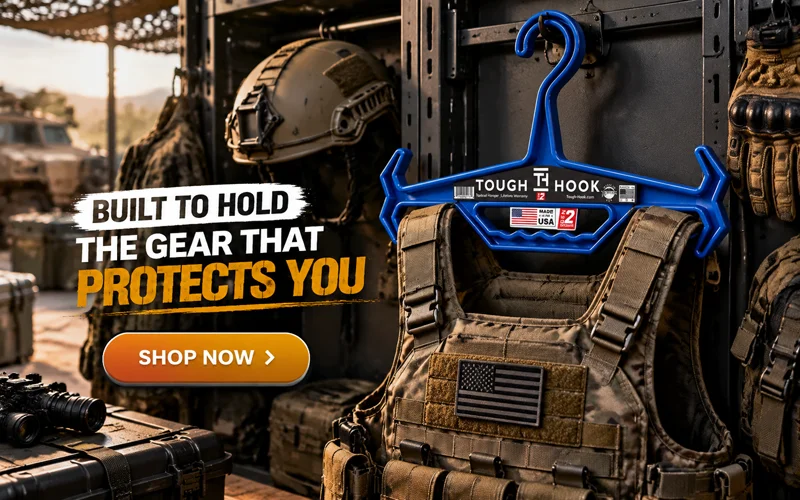
Tough Hook solves a different but related problem: keeping that same gear properly stored once a shift or deployment ends, since heavy tactical vests and plate carriers wear out standard hangers fast.
Tactical Accessories: The Often Overlooked Essentials
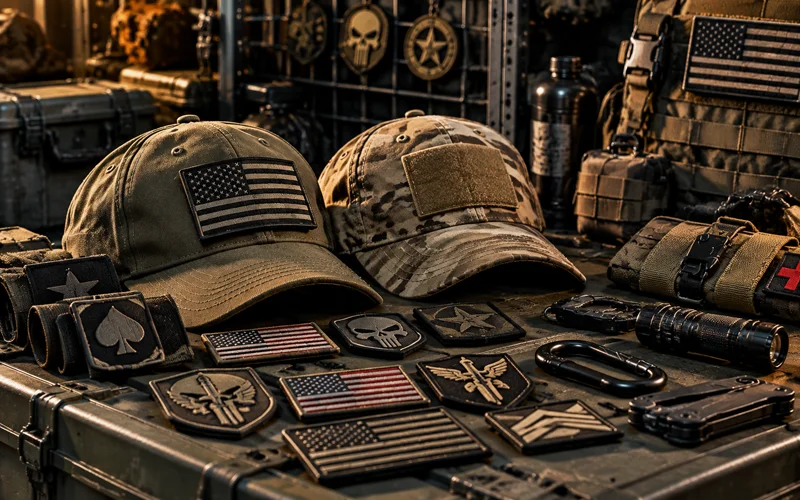
Beyond the primary gear categories, several smaller items carry real functional weight.
Badges, Caps, and Morale Items
Name tapes, badges, dog tags, and caps identify rank, unit, and sometimes the nature of a mission at a glance. Morale patches and embroidery aren’t purely decorative either; they play a real role in unit cohesion during long or difficult operations.
Choosing the Right Tactical Gear: A Buying Guide
Whether the gear is being issued, purchased for law enforcement work, or bought by a civilian for training or preparedness, a few questions decide whether it’s the right purchase.
How Much Does Tactical Gear Typically Cost?
Costs vary widely by category. A quality plate carrier alone typically runs from $150 to $400 before plates, while a full loadout, including boots, a load-bearing vest, pouches, and a backpack, commonly lands between $800 and $2,000 depending on the brand and whether armor is included. Buying gear piece by piece as needs change is usually more practical than trying to assemble a complete kit at once.
Can Civilians Legally Buy Military-Grade Gear?
In the United States, most tactical clothing, backpacks, holsters, and non-restricted plate carriers are legal for civilians to purchase and use, and this covers most of what’s available through retail tactical equipment sellers. A small subset of items, certain restricted communication frequencies or military-specific issue gear, is not sold on the open market. Checking local and state regulations still matters, since rules on body armor ownership in particular vary by state.
Choosing Gear for Self-Defense or Everyday Preparedness
Civilians building a kit for self-defense or everyday carry generally don’t need full military-spec gear. A solid holster, a reliable flashlight, a basic first-aid kit, and tactical gloves cover most practical EDC needs without the cost or weight of a full military loadout. Fit and comfort matter more than tactical branding, since gear that’s uncomfortable to wear regularly won’t get used when it counts.
Caring For and Storing Tactical Gear
Gear that isn’t stored properly wears out faster, regardless of how well it was made. Damp gear left in a heap breeds mold and weakens webbing, and heavy vests or plate carriers left on standard hangers stretch or snap them within weeks.
A proper hanging system built for the actual weight of tactical gear, like the setups covered in this guide to hangers for military gear, keeps everything ready to grab and extends how long the gear itself lasts. For anyone maintaining a full kit, these storage tips for tactical gear cover the basics of keeping a loadout organized between uses.
Conclusion
Military tactical gear is a wide category, covering clothing, load-bearing equipment, protective armor, medical supplies, communication tools, and the accessories that tie it all together. None of it exists in isolation. A soldier’s boots matter as much as their radio, and a plate carrier is only useful if it’s stored properly and ready when it’s needed. Understanding what each category does, and what it actually costs to build out, makes it far easier to put together a loadout that holds up under real use, whether that’s training, active duty, or everyday preparedness.
Frequently Asked Questions
What is military tactical gear?
Military tactical gear refers to the clothing, load-bearing equipment, protective armor, weapons accessories, and communication tools used by service members, law enforcement, and civilians in tactical or field environments.
Are there gear storage facilities on military bases?
Yes. Military bases maintain storage and maintenance facilities so gear stays ready for deployment at any time.
Can tactical gear be recycled or repurposed after its life cycle?
Some components can be recycled, and many branches also repurpose retired gear for training, simulations, or donation to charitable programs.
Is there a quality assurance or testing phase for new tactical gear?
Yes. New gear goes through rigorous testing under a range of conditions before it’s approved for mass deployment.
How much does tactical gear typically cost?
A single plate carrier generally costs $150 to $400 before armor plates, while a complete loadout with boots, a vest, pouches, and a backpack typically runs $800 to $2,000.
Can civilians legally buy military-grade tactical gear?
Most tactical clothing, backpacks, holsters, and standard plate carriers are legal for civilian purchase in the United States. Certain restricted items and communication equipment are not sold on the open market, and body armor rules vary by state.