
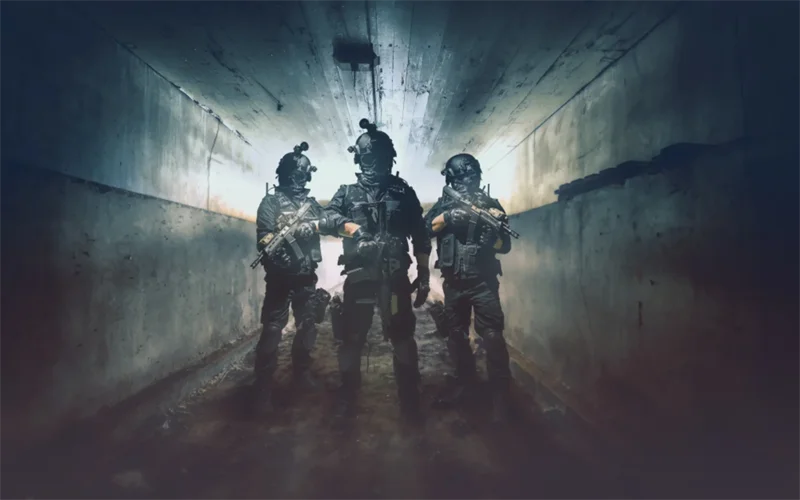
Police tactical equipment covers everything an officer relies on to do the job safely: protective gear, communication tools, mobility equipment, and the storage systems that keep it all ready between shifts.
Choosing the right gear isn’t just about checking boxes on a supply list. It’s about matching equipment to the real conditions officers face on patrol, during high-risk calls, and in specialized assignments.
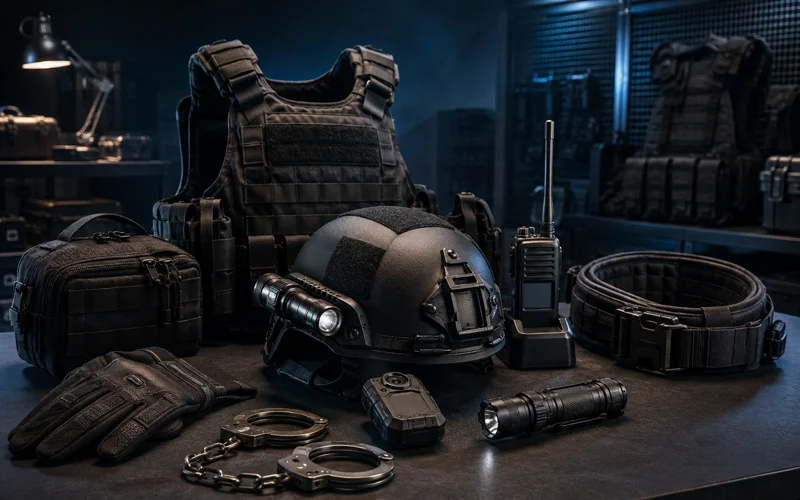
From the standard-issue duty belt and body armor to body cameras, night vision devices, and surveillance tools, the equipment an officer carries directly affects how effectively they can respond to whatever a shift brings. Power of Tactical Gear in Military Training covers how much of this equipment traces back to military-grade standards before it reaches a duty belt.
What Police Tactical Equipment Actually Covers
The short answer to “why is tactical equipment required” is that policing conditions change shift to shift, and generic gear doesn’t hold up across all of them. An officer handling a domestic dispute, a traffic stop, and a civil disturbance call in the same week needs equipment that performs consistently across all three.
Body armor and shields exist because the margin for error in those situations is thin. A taser, a baton, and a pair of boots aren’t isolated tools; they work together as a system, and a weak link in that system (a vest that doesn’t fit right, boots that fail on wet pavement) creates real risk on the job.
Essential Police Tactical Equipment Categories

Personal Protective Equipment (PPE)
Helmets defend against projectiles and double as mounting points for radio sets and cameras. Tactical vests, particularly body armor, are the primary line of defense during high-risk assignments, and fit matters as much as rating: armor that doesn’t sit correctly restricts movement and leaves gaps in coverage.
Communication Tools
Radios and earpieces are the lifeline of coordinated operations.
In multi-unit responses, a reliable communication channel is often what keeps a situation from escalating, which makes durability and battery life as important as clarity.
Footwear and Mobility Gear
Proper footwear is about function, not comfort alone. Tactical boots provide the grip, ankle support, and agility officers need across pavement, gravel, and wet terrain.
Harnesses and tactical belts serve as the platform that keeps flashlights, radios, and ammunition pouches within immediate reach.
Duty Belts, Restraints, and Load-Bearing Gear
The duty belt is where most of an officer’s carried equipment lives: holster, restraints, a baton such as an ASP, a flashlight, and often MOLLE-compatible pouches for additional tools.
Weight distribution matters here as much as the individual items; a poorly balanced belt causes fatigue over a long shift and slows access to the gear an officer needs quickly.
Weaponry and Defense
Firearms remain a staple of the police arsenal, but ammunition selection, whether less-lethal rounds or standard duty rounds, depends on the operation.
Non-lethal alternatives like tasers and pepper spray offer containment without inflicting serious harm, and like any equipment carried in the field, they need regular inspection and maintenance to function when it counts.
Police Tactical Accessories
Beyond the core categories above, a range of smaller accessories rounds out an officer’s kit and often makes the biggest difference in daily comfort and efficiency.
Flashlights remain one of the most-used accessories on a shift, whether mounted to a duty belt or a weapon.
Tactical gloves protect hands during searches, arrests, and evidence handling without sacrificing grip or dexterity.
Pouches and cases, sized for radios, magazines, or medical kits, keep gear organized and within reach rather than buried in a bag.
Even something as simple as a well-fitted duty belt, sized correctly and balanced with the right accessories, can reduce fatigue significantly over a long shift.
Choosing accessories that are compatible with an officer’s existing PPE and duty gear, matching MOLLE attachment points, belt width, and mounting hardware, prevents costly mismatches down the line.
SWAT and Specialized Unit Tactical Gear
Standard patrol loadouts cover most calls, but SWAT and other specialized units carry equipment built for a different level of risk. Ballistic shields, breaching tools, and entry equipment are staples for high-risk warrant service and active-threat response.
Specialized units also rely on heavier body armor rated for a wider range of threats, along with helmets built to accommodate night vision and communication mounts simultaneously.
Because this gear sees harder use in shorter, higher-intensity windows, inspection and maintenance schedules for specialized units tend to be more frequent than standard patrol equipment.
Surveillance and Intelligence Gathering
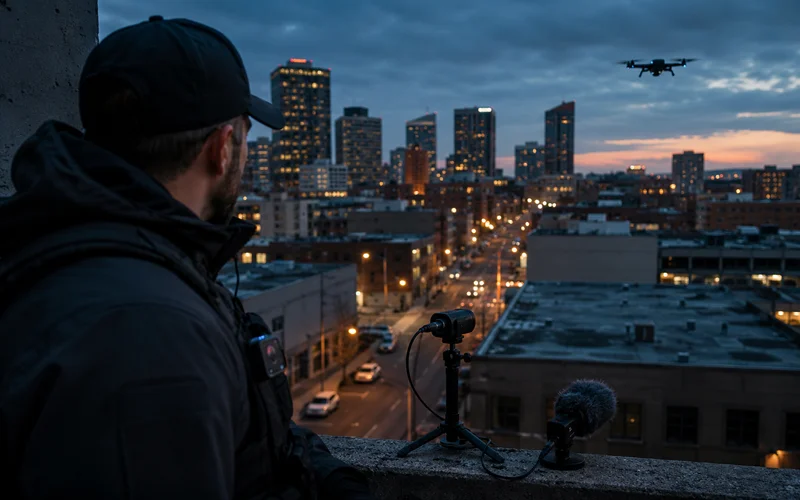
Covert operations rely heavily on concealed cameras, microphones, and increasingly, drones for aerial situational awareness.
Body-worn cameras have also become standard equipment for patrol, documenting interactions and adding accountability on both sides of an encounter.
As departments lean further into digital tools, the equipment protecting that data (encrypted communication devices, hardened data storage) has become as essential as the physical gear on an officer’s belt.
Tactical Clothing, Apparel, and Comfort
Fabric choice in tactical clothing balances breathability against protection. An officer might wear a camouflaged shirt for a stakeout or moisture-wicking layers for a long outdoor detail.
Unit and morale patches are common on tactical apparel too, used for identification and team cohesion.
Climate adds another layer of consideration: gear that works in summer heat often isn’t what’s needed for a winter night shift, so departments frequently issue seasonal variants of the same core apparel.
Storage, Organization, and Gear Longevity
Tactical backpacks handle everything from a laptop for on-site data entry to a spare set of gloves, and holsters, pouches, and scabbards provide quick access to knives, flashlights, and other frequently used tools.
What happens to that gear between shifts matters just as much as the gear itself. Body armor, duty belts, and uniforms lose their shape quickly when they’re draped over a chair or crammed into a locker instead of properly supported.
Proper storage for body armor and equipment and Police Uniform Care 101: preventing shoulder creases and belt damage both cover how heavy-duty, load-rated hangers protect the shape and lifespan of the gear officers depend on, which matters for a duty belt and vest combination that can weigh well over the load capacity of a standard hanger.
Police Training with Tactical Equipment

Field competence comes from repetition: mastering a shield during a mock riot, or fine-tuning aim with a taser.
Realistic training scenarios are what turn equipment familiarity into operational readiness, which is why departments run recurring drills rather than one-time certifications.
Choosing Tactical Gear by Brand, Certification, and Value
Trust in equipment starts with trust in its source. Certifications and industry standards are the clearest signal of product reliability, and warranty coverage plus responsive customer service reflect how seriously a manufacturer stands behind its gear over years of use, not just at the point of sale.
With dozens of manufacturers competing for law enforcement contracts, evaluating tactical gear brands comes down to a few consistent factors: certification against recognized standards, the breadth of features relevant to the specific role the gear will serve, and a track record with other departments.
A wide product range from a single manufacturer can also simplify procurement and ensure compatibility across duty belts, holsters, and pouches.
Price is a factor, but it shouldn’t be the deciding one.
Equipment that fails during a critical moment costs far more than the difference between a mid-range and premium option.
Departments evaluating brands typically look at documented durability testing, verified user reviews from other law enforcement agencies, and how long a manufacturer has supplied gear to the field, rather than price alone.
Police Tactical Equipment Checklist
For departments or individual officers building out a kit, a quick checklist can help confirm nothing critical is missing:
- Body armor and PPE (helmet, vest)
- Duty belt with holster, restraints, and baton
- Communication tools (radio, earpiece)
- Mobility gear (tactical boots, harness)
- Weaponry and less-lethal options (taser, pepper spray)
- Surveillance and documentation tools (body-worn camera)
- Tactical clothing suited to climate and assignment
- Accessories (flashlight, gloves, pouches, cases)
- Storage system for protecting gear between shifts
This isn’t a one-size-fits-all list. Specialized units and plainclothes assignments will add or swap items accordingly, but it covers the categories every officer’s kit should account for.
Modern and Emerging Police Tactical Gadgets
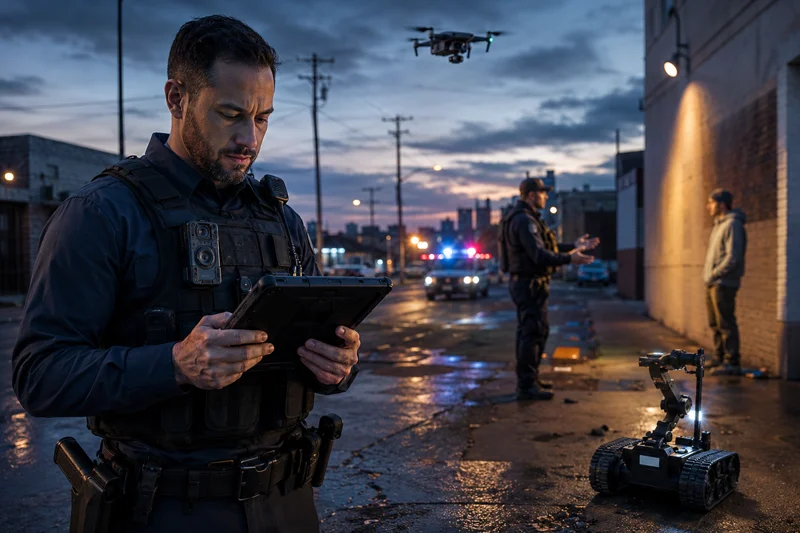
Law enforcement is moving toward AI-assisted tools, robotics, and increasingly capable body-worn technology for tasks like reconnaissance and hazard assessment.
These gadgets extend what an officer can see and document, but they’re additions to an officer’s capability, not replacements for it. The human element, judgment, de-escalation, situational awareness, remains the part of the job no piece of equipment can substitute for.
Conclusion
Choosing police tactical equipment comes down to matching gear to real operational demands: protection that fits, communication that doesn’t fail, and storage that keeps everything ready for the next shift.
From body armor to the duty belt to the hangers protecting both between calls, every piece plays a role in how prepared an officer is when it matters.
Frequently Asked Questions
How has the role of police tactical equipment changed over the years?
Beyond the traditional baton and handcuffs, today’s equipment incorporates body-worn cameras, digital communication tools, and ergonomic protective gear built around real patrol conditions rather than one-size-fits-all designs.
Are there specialized tools for cybercrime and digital forensics units?
Cybercrime units rely on dedicated software and hardware for digital forensics, data recovery, and protection against hacking, separate from the physical tactical equipment carried on patrol.
Why is camouflage important for some police operations?
Camouflage helps officers blend into their surroundings during covert operations or stakeouts, where staying undetected is essential to the outcome.
What tactical equipment do most patrol officers carry on a daily shift?
A typical duty loadout includes body armor, a duty belt with holster and restraints, a radio, a flashlight, and mobility gear like boots built for long shifts on varied terrain. Specialty units add tools suited to their assignment, such as surveillance or breaching equipment.
How should officers store and maintain their tactical equipment between shifts?
Body armor, duty belts, and uniforms hold their shape and last longer when they’re hung on supportive, heavy-duty hangers instead of draped over a chair or crammed into a locker. Regular inspection and manufacturer-recommended cleaning also extend the service life of vests, boots, and duty gear.
How do police departments evaluate tactical equipment brands and suppliers?
Departments typically weigh certifications, industry standards, warranty coverage, and documented durability testing rather than price alone, since equipment failure in the field carries a higher cost than a higher upfront price.
What do plainclothes and undercover officers wear instead of standard tactical gear?
Plainclothes and undercover assignments trade visible tactical gear for concealable options: a concealed holster, a low-profile vest worn under regular clothing, and civilian-style clothing chosen to blend into the environment rather than signal law enforcement presence.