
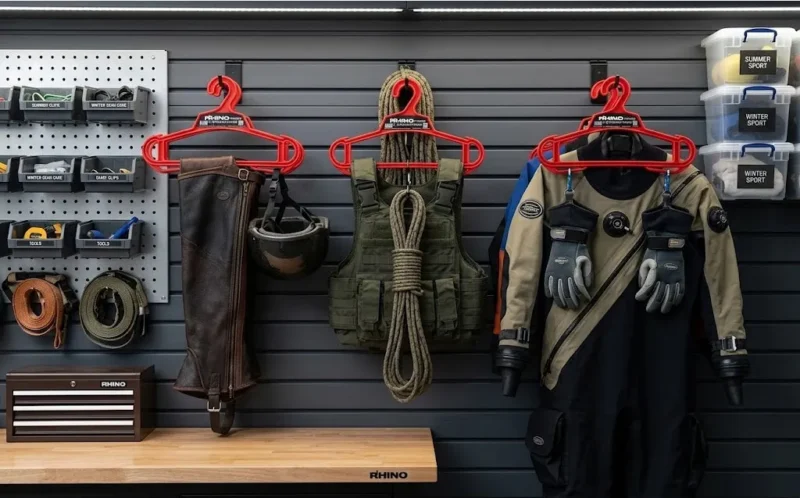
The storage problem most gear owners have is not a space problem. It is a method problem. Gear ends up folded when it should be hung, stacked when it should be separated, and put away wet when it needs to be dry. Six months later, the wetsuit has creases that will not shake out, the ski jacket has lost its loft in the shoulders, and the plate carrier’s padding has compressed in the areas that took the most load from a bad hang.
If you already know your current storage is not working and you are looking for a practical system that keeps gear protected through every off-season rotation, this guide covers how to approach it category by category.
Tough Hanger XL
Full-shoulder span. Over 200-lb load rating. Protects wetsuits, plate carriers, winter jackets, and turnout gear through every off-season.
How Poor Storage Damages Gear Over Time
Gear damage from bad storage is almost always slow and invisible until it is not. The processes that cause it happen over weeks and months, which is why the connection between storage method and gear failure is so easy to miss.
Compression Damage
Compression is the most common form of off-season gear damage. Insulated jackets, sleeping bags, and any gear with a foam, down, or synthetic fill compress under sustained pressure. The fill clusters flatten and lose their loft rating. In insulation, the loft is warmth. A jacket that comes out of storage flat in the shoulders and chest provides measurably less warmth than it did when it went in, and recovery is not guaranteed even with washing and drying.
Neoprene wetsuits are particularly vulnerable. Neoprene is a closed-cell foam: its warmth and flexibility come from the air trapped in its structure. Sustained compression from folding, stacking, or a narrow hanger creates a point load that collapses those cells. The suit becomes thinner, stiffer, and less buoyant at the points of compression. That damage is permanent. PADI’s wetsuit care guidelines confirm that folding neoprene for extended periods causes permanent creasing and recommend hanging on a wide, padded hanger as the correct long-term storage method.
Shape Loss in Structured Gear
Tactical vests, plate carriers, body armor, and structured protective gear are designed for a specific geometry. The torso coverage, the plate pocket positioning, and the fit over a loaded loadout belt all depend on the carrier maintaining its shape in storage. A vest hung on a narrow hanger that bends under its weight gradually changes shape at the shoulders. Armor panels shift. The carrier hangs off the body differently than it did when properly fitted.
First responder gear faces the same issue. A turnout coat that sags on an undersized hanger compresses the internal moisture barrier and thermal liner layers at the hang points. After enough seasonal cycles, the coat no longer fits or performs as it was rated to.
Moisture Retention and Mildew
Gear put away damp a common outcome when storage is done under time pressure can develop mildew inside any folded or stacked layer where air movement is restricted. Wetsuits stored damp in a bag develop odor and surface mildew that are difficult to eliminate. Synthetic insulation that dries slowly while compressed can develop similar issues. Gear hung on an open rod in a ventilated space dries consistently without trapping moisture at contact points.
A Category-by-Category Storage Method
Body Armor and Tactical Vests
Plate carriers and tactical vests should be stored hung, not stacked. The hang position keeps the carrier’s shoulder geometry in the same position it holds on the body, preserving fit over long storage periods. A hanger rated for the full weight of the carrier load prevents the bending and narrow-point stress that occur on an undersized hanger.
Remove soft armor inserts and store them flat if the manufacturer recommends it. Hard armor plates can remain in pockets during storage on a properly rated hanger. Do not store the carrier compressed under other gear.
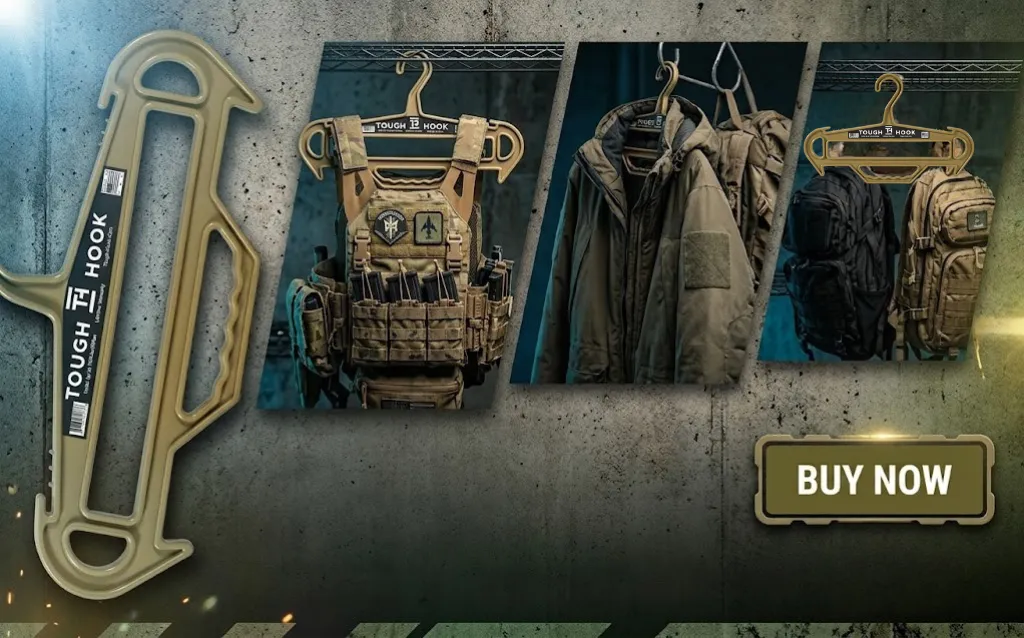
Original Tough Hook Tactical Hanger
Rated over 200 lbs for loaded plate carriers and duty vests. I-beam construction that does not flex. USA-made, lifetime warranty.
Wetsuits and Drysuits
Always hang, never fold for storage longer than a few days. The hanger needs to support the full shoulder span of the suit and handle the weight of the neoprene or membrane wet. A narrow hanger creates a point load at the shoulder that thins the neoprene over a single off-season.
Rinse the suit in fresh water after salt or chlorine exposure, let it drain hanging, then store it hanging in a cool, shaded space. Avoid direct sunlight, which degrades neoprene faster than almost anything else.
For complete preparation and storage before the suit goes on the hanger, the step-by-step guide to seasonal gear storage, from snow boots to wetsuits, covers each item type in sequence.
Winter Jackets and Insulated Layers
Hang winter jackets on a wide-shoulder hanger rather than folding them into storage. The shoulder span of the hanger should match the shoulder span of the jacket a mismatch in either direction creates pressure points or causes the garment to sag inward.
Down jackets can be stored loosely folded in a large breathable bag if hanging is not possible, but hanging is always the first choice. Synthetic insulation is slightly more resilient under compression but still benefits from being stored without sustained pressure.
Waterproof shell layers should be hung, not folded. The DWR coating on a shell degrades faster when the fabric is repeatedly creased along the same fold lines. A hanger that keeps the shell flat prevents that repeated crease stress.
First Responder and Duty Gear
Turnout gear, EMS vests, and duty loadout systems need full shoulder support and a hanger frame that does not flex under their weight. Turnout coats can weigh 15 to 20 pounds, and they need to be stored so the internal layers remain in their intended position without compression.
For departments or individual responders with multiple sets, a wall-mounted rod system in a dedicated gear room or garage bay provides enough linear space to hang each piece separately, improving air circulation between items and making gear easier to inspect and access before a call.
Hunting and Outdoor Layers
Hunting jackets, bibs, and base layers that handle moisture from rain, sweat, or early-season snow need to be completely dry before storage. Hang them on an open rod rather than stacking them on a shelf, which traps residual moisture and allows mildew to form inside the stack.
Waders should be hung inverted or loosely folded to keep the boot seam from being stressed. Heavy wading jackets and float coats benefit from the same full-shoulder hang as any other insulated outer layer.
Why the Hanger Itself Is the Key Variable
Every storage method described above relies on one thing working correctly: the hanger. If the hanger bends under the weight of the gear, every downstream benefit, such as shape retention, proper hang angle, and moisture drainage, is reduced or eliminated.
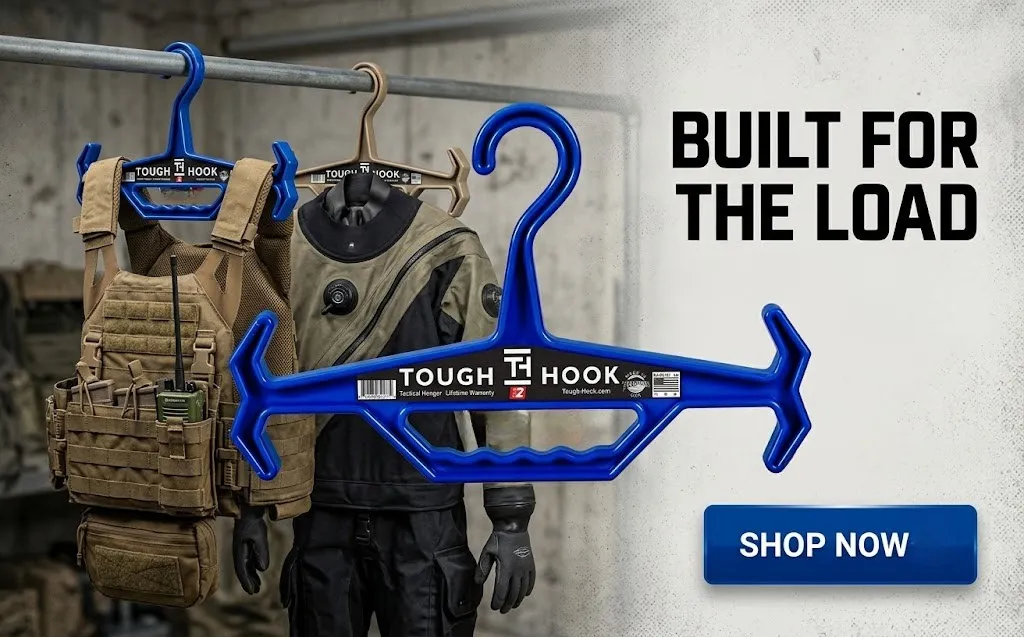
Tough Hook hangers are engineered specifically for heavy, bulky, or wet gear. The patented I-beam construction resists flex under sustained load. The impact-resistant polypropylene body handles the temperature swings common in garages and gear rooms without becoming brittle. The load rating exceeds 200 pounds, which covers the weight range of even the most demanding seasonal gear combinations.
The Tough Hanger XL adds a full shoulder span to support the shoulder width of bulkier items, preventing inward sag during long storage periods. The patented reversible carry handle allows the hanger to serve as a carry grip for moving gear between storage and deployment, making it useful for anyone managing gear among a locker, a vehicle, and a staging area.
All Tough Hook hangers are manufactured in the USA and backed by a lifetime warranty. They fit standard closet rods, locker rods, wall-mounted rod systems, and freestanding racks without modification.
Protect Your Gear From the Storage Method That Ruins It
Tough Hook heavy-duty hangers hold over 200 pounds, are made in the USA, and come with a lifetime warranty. The right hanger is the foundation of a storage system that keeps seasonal gear in the same condition it was when you put it away.
Frequently Asked Questions
Can a wetsuit be permanently damaged by improper storage?
Yes. Neoprene is a closed-cell foam that compresses under sustained pressure. Folding a wetsuit or hanging it on a narrow hanger creates permanent compression damage at the stress points — the neoprene thins, stiffens, and loses its insulating and buoyancy properties at those locations. That damage does not reverse.
What happens to a plate carrier that is stored on a standard hanger long-term?
A standard hanger bends under the weight of a loaded plate carrier, changing the carrier’s hang angle and shifting the armor panels within their pockets. Over time, the shoulder structure of the carrier deforms, and the carrier no longer fits the same way it did when properly supported.
Is it safe to store a winter jacket folded in a bin all summer?
For insulated jackets, no. Sustained compression over several months flattens the fill clusters in down or synthetic insulation, reducing loft and warmth. Recovery is partial at best. Hanging the jacket on a wide-shoulder hanger in a cool, well-ventilated space helps maintain loft through the off-season.
How do I prevent first responder turnout gear from degrading in storage?
Hang it on a hanger rated for its full weight with a shoulder span that supports the coat’s full width. Avoid stacking or folding, which compresses the internal thermal liner and moisture barrier layers. Store in a ventilated space that allows the coat to air out fully between uses.
Can the same hanger be used for a wetsuit and a ski jacket?
Yes, if it is rated for the combined weight. A heavy-duty hanger rated for over 200 pounds, with a wide shoulder span, handles both a soaked wetsuit and a heavy ski jacket without compromising flex or shape. Using one hanger system across all seasonal gear categories simplifies the storage setup significantly.