
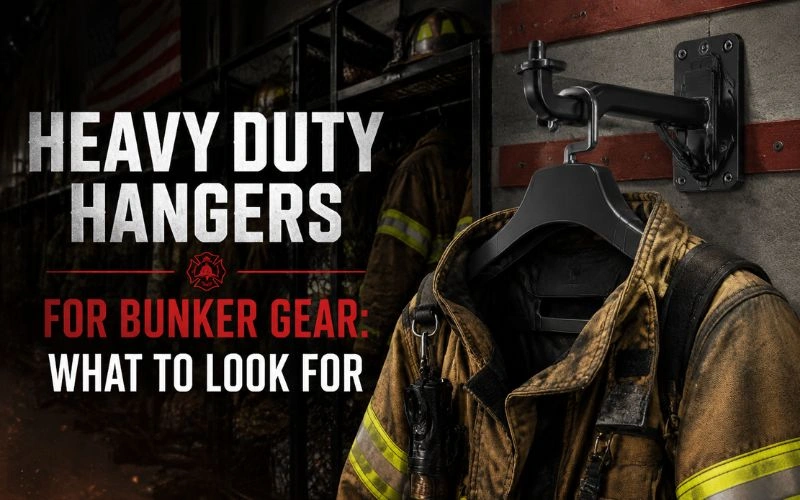
Bunker gear is engineered to protect under extreme conditions. A fully equipped turnout ensemble jacket, pants, helmet, gloves, and boots can exceed 45 pounds, and that weight compounds the damage when gear is stored on the wrong hanger. Thin wire bends permanently. Standard plastic cracks under load. Gear left piled or improperly hung absorbs moisture, degrades faster, and risks failing inspection when it counts.
For fire departments and first responders, proper storage is an operational decision. The hanger holding that gear between calls directly affects drying time, structural integrity, and service life. Knowing what separates a capable heavy-duty hanger from one that fails under the demands of bunker gear storage is the first step in protecting that investment.
Built for the Weight of the Job
The Original Tough Hook Tactical Hanger is rated for 200 lbs and engineered from heavy-duty polypropylene, purpose-built for first-responder gear that demands more than a standard hanger can offer. Six Things to Evaluate Before You Buy
Not all heavy-duty hangers are built to the same standard, and the differences matter most under sustained load. Bunker gear is expensive, certification-dependent, and mission-critical, which means the hanger holding it between calls needs to earn its place. The six factors below cover the full range of what separates a hanger built for professional gear storage from one that merely looks the part. Work through each before making a decision.
1. Material Construction Determines How Long It Lasts
The material a hanger is made from sets its performance ceiling. Heavy-duty polypropylene is the benchmark for bunker gear applications. It resists cracking under sustained loads, handles temperature swings without warping, and maintains structural integrity over years of daily use.
Unlike metal options that corrode in damp bay environments or thin-wall variants that permanently deform, engineering-grade polypropylene maintains its shape regardless of how long heavy gear remains hung.
When evaluating hangers, look for manufacturers that specify the exact material and its performance properties. Vague descriptions like “heavy-duty plastic” are a warning sign. A hanger built for first-responder gear should clearly state what it is made of and why that material is rated for the task.
2. Weight Capacity Must Exceed the Full Gear Load
A firefighter’s full PPE ensemble can exceed 45 pounds, but a reliable hanger should be rated well beyond that threshold. The reason is straightforward: weight ratings exist to account for real-world variables, such as uneven loading, dynamic stress when gear is retrieved quickly, and continuous structural load over years of use.
Heavy-duty hangers for bunker gear should support at least 150 lbs, with the best-performing models rated at 200 lbs. That margin is not excess — it is what separates a hanger that performs reliably over a full service life from one that fails under repeated use. Departments already familiar with first responder gear storage challenges understand that undersized equipment eventually becomes a liability.
3. Weight Distribution Design Protects the Gear Itself
A high load rating alone is not enough. How a hanger distributes weight across the gear determines whether turnout jacket shoulders, straps, and moisture barriers remain intact over time. Wide arm spans, reinforced hooks, and multi-point contact surfaces reduce stress concentration at any single point, preventing the strap fatigue, shoulder compression, and fabric creasing that shorten gear service life.
Wide-shoulder designs specifically prevent the V-shaped folding pattern that can compress moisture-barrier seams in bunker jackets. Cross-bracing within the hanger structure distributes load uniformly, maintaining its shape under continuous heavy use throughout the entire shift cycle.
Gear Rooms Need More Than One Solution
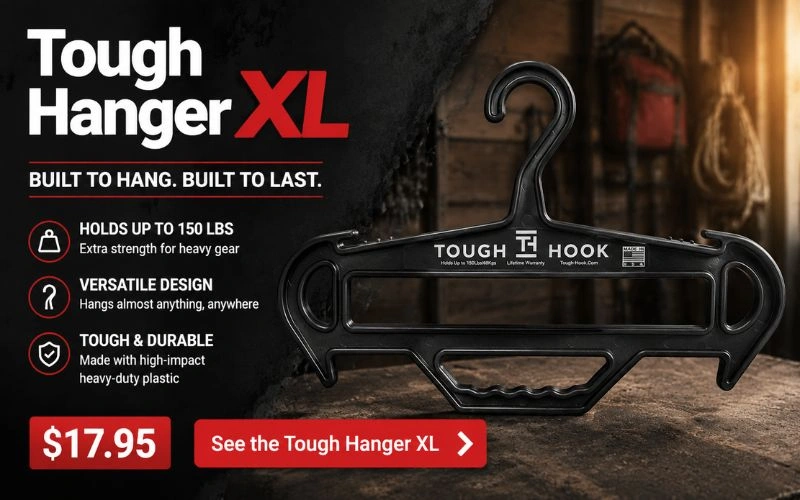
When storage volume matters, outfitting a full crew or a shared gear room, the Tough Hanger XL delivers the same 200 lb-rated construction in a wider profile designed for oversized turnout gear and tactical loadouts.
 4. Impact Resistance Across Temperature Extremes
Fire stations are not climate-controlled warehouses. Apparatus bays experience significant temperature variation from summer heat to winter cold, and gear hangers need to perform across that entire range. Impact-resistant construction prevents hangers from becoming brittle in freezing conditions and from softening or deforming in high-heat environments.
When evaluating materials, check whether the manufacturer specifies temperature performance or impact-resistance testing standards. High-density polymers engineered for structural consistency should maintain load capacity at both ends of the temperature range. If performance specs are not documented, assume standard-grade construction that may not hold up over a multi-year service period.
5. Ventilation Design Keeps Gear Ready Between Calls
Bunker gear that stays damp between uses becomes a health and performance liability. Moisture trapped in turnout fabric accelerates degradation of the moisture barrier layer, increases the risk of biological contamination, and dramatically slows drying time between shifts.
Open-grid hanger designs promote airflow across all layers of the gear simultaneously. This is not a cosmetic feature it directly affects drying time and long-term gear integrity. Proper ventilation during storage is one of the simplest steps in preserving a turnout ensemble, and the hanger is where that process starts.
6. Compatibility With NFPA Maintenance Standards
NFPA 1971 and NFPA 1851 set the benchmarks for protective ensemble performance and maintenance protocols. Bunker gear certified to these standards is tested for thermal protection, moisture resistance, and structural integrity, and the storage system used between calls should support, not undermine, that certification.
When evaluating hangers for department use, request compliance documentation from the manufacturer. Confirm that the hanger design supports NFPA 1851 storage requirements: no direct light exposure, elevated off the floor, and positioned to allow adequate airflow. For a deeper look at building a compliant storage setup, creating a dedicated tactical gear storage space provides a comprehensive system approach. A hanger incompatible with NFPA protocols is not a suitable choice for professional gear rooms, regardless of price.
The Hanger Is Part of Your PPE System
Bunker gear represents a significant investment in protective equipment and serves as the last line of defense for those wearing it. Storing that gear on an inadequate hanger is not a minor oversight it is a maintenance failure that compounds over time, shortening service life and eroding gear performance with every use cycle.
The right hanger protects stitching, moisture barriers, and structural integrity while keeping gear ventilated, organized, and ready to deploy. Use the six criteria above as a checklist when evaluating your options. A hanger that meets all of them is not a premium upgrade, it is the baseline your gear and the people wearing it deserve
Frequently Asked Questions
How much weight should a heavy-duty hanger for bunker gear support?
Fully equipped bunker gear can exceed 45 lbs, but the hanger should be rated significantly higher, a minimum of 150 lbs, ideally 200 lbs, to account for ongoing structural stress, uneven loading, and years of repeated use without deformation.
Can standard hangers be used for firefighting gear?
No. Standard residential hangers are designed for clothing weighing 2–5 lbs. They will deform, collapse, or break under the weight of bunker gear and cannot distribute the load in a way that protects the gear’s structural layers or moisture barrier.
How does hanger design affect bunker gear service life?
Hangers with wide shoulders and multi-point contact surfaces prevent fabric compression, strap fatigue, and moisture-barrier creasing. Poor hanger design accelerates wear on both the outer shell and the inner moisture layer, shortening the gear’s overall service life and potentially voiding the manufacturer’s certification.
What do NFPA standards require for bunker gear storage?
NFPA 1851 requires that protective ensembles be stored away from heat, light, and contamination, and that gear be properly dried before storage. A ventilated heavy-duty hanger supports these requirements by promoting airflow and keeping gear elevated off the floor between uses.
What materials should I look for in a bunker gear hanger?
Heavy-duty polypropylene and engineering-grade impact-resistant polymers are the most reliable materials for bunker gear hangers. They maintain structural integrity across temperature extremes, resist cracking under sustained loads, and do not corrode or permanently deform as metal or thin-wall options can.