
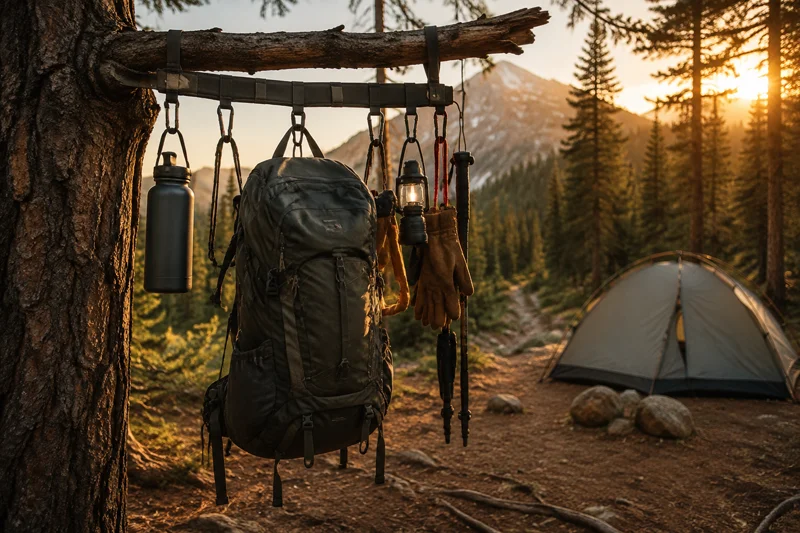
A backpack hook only matters when it is holding real weight. A loaded frame pack, a full hydration bladder, a plate carrier, or a stack of gear at a mudroom door all put more stress on a hook than most shoppers expect, and a hook that is not rated for that load will bend, crack, or let go without warning. This guide covers what actually makes backpack hangers and hooks heavy-duty, how much weight different types can realistically hold, how to mount one correctly on the trail or on a wall, and how to pick the right hook or hanger for your specific load.
What Makes a Backpack Hook “Heavy-Duty”
A hook that is marketed as heavy-duty should have three things in common: a stated load rating from the manufacturer, enough material thickness at the point where the load hangs, and a mounting method built to carry that rating rather than just look sturdy. Reinforced metal alloys and high-density polymers such as high-impact polypropylene are the two materials that consistently meet all three, which is why they show up across the hiking-ready hooks and hangers built for trail use and heavy-duty wall hooks built for entryway and garage storage.
A hook rated for a light daypack will not hold up under a loaded frame pack, a full hydration bladder, or a fully kitted-out plate carrier. Hooks built for tactical and duty gear, such as the Tough Hook Tactical Hanger, are rated well above what typical hiking or camping loads require, which is the kind of safety margin worth looking for before you hang anything heavy on a hook for the first time.
How Much Weight Should a Heavy-Duty Hook Actually Hold
“Heavy-duty” gets used loosely, so it helps to know what the number actually means in practice:
- Light-duty hooks (under 15 lb): Adhesive strips, small decorative hooks, and thin wire hooks. Fine for a hat, a light jacket, or a water bottle, but not for a loaded pack.
- Mid-duty hooks (15–35 lb): Most standard wall-mounted coat and backpack hooks sold for entryways, mudrooms, and classrooms fall in this range. This covers an empty-to-lightly-loaded daypack.
- Heavy-duty hooks (35–90 lb): Reinforced wall hooks and gear-specific hooks built for a fully loaded daypack, a hydration pack, or hanging tools and outdoor gear alongside a backpack.
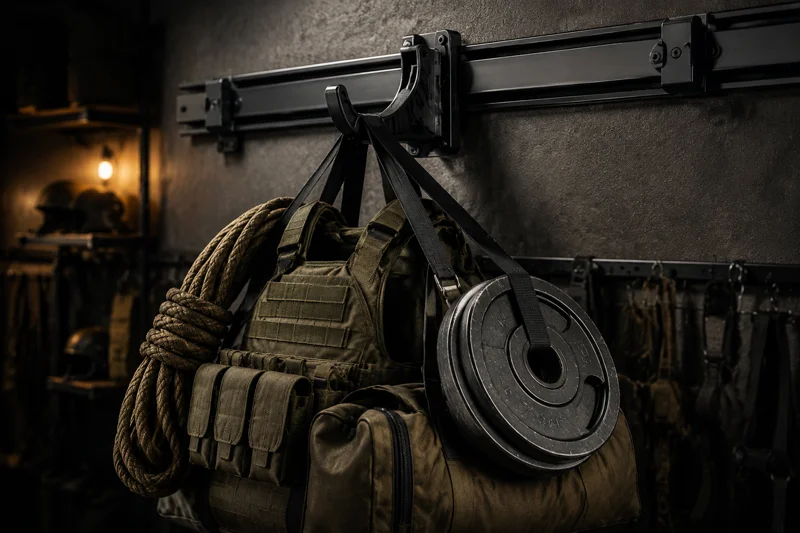
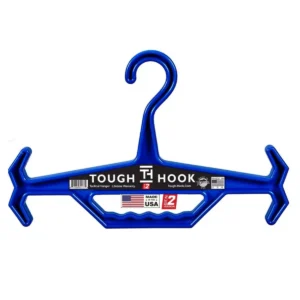
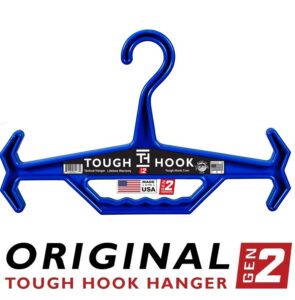
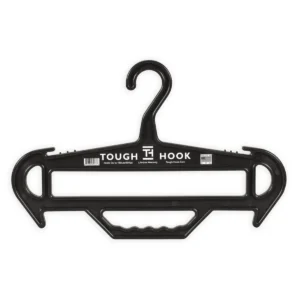
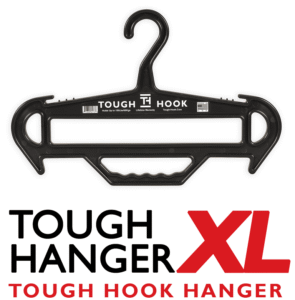
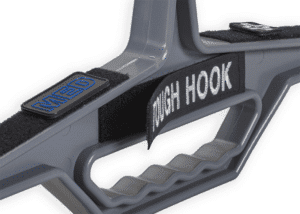
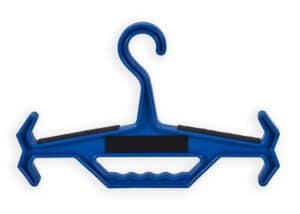
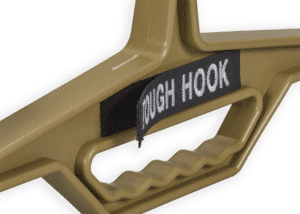
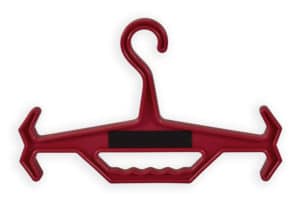
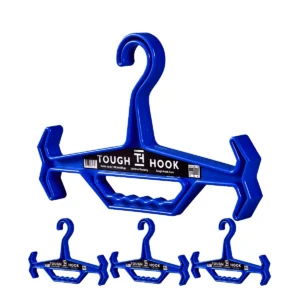
- Purpose-built tactical and duty hangers (150–200+ lb): Hangers engineered specifically for plate carriers, loaded duty belts, and tactical packs. The Tough Hook Tactical Hanger and the RHINO Hanger both fall here, rated to hold over 200 lb through I-beam construction and high-impact polypropylene resin, which is significantly more capacity than a typical hiking or camping load ever puts on a hook.
The practical takeaway: match the rating to the heaviest single load you will realistically hang, not the average one. A loaded frame pack, a plate carrier, or a duty belt with attachments can weigh more than most people assume, so it is worth checking your own gear’s weight before assuming a mid-duty hook will do the job.
This is also why a weight-rated hook matters more than a generic “heavy-duty” label when you are hanging outdoor equipment beyond just a backpack, such as coolers, tool bags, climbing gear, or hydration systems.
A hook’s printed capacity is the only number that tells you what it will actually hold, and it should be checked against your gear’s real weight rather than assumed from the hook’s size or price. For a closer look at how that number is determined for non-metal options, see our guide to how much weight a plastic hanger can hold.
Metal vs. Plastic Backpack Hooks: Which Holds More Weight
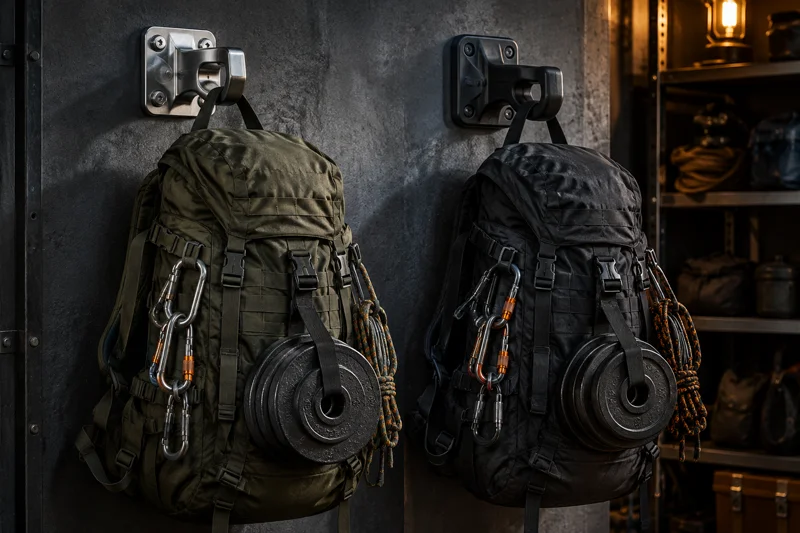
Material choice affects both weight capacity and long-term durability, and the two options behave differently depending on where and how the hook is used. Metal hooks, usually stainless steel or aluminum alloy, resist wear from repeated clipping and unclipping and hold up well outdoors in freezing temperatures, which makes them a solid fit for hooks that stay attached to a pack for the length of a multi-day hike.
High-impact polypropylene and other reinforced polymers, the material used in the Tough Hook Tactical Hanger and RHINO Hanger, are a different tradeoff. They will not rust or corrode, they resist cracking in cold storage better than basic consumer-grade plastic, and a well-engineered polymer hook with reinforced internal structure (such as I-beam construction) can carry as much or more weight than a comparable metal hook while weighing less.
The gap in durability is really between reinforced, purpose-built polymer and cheap, thin plastic, not between plastic and metal as categories. A basic thin-walled plastic hook is more prone to cracking in cold weather or under a sudden shock load, such as catching on a branch mid-hike, but that is a construction-quality issue rather than a plastic-versus-metal issue.
For a closer breakdown of that gap, see our comparison of standard versus heavy-duty hanger durability. If pack weight is a top priority and your gear load is light, a well-made polymer or plastic hook is often enough. If you are carrying heavier or bulkier items regularly, or the hook needs to stay attached and loaded for hours or days at a time, prioritize a hook with a stated high load rating over material type alone.
This same comparison applies to custom or specialty outdoor equipment beyond a standard pack. A reinforced plastic hook built for tactical or duty gear will often outperform a generic metal hook that was designed for light household use, because the internal structure, not just the raw material, is what determines how much weight it can carry without deforming.
Plastic Hooks and Hangers for Outdoor Equipment Beyond a Backpack
A reinforced plastic or high-impact polypropylene hook is not limited to hanging a pack. The same lightweight, corrosion-resistant construction works for a range of outdoor equipment, provided the attachment point on the gear matches the hook’s shape.
- Coolers: Use the built-in handle or strap loop rather than the lid, since hanging a cooler from the lid alone puts uneven strain on the hinge.
- Tool bags: A wide-gate hook or dual-point hanger distributes weight across a tool bag’s handles better than a single narrow hook, especially once the bag is loaded.
- Climbing gear: Ropes, harnesses, and slings hang best from a rounded, broad-surface hook that will not crease webbing the way a narrow wire hook can.
- Hydration systems: A hydration bladder or reservoir should hang from its fill port or carry handle, not the hose, to avoid stressing the bite valve connection.
An adjustable clip-style hook, the kind built with a gate or S-biner opening, works as a single accessory you can move between a backpack, a cooler, or a gear bag as needed, rather than buying a separate hook for each piece of equipment.
Attaching a Hook to Your Backpack on the Trail
Attaching a hook to your backpack is less about the hook itself and more about where and how you mount it. Most hikers use one of three attachment points: the shoulder straps for frequently accessed items, the hip belt for quick-grab tools, or webbing loops on the back panel for bulkier gear that needs to stay clear of your back.
Carabiner-style clips and S-biner hooks are common choices because they let gear be added or removed without unclipping the entire hanger. For heavier items, a hook with a wider gate opening and a locking mechanism reduces the chance of gear working loose on uneven terrain. Before a trip, test your hook attachment with a full pack load rather than an empty one. Weight shifts differently on the trail, and a hook that feels secure at home can behave differently after several miles of movement.
Hiking Hooks and Trekking Bag Hooks: What to Look For
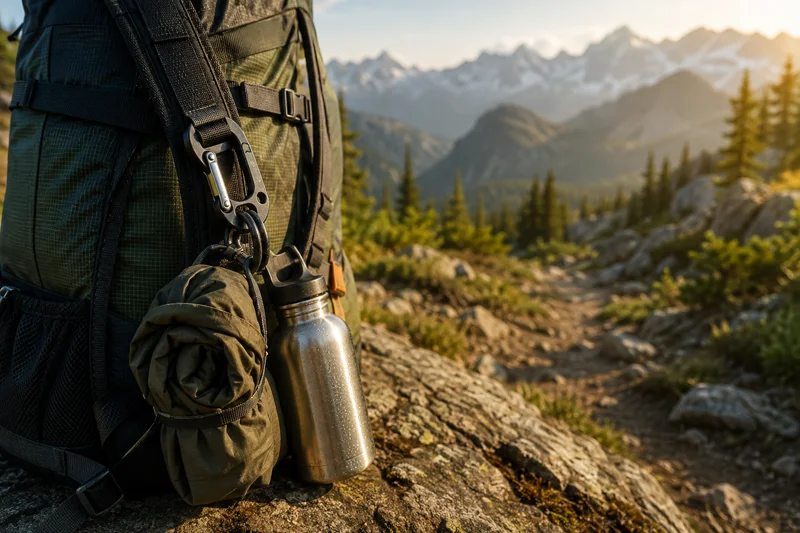
A hiking hook and a trekking bag hook are usually the same kind of product described two different ways, a small clip-style hook meant to ride on a strap or a loop for the length of a hike. What separates a good one from a weak one comes down to the same three things covered earlier: a stated load rating, enough material thickness at the load-bearing point, and a secure attachment style, whether that is a molded loop, a screw-gate clip, or stitched webbing.
For day hikers, a single lightweight hiking hook clipped to a shoulder strap is usually enough to carry a water bottle, a compass, or a small utensil set. For backpackers carrying a loaded frame pack over multiple days, look for a hook rated closer to the heavy-duty range described above, since a hook that flexes under an empty pack can fail once real trail weight and repeated movement are added.
A backpacking hook that stays clipped to the same attachment point for days at a time also takes more repeated stress than one used occasionally at home, so it is worth choosing one built for continuous outdoor use, such as the heavy-duty hangers built for trekking essentials, rather than a general-purpose hook borrowed from a closet or garage setup.
Tactical Gear Hooks for the Trail
Tactical hiking gear, plate carriers, chest rigs, and duty packs, puts a different kind of load on a hook than a standard daypack. The weight is concentrated, often loaded with hard plates or gear pouches, and it needs to be hung or carried without deforming the carrier’s shape. This is where a purpose-built tactical hanger, such as the Tough Hook Tactical Hanger, outperforms a general hiking hook. Its 200+ lb rating and wide, curved profile support a loaded plate carrier or duty belt without the pressure points that a narrow hook or wire hanger creates over time.
For hikers who carry tactical-style packs or gear on the trail and also need a place to store that same equipment at home or in a locker, a hanger rated for tactical loads covers both jobs at once, rather than needing a separate lightweight hook for the trail and a separate heavy-duty hanger for storage.
Mounting a Heavy-Duty Hook on a Wall: Studs, Anchors and Weight Limits
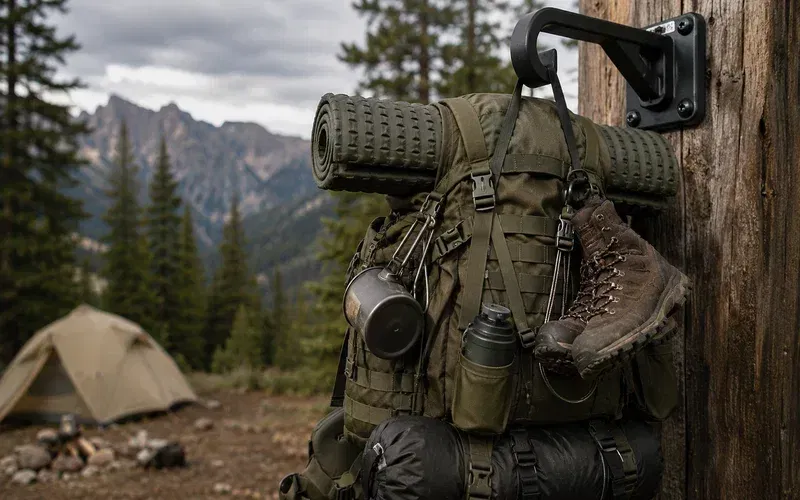
The other common use for a heavy-duty backpack hook has nothing to do with the trail: mounting one at a door, in a mudroom, or in a garage to keep packs off the floor. The load rating printed on a hook’s packaging almost always assumes it is mounted correctly, and the mounting method matters as much as the hook itself.
- Into a wood stud: The strongest mounting option. A hook screwed directly into a stud can generally support close to its full rated capacity, since the load transfers into solid wood framing rather than the wall surface itself.
- Drywall with a rated anchor: When a stud is not available, use an anchor rated for the hook’s weight, not just any anchor in the drawer. Toggle bolts and heavy-duty threaded anchors typically hold more than basic plastic expansion anchors, but even a good anchor is limited by the drywall itself, not just the anchor’s own rating.
- Adhesive or “no-drill” mounts: Convenient for renters, but almost always rated well below the hook’s own maximum capacity. Check the adhesive strip’s stated weight limit separately from the hook’s, since the weaker of the two is what actually determines what the setup can hold.
A hook labeled to hold 35 lb only holds 35 lb if it is mounted into something that can support 35 lb. Mounting the same hook with an underrated anchor or an adhesive strip lowers the real-world capacity, regardless of what the hook itself is rated for.
Portable Clip-On Hooks vs. Fixed Wall-Mounted Hangers
Every hook on this page falls into one of two categories: portable, meaning it travels with the pack on a strap or a piece of webbing, or fixed, meaning it stays permanently mounted to a wall, a stud, or a gym rig. Knowing which one you actually need before buying avoids ending up with a hook that is the wrong shape for the job.
| Type | Typical Use | Mounting | Best For |
|---|---|---|---|
| Portable clip-on hook | Trail, hip belt, shoulder strap | Carabiner, S-biner, molded loop | Water bottles, small tools, quick-access gear |
| Fixed wall-mounted hook | Entryway, garage, mudroom, locker | Stud, rated anchor, or gym rig hole | Storing a loaded pack, plate carrier, or duty belt between uses |
Some hangers, including the Tough Hook Tactical Hanger and RHINO Hanger, are built to work both ways, hung on a closet rod or gym rig at home and used as a carry handle in the field, which is worth considering if you would rather standardize on one hook for both jobs instead of buying separate portable and fixed options.
Choosing the Right Hook or Hanger for Your Use Case
The right choice comes down to where the hook lives and what it needs to hold, more than any single “best” product. A few common scenarios:
- Short day hikes, light gear: A lightweight carabiner-style clip or S-biner attached to a shoulder strap or hip belt is usually enough.
- Multi-day hikes, loaded frame packs: A metal hook or a reinforced polymer hook with a stated load rating well above your pack’s loaded weight, mounted to webbing rather than a strap seam.
- Tactical or duty gear, plate carriers, loaded belts: A purpose-built hanger such as the Tough Hook Tactical Hanger, rated over 200 lb specifically for this kind of load.
- Home, garage, or mudroom storage: A wall-mounted hook rated at least as high as your heaviest loaded pack, installed into a stud or a properly rated anchor. The RHINO Hanger is built for exactly this kind of everyday household use while sharing the same 200+ lb rating and I-beam construction as the Tactical Hanger.
It is worth reading reviews from other hikers and campers before buying, since real-world use over months of trail time reveals wear patterns that a spec sheet alone will not.
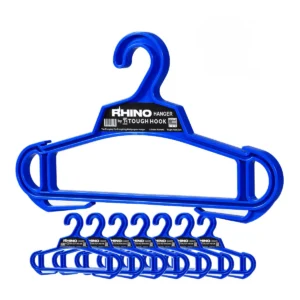
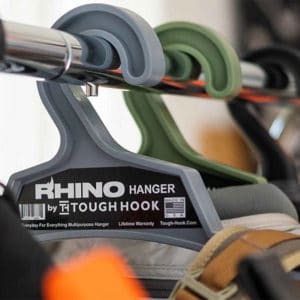

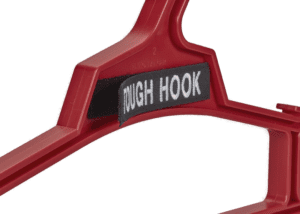
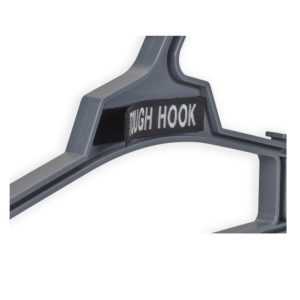
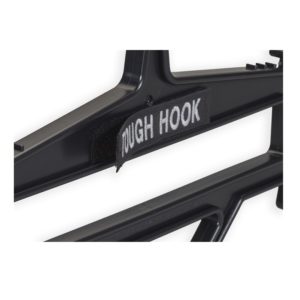


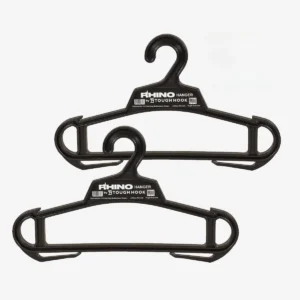
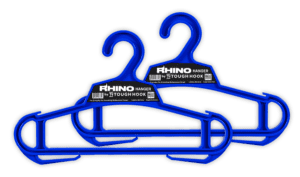
2 Pack RHINO Heavy Duty Clothes Hanger Bundle
Original price was: $27.95.$23.95Current price is: $23.95.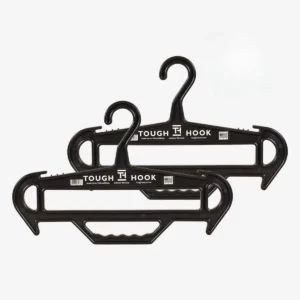
Hangers for Sleeping Bags and Other Bulky Camping Gear
Sleeping bags, tents, and rolled sleeping pads present a different challenge than smaller gear. A hook designed for a water bottle or a utensil set is not built to support their shape or weight. For sleeping bags specifically, look for wider hooks or dual-point hangers that distribute weight across two attachment areas rather than a single point.
This reduces strain on both the hook and the pack fabric, and it keeps the bag from swinging or shifting during the hike. At camp, the same principle applies to airing out and storing a sleeping bag overnight. A hook with a broad, rounded surface prevents the fabric from creasing or developing pressure points, which extends the life of the insulation inside.
When shopping specifically for sleeping bag hangers, check the width of the hook or the distance between hook points on a dual-point hanger, not just its stated weight rating. A hook rated for 30 lb but only a few inches wide can still crease or compress a rolled sleeping bag even though it technically supports the weight, since a narrow contact point concentrates pressure on a small section of fabric.
Storing Your Backpack Between Trips: At Home and in the Garage

Once a trip is over, how you store your backpack matters almost as much as how you packed it. Leaving a loaded or damp pack on the floor can trap moisture, encourage mildew, and put unnecessary strain on the straps and frame. A wall-mounted hook or hanging rack keeps your backpack off the ground, lets it air out fully, and keeps gear organized between trips.
This is especially useful for households with multiple packs, since a dedicated rack keeps each bag tidy and accessible without piling gear in a closet. Our full walkthrough on how to store a backpack after a trek covers the process step by step. The same heavy-duty hooks used on the trail can often double as home storage, so one hook can work for hiking and for hanging your pack in the garage or mudroom afterward. Browse the full camping and outdoors collection for hooks built to do both jobs.
Backpack Hook vs. Backpack Hanger: What’s the Difference
The terms are often used interchangeably, but they describe two different things. A hook usually refers to a single clip-style attachment point for one item, mounted to a strap, a wall, or a piece of webbing. A hanger typically includes multiple hooks, loops, or a broader frame built into one unit, closer in shape to a clothes hanger, and is more often used for gear that needs to hang by its straps rather than clip onto a single point. Hikers attaching one or two items to a strap or hip belt typically want a hook. Campers organizing several pieces of gear at once, or anyone hanging a loaded plate carrier or duty belt by its straps, usually gets more use out of a full hanger.
Safety and Maintenance
Make sure any hook is securely fastened before loading it, whether that means checking a clip’s locking gate on the trail or confirming a wall mount is screwed into a stud or a properly rated anchor. Regularly inspect hooks for wear, cracking, or a loosening mount, and replace a hook at the first sign of damage rather than waiting for it to fail under load.
A well-maintained hook or hanger holds up for years. A hook that has developed hairline cracks or a wobbling mount is a liability the next time it is loaded, not before. For cleaning, a damp cloth is usually enough for both metal and high-impact polypropylene hooks. Polypropylene is non-porous, so it will not absorb odors, dirt, or salt residue from gear, and it does not need any special conditioning or treatment.
Metal hooks benefit from an occasional check for surface rust or corrosion, particularly if they are used outdoors or in humid storage areas, since a corroded surface can weaken a hook well before it becomes visibly obvious.
Quick Recommendations: Which Hook Is Best for You
- Best for short day hikes: A lightweight carabiner-style clip or S-biner on a shoulder strap or hip belt.
- Best for multi-day backpacking: A metal or reinforced polymer hiking hook rated well above your loaded pack weight, mounted to webbing.
- Best for tactical or duty gear: The Tough Hook Tactical Hanger, rated over 200 lb for plate carriers and loaded belts.
- Best for home, garage, or mudroom storage: The RHINO Hanger or a comparable wall-mounted hook, installed into a stud or a properly rated anchor.
- Best for sleeping bags and bulky gear: A wide, dual-point hanger that distributes weight across two attachment areas.
Heavy-Duty Backpack Hooks: A Quick Buying Checklist
Before buying a heavy-duty backpack hook, run through a short checklist so the one you pick actually matches your load instead of just the label on the package:
- Confirm the manufacturer’s stated weight rating, not just a generic “heavy-duty” claim on the packaging.
- Match the material, metal or reinforced polymer, to how the hook will be used: outdoors in the cold, indoors in a mudroom, or clipped to a pack for days at a time.
- Check the attachment style, carabiner, S-biner, molded loop, or screw-gate clip, against where it will actually mount: a strap, a hip belt, or a wall.
- If it is going on a wall, confirm what it will be mounted into, a stud, a rated anchor, or an adhesive strip, since that changes the real-world capacity more than the hook itself.
Running through these four points before checkout catches most of the mismatches that lead to a returned hook or a hanger that underperforms its rating.
Frequently Asked Questions
What is considered a heavy-duty backpack hook?
A heavy-duty backpack hook is built from reinforced metal or high-density polymer and carries a stated load rating well above what a light daypack requires, typically 35 lb or more for wall-mounted hooks and well over 100 lb for purpose-built tactical and duty hangers. Look for a stated capacity and a mounting method built to support it, rather than assuming any hook labeled heavy-duty will suit a fully loaded pack.
How much weight can a heavy-duty backpack hook hold?
It depends on the hook type. Standard wall-mounted hooks typically hold 20–35 lb. Reinforced heavy-duty hooks can hold 35–90 lb. Purpose-built tactical and duty hangers, such as the Tough Hook Tactical Hanger and RHINO Hanger, are rated over 200 lb. The mounting method matters as much as the hook’s own rating: a hook mounted with an underrated anchor or adhesive strip will not hold its full rated weight.
Are plastic or metal hooks better for heavy gear?
It depends on the plastic. Metal hooks resist wear from repeated clipping and hold up well in freezing outdoor temperatures. Reinforced, purpose-built polymers like high-impact polypropylene can match or exceed metal’s weight capacity while resisting rust and corrosion, which is why they are used in hangers rated over 200 lb. Thin, basic plastic hooks are the ones that crack under cold or sudden shock loads, not reinforced polymer as a category.
What is the difference between a backpack hook and a backpack hanger?
A hook usually refers to a single clip-style attachment point for one item, while a hanger includes multiple hooks, loops, or a broader frame built into one unit. Hikers attaching one or two items to a strap typically want a hook, while campers organizing several pieces of gear, or anyone hanging a loaded plate carrier or duty belt, usually prefer a full hanger.
Will a heavy-duty hook damage my wall?
A quality metal hook mounted into a stud or a properly rated anchor leaves no more damage than a standard screw hole. Adhesive or “no-drill” mounts avoid drilling entirely but carry a much lower weight limit than a screwed-in hook, so they are better suited to lighter loads than a fully packed backpack.
Do I need to mount into a stud, or is a wall anchor enough?
A stud gives you close to the hook’s full rated capacity. If no stud is available, use an anchor rated for the hook’s stated weight, such as a toggle bolt or heavy-duty threaded anchor, rather than a basic plastic expansion anchor. The anchor’s rating, not just the hook’s, determines what the setup can actually hold.
Can I use the same hook for a sleeping bag and smaller gear?
No. Small hooks designed for water bottles or utensils are not built to support the weight and bulk of a sleeping bag. For sleeping bags and similar bulky items, use a wider hook or dual-point hanger designed to distribute the load.
Can the same hook work for both hiking and home storage?
Yes, for hooks with a high enough load rating. A hook rated for tactical or duty gear, such as the Tough Hook Tactical Hanger or RHINO Hanger, can carry a loaded pack on the trail and then double as a wall-mounted storage hook at home, since its rated capacity covers both uses comfortably.
What is the difference between a portable clip-on hook and a fixed wall-mounted hanger?
A portable clip-on hook travels with the pack, attached to a strap, hip belt, or piece of webbing, and is meant to be added or removed as needed on the trail. A fixed wall-mounted hanger stays permanently mounted to a stud, rated anchor, or gym rig, and is meant for storing a pack or gear between uses rather than carrying it.
Are heavy-duty hooks safe for tactical or duty gear on the trail?
Yes, provided the hook is rated for the load. A loaded plate carrier or duty belt can weigh well beyond what a standard hiking hook is built for, so look for a purpose-built tactical hanger with a load rating of 150 lb or more, such as the Tough Hook Tactical Hanger, rather than a general-purpose hiking hook.