
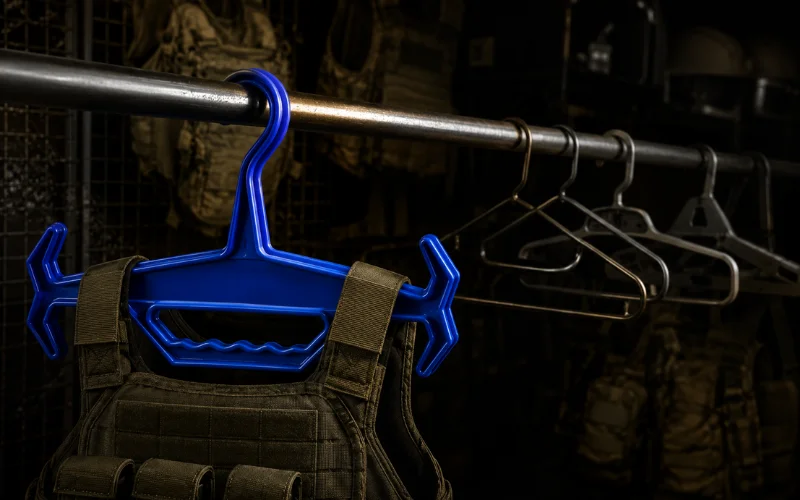
Anyone who has watched a coat slide off a slick plastic hanger, or found a wire hanger permanently bent under the weight of a loaded plate carrier, already understands the core problem. Most hangers are built for shirts and light blouses, not for the gear, uniforms, and heavy outerwear that closets, garages, and gear lockers actually need to hold. When a hanger fails, the cost is more than a fallen garment. It is stretched shoulders, cracked plastic on the closet floor, and equipment that has to be re-hung or re-racked over and over.
This guide compares tactical hangers to the standard alternatives, plastic, wood, and metal, so you can see where each one performs well and where each one tends to fail. Rather than a generic overview, it walks through the shoulder shape, material, and hook design that actually decide whether a hanger survives daily use or ends up in the trash after a season.
Looking for a hanger built to carry real weight? Check out the Original Tough Hook Hanger, rated to hold up to 200 lbs of clothing or gear.
What Actually Qualifies as a Tactical Hanger
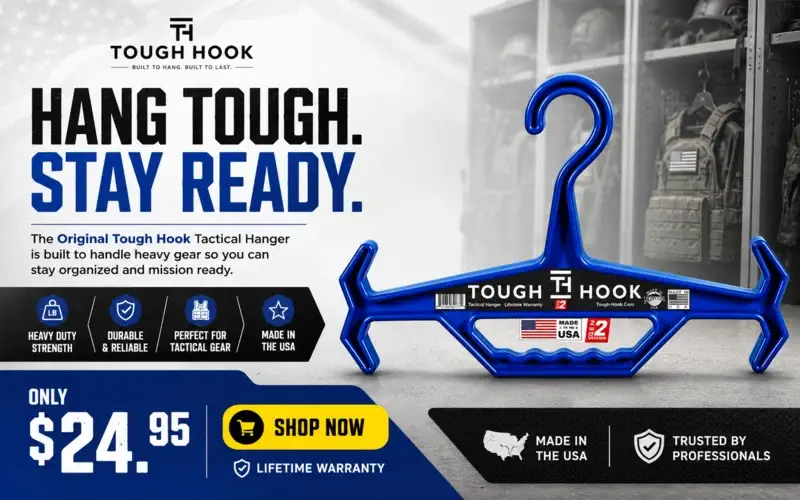
A tactical hanger is not simply a hanger painted in a military color scheme. The term generally refers to a hanger engineered around three things: load capacity, shoulder geometry, and a hook built for thicker rods and rails than a standard closet bar. The tactical hanger collection built by Tough Hook, for example, uses I-beam construction and high-impact polypropylene resin to reach a rated load capacity of up to 200 lbs, well beyond what a typical shirt hanger is designed to carry.
The category grew out of a practical need. Service members, first responders, and outdoor equipment users needed something that could hold plate carriers, turnout gear, dive equipment, and heavy jackets without bending or snapping under repeated use. A hanger built for a dress shirt is a fundamentally different tool from one that needs to support a loaded duty belt or a soaked wetsuit day after day.
Where Standard Plastic, Wood, and Metal Hangers Fall Short
Standard hangers are not poorly made. They are simply built for a different job. Thin plastic and wire hangers are designed for mass production and low cost, not for sustained heavy loads. Under the weight of a winter coat or a loaded backpack, the neck of a thin plastic hanger is often the first point to crack.
Wooden hangers hold up reasonably well for suits and lighter coats, and plenty of people prefer their look in a closet. Wood does absorb moisture, though. In a garage, mudroom, or humid climate, wooden hangers can warp, swell, or split over time, changing their shape and reducing the support they provide to a garment’s shoulders.
Metal hangers, especially wire versions, are thin by design. That thin profile concentrates a garment’s entire weight onto a small point at the shoulder, which is exactly the kind of stress that cooperative extension guidance on clothing storage cautions against when matching a hanger to a garment’s weight and construction. Chrome-plated versions also risk rust once the coating wears through, which can transfer stains directly onto fabric.
None of this means standard hangers are useless. It means each material has a practical weight range, and gear or heavy outerwear tends to exceed it quickly. Reviewing how heavy-duty hangers compare with regular hangers side by side makes the pattern clear across categories.
Features That Separate a Tactical Hanger From an Everyday One
Not all heavy-duty hangers are built equally, and not every hanger marketed toward gear storage is designed with the specific demands of tactical apparel in mind. These four factors establish what genuinely separates a tactical hanger from an everyday one.
Shoulder Width and Shape
A hanger’s shoulder needs to roughly match the shoulder seam of whatever it holds. Too narrow, and the fabric or gear straps bunch and stretch. Too wide and the garment slides around and loses its shape. Tactical-style hangers are typically built with a broad, contoured profile so that jackets, uniforms, and vests maintain their structure rather than developing pressure points at the shoulders.
Material and Structural Strength
This is where the real difference between hanger types shows up. Basic plastic resin has a limited flex tolerance before it cracks. Reinforced hangers, including those built with I-beam construction, resist that flex because the internal shape spreads weight along the length of the hanger instead of concentrating it at the neck. Guidance from the National Park Service on hanging garment storage specifically recommends chemically stable materials, such as polypropylene, for this reason, as the material holds its shape under sustained load rather than degrading.
Hook Design and Rail Compatibility
Standard hangers use a thin, tightly curved hook meant for a narrow closet rod. Many gear lockers, garage rails, and industrial racks use thicker rods that a standard hook barely clears. A wider hook opening matters as much as the hanger’s overall strength, since a hook that slips off a rail defeats the purpose of a heavy-duty hanger entirely.
Weight Distribution and Load Handling
A hanger rated for heavy loads only performs as advertised when the weight is distributed correctly. Bulky items such as a plate carrier or a loaded jacket should sit centered on the hanger rather than bunched to one side. Uneven loading is one of the most common reasons a hanger fails even when its rated capacity was technically sufficient.
Tactical Hangers vs. Standard Alternatives at a Glance
| Hanger Type | Typical Strength | Shoulder Support | Best Suited For | Common Weak Point |
|---|---|---|---|---|
| Thin wire or basic plastic | Low | Minimal | Light shirts and blouses | Bends or cracks under weight |
| Wood | Moderate | Good for suits | Suits and lighter coats | Warps or swells with humidity |
| Standard chrome or metal | Moderate | Minimal, narrow profile | Space-saving, dry cleaning | Rust can dent the shoulder fabric |
| Reinforced tactical style | High | Wide and contoured | Gear, heavy coats, uniforms | Takes up more rod space |
When an Ordinary Hanger Still Gets the Job Done
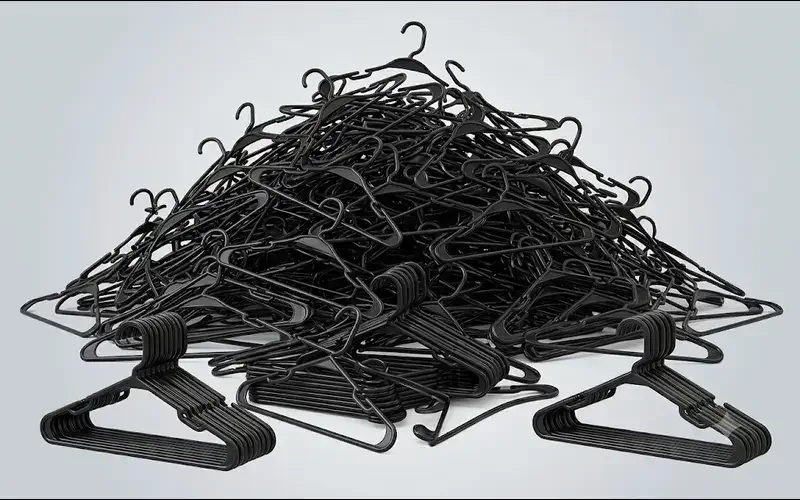
For a closet full of dress shirts, everyday blouses, or lightweight layers, a standard plastic or wire hanger is often perfectly adequate. There is no practical benefit to replacing a hanger that is already doing its job well. The mismatch occurs when the garment or gear on the hanger weighs more than the hanger is designed to hold, which is exactly when shoulders start to sag, and hooks start to bend.
How to Choose Based on Equipment, Storage Environment, and Frequency of Use
Start with what actually goes on the hanger most often. A closet dominated by suits and dress shirts has different needs from a mudroom that holds wet gear and heavy coats every day. Frequency matters too, since an item hung and removed daily puts more repeated stress on a hook and neck than something stored for a season.
The storage environment plays a role as well. A garage or basement with temperature swings and humidity is harder on wood than on high-impact resin, which does not absorb moisture the way wood does. A closet with limited rod space may also call for a slimmer profile rather than the widest option available.
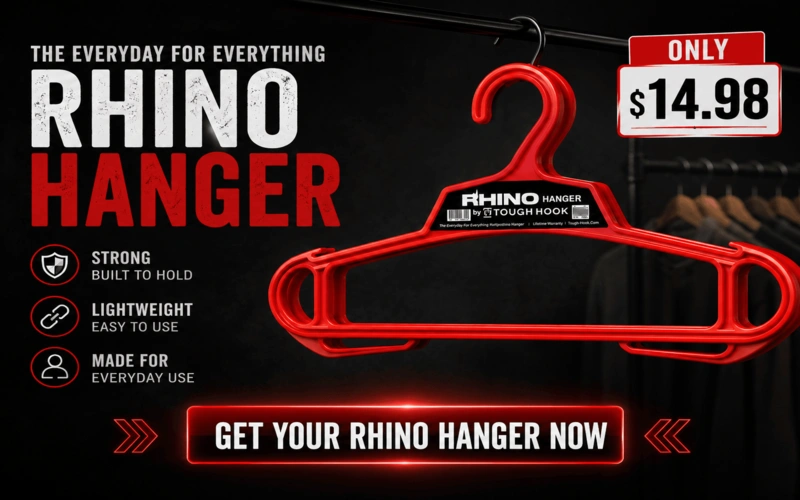
For gear rooms, garages, and everyday household use, the RHINO Hanger offers the same rated strength in a lighter, more compact design.
Common Mistakes People Make When Comparing Hangers
Assuming all plastic hangers behave the same way is one of the most common errors. Basic injection-molded plastic and reinforced high-impact resin perform very differently under load, even though both are technically plastic. Choosing a hanger based on price alone without checking its intended use is another frequent misstep, along with overloading a single hanger with multiple heavy items instead of spreading gear across more hangers. Ignoring hook width is a smaller but common oversight, especially when a rail or rod is thicker than a standard closet rod.
Quick Hanger Selection Checklist
- Match the hanger’s shoulder width to what you are hanging
- Confirm the hook fits your specific rod or rail
- Check whether the storage space is humid, since that affects wood and metal differently
- Consider how often the item is handled, not just how heavy it is
- Replace any hangers already showing cracks, bends, or rust
Who Actually Needs a Tactical Hanger?
Not everyone does, and that is a fair starting point. People who store heavy winter coats, uniforms, tactical vests, scuba gear, motorcycle jackets, or gym equipment tend to see the most benefit from switching, especially households tired of replacing cracked plastic hangers year after year. Reviewing how hanger materials affect the lifespan of stored clothing is a useful next step for anyone still weighing whether the switch makes sense for their specific closet or gear room.
Matching the Hanger to the Job
Choosing between a tactical hanger and a standard alternative comes down to matching the tool to what it actually needs to hold. Plastic, wood, and metal each perform well within their intended weight range, and there is no reason to replace a hanger that is already doing its job. The mismatch appears once gear, uniforms, or heavy outerwear exceed what a standard hanger was ever built for.
A tactical hanger with reinforced construction, a wide contoured shoulder, and a hook sized for thicker rods solves that specific problem. For closets, garages, and gear rooms carrying real weight day after day, that difference shows up in fewer replacements and better-protected clothing over time. Tough Hook builds its hangers around that exact need, giving households and gear-focused users a dependable option once a standard hanger reaches its limit.
Frequently Asked Questions
What is the difference between a tactical hanger and a regular hanger?
A tactical hanger is built with a higher load rating, a wider contoured shoulder, and a hook designed for thicker rods or rails. A regular hanger is generally made from thinner materials meant for light, everyday clothing. The difference becomes obvious once a hanger is asked to hold something heavier than a shirt or blouse.
Can a wooden hanger hold heavy tactical gear?
Wooden hangers can support moderately heavy items like suits or light coats, but they are not built for gear such as plate carriers or loaded duty belts. Wood is also vulnerable to warping in humid storage spaces, which reduces its shoulder support over time and makes it a less reliable long term choice for heavy equipment.
How much weight can a standard plastic hanger hold?
Basic plastic hangers vary by design, but most are intended for light clothing rather than heavy loads. Hangers built specifically for gear and heavy garments carry a meaningfully higher rated capacity because of thicker construction and different internal engineering, such as I-beam shaping that spreads weight along the hanger.
Are metal hangers a good alternative to tactical hangers?
Metal hangers, especially wire versions, tend to concentrate weight at a single point on the shoulder, which can dent or crease fabric over time. Chrome-plated metal also risks rust once the coating wears down. They can work for lighter, space-saving use, but are not typically built for heavy gear storage.
When should I upgrade from a standard hanger to a heavy-duty tactical hanger?
The clearest sign is repeated hanger failure, meaning cracked necks, bent hooks, or garments sliding off. Anyone who stores heavy coats, uniforms, tactical vests, or outdoor gear regularly will usually notice a difference in support and longevity when they switch to a purpose-built hanger.
Do tactical hangers work for regular clothing, too?
Yes. A tactical hanger’s wider shoulder and stronger build work fine for everyday shirts, jackets, and dresses. The extra strength isn’t required for light items, but it doesn’t cause any harm and can also extend the life of everyday clothing.