
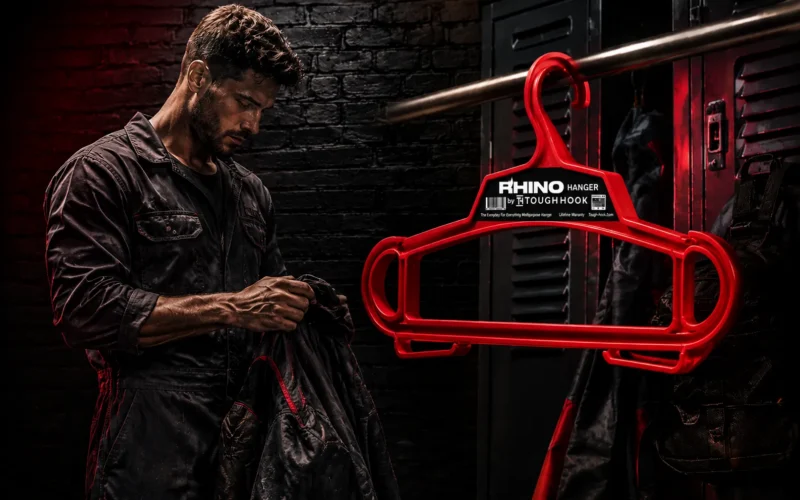
You come off a 12-hour shift. Your gear is heavy, it may be wet or dirty, and the last thing you want to do is spend time figuring out where to put it. So it ends up on the floor, draped over a chair, or thrown on a hook that was never built for the load.
The next shift comes around, and the gear is where you left it, wrinkled, damp, and not quite ready. You make it work because you always do. But the gear takes a little more punishment each time, and the process never gets easier.
This is not a rare situation. It is the standard storage reality for most first responders at home. The gear is purpose-built and expensive. The storage setup is whatever was already in the house. This article supports First Responders at Home: Storing Gear Cleanly with Heavy-Duty Hangers After a Shift, the primary guide on this topic.
Gear this important deserves a hanger built for it.
The Original Tough Hook Hanger is American-made, holds over 200 lbs, and is trusted by law enforcement and the military for daily-use storage.
What First Responder Gear Actually Weighs
The problem with standard home storage is scale. Most closet hardware was sized for civilian clothing. First responder gear operates at a completely different weight class.
| Gear Item | Approximate Weight |
| Loaded duty belt | 15 to 25 lbs |
| Plate carrier or body armor vest | Adds 15 to 20 lbs |
| Outer shell jacket and accessories | 5 to 10 lbs |
| Full operational loadout combined | 40 to 50+ lbs |
That is not a weight any consumer hanger was designed to hold. It will bend, crack, or break standard closet hardware within weeks of regular use. For more on how tactical gear load demands compare to standard storage capacity, read Tactical Gear, Tactical Storage.
What Happens When Heavy Gear Has No Proper Place
Gear Takes Longer to Get On
When a duty belt is coiled on a shelf or body armor is folded in a bin, getting into kit takes longer. Not dramatically, but consistently. Over hundreds of shifts, the extra minutes spent locating and untangling gear add up. More importantly, in a callout or emergency, seconds spent sorting gear matter more than they do in a desk job. A proper hang point means the gear is in the same place and in the same configuration every time. For emergency services readiness specifically, see Preventing Gear Fatigue.
Structural Gear Damage Accumulates Quietly
Body armor carriers are built with specific structural integrity. The panels sit in designated pockets at calibrated angles. Stored folded or slumped, the carrier shell can crease in ways that compromise panel fit over time. A duty belt repeatedly coiled takes fatigue stress at the coil points. Tactical shells and outer carriers develop permanent fold lines that affect how the gear sits and functions. For guidance specifically on maintaining vest and uniform integrity, see Critical Gear Care.
The Home Environment Suffers Too
Gear left on chairs, countertops, or floor hooks is not just an organisational issue. It brings the working environment into the home. For first responders managing the psychological separation between work and home life, a clean, dedicated gear storage space is not a luxury. It is a genuine quality-of-life factor. The 8 Tips to Maintain and Store Your Tactical Gear guide covers the full maintenance routine, starting with proper hanging.
What Proper Off-Shift Gear Storage Looks Like
The requirements for first responder home storage are specific but not complicated.
- A hanger rated for the full loadout weight – A loaded duty setup can exceed 40 to 50 lbs. The hanger needs to hold that without flexing, and the hook needs to stay seated on the closet rod under that load.
- A shoulder profile that supports body armor structure – A wide-shouldered hanger keeps body armor carrier geometry intact when the carrier is off the body, preventing the creasing and panel misalignment that narrow contact points cause.
- A dedicated spot that is always available – The gear needs to go to the same place every time. This requires a hanger-and-rod setup that holds the load reliably enough for the system to stay put.
- Separation from civilian clothing – Tactical and duty gear should have its own hang space. Mixing it with everyday clothing creates cross-contamination, organisational confusion, and blurring of work and home space.
Conclusion
First responder gear is expensive, structurally critical, and used hard on every shift. It deserves storage that matches that standard. A hook on the wall or a pile on the floor is not that standard.
Tough Hook heavy-duty hangers are American-made and trusted by the same community they were built for: military, law enforcement, and first responders who depend on gear performing when it matters. Give the gear a proper place to rest, and it will be ready when the next shift starts. For a broader look at military and tactical gear organization at home, see Military Gear Organized: Effective Storage Solutions.
Built for the people who depend on their gear.
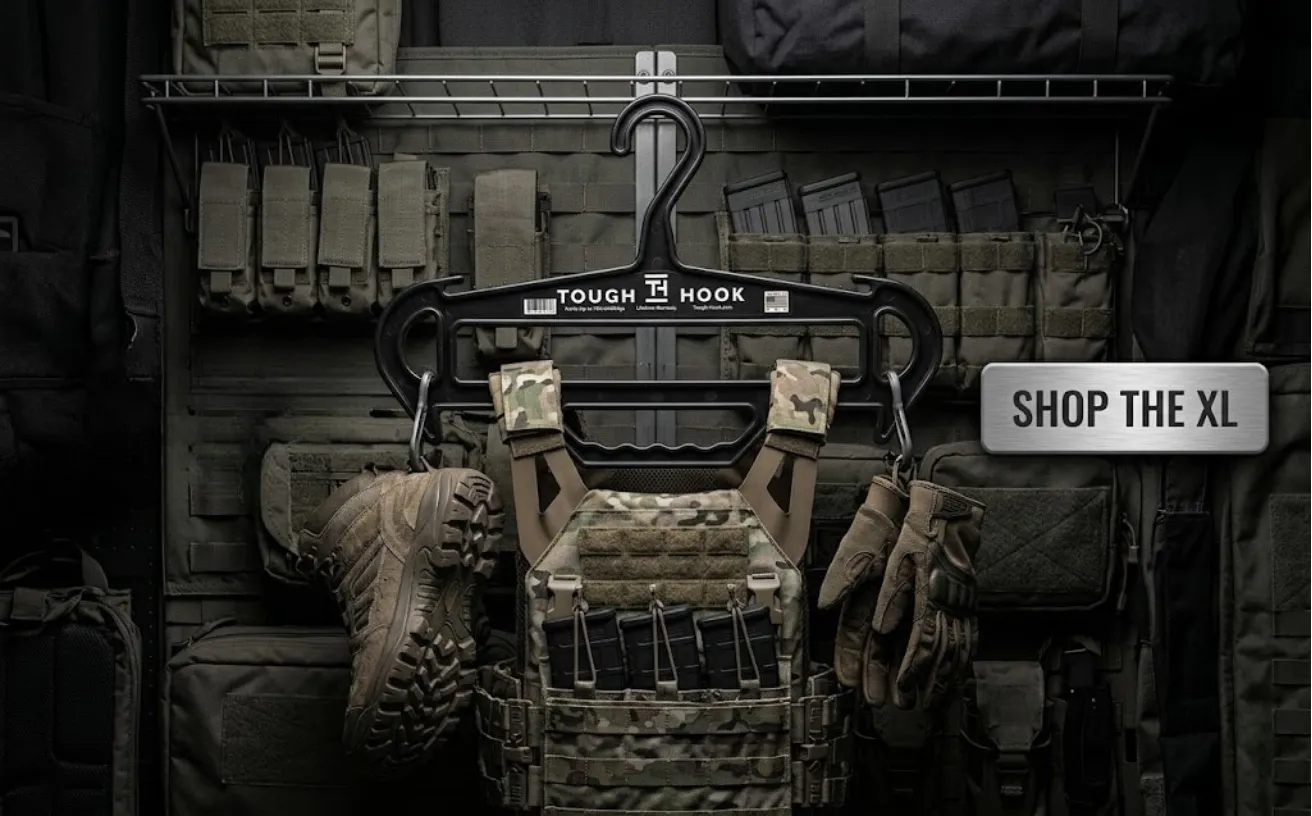
The Tough Hanger XL holds over 200 lbs and handles body armor, loaded duty belts, and full tactical setups without bending.
Frequently Asked Questions
Why can a regular hanger not hold first responder gear?
Standard consumer hangers are rated for 10 to 15 lbs of lightweight clothing. A loaded duty belt alone can weigh 15 to 25 lbs. Body armor and a full tactical loadout easily exceed 40 lbs. Consumer hangers fail under this weight by bending, cracking, or pulling away from the closet rod.
Does storing body armor on a hanger actually protect the panels?
Yes. Body armor panels need to be stored in a natural hanging position to maintain their structural fit. A wide-shouldered heavy-duty hanger keeps the carrier shell in the correct geometry so panels sit correctly when the vest is put back on. See Critical Gear Care for more.
How should a duty belt be stored off-shift?
A duty belt should be hung on a hanger or hook rated for its loaded weight rather than coiled or folded. This prevents fatigue stress at repetitive fold points and keeps all attached equipment accessible without untangling.
Is there a benefit to separating duty gear from regular clothing storage?
Yes. Dedicated storage for duty gear keeps it organized and ready without mixing it into everyday clothing. It also supports cleaner psychological separation between work and home environments, which is relevant for first responders managing the mental load of high-stress roles.
Where are Tough Hook hangers made?
American-made. Designed by a US Army Sergeant and trusted by the military, law enforcement, and first responders for daily-use gear storage.