
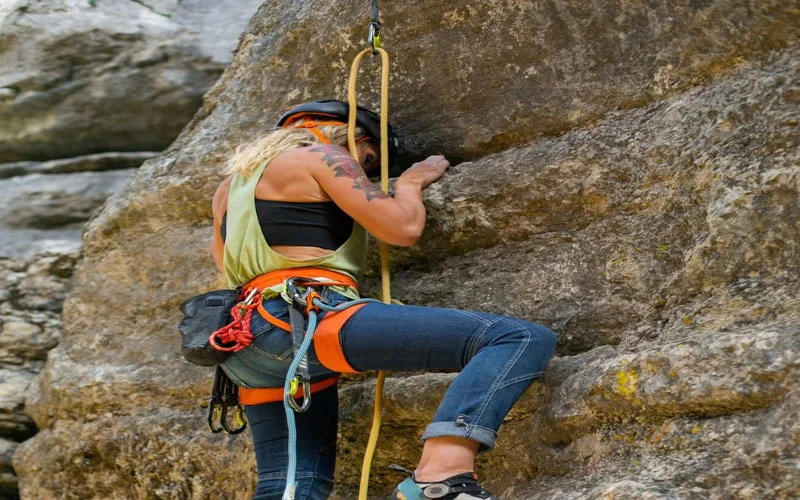
This guide covers general sport climbing gear and terminology. Always learn belaying, anchor-building, and rope systems in person from a certified instructor before climbing outdoors.
Understanding the Basics of Sport Climbing
Sport climbing is a form of rock climbing that relies on permanent anchors fixed to the rock for protection. Compared to traditional climbing (trad) and bouldering, sport climbing uses bolts, so you don’t have to place protection as you climb. If you’re just getting into the sport, our beginner rock climbing gear checklist breaks down what to rent versus buy for your first sessions.
Sport Climbing vs. Trad Climbing: What Sets Them Apart
Sport climbing and trad climbing are often mentioned in the same breath, but they solve the protection question differently. Sport routes have bolts already drilled and fixed into the rock, so climbers clip quickdraws into that hardware as they ascend. Trad climbing has no fixed bolts along the way. Instead, the leader places removable gear, like cams and nuts, into cracks in the rock and removes it on the way down. Because sport climbing needs less specialized hardware and carries a more predictable risk profile, it’s usually the format newer climbers try first before moving on to trad.
What Is Lead Climbing?
Sport climbing is technically a form of lead climbing. In lead climbing, the climber and the rope both start on the ground, and the climber clips into protection on the way up rather than climbing on a rope that’s already anchored above. This differs from top-rope climbing, where the rope runs through an anchor at the top of the wall before you ever leave the ground. Most gyms teach top-roping first, then offer a lead climbing certification once you’re ready to manage your own clips, falls, and rope during the ascent.
Sport Climbing at a Glance

- Sport climbing is one of the fastest-growing forms of climbing in the United States, driven largely by the boom in indoor climbing gyms over the past decade.
- It’s now the most common way new climbers are introduced to the sport, thanks to gym-to-crag pipelines at most commercial climbing facilities.
- Sport climbing debuted as an Olympic event at the Tokyo 2020 Games, boosting mainstream visibility and gym membership growth.
The Physical and Mental Aspects of Sport Climbing
A proficient sport climber needs a combination of strength, endurance, flexibility, and mental fortitude. Regular gym workouts can improve physical fitness, while mindfulness practices can enhance focus during a climb.
In-Depth Look at Sport Climbing Techniques
Effective climbing techniques can transform a difficult climb into a manageable one. The basics include proper foot placement and body positioning. Advanced techniques include dynamic movements such as overhang climbing, which involves climbing routes that are steeper than vertical. Regularly practicing these techniques on different routes and walls can significantly enhance your climbing efficiency.
Clipping Technique and Common Mistakes
Clipping a quickdraw looks simple until you’re pumped high above a bolt. Two mistakes trip up most new leaders: back-clipping, where the rope runs the wrong way through the carabiner gate and can unclip itself in a fall, and z-clipping, where you accidentally grab rope from below the last bolt instead of from your tie-in point, adding slack you don’t want. Practicing clips on the ground, then again low to the ground on easy routes, builds the muscle memory to clip correctly when your grip is fading and your feet are balanced on a small foothold.
Essential Gear for Sport Climbing
Understanding your gear is a vital part of sport climbing. Your harness, rope, and carabiners are fundamental to your safety. Special attention should be given to selecting climbing shoes that fit well, as they can significantly affect your climbing ability. A reliable helmet is also critical to protect you from falling debris or in case of falls.
Core Gear Checklist
Beyond a harness and shoes, a few small items make the difference between a smooth day at the crag and a frustrating one. Quickdraws connect your rope to each bolt as you climb, and most sport routes need somewhere between 10 and 14 of them. A locking carabiner is essential for your belay device; never substitute a non-locking gate for belaying. Chalk keeps your hands dry on longer routes, and a chalk bag clipped to your harness keeps it within reach without breaking your rhythm mid-climb. Once you’re back from the crag, hanging damp gear properly matters too; a heavy-duty hanger keeps a harness or chalk bag off the floor and out of the way between sessions.
Importance of Safety and Risk Management
While the thrill of sport climbing can be intoxicating, it’s essential never to lose sight of safety. Knowledge of common risks and proper use of safety gear like belay devices and crash pads is crucial. A basic understanding of first aid can also come in handy during emergencies.
Cleaning a Route and Rappelling Down
Reaching the anchor at the top of a sport route is only half the job; you still need to get back down safely. Most sport climbs are cleaned by threading the rope through the anchor hardware and lowering off on belay, or by rappelling if you’re the last person down. Rappelling means descending on the rope using a friction device, and it demands the same attention to detail as the climb itself. Always back up a rappel with a knot or an autoblock until cleaning anchors and rappelling become second nature.
Tips for Training and Progression in Sport Climbing
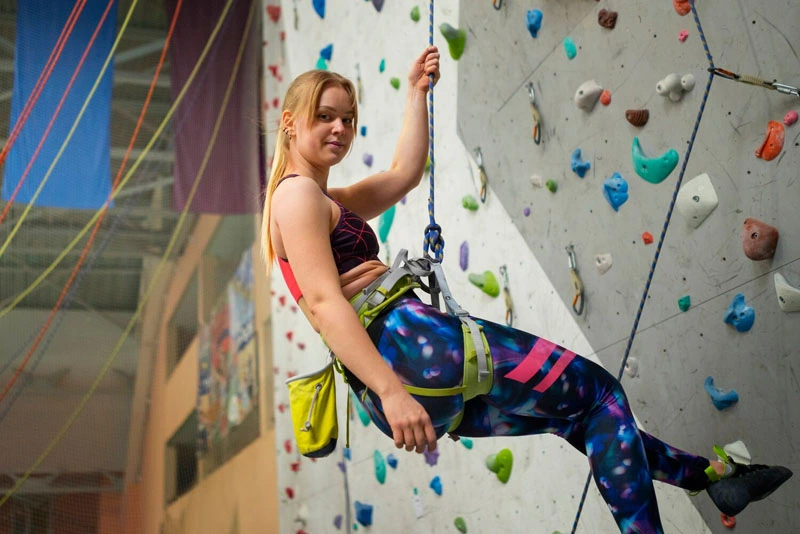
Training regularly and allowing adequate rest periods is the key to progress in sport climbing. A balanced diet will also aid in muscle recovery and increase endurance. Paying attention to technique while practicing, whether on the boulder, slab, face, or arete, can significantly improve your ability to send, flash, or redpoint your project.
Getting Involved in the Climbing Community
Being part of the climbing community can be a rewarding experience. It’s a great way to share information and grow as a climber. Practicing good sport climbing etiquette, like leaving no trace at the crag or taking turns on popular routes, is also essential. Participation in climbing events or competitions can push your boundaries and enhance your skills.
To sum it up, mastering sport climbing involves understanding the basics, honing your techniques, knowing your gear, and ensuring safety at all times. It requires both physical strength and mental agility, with a dash of community spirit. Armed with the right knowledge and the right attitude, you are well on your way to becoming a proficient sport climber.
Choosing Your Climbing Route
Choosing the right sport climbing route involves considering your physical capabilities and experience level. For beginners, a route with less overhang and more face or slab might be easier to tackle. More experienced climbers can challenge themselves with tougher routes, including overhangs, cracks, and aretes. If you’re working toward bigger multi-pitch or alpine objectives beyond bolted sport routes, see our mountain climbing gear guide for what changes once you’re off single-pitch crags.
Understanding Sport Climbing Grades
Route difficulty is communicated through grading systems, and knowing them helps you pick routes that actually match your ability. In North America, most gyms and crags use the Yosemite Decimal System (YDS), which runs from around 5.0 for beginners past 5.15 for the world’s hardest climbs. Much of the rest of the world, including popular destinations like France and Spain, uses the French grading system instead, where routes start around 4 or 5 and climb into the 9s at the elite level. The two systems don’t convert one-to-one, but a beginner-friendly 5.9 on the YDS roughly lines up with a French 5c, so it’s worth learning both if you plan to climb internationally.
A Brief Guide to Sport Climbing Lingo
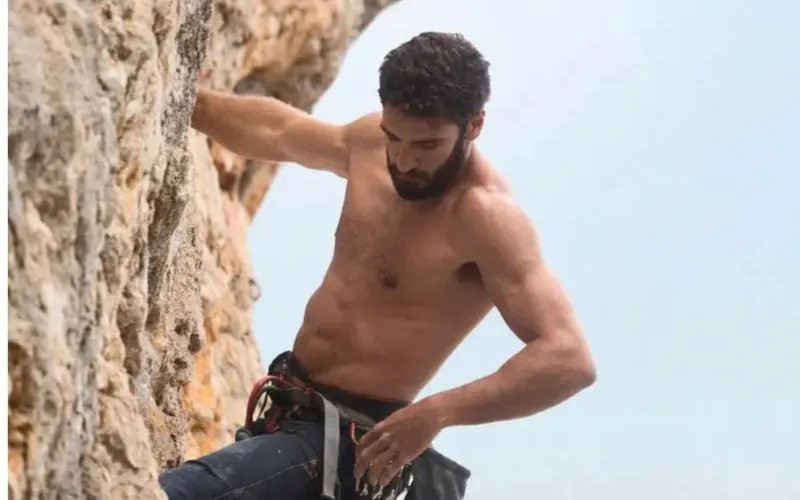
The language of sport climbing can seem like a different dialect, filled with words like “send,” “onsight,” “redpoint,” “flash,” and “project.” Understanding these terms can be useful in communicating with other climbers and understanding climbing-related information.
Sport Climbing vs. Bouldering: What’s the Difference?
Sport climbing and bouldering are two popular forms of climbing. While they share many similarities, they differ in crucial ways. Bouldering usually involves shorter climbs over crash pads, whereas sport climbing involves longer routes with protection from bolts and a rope. Understanding the differences can help you choose which form is right for you.
Gearing Up: Understanding Climbing Equipment
Climbing gear for sport climbing includes a variety of items, all with specific purposes. Knowing your gear and how to use it correctly is critical for safety and efficiency on the climb. Harnesses, shoes, ropes, chalk, belay devices, quickdraws, and helmets are all necessities for sport climbing. Once you’re off the wall, a Tough Hook heavy-duty hanger keeps that gear organized and ready for the next session instead of piled on the floor.
Sport Climbing Competitions and Events
Whether it’s speed climbing events or the thrill of a climbing competition, sport climbing can be much more than just a hobby. Olympic and World Cup sport climbing competitions are governed by the International Federation of Sport Climbing (IFSC) and include separate lead, speed, and bouldering disciplines, with lead climbing closest to the outdoor sport climbing covered in this guide. Joining these events is a great way to test your skills and become part of the climbing community.
Top 6 Sport Climbing Locations Around the World
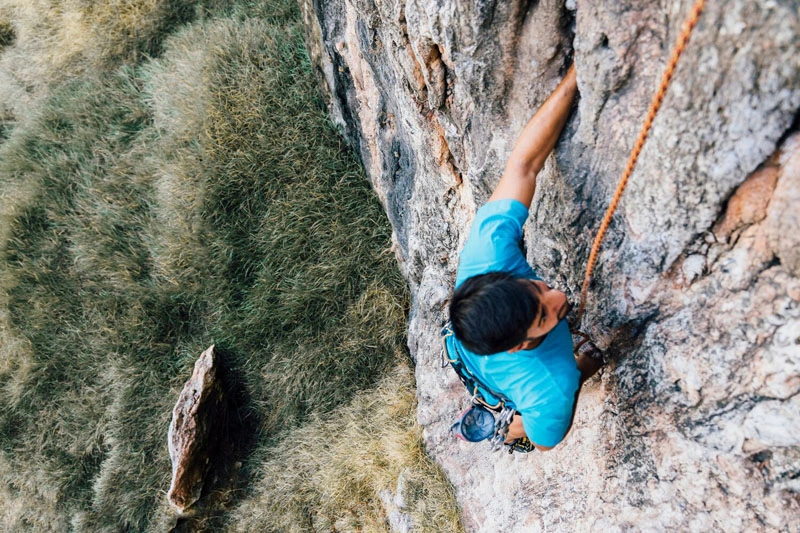
Sport climbing has gained popularity all over the world. From the crags of France to the rock faces of the USA, the world is filled with incredible places to climb. Here are some of the most popular climbing locations and what makes them special for sport climbers.
- Ceuse, France: Located in the Hautes-Alpes region of France, Ceuse is renowned for its pristine limestone cliffs and high-altitude climbing. With over 300 bolted routes, it provides a challenge for climbers of all skill levels.
- Kalymnos, Greece: Once a sponge-diving hub, Kalymnos now attracts climbers from around the globe to its sheer limestone cliffs. The island’s 3000+ routes offer a variety of climbing styles and difficulties, along with stunning views of the Aegean Sea.
- El Potrero Chico, Mexico: Known for its multi-pitch sport routes, this is a paradise for climbers seeking to tackle tall limestone walls. The area’s moderate winter climate makes it a popular destination for North American climbers during the colder months.
- Yangshuo, China: With its unique karst formations, this destination offers a truly distinctive climbing experience. From slab to overhang, you’ll find a plethora of climbing styles amidst the picturesque backdrop of China’s Guangxi region.
- Smith Rock, United States: Often regarded as the birthplace of sport climbing in the United States, Smith Rock in Oregon features over a thousand climbs. Its tuff and basalt cliffs cater to all levels of sport climbing, from beginner to advanced.
- Rodellar, Spain: Nestled in the Sierra de Guara National Park, Rodellar is a haven for climbers seeking steep overhangs and tufa climbing. Its limestone routes are known for their length and continuous difficulty, offering an exciting challenge for sports climbers.
Sport climbing is a discipline that requires knowledge, preparation, technique, and, most importantly, passion. Understanding its nuances and respecting its demands can transform you from a beginner into a seasoned climber. Whether you’re practicing in the gym or scaling rock faces outdoors, enjoy the journey as much as the climb itself. Happy climbing!
Frequently Asked Questions
What are bolts in sport climbing?
Bolts are permanently installed anchors in the rock that climbers use to attach their ropes and quickdraws.
What is a climbing harness?
A climbing harness is a piece of equipment that wraps around a climber’s waist and thighs, providing a point to attach the rope and other gear.
What is the role of the belayer in sport climbing?
The belayer manages the rope, ensuring it is taut enough to catch the climber in a fall but loose enough to allow upward progress.
How can I prevent injuries while sport climbing?
Proper technique, use of appropriate gear, adequate physical conditioning, and adherence to safety protocols can help prevent injuries while sport climbing.
What is the difference between sport climbing and trad climbing?
Sport climbing relies on permanent bolts already fixed in the rock, so climbers clip quickdraws as they go. Trad climbing uses removable gear like cams and nuts that the leader places and removes, which demands more equipment and experience.
What do sport climbing grades mean?
Sport climbing routes are rated for difficulty using systems like the Yosemite Decimal System (YDS) in North America or the French scale used across Europe and most of the world. Higher numbers and letters mean a harder climb, so beginners typically start on easier grades and work up as their skills improve.