
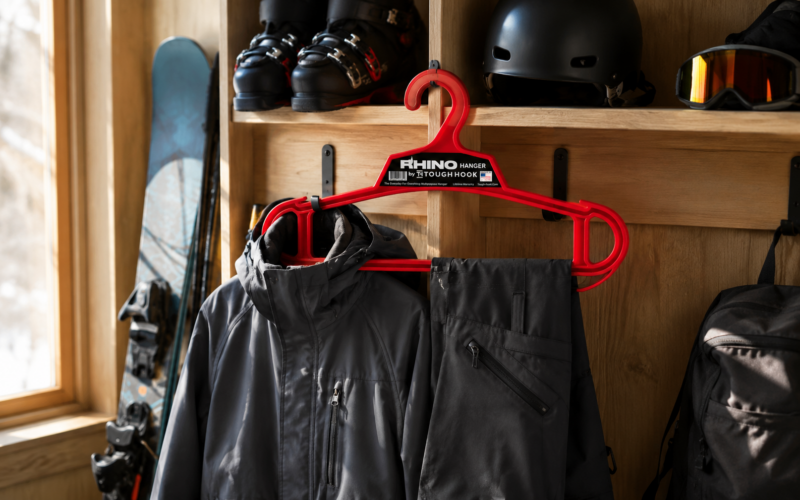
Winter sports gear is a serious investment. Ski jackets, snowboards, helmets, boots, and base layers don’t come cheap, and how you treat them between seasons directly affects how long they last. Tossing everything into a spare closet or leaving it stacked in a garage corner creates the conditions for mold, warped materials, rust, and missing accessories.
This guide walks through the right approach to off-season storage for every category of winter gear, from clothing and footwear to skis, hockey pads, and protective equipment. Follow these steps and your gear will be in ready-to-go condition when the first snowfall hits.
Ready to stop fighting your storage setup? The Original Tough Hook Hanger holds up to 200 lbs and is built to handle bulky ski jackets, snow pants, and gear bags without bending or breaking. Made in the USA by veterans, it is the foundation of any serious gear storage system.

Why Off-Season Storage Makes or Breaks Your Gear
Most winter gear does not wear out on the mountain. It wears out in storage. Jackets lose their shape on flimsy hangers, boot liners grow mold from trapped moisture, ski edges rust from sitting on damp concrete, and helmets get cracked from heavy items stacked on top. The off-season, which for most people runs five to seven months, is where the real damage happens.
Getting this right does not require a dedicated gear room or an expensive system. It requires the right approach for each equipment category and a bit of consistency at the end of every season.
How to Store Your Winter Sports Gear the Right Way
Whether you are putting away a full family’s worth of ski equipment or just your own snowboard setup, the same principles apply across the board. Here is a step-by-step breakdown of how to do it properly.
Step 1: Clean Everything Before It Goes Away
The most important rule of off-season storage is simple: never put dirty gear away. Dirt, sweat, trail grime, and moisture left on fabrics and hard surfaces create problems that compound over time. Mildew sets in, odors become permanent, materials degrade, and metal edges rust.
Before anything goes onto a rack, into a bin, or onto a hanger, run through a complete cleaning checklist.
Outerwear and base layers. Follow the care labels. Most technical ski jackets and insulated pants can be machine-washed on a gentle cycle. Reapply DWR (durable water repellent) treatment before storage if the fabric has lost its beading ability. Air dry completely before putting items away.
Boots and footwear. Remove insoles and let them dry separately. Wipe down the exterior with a damp cloth and allow the boots to air out fully before storing. Stuffing boots with crumpled newspaper helps absorb any remaining moisture and maintain their shape.
Hard gear: helmets, goggles, and pads. Wipe surfaces with a damp cloth and mild soap. Check goggles for lens scratches, inspect helmet padding for compression, and look for any cracks in shells. Air out hockey and skiing pads in a ventilated space before storage.
Skis and snowboards. Wipe down bases and edges. Apply a thin coat of glide wax to ski bases and edges before storage to prevent rust and oxidation. Loosen ski bindings slightly to relieve tension on the springs over the off-season.
Step 2: Use the Right Hanger for Heavy Outerwear
Standard wire or lightweight plastic hangers were not designed for ski jackets, snow bibs, or heavily insulated parkas. Under the weight of technical outerwear, they bend, snap, or leave permanent shoulder dents in the fabric. For clothing that costs hundreds of dollars and needs to hold its shape across many seasons, the hanger matters.
A heavy-duty hanger with a wide shoulder span and structural rigidity is the correct tool. The Original Tough Hook Hanger is rated to hold over 200 lbs using a patented I-beam design built from impact-resistant resin. It will not warp, crack, or bend under the combined weight of a ski jacket and snow pants hung together, and its wide shoulder design distributes the load evenly to preserve the garment’s shape.
One Tough Hook hanger can do double duty: hang your ski jacket and loop your helmet’s chin strap over the same hook, keeping your complete kit in one place and easy to grab at the start of next season.
Step 3: Store Skis, Snowboards, and Poles Off the Floor
Leaving skis and snowboards propped against a wall or lying flat on a garage floor causes problems. Edges get dinged, bases pick up scratches, poles bend, and the weight of other gear stacked on top creates warping. The solution is wall-mounted storage that keeps everything elevated and secure.
For garage installations, a dedicated ski-and-snowboard wall rack is one of the best investments you can make. Mount it at a height that keeps the gear entirely off the concrete. Concrete floors absorb and release moisture year-round, and that humidity cycle is hard on both metal edges and base materials.
Keep skis paired together with a Velcro or buckle strap at both tips and tails. This prevents them from splaying apart and protects edges from contact with other gear. Store poles in a separate holder or bundle each pair with a strap and hang them vertically to prevent bending. For more strategies specific to snow sports gear, From Slopes to Storage: Winter-Proof Storage Hacks for Snow Sports Equipment covers garage and basement setups in detail.
Step 4: Organize Smaller Accessories in Labeled Bins
Gloves, beanies, neck gaiters, goggles, boot liners, and base layers are the items most likely to get lost between seasons. They are small enough to disappear into closet depths and scattered enough to create a chaotic search party every November. The fix is simple: dedicated labeled bins.
Clear plastic storage bins with lids work well because you can see the contents without opening every container. Assign one bin per category, one for accessories like gloves, hats, and buffs, one for base layers, one for boot liners and insoles. If you have multiple family members with gear, assign a bin per person.
Before sealing each bin, drop in a silica gel pack or two. These absorb residual moisture and protect fabrics, leather, and foam materials from mold and mildew during the off-season. This is especially important in basements or garages where humidity levels fluctuate.
Step 5: Store Boots and Skates on Dedicated Racks
Winter footwear takes up a disproportionate amount of floor space and causes more clutter problems than almost any other gear category. Ski boots, snowboard boots, ice skates, and insulated hiking boots all need to be kept off damp floors, stored upright or on a rack, and kept visible enough to find quickly.
A tiered boot rack in a mudroom, closet, or entryway keeps footwear organized and allows airflow between pairs. For ice skates specifically, always cover the blades with cloth blade guards before storage. Bare steel blades left in contact with each other or with other gear will nick and rust. Hang the skates by the laces on a heavy-duty hanger, or store them on a shelf with the blades covered.
Never store footwear in sealed plastic bags for extended periods. Leather, foam, and synthetic boot materials need some airflow to prevent moisture buildup and material breakdown. Breathable mesh bags or open shelf storage are better long-term choices.
Step 6: Give Hockey and Team Sports Gear Room to Breathe
Hockey gear presents a unique storage challenge because of its volume, its density, and the bacterial load it accumulates during a season of play. Jerseys, pants, shoulder pads, shin guards, gloves, and helmets all need to be aired out before storage, not shoved into a bag and forgotten until next fall.
After the final game of the season, hang every piece individually in a well-ventilated area for at least 24 hours. A Tough Hook hanger handles this well because its capacity allows multiple heavy pads and jerseys to hang together without the hanger flexing or collapsing. Once everything is fully dry and aired, store pads and hard equipment in a gear bag or on dedicated shelving. Store hockey sticks vertically in a corner stand or wall rack to prevent warping.

Step 7: Think About Your Storage Space Holistically
Good winter gear storage is not just about where individual items go. It is about designing a system where everything has a defined home and the flow from “off the mountain” to “stored properly” takes as little friction as possible.
If you have a garage, look up. Overhead storage platforms mounted to ceiling joists are some of the most underused square footage in any home. Lightweight PVC pipe racking or wooden platforms can hold sleds, extra ski bags, and seasonal bins, keeping them completely out of the way. Pair overhead storage with wall-mounted racks and a row of Tough Hook hangers, and you have a system that handles gear for an entire family without taking up floor space. For a broader look at getting the most out of limited wall and closet space, Vertical Storage Hacks: Using Hangers to Maximize Small Spaces is a practical read.
For down jackets specifically, avoid vacuum-seal bags for long-term storage. Prolonged compression reduces loft and insulation performance. A breathable garment bag hung on a heavy-duty hanger is the better choice for expensive down outerwear. If you are also thinking about how to care for your premium coats and jackets heading into the colder months, Fall’s Fashion Saviors: The Hangers Your Expensive Coats Deserve covers that ground well.
Quick Reference: Winter Gear Storage by Category
| Gear Type | Storage Method | Key Tip |
| Ski jackets and snow pants | Heavy-duty hanger | Re-apply DWR treatment before storing |
| Skis and snowboards | Wall-mounted rack | Wax edges before storage to prevent rust |
| Poles | Wall rack or vertical stand | Bundle pairs together to prevent bending |
| Boots and skates | Boot rack or shelving | Dry thoroughly; cover skate blades |
| Helmets and goggles | Dedicated bin or cubby | Store helmet upright; never stack heavy items on top |
| Base layers and accessories | Labeled bins with silica gel | One bin per category or per person |
| Hockey and team pads | Air out 24 hrs, then gear bag or shelving | Hang individually first to eliminate bacterial buildup |
The Takeaway
Proper off-season storage for winter gear comes down to three things: clean it before it goes away, store it in a way that protects its structure, and build a system that makes everything easy to find when the season returns.
Heavy-duty hangers handle the outerwear side of that equation better than anything else available. Wall racks and vertical storage handle the skis and boards. Labeled bins handle the small stuff. Together, these three elements make up a complete system that protects a significant gear investment and eliminates the seasonal scramble.
Frequently Asked Questions
What is the best way to prevent moisture damage when storing winter sports gear?
Always clean and fully dry every item before putting it away. Store gear in a cool, dry area with good airflow and avoid sealed plastic bags for items that need to breathe, like leather boots or down jackets. Silica gel packs placed inside bins and boxes absorb residual moisture and provide added protection throughout the off-season.
Can I store skis and poles in a garage without a climate-controlled setup?
Yes, a garage works well for skis and poles as long as you keep them off the concrete floor and away from direct sunlight. Wall-mounted racks elevate your gear and minimize exposure to temperature extremes. Wipe ski edges with a light coat of wax to prevent rust, and bundle each pair of poles together to avoid scratches.
How do Tough Hook hangers help with winter gear storage?
Tough Hook hangers are rated to hold over 200 lbs, which means a single hanger can support multiple heavy jackets, snow pants, and gear bags without bending or breaking. Their patented I-beam construction makes them a dependable organizer for everything from ski parkas to hockey padding. They are available in a range of colors and come with a lifetime warranty.
What is the safest way to store ice skate blades during the off-season?
Dry the blades thoroughly after your last use, then slide cloth or terry-cloth blade guards over them to protect them from nicks and rust. Store each pair of skates on a shelf or hang them on a heavy-duty hanger. Never leave them loose on the floor, where the blades can damage other gear or pose a tripping hazard.
Are vacuum-sealed bags safe for all types of winter clothing?
Vacuum-sealed bags are excellent for synthetic-fill jackets and base layers because they compress without harming the material. However, avoid using them for extended storage of down-filled items. Prolonged compression can reduce loft and insulation performance over time. For down jackets, a breathable garment bag or a Tough Hook hanger is a better long-term choice.
How often should I inspect stored winter gear before the new season?
A quick inspection about two to four weeks before you plan to use your gear gives you enough time to address any issues. Check the edges and bases on skis and snowboards, test the ski binding release, check helmet padding and shell integrity, and try on boots to confirm fit. Catching a problem early means you can get it repaired or replaced before you need the gear.