
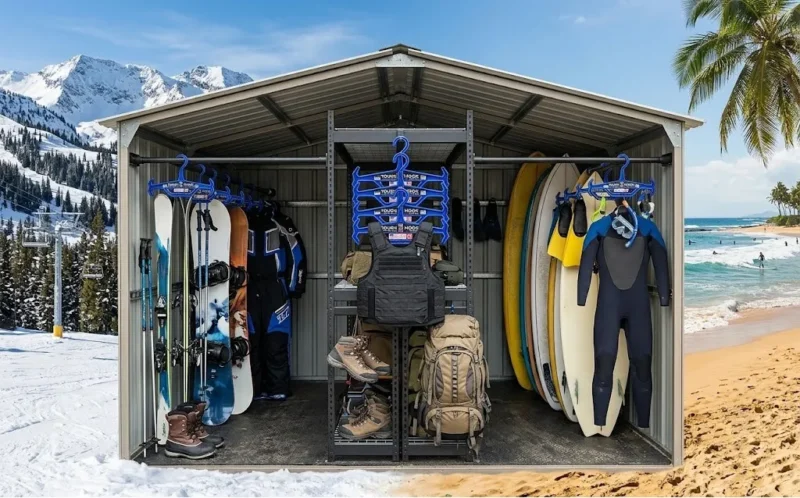
Most people approach seasonal gear storage the same way every year: pile the off-season gear into a corner, stuff it into bins, or drape it over the nearest available surface. It works until it does not. A wetsuit develops a crease after six months on a folded shelf. A ski jacket loses its loft because it sat compressed in a bin all summer. Hunting gear smells like the garage it was stacked in because nothing was hung properly after the last trip out.
The real problem is not the gear. Most homes and garages are set up with storage systems designed for lightweight everyday clothing, not for the weight and bulk of serious seasonal equipment. There is a simpler way to manage it all, and it starts with a consistent, reliable system that works regardless of the season you are rotating into.
Tough Hanger XL
Wide shoulder span, 200-lb load rating, USA-made. One hanger for wetsuits, ski jackets, hunting gear, and everything in between.
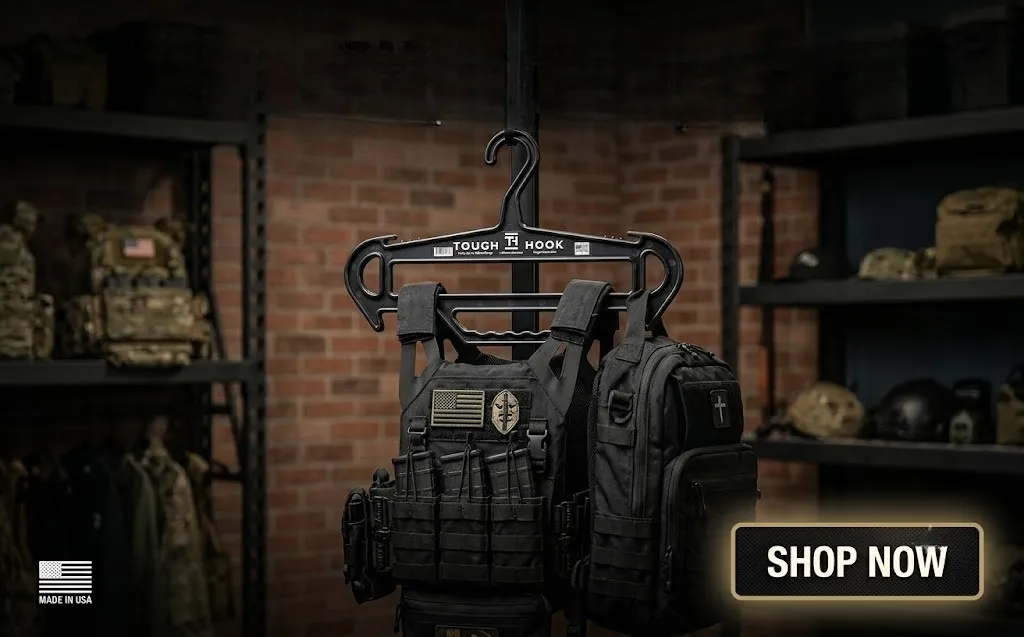
Why Seasonal Gear Needs Its Own Storage Approach
Seasonal gear differs from everyday clothing in two key ways: it is heavier and sits idle for longer stretches.
A ski jacket with a full insulation layer and a waterproof shell weighs several times as much as a standard shirt. A fully equipped wetsuit, soaked and fresh off a dive, can be surprisingly heavy. A hunting pack with layering systems, waterproof pants, and a loaded vest represents a significant combined weight when everything goes up at the end of the season.
The problem with long idle periods is that whatever condition your storage puts the gear in, it stays there for months. If a ski jacket spends six months compressed in a bin, the fill compresses as well. If a wetsuit is folded rather than hung, the neoprene holds the crease and develops stress points. Getting the storage method right matters more for seasonal gear than it does for anything you rotate through daily.
What a Season-by-Season System Actually Looks Like
A practical seasonal storage system does not require a dedicated gear room or a full wall of custom shelving. What it requires is a consistent logic: one place for each category, with each item stored in a way that preserves its shape, allows it to dry, and keeps it accessible when the season turns.
Winter and Snow Gear
Heavy ski jackets, insulated snow pants, base layers, and helmet bags need to be returned to service clean and dry. Once clean, the jacket belongs on a hanger with a full shoulder span, not folded into a bin. Compressing a down or synthetic insulated jacket for months flattens the fill clusters, and restoring loft from that kind of compression can take days of use or never fully happen at all.
Snow pants can be hung by the waist loop or folded loosely. Boot liners should be pulled and stored separately from the boot shell so they dry fully and do not develop odor or mildew over the summer.
Spring and Rain Gear
Waterproof shell layers, rain pants, and light hiking layers that carry over into spring and summer hiking trips need to be stored hung, not folded. Repeated folding of DWR-treated fabrics along the same crease lines degrades the waterproof finish at those points over time. A hanger keeps the shell in its natural shape and prevents repeated crease damage.
Summer: Wetsuits, Surf Gear, and Dive Equipment
This is the category where storage mistakes create the most permanent damage. Neoprene is a foam-based material that compresses under prolonged pressure. A wetsuit stored folded on a shelf develops permanent flat spots and crease lines at the fold. A narrow hanger creates a point load at the shoulder that thins the neoprene over a full season of storage.
The right approach is a wide hanger that supports the suit’s full shoulder span and can handle the neoprene’s weight, wet or dry. Buoyancy compensators should be inflated slightly and hung rather than stored deflated in a bag. Regulators and masks store well in their cases in a dry, dark environment. PADI’s wetsuit care guidance also recommends rinsing with fresh water after every use and drying in a shaded area before storing the suit for the long term.
For a complete breakdown of how to handle each gear type through the rotation, the guide on organizing seasonal gear from snow boots to wetsuits covers the step-by-step process in detail.
Fall: Hunting and Field Gear
Hunting layers have specific storage requirements because scent control matters as much as condition. Base layers and mid-layers should be washed and stored to prevent exposure to household odors during the off-season. A sealed bag or scent-free storage bin works for smaller layers. Heavier outer garments — insulated hunting jackets, bibs, and waders — do better hung on a stable hanger that keeps them aired out and off the ground.
Waders in particular should be hung inverted if possible, or folded loosely and stored in a cool, dry place where the rubber or neoprene can breathe without compression.
Original Tough Hook Hanger
Rated over 200 lbs. Fits closets, lockers, and wall-mounted rods. Made in the USA with a lifetime warranty.
The Hanger Is the Foundation of the System
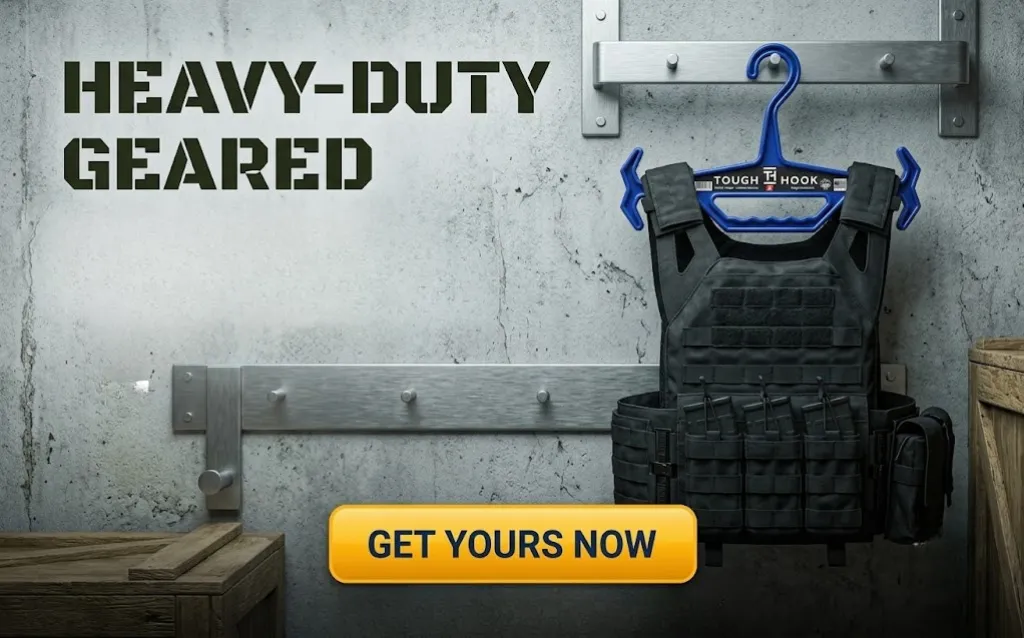
A seasonal storage system that relies on bins and shelves alone leaves the heaviest and most damage-prone items without proper support. The hanger is what keeps a wetsuit from developing permanent creases. It is what keeps a ski jacket’s shoulder structure intact over a six-month summer storage period. It is what allows a turnout coat or a hunting jacket to hang, fully aired, rather than be compressed against other gear on a shelf.
Standard hangers fail at this because they were not built for the weight. A typical plastic hanger bends under the load of a heavy jacket and creates the same narrow stress points that bins and folding do — just vertically rather than horizontally.
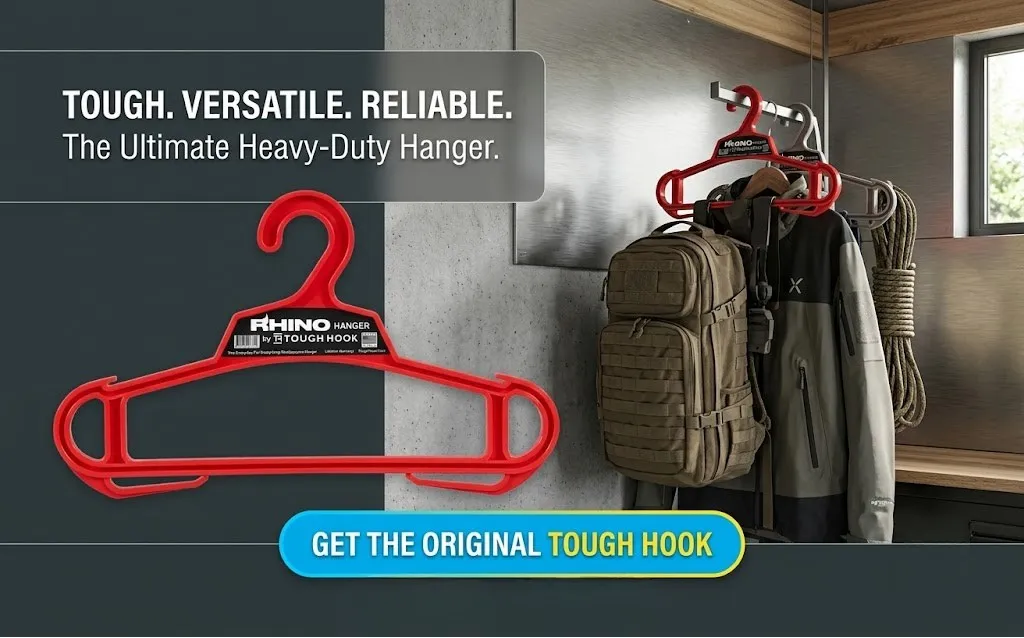
Tough Hook heavy-duty hangers are built to hold over 200 pounds, with a wide shoulder span and I-beam construction that keeps the hanger frame rigid regardless of what is on it. They work across every environment where seasonal gear gets stored: closets, garages, wall-mounted rod systems, and gear rooms. USA-made with a lifetime warranty, they are a one-time addition to a storage system that handles everything from the first snowfall to the last dive of summer.
Building the System: A Simple Starting Point
Getting the storage system organized does not have to be a weekend project. A few changes make a significant difference:
Designate a single rod or rack for seasonal gear. Everything gets hung there when it comes out of active rotation, not draped over a chair or stacked on a shelf.
Use one hanger type for everything. Mixing hanger styles creates inconsistent support. A heavy-duty hanger that works for a wetsuit, a winter jacket, and a hunting vest eliminates the need to think about which item goes on which hook.
Store boots, helmets, and cases on a shelf below or beside the hanging rod rather than in separate locations. Keeping the full seasonal kit together means it goes out the door as a unit, not assembled from three different places under deadline.
Clean before you store, not before you use. Gear that goes into storage dirty comes out with set-in odor and staining. Building the clean-and-hang habit at the end of each season means gear is ready when the season comes back around.
One Hanger for Every Season’s Gear
Tough Hook heavy-duty hangers hold over 200 pounds, fit standard rods and lockers, and are made in the USA with a lifetime warranty. Whether you are hanging a soaked wetsuit, a ski jacket, or a hunting vest, there is a Tough Hook hanger built for that item.
Frequently Asked Questions
Is it better to fold or hang a wetsuit for long-term storage?
Hang it. Folding a wetsuit puts sustained compression on the neoprene, which creates permanent crease lines and can thin the material at the fold over a full season of storage. A wide hanger that supports the suit’s full shoulder span helps it hold its shape and allows moisture to move away from the neoprene.
Can a ski jacket be stored in a compression bag to save space?
Only for short-term transport. For seasonal storage lasting several months, compression reduces the loft of the insulation fill, and it does not always fully recover. Hanging the jacket on a full-shoulder hanger in a cool, dry space is the better approach for preserving warmth performance into the next season.
What is the best way to store hunting waders in the off-season?
Hang them inverted or fold them loosely without creasing along the boot seam. Avoid tight folds or compression, which can stress the waterproof seam tape and shorten the wader’s lifespan. Store in a cool, dark, dry location where the material can breathe.
Can one type of hanger really work for all types of seasonal gear?
Yes, if it is built for the load range. A heavy-duty hanger rated for over 200 pounds with a wide shoulder span handles everything from a soaked wetsuit to a ski jacket to a hunting vest without requiring different hanger types for each item. That consistency simplifies the storage system significantly.
How do I keep scent-sensitive hunting gear from picking up household odors in storage?
Keep hunting base layers and mid-layers in a sealed, scent-free storage bag or bin. Heavier outer layers can be hung in a dedicated space away from strong household odors like laundry products or cooking. Washing in scent-free detergent before storage and immediately sealing the laundered items reduces off-season contamination.