

Choosing the best coat hangers is one of the simplest ways to protect your jackets and coats while making better use of your closet space. The right hanger keeps shoulders in shape, prevents slipping, and lets you fit more into a smaller space without crowding your clothes. This guide walks through the main types of coat hangers, what to look for before you buy, and how to size and organize them so your closet works harder without looking cluttered.
The Role of Coat Hangers in Closet Organization
Picking the right coat hanger is about more than looks. It affects how efficiently your closet works day to day. Mismatched or flimsy hangers lead to crowded racks, stretched-out shoulders, and clothes that slide onto the floor. Understanding the common hanger problems, and knowing which style solves them, makes it easier to protect your coats and free up space at the same time.
Types of Coat Hangers
Coat hangers come in a range of materials, each with its own strengths and trade-offs. Here are the main types you’ll come across:
- Wooden Hangers
- Plastic Hangers
- Velvet Hangers
- Metal Wire Hangers
- Heavy-Duty Plastic Hangers
Wooden Hangers
Wood hangers are sturdy and well suited to heavy fabric or items like coats and suits. They add a classic look to a closet, though their bulk means fewer will fit on a standard rod.
Plastic Hangers
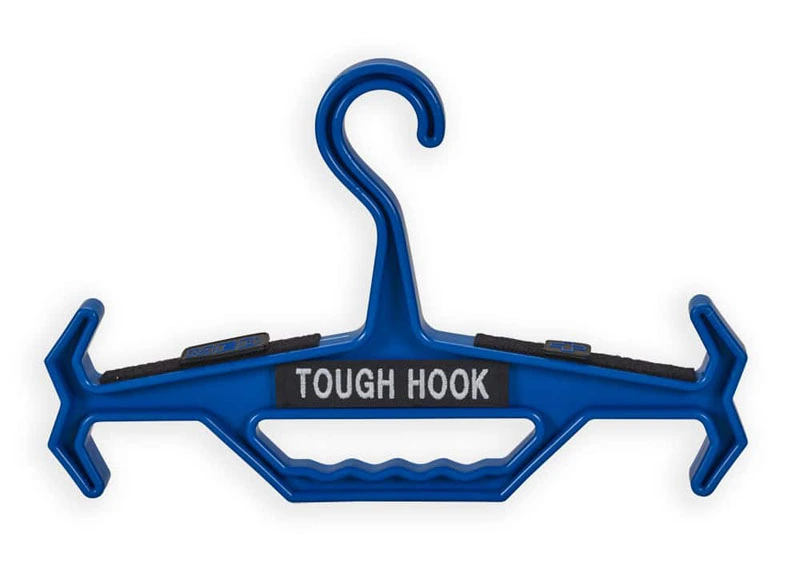
Standard plastic hangers are lightweight, affordable, and suitable for everyday clothing. For coats and heavier garments, a reinforced option such as the Tough Hook Original ID Max Hanger holds up better under weight without bending or snapping.
Velvet Hangers
Velvet hangers are slim and non-slip, which makes them strong space savers and a good match for delicate fabrics. They do need a bit more care to keep the flocking looking new.
Metal Wire Hangers
Wire hangers are inexpensive, thin, and commonly used by dry cleaners. Their limited support can let shoulders lose shape over time, so they work better as a short-term option than a long-term closet solution.
Heavy-Duty Plastic Hangers
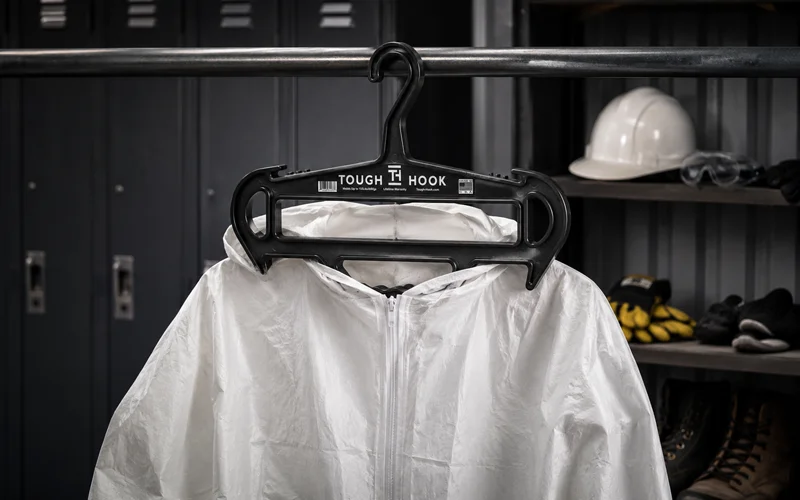
Heavy-duty plastic hangers are built specifically for coats, jackets, and other weighty garments that standard hangers can’t support. Heavy-duty coat hangers typically use a wider, contoured shoulder to hold a coat’s shape and a sturdier build that resists cracking in cold weather, which makes them a practical pick for entryway closets and mudrooms.
Coat Hangers vs. Coat Racks: Which Should You Choose?
A coat hanger and a coat rack solve the same problem in different ways. A hanger works inside a closet, on a closet rod, and keeps a coat’s shape by supporting it at the shoulders. A coat rack sits out in the open, usually near an entryway, and holds coats on hooks or pegs instead of a rod. If your space has a closet, hangers make better use of it since more coats fit into the same footprint.
If you’re dealing with a mudroom, hallway, or apartment without much closet space, a coat rack gives guests and family members somewhere to hang a coat the moment they walk in, without opening a door. Picking the right size for either one comes down to how many coats you need to fit and how much wall or closet space you actually have to work with.
Coat Hooks vs. Coat Hangers: Choosing the Right One for Your Space
Coat hooks and coat hangers often get grouped together, but they aren’t interchangeable. A hook holds a coat by the collar or a loop, which is fast for everyday use, but it doesn’t support the shoulders the way a hanger does, so a coat left on a hook for a long stretch can lose its shape faster. Hanger hooks offer a middle ground by letting you hang an actual hanger from a hook-style mount, so you get quick access near a door while the hanger still does the work of keeping the coat’s shape.
Coat hooks are typically made from metal, wood, or heavy-duty plastic, and the material affects how much weight they can safely carry. A metal hook mounted into a wall stud will hold more than an adhesive hook, so match the hook’s rated weight to the coats you’re hanging, especially a wet winter coat that’s heavier than usual.
What to Look for in a Coat Hanger
Not every hanger is built for a coat. A few features separate a hanger that protects your clothes from one that damages them over time.
Weight Capacity
Coats and jackets are heavier than shirts or blouses, so the hanger needs to hold that weight without bowing. Check how much weight a plastic hanger can hold before hanging heavier winter coats or wool blazers on it.
Shoulder Width and Shape
A contoured, wider shoulder mirrors the shape of a coat and helps it keep its structure, instead of leaving pointed marks near the collar.
Grip and Finish
A non-slip finish or notched design keeps coats, scarves, and straps from sliding off the hanger, which is especially useful in a closet that gets opened and closed often.
Best Hangers for Heavy Coats and Winter Jackets
Heavy coats put more strain on a hanger than almost anything else in a closet. Wool overcoats, padded winter jackets, and lined trench coats all pull down on the shoulders, and a hanger that isn’t rated for that weight will bend, warp, or snap over a season of use. This is where heavy-duty hangers compare favorably to regular hangers, since the reinforced build and wider shoulder are made to carry that extra weight without losing shape. If your closet mostly holds lighter shirts and blouses, standard hangers are fine. Once coats, jackets, and outerwear are involved, a heavier-rated hanger protects both the garment and the closet rod.
Top Coat Hanger Options for Space Maximization
Maximizing closet space calls for a strategic mix of hanger types. Here are a few reliable options:
- Slim-profile hangers
- Multi-tier hangers
- Specialty hangers
Slim-Profile Hangers
Slim-profile hangers, like velvet-finish designs, save noticeable space thanks to their thin build. Their narrow shape lets more hangers fit on the same closet rod.
Multi-Tier Hangers
Multi-tier hangers let you hang several items in the space a single hanger would normally take up. They work well for pants, skirts, and scarves.
 Specialty Hangers
Specialty hangers, made for specific items like ties, belts, or bras, keep those pieces neatly stored without eating into your closet rod space.
Standard Coat Hanger Sizes and Dimensions
Most adult coat hangers run between 16 and 19 inches wide, with 17 inches being the most common size for a standard adult coat or jacket. Wider hangers, closer to 19 or 20 inches, work better for bulkier winter coats or structured-shoulder suits, while narrower hangers around 16 inches suit slimmer jackets and pack more tightly into a full closet. Kids’ coat hangers usually run smaller, in the 10- to 14-inch range, so a coat doesn’t slide off narrow shoulders. Some hangers are adjustable, with arms that extend from a child’s size up to an adult size, which is worth considering for a household with growing kids. When in doubt, measure the shoulder width of your heaviest coat and pick a hanger that matches or slightly exceeds it, since a hanger that’s too narrow leaves crease marks near the collar.
Sizing Your Hangers to Your Closet
A common oversight in closet planning is matching hanger size to closet rod length. Getting the most out of your rod means factoring in hanger width and how many you can fit comfortably without crowding your clothes.
Best Practices for Hanging Clothes
The way you hang clothes affects both their lifespan and how much closet space you use. Hanging items by category, and pairing each piece with the right hanger, helps keep the closet structured and easy to search through. Coats and heavier jackets, in particular, hold their shape better on wider, sturdier hangers rather than slim or wire designs.
Buying Guide: Choosing the Right Coat Hangers

When shopping for coat hangers, prioritize build quality over price alone. Look for a hanger rated for the weight of your heaviest coats, a shoulder shape that supports the garment properly, and a material that won’t crack or warp in a cold entryway or garage. Knowing what to check before buying hangers can save you from replacing a flimsy set within a year. Tough Hook’s heavy-duty hangers are built around this kind of daily wear, which is why they hold up in closets that get used constantly.
Budget and Eco-Friendly Considerations
A cheaper hanger that needs replacing every year often costs more over time than a sturdier one bought once. If sustainability matters to your purchase, look at eco-friendly heavy-duty hangers made from recycled or recyclable materials, which give you the same weight support without the same environmental trade-off as disposable wire or thin plastic hangers.
How to Care for and Maintain Your Hangers
Regular upkeep keeps your coat hangers performing well for longer. Simple habits like dusting them off, not overloading a single hanger, and matching the hanger to the garment can extend their working life.
Additional Tips and Tricks for Closet Organization
Beyond hanger choice, a few other tools help stretch your closet space further. Drawer dividers, shelf organizers, and under-bed storage bins all work alongside a good hanger setup to organize your closet with hangers more effectively.
Conclusion
The right coat hanger does more than tidy up a closet. It protects the shape of your coats, holds up under weight, and helps you fit more into the same space. Match the hanger to the garment, check its weight rating, and you’ll get more life out of both your closet and your clothes.
Ready to upgrade your closet? Shop Tough Hook’s heavy-duty hangers, built to handle coats, jackets, and everything else your closet holds.
Frequently Asked Questions
What is the importance of hanger size in closet organization?
Matching hanger size to closet rod length prevents overcrowding and makes better use of the space you have.
What are some best practices for hanging clothes?
Hang clothes by category and use the hanger suited to each item to keep the closet structured and easy to navigate.
Can the wrong hanger damage my clothes?
Yes. Hangers that don’t match the weight or shape of a garment can stretch fabric, leave marks near the shoulders, or let clothes slide onto the floor.
What should I look for in a coat hanger?
Check the weight capacity, shoulder width, and grip. A hanger built for coats should support the garment’s weight and keep its shape without slipping.
How many coat hangers do I need for my closet?
It depends on how many coats and jackets you own, but it helps to keep a few extra heavy-duty hangers on hand for guests or seasonal items.
Are plastic hangers strong enough for heavy coats?
Standard plastic hangers can bend under a heavy coat, but reinforced, heavy-duty plastic hangers are made to hold that extra weight without bowing or cracking.
Should I use a coat hanger or a coat rack?
Hangers make better use of closet space and support a coat’s shape, while a coat rack works well for quick access near an entryway or in a space without a closet.
How wide is a standard coat hanger?
Most adult coat hangers are 16 to 19 inches wide, with 17 inches being the most common size. Kids’ hangers typically run 10 to 14 inches.