
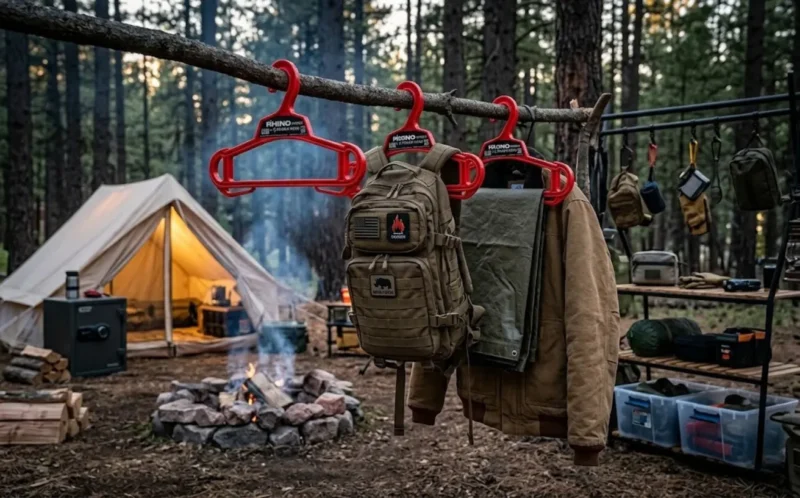
You know how it goes. The trip is two days away. You start pulling camping gear together, and half of it is buried under the other half. The jacket you need is under a pack that is under a sleeping bag that somehow ended up on the floor. You spend 45 minutes finding what should have taken five.
The pile is not a habit problem. It is a hardware problem. When there is nowhere proper to hang gear, everything ends up stacked. And when everything is stacked, nothing is ever actually ready. For the full solution guide, read Camping Gear Made Simple with the Strongest Hooks. If you have already started thinking about organizing your camping storage, Organized Camping with Heavy-Duty Hangers is a good starting point for building a system that can hold the weight.
Gear that has a place is gear that is ready.
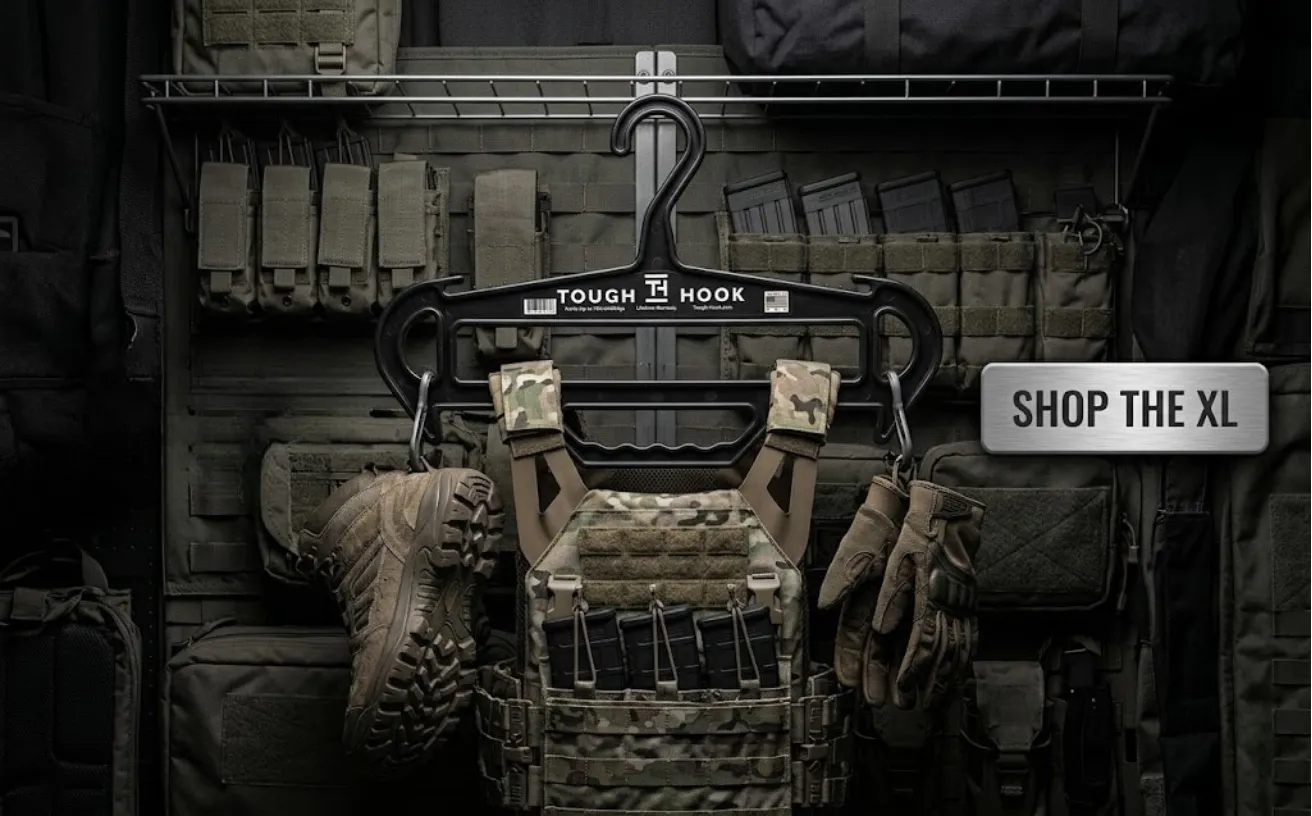
The Tough Hanger XL holds over 200 lbs and is built for jackets, packs, layering systems, and wet camping gear.
Why Camping Gear Always Ends Up in a Pile
Camping gear has three qualities that make it resistant to good storage: it is bulky, heavy, and oddly shaped. Standard closet hardware was not designed for any of those three things.
Standard Hangers Cannot Take the Weight
A consumer plastic hanger has a realistic load limit of around 10-15 lbs before it starts to flex or crack. A heavyweight insulated parka hits that alone. Add a fleece mid-layer draped over the same hanger, and the hanger bends under the combined weight. Add a loaded daypack, and the closet rod starts to sag. The hanger fails, the gear ends up on the floor, and the pile starts. For more on why standard hangers fail serious outdoor gear, see this outdoor hanger guide.
Odd Shapes Do Not Fit Standard Storage
Camping gear is bulky by design, with hoods, cinch straps, compression buckles, and integrated harnesses. Standard hangers are designed for flat, structured clothing. They do not accommodate the three-dimensional bulk of serious outdoor apparel. The gear hangs awkwardly, slides off, or gets crammed together, making it a chore to find anything.
Nothing Gets Assigned a Permanent Place
Without hardware strong enough to hold the load, there is no stable place to designate for each piece of gear. And without designated places, everything migrates into the nearest available pile. This is not a discipline problem. It is an infrastructure problem.
What the Pile Actually Costs You
Time Lost Before Every Trip
Digging through gear before a trip adds 30 to 60 minutes to the departure time. Multiply that over a season, and it amounts to hours lost to a problem that a proper storage setup would eliminate.
Gear That Gets Left Behind
When gear is not visible and accessible, it does not get packed. Technical layers that would have been useful sit buried in the pile at home. This is a storage problem, not a forgetfulness problem.
Damage That Builds Up Quietly
Gear stored in a pile, especially damp gear coming off a trip, compresses, creases, and sits in its own moisture. Down insulation loses loft. Waterproof membranes break down. Neoprene develops permanent folds. Most people blame normal wear. The real cause was the closet. For seasonal gear specifically, see Organizing Seasonal Gear from Snow Boots to Wetsuits.
What Smarter Camping Storage Actually Requires
Fixing the pile does not require a renovation. It requires three things done right.
- Hangers rated for the real weight of the gear – Not consumer hangers relabeled as heavy-duty. Hangers engineered for the kind of loads that camping gear actually puts on a closet rod. This backpack hanger guide has useful context here.
- A shoulder profile wide enough for technical outdoor apparel – A wide, contoured shoulder keeps jacket structure intact, stops gear from slipping off, and distributes weight across the full garment rather than at two narrow contact points.
- A dedicated hang point for every category – Backpacking kit in one section, car camping kit in another, wet gear drying on a dedicated hanger in a ventilated spot. When every piece of gear has a home, the pile cannot reform.
Conclusion
The pile is not inevitable. It is what happens when storage hardware cannot support the weight of the stored gear. Flimsy hangers bend, gear ends up on the floor, and everything ends up in a stack that makes prep harder every time.
Tough Hook heavy-duty hangers are American-made and built to withstand the weight real camping gear puts on storage hardware. Give every piece of kit a proper place to hang, and the pile stops forming. For a full system setup guide, read Camping Gear Made Simple with the Strongest Hooks.
Give your gear a place it will actually stay.
The Original Tough Hook 4-Pack Bundle is American-made, rated for over 200 lbs per hanger, and built for a serious camping kit.
Frequently Asked Questions
Why does camping gear always end up in a pile?
Standard hangers and hooks cannot hold the weight of serious outdoor gear. When hardware fails or is not rated for the load, gear ends up on the floor or stacked in piles rather than hanging properly.
What weight should a camping gear hanger be rated for?
A loaded hiking pack can weigh 30-40 lbs. A soaked rain jacket adds significant weight. A layering system hung together can easily reach 20 lbs or more. Look for hangers rated for at least 150-200 lbs to handle the combined loads a real gear setup produces.
How do I stop camping gear from slipping off hangers?
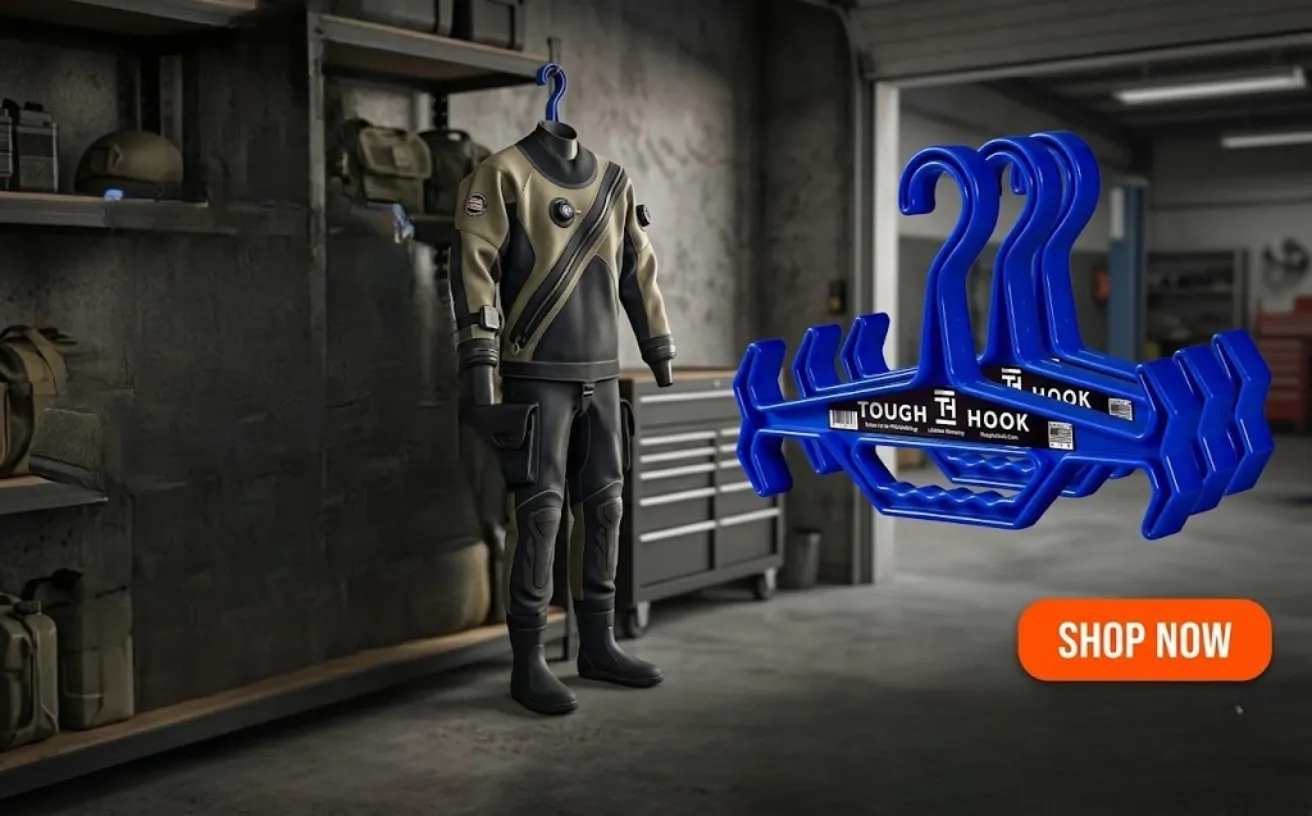
Wide-shouldered hangers with textured grip surfaces prevent slippage on smooth technical fabrics. Tough Hook hangers include tabs and perforations specifically designed to prevent gear from sliding when the hanger carries uneven loads.
How many hangers do I need for a basic camping gear setup?
A practical starting point is one hanger per gear category: one for your layering system, one for your pack, one for drying wet gear, and one for accessories. Most setups benefit from 4 to 8 hangers total. See the 4-Pack Bundle as a starting option.
Where are Tough Hook hangers made?
American-made in the USA. Designed by a US Army Sergeant and trusted by military, law enforcement, and serious outdoor users.