What to Buy First, and What to Buy Later
Buy your first set of scuba diving gear in two rounds. Start with the items that have to fit you well: a mask, snorkel, fins and wetsuit. Wait or rent on the bulky, expensive pieces until you have logged some dives and know what kind of diving you will do. For the complete kit, see our scuba equipment checklist.
| Item | Buy, rent or wait | Why |
|---|---|---|
| Mask | Buy before training | Fit decides comfort and leaks |
| Snorkel | Buy before training | Simple, low cost, often required in courses |
| Fins | Buy before training | Good fit saves energy and air |
| Wetsuit | Buy before training | Warmth and protection that suit your water |
| BCD | Wait until after certification | Style depends on the diving you plan to do |
| Regulator | Wait until after certification | Buy an established brand and keep it serviced |
| Dive computer | Buy after certification | Tracks depth, time and no-decompression limits |
| Tank and weights | Rent | Heavy, and usually supplied by the dive shop |
Scuba Diving Gear to Buy Before You Finish Training
These four items are personal-fit gear. Renting them is a gamble, because a leaking mask or loose fins can spoil your first dives.
Scuba Mask
Your mask is your window to the underwater world. It has to seal properly to stay comfortable and keep water out. Try on several before you buy. Hold the mask to your face without the strap and breathe in gently through your nose. If it stays in place, the seal is good.
Snorkel
A snorkel lets you breathe at the surface without using your tank’s air supply. It is a simple, inexpensive piece of gear, and having your own is handy during and after training.
Fins
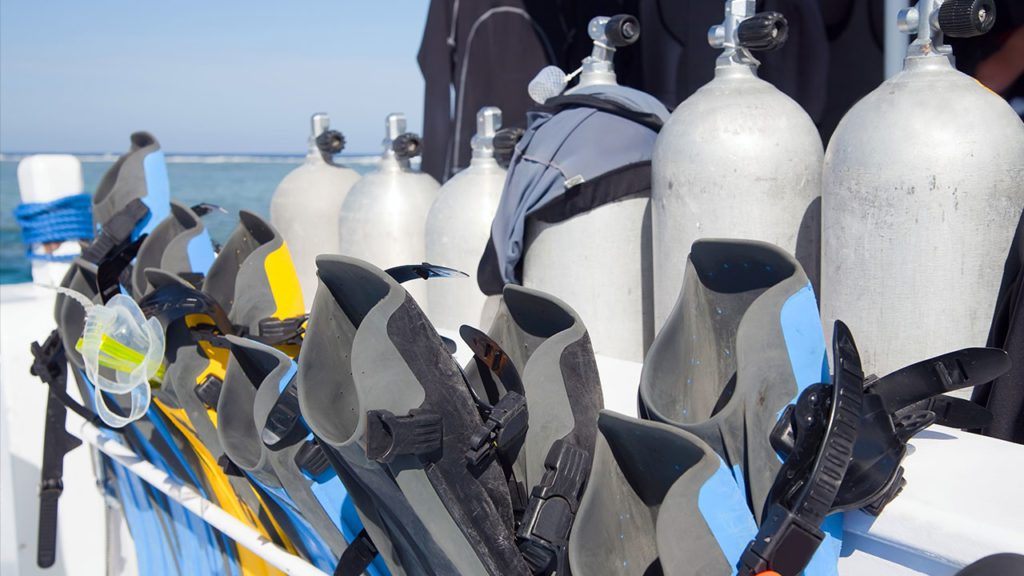
Fins are your underwater propulsion. A good pair helps you move efficiently, reduces fatigue and saves air. Choose fins that fit well with or without a wetsuit, depending on where and when you dive.
Wetsuit
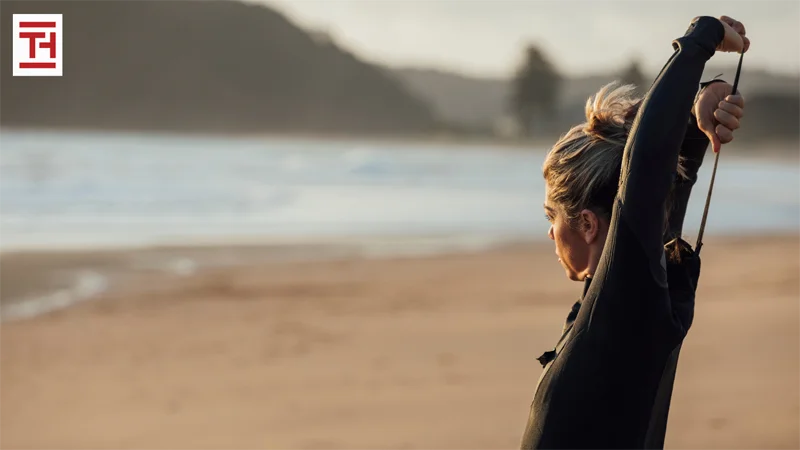
A wetsuit keeps you warm and protects you from scrapes and stings. It should fit snugly without limiting your movement, and the right thickness depends on your water temperature. Put fit and comfort ahead of price.
Scuba Diving Gear to Add After You Get Your License
Once you are certified, you can add the remaining equipment. Many divers rent these pieces for a while first, so they can compare styles before buying.
Buoyancy Compensator (BCD)
The buoyancy compensator holds your gear in place, helps you carry your tank and lets you keep neutral buoyancy underwater. Choose a BCD that suits the type of diving you plan to do.
Scuba Regulator
The regulator steps the high pressure in your tank down to the pressure of the water around you, so you can breathe from it at depth. Buy from an established brand that meets safety standards, and have it serviced on the schedule the manufacturer recommends.
Dive Computer
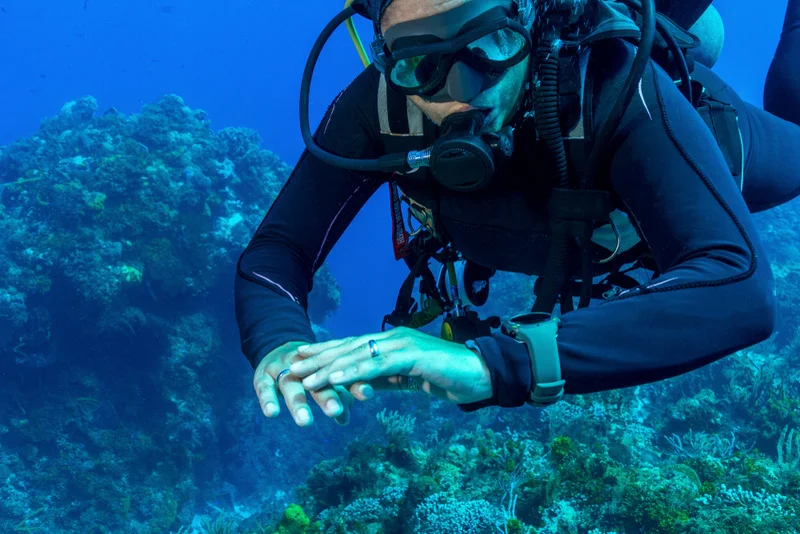
A dive computer tracks your depth and time underwater. It also monitors no-decompression limits and surface intervals, which makes dive planning simpler and your dives safer.
Buy or Rent: How to Decide
If you dive a few times a year, rent the big items and own the small ones. If you dive often or travel with your gear, buying your own BCD and regulator starts to make sense. The tank and weights are normally rented from the dive shop either way. If you do plan to buy a tank, read how to choose a scuba tank first.
How to Store and Care for Your Scuba Gear
Your scuba gear is an investment, and good storage helps it last. A simple routine after every dive does most of the work.
Rinse and Dry
Rinse everything in fresh water after each dive to remove salt, sand and other residue. Then let it dry fully before it goes away, because gear packed away damp can develop mildew and odors. Our post-dive rinse and dry routine walks through the steps.
Wetsuits
Hang your wetsuit to dry away from direct sunlight, and store it on a wide, sturdy hanger so the neoprene does not stretch or crease at the shoulders. Here is how to dry and store a wetsuit, and why a wetsuit needs a sturdy hanger.
BCD, Regulator and Dive Computer
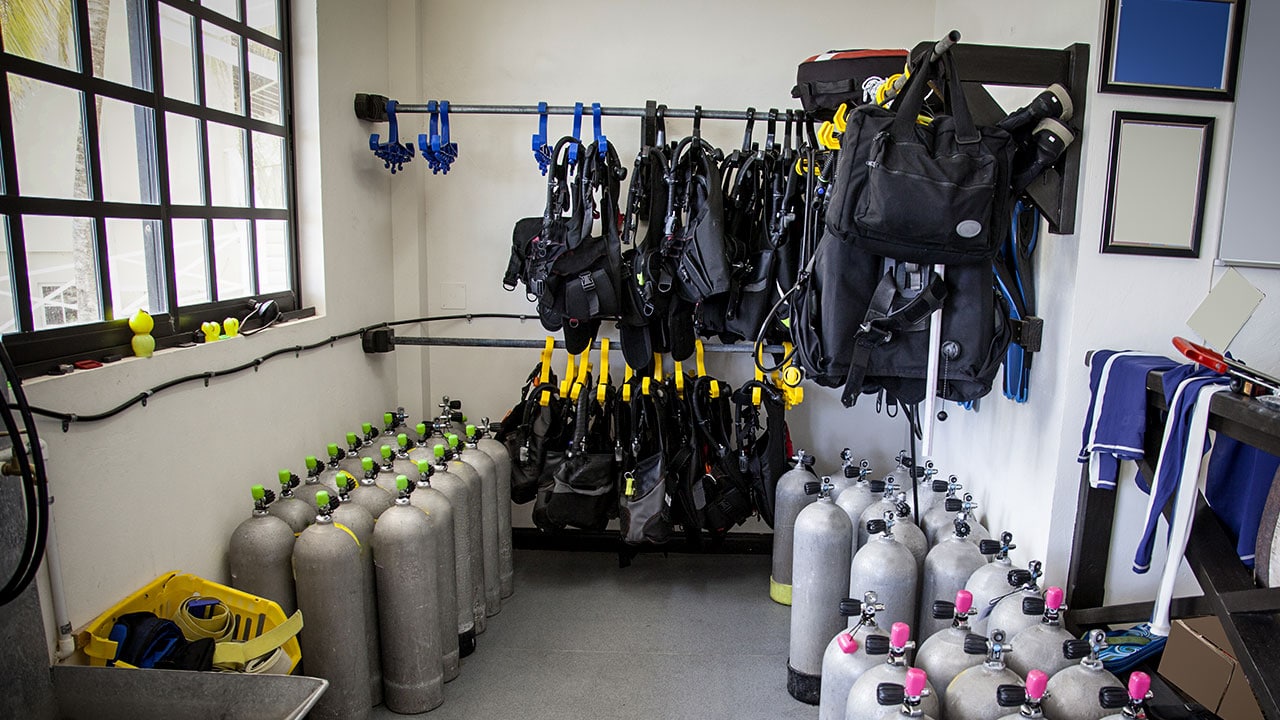
Hang your BCD so it can drain and air out. Keep the regulator and its hoses in a clean, dry place where they are not crushed or tightly kinked, and store your dive computer somewhere it will not be knocked around. A heavy-duty scuba gear hanger is made to hold a full BCD, and this guide on keeping a BCD organized and dry shows how.
Choose a Cool, Dry Spot
Pick a storage spot out of direct sunlight and away from big swings in heat and humidity. Check your manufacturer’s guidance for anything specific to your tank, regulator or computer. For more habits that add years to your kit, see these four tips for keeping gear in shape.
Frequently Asked Questions
What scuba gear should I buy first?
Start with the items that must fit you: a mask, snorkel, fins and a wetsuit. These make the biggest difference to comfort during training.
Should I buy or rent scuba gear as a beginner?
Buy fit-critical personal items and rent bulky, expensive gear such as the tank, weights, BCD and regulator until you know what kind of diving you will do.
Do I need my own regulator and BCD before certification?
No. Your training provider supplies them for the course. Buy your own after you have logged some dives and know which style suits you.
Is a dive computer worth buying early?
Many new divers buy one soon after certification because it tracks depth, time and no-decompression limits for you.
How should I store scuba gear after a dive?
Rinse everything in fresh water, dry it out of direct sunlight and hang heavy items such as a BCD or wetsuit on a hanger rated for their weight.