
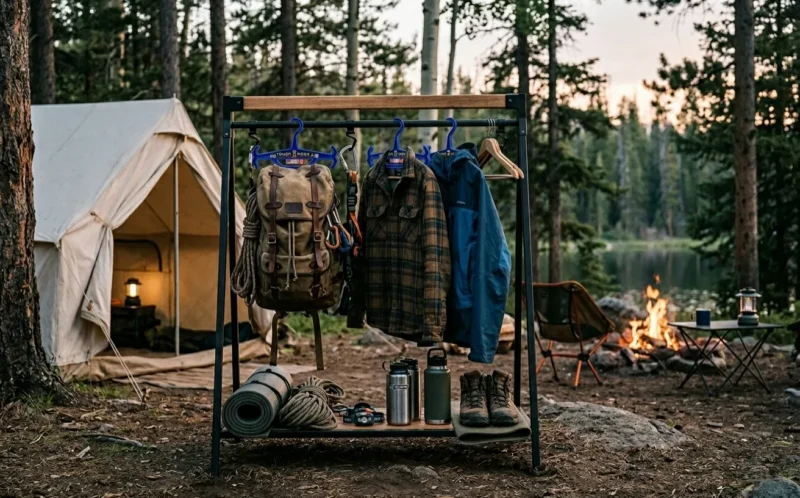
Most people spend hundreds, sometimes thousands, on camping gear. Quality rain shells, technical layering systems, loaded packs built for serious trails. Then they come home and toss everything on a flimsy plastic hanger, a doorknob, or the floor.
That is where the damage actually starts.
Poor storage is one of the most overlooked reasons camping gear wears out faster than it should. Warped shoulders on a waterproof shell. Straps that get pinched and creased. A jacket that never quite hangs right again after a season of bad storage. None of this happens on the trail. It happens in the closet.
If you have ever pulled gear out for a trip and found it looking worse than when you packed it away, your storage setup is the problem.
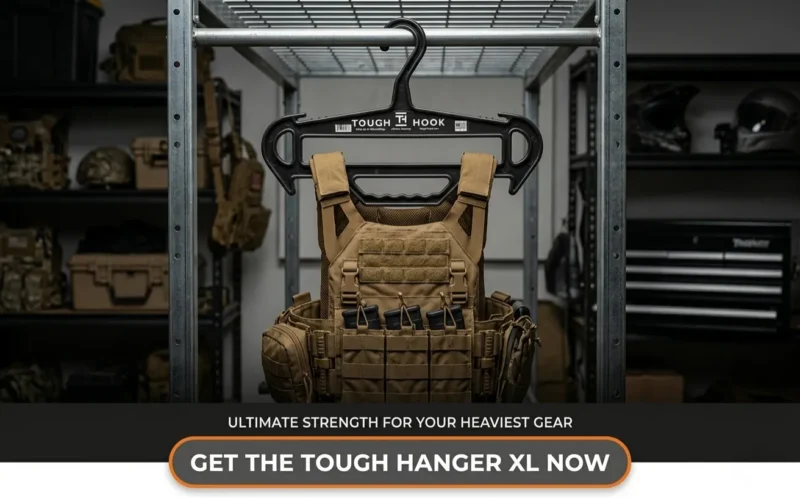
Your gear works hard. Your storage should too. The Tough Hanger XL is American-made, holds over 200 lbs, and is built specifically for camping jackets, loaded packs, waders, and wet gear. See the Tough Hanger XL
What Actually Happens to Camping Gear in Bad Storage
Understanding the problem is the first step. Here is what poor storage does to a serious outdoor kit over time.
Narrow Hangers Destroy Technical Fabrics
Consumer-grade plastic hangers have a shoulder width of roughly 16 to 17 inches with a thin, rounded edge at the contact point. On a dress shirt that is fine. On a 600g insulated parka or a DWR-coated hardshell, that narrow edge concentrates all the garment’s weight onto two small pressure points, exactly where the shoulder seams and face fabric are most vulnerable.
Over multiple seasons, that repeated pressure breaks down waterproof membranes, weakens seam tape, and distorts the jacket’s shoulder structure so it no longer fits the same way.
Weak Hangers Bend and So Does Your Gear
Standard plastic hangers are rated for lightweight clothing. A loaded hiking pack, a soaked wading jacket, or a heavy canvas shelter weighs far more than any consumer hanger was designed to hold. When the hanger bends under load, everything hanging on it bends with it, including straps, fabric panels, and buckle attachments.
That bent shape becomes a permanent crease if the gear sits that way long enough.
Piled Gear Traps Moisture and Grows Problems
Gear without a dedicated hang point usually ends up stacked or piled. Piling damp gear after a trip is one of the fastest ways to develop mildew, since storing fabric while still damp can break down waterproof coatings over time through a process called hydrolysis. That kind of damage is often irreversible and always unpleasant to deal with.
The Gear That Suffers Most from Poor Storage
Not all camping gear is equally vulnerable. These are the items that take the most damage from bad storage conditions.
Waterproof shells and hardshells – DWR coatings degrade faster when fabric is compressed or stored on narrow hangers. The membrane needs to breathe and hold its shape.
Insulated mid-layers and parkas – Down and synthetic fill compresses permanently if stored under pressure. Sleeping bags lose their lofting ability when left compressed for months, and the same principle applies to insulated jackets.
Waders and neoprene gear – Heavy when wet, prone to cracking if stored folded or compressed. Hanging is the correct storage method, but only if the hanger can take the weight.
Loaded packs and tactical bags – Packs stored slumped on the floor or draped over a hook develop frame distortion and strap creasing. A proper heavy-duty hanger keeps the pack structure intact between trips.
Technical base layers and moisture-wicking systems – Less structural damage, but fabric elasticity suffers when these are crammed into a pile rather than hung properly.
Why Most People Do Not Realize Storage Is the Problem
Gear degradation from poor storage is slow and cumulative. A jacket does not fall apart after one bad hang. It gets gradually worse over months and seasons. By the time the damage is obvious, most people blame the brand, the trail conditions, or normal wear. The real cause was the closet.
This is also why serious outdoor users, backpackers who track gear performance, military and law enforcement professionals who depend on equipment reliability, pay close attention to storage. They know that how gear is treated between uses determines how well it performs when it matters.
What Good Camping Gear Storage Actually Looks Like
A proper camping gear setup has three qualities: it holds the load, it protects the gear structure, and it keeps everything accessible.
That means:
- Hangers that do not bend under the weight of real outdoor gear
- Shoulder designs are wide enough to keep the jacket and pack shapes correct
- A dedicated hanging space for wet gear to dry fully before being stored
- A system organized by use case, so gear is easy to find and ready to grab
None of this requires a custom closet renovation. It requires the right hardware, starting with hangers built for the job.
For a complete look at how to set up a year-round gear storage system, including seasonal rotation from snow gear to summer kit, see: Organizing Seasonal Gear from Snow Boots to Wetsuits
Conclusion
Camping gear does not fail only on the trail. A significant amount of wear, structural damage, and performance degradation happens in storage, on the wrong hangers, in the wrong conditions, over months and seasons of being treated as an afterthought.
The fix is not complicated. Gear that is worth using is worth storing correctly. That starts with hangers strong enough to actually hold what you own.
Tough Hook heavy-duty hangers are American-made and built for real outdoor loads, the kind of gear that has no business hanging on a consumer closet hanger.
Frequently Asked Questions
Does the type of hanger really affect the quality of camping gear?
Yes. Narrow or weak hangers put pressure on seams, distort fabric panels, and bend under the weight of heavy outdoor gear. Over time, this causes real structural and performance damage to technical fabrics and insulated layers.
What camping gear is most at risk from poor storage?
Waterproof shells, insulated jackets, waders, loaded packs, and neoprene gear are most vulnerable. These items are heavy, structurally specific, and expensive to replace — all reasons to store them on hangers built to handle the load.
How do I know if my hangers are too weak for my gear?
If your hangers are bending, cracking, or pulling away from the closet rod under the weight of outdoor gear, they are not adequate. The same applies if your jackets are developing permanent shoulder distortions or fold marks from the hanger contact point.
Should I hang wet gear right away or let it dry first?
Hang wet gear immediately in a ventilated area and do not pile it. Let it fully dry before returning it to closed storage. This prevents mildew, odor buildup, and long-term fabric damage.
Where are Tough Hook hangers made?
Tough Hook hangers are American-made, a key part of the brand quality standard, and the reason they are trusted by military, law enforcement, and serious outdoor users.